

If you’re trying to decide whether travertine is right for your home, here’s the short version: it’s a genuinely beautiful natural stone with a warm, aged look that photographs well and holds up for decades — but it’s porous, needs regular sealing, and doesn’t suit every room or every climate. Expect to pay roughly $3 to $15+ per square foot for the tile itself, with installed costs typically landing somewhere between $10 and $25 per square foot depending on finish, pattern, and local labor rates.
The rest of this guide covers what actually determines whether travertine makes sense for your specific project, and what most buying guides skip over.
What Is Travertine?
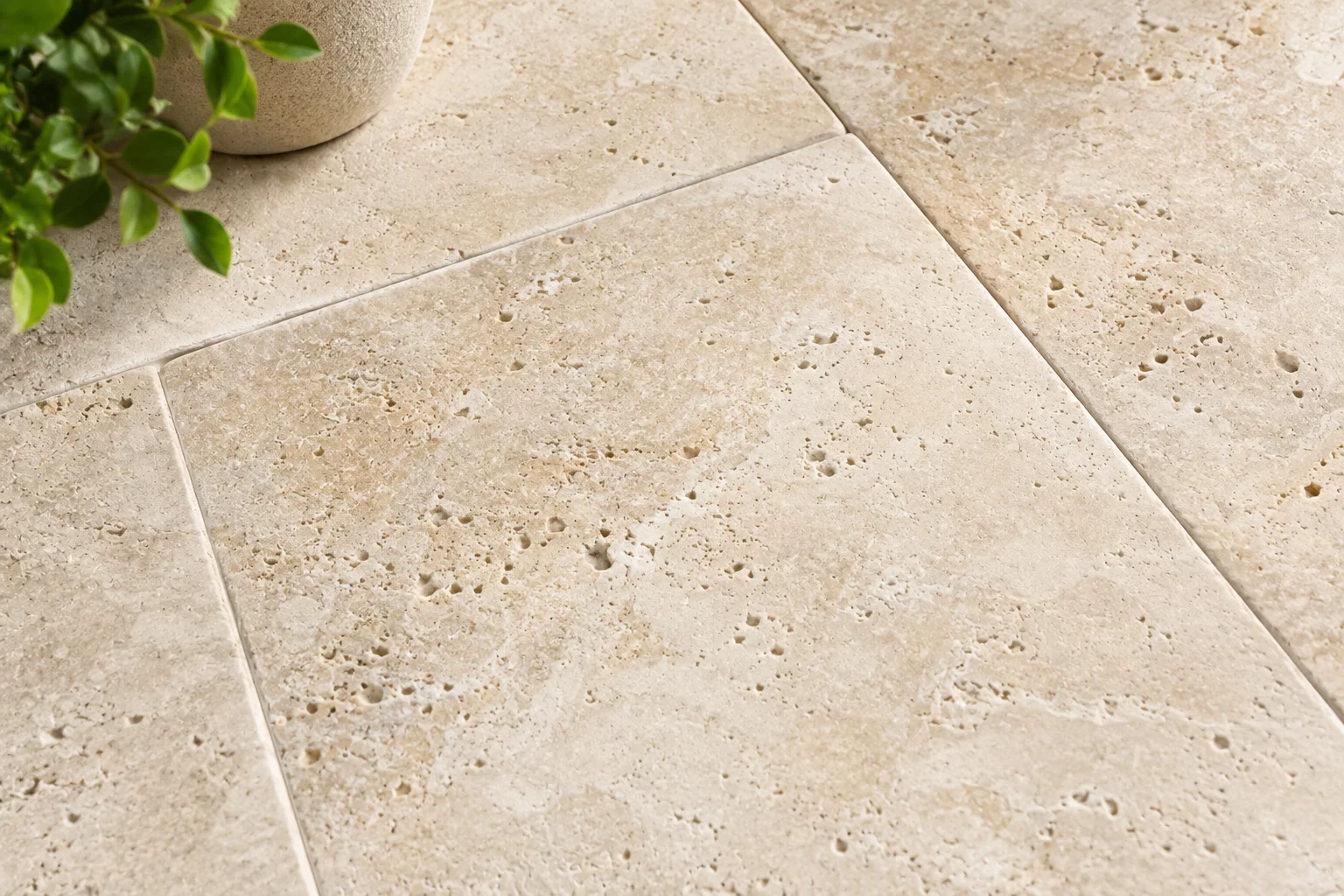
Travertine is a form of limestone that forms around mineral hot springs, where dissolved calcium carbonate deposits and hardens over time. As it forms, gas bubbles and organic material create small holes and channels throughout the stone. That’s why raw travertine has that pitted, textured look you don’t see in granite or quartz.
Those natural holes matter for two reasons. First, they give travertine its signature aged, organic appearance that no manufactured tile fully replicates. Second, they explain why travertine needs sealing, which we’ll cover shortly.
Color-wise, travertine runs warm: ivory, cream, beige, walnut, and gold tones dominate, and silver-gray varieties exist too. Quarries in Italy and Turkey supply most of the U.S. market, though several other countries produce it as well. Within any given color, you’ll also find different sorting grades — unsorted “rustic” or “mix” travertine tends to cost the least, while carefully sorted, consistent-color batches command a higher price.
Travertine Finishes: Which One You Actually Want
This is where a lot of buyers get overwhelmed at the tile store, so here’s what each finish actually means in practical terms.
Honed is the most common finish sold in the U.S. Manufacturers grind it smooth to a matte or satin surface, which makes it practical for both floors and walls. Most honed travertine comes “filled” — meaning the manufacturer packs the natural holes with a resin or grout-like filler before the tile leaves the factory, giving you a smoother, easier-to-clean surface. You’ll sometimes see this abbreviated as H/F (honed/filled) or H/UF (honed/unfilled) on product listings.
Polished travertine has a glossy, reflective surface. It looks elegant, but it gets noticeably slippery when wet, which rules it out for bathroom floors, entryways in snowy climates, or anywhere water tracks in regularly.
Tumbled travertine goes through a mechanical process: manufacturers place cut tiles in a barrel with abrasive grit and water and tumble them together for anywhere from a few days up to several weeks. This softens and rounds the edges and surface, producing a worn, antique look. Most tumbled travertine ships unfilled, meaning the natural holes stay open. Some homeowners like this rustic look; others have the installer fill the holes with grout during the grouting phase for a smoother result. Tumbled finishes provide good slip resistance, which is why they show up so often on pool decks and patios.
Brushed sits between honed and tumbled — textured but with sharper edges than tumbled tile. Manufacturers achieve this by running a rotary wire brush across the surface. It’s a common choice for a rustic-but-refined kitchen or mudroom floor.
What Travertine Actually Costs
Real listings help more than vague ranges. At Home Depot, a 16-in. x 24-in. honed-and-filled travertine floor tile currently lists around $11 per square foot, while a premium tumbled option in a similar format runs closer to $17–18 per square foot. Their broader travertine tile category spans from roughly $1–2 per square foot for basic small-format tiles up to $13-plus per square foot for larger-format or higher-grade stone, with most mid-range options landing somewhere between $5 and $9 per square foot.
That’s material only. Installation — labor, thinset, grout, spacers, and sealer — commonly adds another $4 to $12 per square foot depending on your region and layout complexity. For a 100-square-foot bathroom or entryway, that puts a realistic installed budget somewhere between roughly $1,000 and $2,500 for a mid-range job, with premium stone and intricate patterns pushing higher.
A few things move the price beyond the tile itself:
- Pattern complexity. A straight grid lay costs the least to install. French patterns (a repeating mix of different tile sizes) and herringbone layouts take installers more time and generate more cutting waste, both of which drive up labor costs.
- Sealing. Budget for sealer as its own line item — installers don’t always bundle it into their quotes, and travertine typically needs it both before and after grouting, plus periodic resealing afterward.
- Removal of old flooring. If you’re replacing existing flooring, factor in demo and disposal costs separately.
Is Travertine Right for Your Room? A Realistic Breakdown
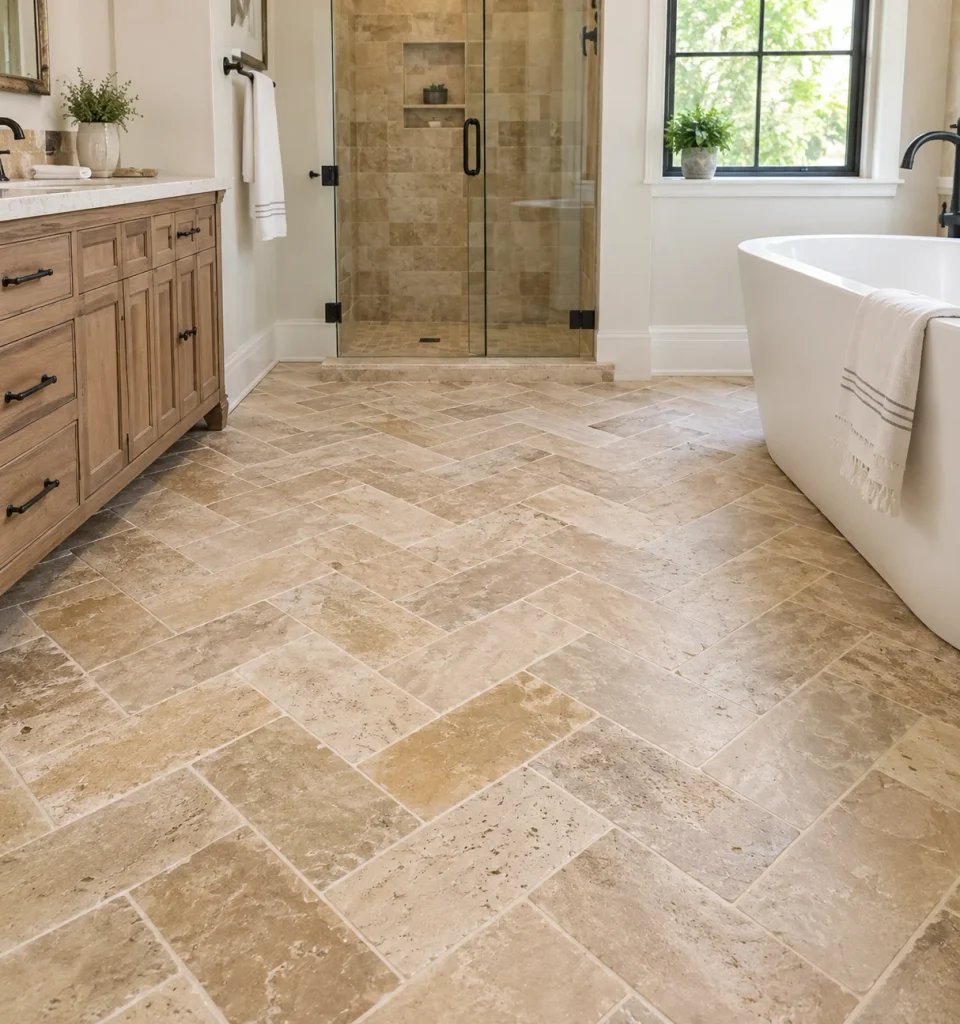
Bathrooms: Travertine works well here, especially in honed or tumbled finishes for slip resistance, but sealing is non-negotiable given constant moisture exposure. Polished finishes are a poor fit in this room.
Kitchens: Homeowners choose travertine often for floors and backsplashes. The main risk is acidic spills — wine, citrus, tomato sauce — which can etch unsealed or poorly sealed travertine. A good sealer and reasonably prompt cleanup handle this in practice.
Entryways: Travertine holds up well to foot traffic and looks the part, but in climates with a lot of winter salt and grit tracked in, honed or brushed finishes clean up more easily than polished.
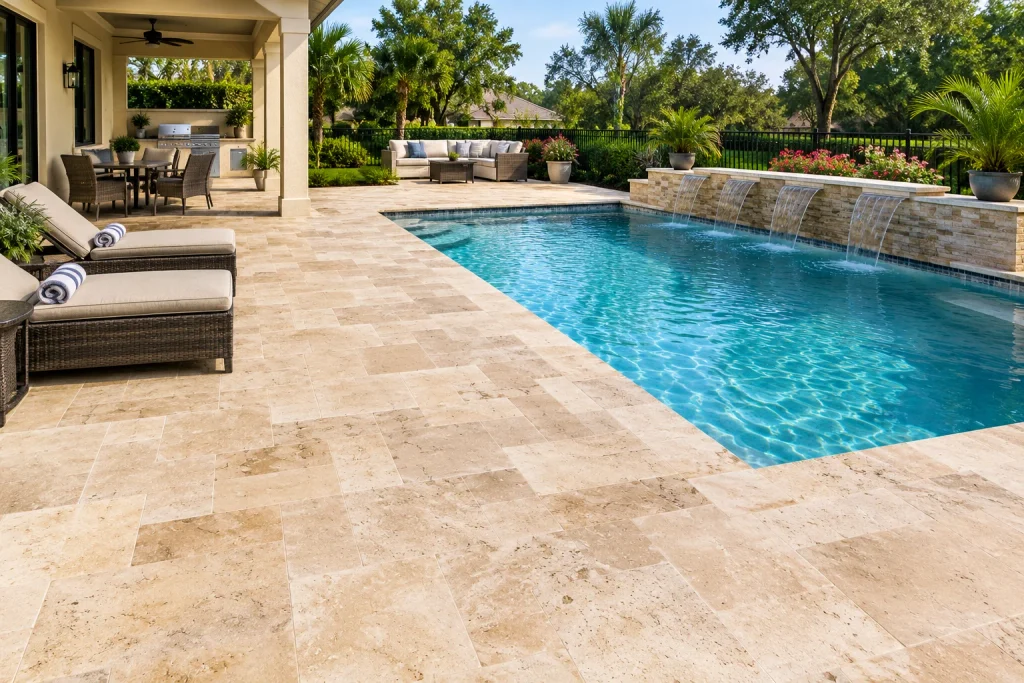
Outdoor patios and pool decks: This is genuinely one of travertine’s strongest use cases. Tumbled and brushed finishes provide real slip resistance around water, and the stone handles sun exposure without fading the way some composite materials do over time. One caveat: in climates with hard freeze-thaw cycles, confirm that the specific product and installation method carry a freeze-thaw rating — not every travertine tile does.
Showers: Travertine can work here, but this is the highest-maintenance application. Constant water exposure means more frequent resealing, and grout lines need real attention to avoid mildew buildup.
Maintenance: What Ongoing Care Actually Looks Like
Travertine’s porosity is the recurring theme in every part of this guide, and maintenance is where it matters most day to day.
Sealing is the single most important maintenance task. A quality penetrating sealer fills the stone’s pores at a microscopic level without changing its appearance, and you’ll need to reapply it periodically — how often depends on foot traffic and the specific product, but kitchen and bathroom floors generally need resealing more often than a lightly used formal living room. Skipping resealing causes most of the staining and dulling homeowners run into within just a few years.
Cleaning should stick to pH-neutral stone cleaners. Avoid vinegar, bleach, and other acidic or highly alkaline household cleaners — they can etch the surface over time, leaving dull spots that don’t buff out easily.
Spills deserve a prompt wipe-up, especially anything acidic. This matters more on unsealed or under-sealed travertine, but it’s a good habit regardless of sealing status.
Small holes and pits can develop or reopen over time, particularly on unfilled or lightly filled tile. Most homeowners simply patch these with a matching filler as part of routine maintenance rather than worrying over them.
Travertine vs. Other Natural Stone: A Quick Comparison
| Material | Cost per Sq. Ft. (material only) | Porosity/Sealing Needs | Best For |
|---|---|---|---|
| Travertine | ~$3–$15 | High — needs regular sealing | Warm, aged aesthetic; patios, entryways, bathrooms |
| Marble | ~$7–$14 | Moderate to high — also needs sealing | Formal, elegant interiors; more prone to etching from acids |
| Granite | ~$5–$15 | Low — dense, minimal sealing needed | Kitchens, high-wear areas, less maintenance |
| Porcelain (stone-look) | ~$2–$8 | None — non-porous | Budget-conscious buyers wanting the look without the upkeep |
If the maintenance commitment is what’s holding you back from travertine, take a look at porcelain tile before ruling out the aesthetic entirely — manufacturers now produce stone-look porcelain that mimics travertine’s texture convincingly.
Common Mistakes Buyers Make
Skipping the sealer to save money. This is the most common regret homeowners run into. Unsealed travertine in a kitchen or bathroom stains faster and looks worn within a couple of years instead of holding up for decades.
Choosing a polished finish for a wet area. It looks great in photos, but it turns genuinely dangerous underfoot when wet. Save polished travertine for dry, low-traffic spaces if you want that finish at all.
Assuming all travertine is interchangeable. Filled vs. unfilled, finish type, and even quarry source affect both appearance and performance. Ask your supplier specifically about filled status and finish before buying, not just “travertine” as a generic category.
Not budgeting for resealing. Buyers often price out the initial installation and forget to factor in the ongoing cost of periodic resealing, which adds up as a real, recurring expense over the life of the floor.
Ignoring freeze-thaw ratings for outdoor use. Not every travertine product on the market suits exterior use in climates with hard winters. Confirm this before you install one on an exposed patio in the Northeast, Midwest, or Mountain states.
U.S. Climate Considerations
Travertine’s performance varies meaningfully by region. In the Southwest and Southern California, where freeze-thaw cycling rarely happens, outdoor travertine installations tend to hold up more easily long-term. In the Northeast, Midwest, and Mountain states, exterior travertine needs a freeze-thaw rating, and proper installation with adequate drainage underneath the tile matters more, since trapped moisture that freezes and expands can crack tile over time.
If you’re weighing travertine against other flooring options as part of a larger renovation, it’s worth looking at how it fits into your overall home design plan — see our guide on Bamboo Flooring vs Hardwood for more on flooring choices across different rooms.
Frequently Asked Questions
Does travertine increase home value? Buyers and appraisers generally view natural stone flooring favorably compared to lower-end synthetic flooring, though the actual value impact depends heavily on your local market, installation quality, and how well you’ve maintained the material.
How long does travertine flooring last? With proper sealing and reasonable care, travertine can last several decades — it’s a genuinely durable material. Most failures trace back to inadequate sealing or improper installation rather than the stone itself wearing out.
Is travertine slippery? Polished finishes can get slippery, especially when wet. Honed, brushed, and tumbled finishes provide meaningfully better traction and make the better choice for bathrooms, entryways, and pool decks.
Can I install travertine over radiant floor heating? Yes, natural stone generally works well with radiant heat systems and conducts warmth effectively, though it’s worth confirming compatibility with your specific installation and checking the tile manufacturer’s guidelines.
How often does travertine need resealing? This varies by product, sealer type, and traffic level, so there’s no single universal number. Check your specific sealer’s guidelines, and watch for early warning signs — like water that no longer beads on the surface — which tell you it’s time to reseal.
What’s the difference between travertine and marble? Both are natural stones formed from calcium carbonate, but marble forms under heat and pressure deep in the earth, which gives it a denser, more uniform crystalline structure. Travertine forms near the surface at mineral springs, which gives it that characteristic porous, pitted texture. Marble tends to show more visible veining; travertine has a more uniform, textured look.
Does travertine make a good choice for a rental property or resale-focused renovation? It can, given its broad aesthetic appeal, but weigh the maintenance requirement against lower-upkeep alternatives like porcelain if the property won’t get consistent care between tenants or after resale.
Sources & References
- Home Depot, Travertine Tile product listings: https://www.homedepot.com/b/Flooring-Tile-Natural-Stone-Tile-Travertine-Tile
[…] If you’re planning flooring upgrades as part of preparing a home for sale or settling into a new one, think through which rooms actually benefit from hardwood versus where a more moisture-tolerant material makes more sense. See our guide on Travertine Flooring: Pros, Cons, and Cost Guide […]
[…] to protect against moisture. If you’re weighing stone options for a renovation, our travertine flooring guide covers care and sealing in more […]