

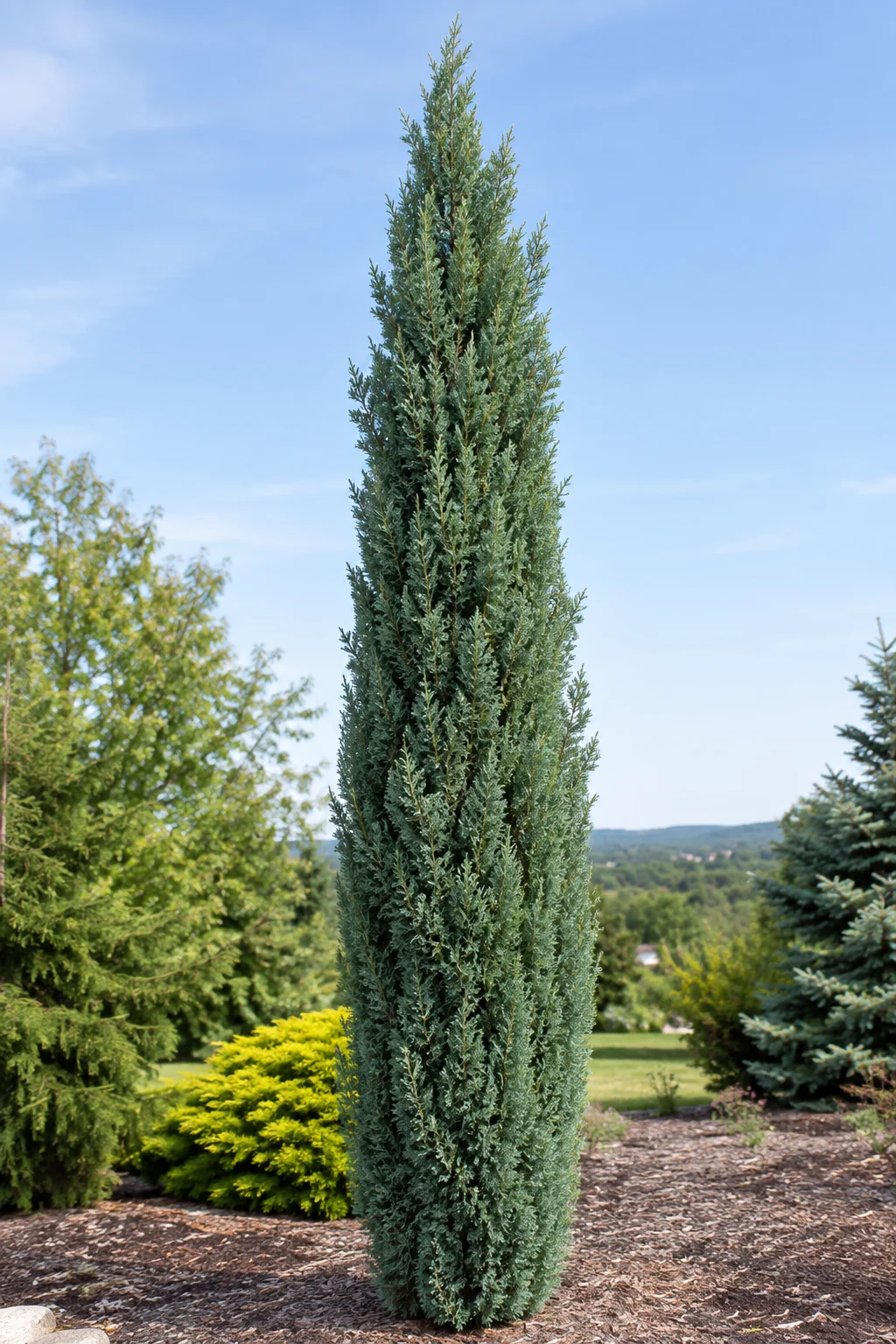
If you want a narrow, upright evergreen that stays green year-round and barely needs maintenance once established, the Taylor Juniper (Juniperus virginiana ‘Taylor’) is one of the most reliable choices for U.S. landscapes. It’s a columnar selection of eastern redcedar that grows tall and narrow — typically 15 to 20 feet high but only 3 to 4 feet wide — which makes it a go-to plant for privacy screens, windbreaks, and tight side-yard spaces where a full-size tree won’t fit.
Below, we’ll cover what this plant actually needs to thrive, where it grows well across the U.S., the mistakes people commonly make with it, and one issue almost no retail plant page mentions: its connection to cedar-apple rust.
What Is a Taylor Juniper?
Taylor Juniper is a cultivar of Juniperus virginiana, the eastern redcedar native to much of the central and eastern United States. It was selected for its exceptionally narrow, columnar habit — a growth pattern that holds up without staking or heavy pruning, unlike some other columnar junipers that tend to splay open with age.
According to the Missouri Botanical Garden’s Plant Finder, Taylor Juniper reaches roughly 15 to 20 feet tall with a spread of only 3 to 4 feet, though some nursery sources list mature heights up to 25 feet under ideal growing conditions. The species has the best drought resistance of any conifer native to the eastern United States. The foliage is a blue-green to silvery blue-green, and it holds its color through winter rather than bronzing or fading like some junipers do in cold weather.
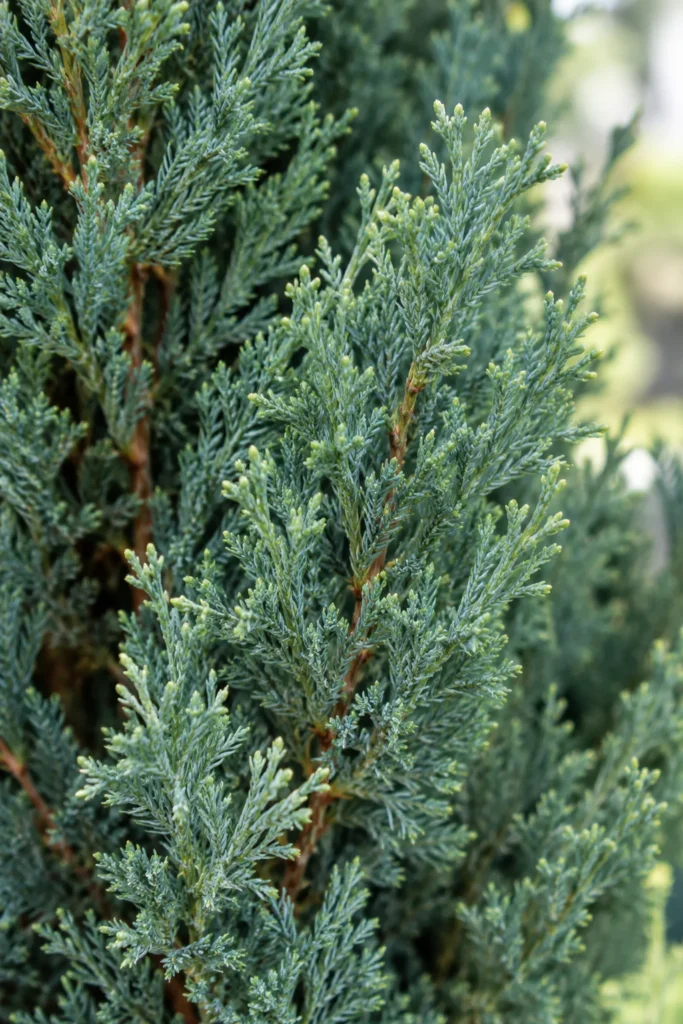
You’ll sometimes see it sold as “Taylor Eastern Redcedar,” which refers to the same plant — ‘Taylor’ is a cultivar of eastern redcedar, not a separate species.
USDA Growing Zones and Climate Fit
Taylor Juniper is generally rated for USDA Hardiness Zones 4 through 9, according to Missouri Botanical Garden. Some retail nurseries advertise hardiness down to Zone 3 when the plant is grafted onto cold-hardy rootstock, so zone tolerance can vary slightly depending on how your specific plant was propagated. If you’re gardening in a colder region and zone hardiness is a deciding factor, ask your nursery whether the plant you’re buying is grafted or grown on its own roots.
This wide zone range means Taylor Juniper works across most of the continental U.S., with a few regional notes:
- Midwest and Great Plains: This is effectively home turf. The plant was selected from wild eastern redcedar populations found in Nebraska, and it handles Midwestern soil, wind, and temperature swings without much fuss.
- Northeast: Performs well, though heavy, poorly drained clay soils in this region can cause problems — see the drainage section below.
- South and Southeast: Tolerates heat and humidity well, but watch for the cedar-apple rust issue discussed later if you’re near apple or crabapple trees.
- Southwest and dry climates: One of the better evergreen choices for xeriscaping once established, since it tolerates drought and doesn’t need supplemental irrigation long-term.
- Pacific Northwest: Grows fine but benefits from good drainage given the region’s wetter winters.
Sun, Soil, and Watering Requirements
Light: Full sun is essential — plan on at least six hours of direct sun a day. Plant it in shade or part shade and you’ll get sparse, leggy growth instead of the dense columnar form it’s known for.
Soil: This is one of the more forgiving landscape evergreens when it comes to soil type. It tolerates a wide range of soils and growing conditions, from swamps to dry rocky glades, and prefers moist soils but doesn’t tolerate constantly wet conditions. It also handles alkaline and clay soils better than most conifers, which is useful if you’re gardening in a region with high-pH soil where azaleas, rhododendrons, and other acid-loving plants struggle.
The one hard requirement is drainage. Standing water around the roots — even temporarily after heavy rain — is the most common cause of decline in this plant. If your yard has a low spot that stays soggy after storms, that’s not the right location for a Taylor Juniper regardless of how much sun it gets.
Watering: During the first growing season or two, water deeply and consistently to help the root system establish. Once established, it becomes genuinely drought-tolerant and typically survives on natural rainfall in most U.S. climates, needing supplemental water only during extended dry spells.
Planting: Timing and Spacing
Fall and early spring are generally the best planting windows in most of the U.S., giving roots time to establish before summer heat or winter cold stresses the plant. In regions where the ground doesn’t freeze — much of the South and coastal areas — winter planting is also a reasonable option, since cooler temperatures let the plant focus on root growth rather than fighting heat stress.
Because Taylor Juniper stays narrow, spacing depends entirely on what you’re trying to achieve:
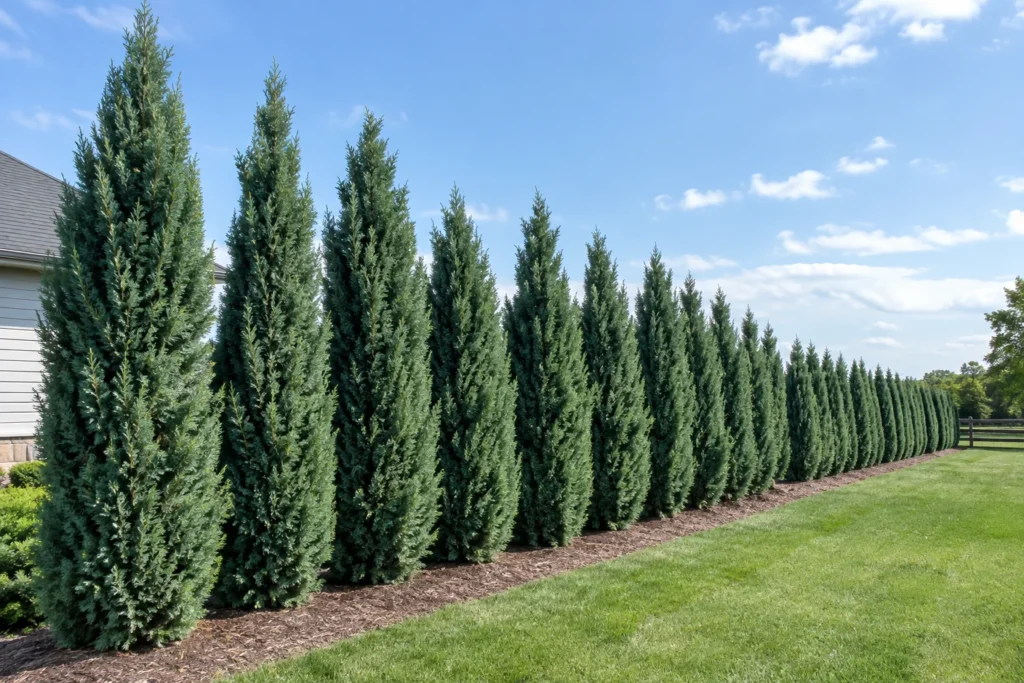
- Privacy screen or hedge: Space plants 3 to 4 feet apart for a solid wall of green within a few years.
- Individual accent or architectural element: Give it more breathing room — 6 feet or more — so its columnar shape reads as a standalone feature rather than blending into other plantings.
- Windbreak: Wider spacing works better here, since you’re relying on multiple trees working together rather than a single dense hedge.
Dig the planting hole only as deep as the root ball but two to three times as wide, and avoid amending the backfill soil too heavily — plants establish better when their roots are encouraged to grow out into the native soil rather than staying confined to a pocket of rich amended soil.
Pruning and Maintenance
Prune in late winter or very early spring, before new growth starts and after the coldest part of winter has passed. Light shaping is fine, but avoid cutting back into old, leafless wood — like most junipers, Taylor Juniper won’t regenerate new growth from bare wood the way some deciduous shrubs will. If you shear too aggressively, you can end up with a permanent bare patch.
Beyond occasional shaping, this plant needs very little upkeep. It doesn’t require regular fertilizing under normal conditions — Missouri Botanical Garden lists its maintenance level as low, and most nursery sources agree it performs well without a regular feeding schedule. If growth seems slow or foliage looks pale despite good sun and drainage, a soil test is a more useful next step than guessing at a fertilizer.
The Cedar-Apple Rust Issue (Often Left Out)
This is worth flagging because most retail plant pages skip it entirely: eastern redcedar, including cultivars like ‘Taylor,’ serves as one of the two hosts required for cedar-apple rust, a fungal disease that also needs apple or crabapple trees to complete its life cycle. The disease doesn’t typically kill junipers, but it can cause orange, gelatinous growths on the branches in spring, and it can seriously damage nearby apple or crabapple trees.
If you’re planting Taylor Juniper on a property with fruit trees — or if a neighbor grows apples — it’s worth knowing this connection exists before you plant. It’s not a reason to avoid the plant entirely in most home landscapes, but it does matter for anyone doing serious fruit production nearby. County extension offices can advise on realistic distances and management if this applies to your situation.
Common Problems and How to Avoid Them
Root rot from poor drainage. This is the single most common cause of a declining or dying Taylor Juniper. Symptoms include browning foliage starting from the interior or bottom of the plant, and a general thinning appearance. Once root rot sets in, there’s rarely a way to reverse it — prevention through proper site selection is the real fix.
Winter burn. In exposed, windy sites, foliage can brown or bronze during harsh winters, especially in the coldest parts of its hardiness range. This is usually cosmetic and the plant recovers with new spring growth, but planting in a location with some wind protection reduces the severity.
Bagworms. Like many junipers, this cultivar can attract bagworms, small caterpillars that build spindle-shaped cocoons from plant material. Check for these in early summer — they’re much easier to remove by hand while the population is small than after they’ve spread through the plant.
Overpruning into old wood. Covered above, but worth repeating: once you cut into bare, needle-less wood, that section typically won’t fill back in. When in doubt, prune conservatively.
Landscape Uses and Design Ideas
Because of its strict columnar shape, Taylor Juniper works well in situations where a wider evergreen would overwhelm the space:
- Narrow side yards between houses, where a standard arborvitae or spruce would eventually crowd a walkway or fence line
- Formal or symmetrical plantings, flanking an entryway or driveway where a matched pair or row creates a clean architectural line
- Privacy screening along property lines without sacrificing much usable yard space, since the mature spread stays under 4 feet
- Windbreaks, particularly in the Midwest and Great Plains, where multiple trees planted in a row buffer wind without taking up the footprint of a traditional windbreak species
If you’re planning landscaping for a home you’ve recently purchased or are preparing a property for sale, columnar evergreens like this one are worth factoring into your overall site plan early, since they take a few years to reach their full screening height. For more details read our guide on Coral Bark Japanese Maple
Frequently Asked Questions
How fast does a Taylor Juniper grow?
It’s generally classified as a moderate grower, typically adding about 1 to 2 feet of height per year once established, though growth rate varies with soil, water, and climate conditions.
How tall does a Taylor Juniper get?
Most authoritative sources list mature height between 15 and 20 feet, with some nursery listings citing up to 25 feet under ideal conditions. Spread typically stays between 3 and 4 feet.
Is Taylor Juniper deer resistant?
Yes, it’s commonly listed as deer resistant, though “resistant” doesn’t mean deer-proof — in areas with heavy deer pressure or during harsh winters when food is scarce, deer may still browse young plants.
Can Taylor Juniper grow in clay soil?
Yes, it tolerates clay soil better than many conifers, but drainage still matters. Amend heavy clay to improve drainage if the site tends to hold water after rain.
What’s the difference between Taylor Juniper and Skyrocket Juniper?
Both are columnar junipers, but they’re different species — Taylor Juniper is a selection of Juniperus virginiana (eastern redcedar), while Skyrocket is a cultivar of Juniperus scopulorum (Rocky Mountain juniper). Taylor tends to hold a tighter, more upright form without splaying as it matures.
Does Taylor Juniper need fertilizer?
Not typically. It performs well in average soil without regular feeding. If you suspect a nutrient deficiency, a soil test will give you more useful information than routine fertilizing.
Is Taylor Juniper toxic to pets?
Juniper species are generally considered to have low toxicity, though ingesting large quantities of berries or foliage can cause mild gastrointestinal upset in some animals. If you have concerns about a specific pet, check with your veterinarian or the ASPCA’s animal poison control resources.
[…] Despite its dainty appearance, lily of the valley is surprisingly tough. It’s deer-resistant, drought-tolerant once established, and practically indestructible once it gets comfortable — which is exactly why it can thrive in a container, alongside other tough, cold-hardy shade options like Taylor Juniper. […]