

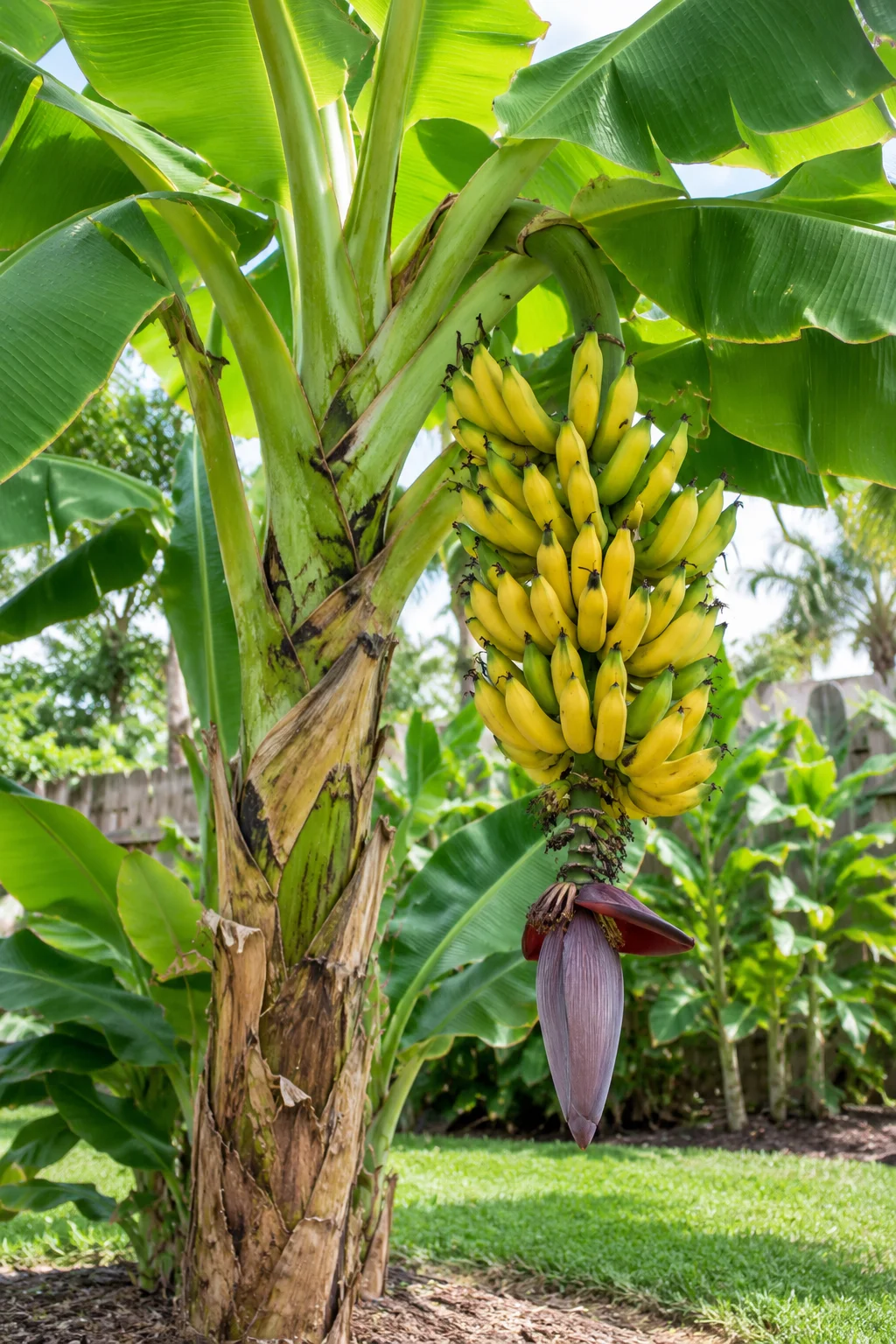
A dwarf banana tree — most commonly the ‘Dwarf Cavendish‘ cultivar of Musa acuminata — is a compact banana plant that tops out around 8 to 10 feet outdoors, or considerably smaller in a container, while still producing full-sized, edible bananas. It thrives outdoors year-round in USDA hardiness zones 8-11, and in colder regions it grows successfully as a container plant that can be moved indoors for winter. This guide covers what it actually takes to grow one, from picking the right variety to getting it to fruit.
Quick Answer
Dwarf banana trees need full sun (at least six hours a day), consistently moist but well-drained soil, warm temperatures, and regular feeding during the growing season. Grown in the ground in a warm climate, most reach fruiting maturity in 10 to 24 months. In containers, expect a slower timeline and a smaller overall plant, but the fruit itself stays the same size and quality as what you’d buy at the grocery store.
What Makes It “Dwarf”
Despite the name, a dwarf banana tree isn’t a miniature version of the fruit — it produces normal-sized bananas, 6 to 10 inches long. What’s dwarfed is the plant’s overall height. A standard banana plant can reach 20 to 30 feet, which makes it impractical for most home gardens. The ‘Dwarf Cavendish‘ cultivar, by contrast, tops out around 8 to 10 feet in the ground and stays considerably shorter in a pot, which is exactly why it’s the variety most home growers end up with.
It’s also worth clearing up a common misconception: what most people call a “banana tree” isn’t a tree at all. Botanically, it’s a giant herbaceous perennial. The trunk-like structure, called a pseudostem, is made of tightly wrapped leaf bases rather than woody tissue. That’s part of why the plant grows so fast and why a damaged stalk can be cut back and will often regrow from the base.
Choosing a Variety
Dwarf Cavendish is the standard choice, and for good reason. It’s the same cultivar behind most supermarket bananas, it’s self-pollinating so you don’t need a second plant, and it tolerates a wider range of conditions than most tropical fruit trees. Reputable growers rate it hardy to USDA zones 8-11 in the ground, with container growing possible well outside that range.
Super Dwarf Cavendish is a smaller relative, generally staying under 4 to 6 feet even in the ground, which makes it a better fit for a patio container or a spot with limited overhead clearance, like under an eave or indoors with a standard ceiling height.
Other dwarf cultivars, including ornamental red-leafed varieties, exist and are sold by specialty nurseries, but they vary more in fruit quality and cold tolerance. If fruit production is your main goal rather than foliage, Dwarf Cavendish remains the most reliable and widely available option, and it’s the variety this guide focuses on.
Where It Will Actually Grow
This is the detail that trips up the most first-time buyers. A dwarf banana tree planted directly in the ground needs USDA zone 8 or warmer to survive winter outdoors, and it needs zone 9-11 conditions to fruit reliably year after year. That covers the Gulf Coast, Florida, southern Texas, southern California, Hawaii, and similar mild-winter regions. You can check your specific zone using the USDA’s official Plant Hardiness Zone Map before planting anything in the ground.
Outside those zones, the plant is grown as a container specimen that lives outdoors in summer and moves indoors — or into a heated garage or sunroom — once temperatures start dropping toward freezing. This isn’t a workaround; it’s the standard approach for a huge share of dwarf banana owners in the Midwest, Northeast, and mountain regions, and it works well as long as you’re realistic about the size and light requirements involved.
A mature banana plant can survive brief exposure to temperatures around 30°F, and the underground rhizome can often survive down to roughly 25°F even if the top growth is killed back. But sustained freezing temperatures will kill the plant outright, so anyone outside zone 8 needs a winter plan before buying, not after the first cold snap.
Light, Soil, and Water
Sunlight. Give it as much direct sun as you can, ideally a minimum of six hours a day. Indoors, that usually means the brightest south-facing window available, and even then, supplemental grow lights often make a real difference during shorter winter days.
Soil. Banana plants want fertile, well-draining soil rich in organic matter. A loose, loamy mix amended with compost works well. Heavy clay or anything that stays waterlogged is a common cause of root problems, so drainage matters as much as fertility.
Water. This plant likes consistent moisture, not dry spells followed by heavy soaking. Water at the base rather than overhead, since wet foliage sitting in humid conditions invites fungal issues. Let the top inch or so of soil dry slightly between waterings, then water thoroughly. During hot, dry stretches, increase frequency rather than volume.
Fertilizer. Feed monthly during the active growing season with a balanced, water-soluble fertilizer. Container-grown plants need this more than in-ground plants, since they’re cut off from the surrounding soil ecosystem and can exhaust nutrients in the pot relatively quickly. Reduce or stop feeding in winter when growth slows.
Container Growing, Step by Step
Most home growers, even in warm climates, start their dwarf banana in a container before ever putting it in the ground, so it’s worth understanding the basics regardless of your zone.
Start with a pot at least 15 to 20 gallons for a young plant, and plan to size up as it grows — a mature Dwarf Cavendish in a container often ends up needing a half-barrel-sized planter or larger. Drainage holes aren’t optional; standing water around the roots is one of the fastest ways to lose the plant. Repot every one to two years, or whenever roots start circling visibly at the drainage holes, moving up one pot size at a time rather than jumping straight to a much larger container.
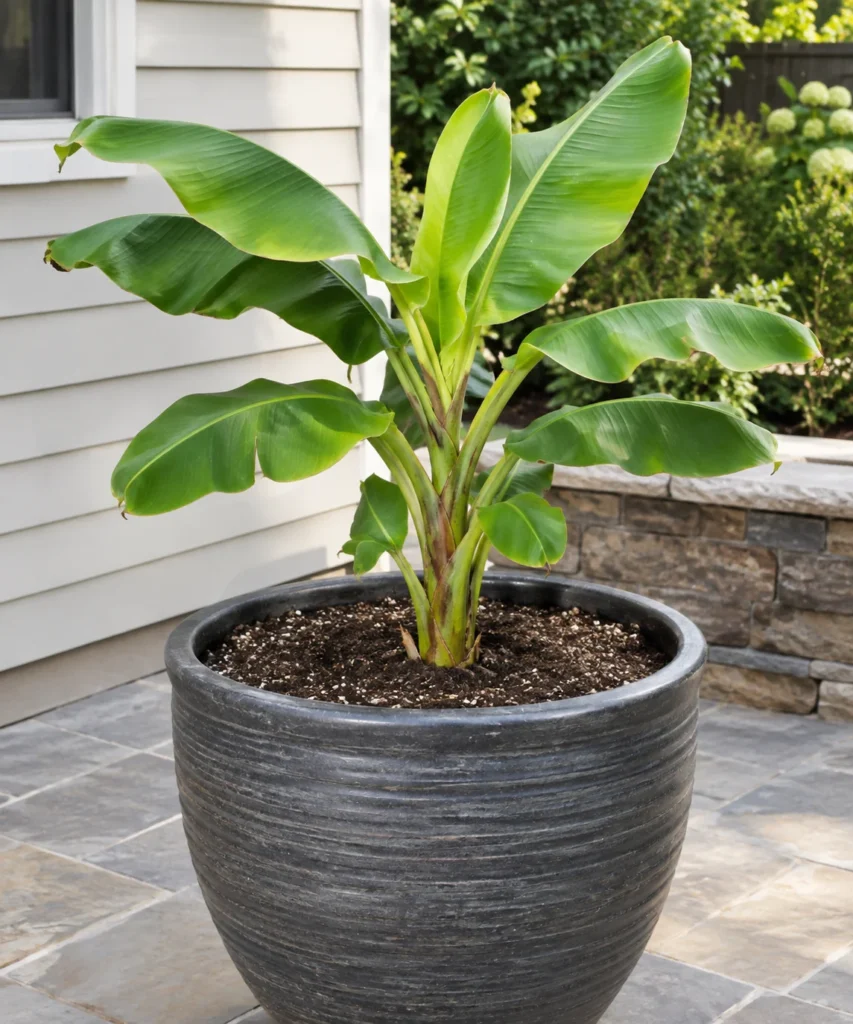
If you’re overwintering indoors, bring the plant in before nighttime temperatures dip into the 40s, not after. A sudden transition from summer heat to a cold snap can shock the plant. Once inside, expect slower growth and fewer or no new leaves until spring — that’s normal, not a sign something’s wrong, as long as the leaves aren’t yellowing or dropping rapidly.
When Does It Actually Fruit?
This is usually the first question people ask, and the honest answer is: it depends heavily on growing conditions. In warm climates with the plant in the ground and consistent care, Dwarf Cavendish can flower and fruit within 10 to 24 months of planting. In containers, especially with a winter dormancy period indoors each year, that timeline stretches out and can take considerably longer, sometimes multiple years.
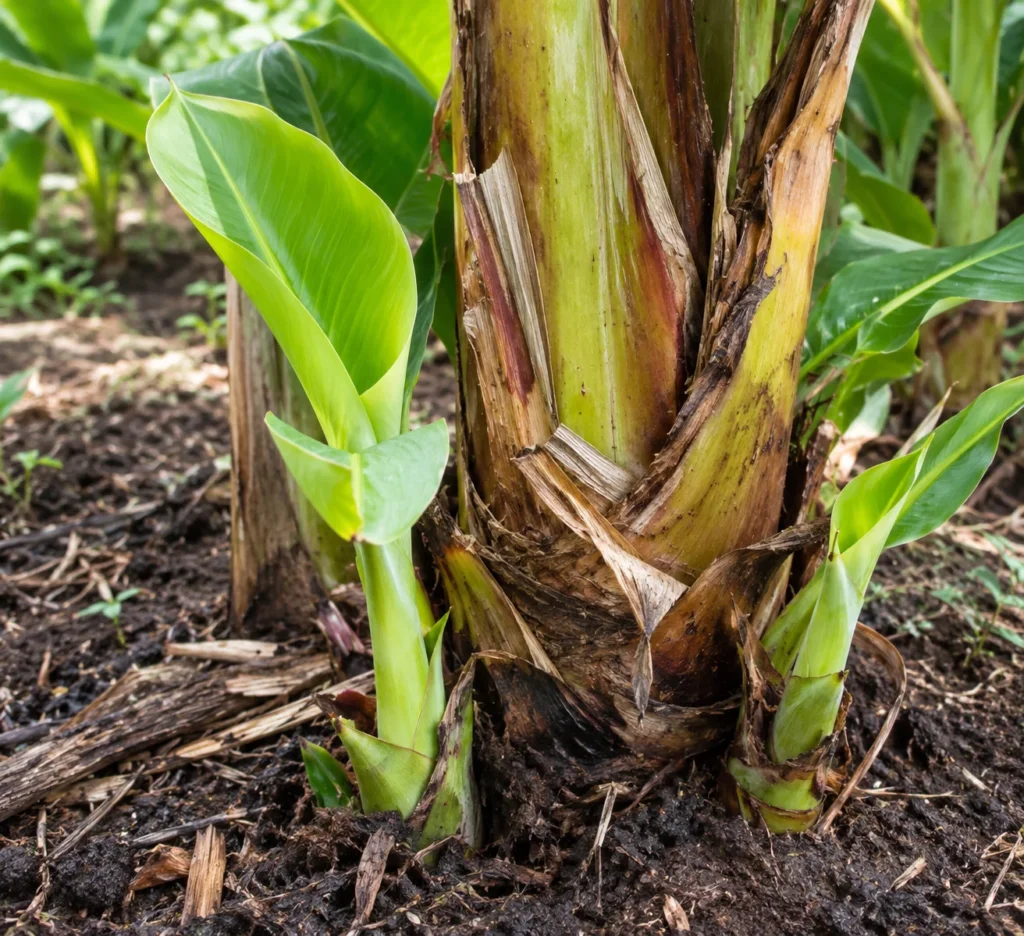
Once a pseudostem flowers and fruits, that particular stalk is done — it won’t fruit again. But the plant sends up new suckers (offshoots) from the base, and one of those becomes the next fruiting stalk. This is why pruning and managing suckers matters: leaving too many competing suckers spreads the plant’s energy thin, while selecting one strong sucker to become the next generation keeps growth focused and improves your odds of a good fruit set.
Common Problems and How to Handle Them
Pests. Aphids, nematodes, and various beetles are the most commonly reported issues. Regular inspection of new growth and the undersides of leaves catches most infestations early, when they’re easiest to manage. Biological and cultural controls — removing affected leaves, encouraging natural predators, keeping the plant otherwise healthy and unstressed — are generally preferable to reaching for chemical insecticides on a plant you intend to eat fruit from.
Fusarium wilt (Panama disease). This soil-borne fungal disease is one of the more serious threats to banana plants worldwide. And it’s part of why Dwarf Cavendish became the dominant commercial variety in the first place. It has meaningfully better resistance than many older cultivars. Still, if you notice yellowing that starts at the leaf margins and moves inward, combined with wilting despite adequate water, it’s worth getting a positive identification before assuming it’s simply underwatering.
Root rot. Almost always tied to poor drainage or overwatering rather than the plant itself being finicky. If you’re losing plants repeatedly, drainage is the first thing to check — both the soil mix and whether the container or planting site actually drains freely.
Leaf spot and Sigatoka disease. These fungal issues tend to show up in humid conditions with poor air circulation. Spacing plants adequately, watering at the base instead of overhead, and removing badly affected leaves all help manage the spread.
Common Mistakes First-Time Growers Make
Underestimating eventual size. Even the “dwarf” varieties reach 8 to 10 feet with leaves spanning several feet across. A plant that looks manageable at nursery size can outgrow a small room or a modest pot within a couple of growing seasons.
Skipping the winter plan. Buying a banana plant in spring without a clear plan for what happens when temperatures drop is one of the most common ways these plants die in non-tropical climates. Decide before you buy whether you have a bright indoor space that can accommodate a large plant through winter.
Overwatering in the name of “tropical” care. Tropical doesn’t mean waterlogged. Consistently soggy soil causes more banana plant deaths than underwatering does.
Removing all the suckers, or none of them. Leaving every sucker to grow competes for resources and can stall fruit production. Removing all of them removes your plant’s path to the next fruiting generation. The usual approach is to keep one or two strong suckers at different growth stages and remove the rest.
Expecting fruit on an unrealistic timeline. A plant grown indoors part of the year, in a container, in a non-tropical climate, may simply take longer to fruit than the marketing copy on a nursery website suggests. Patience matters more than any single care adjustment.
For a closer look at getting the watering balance right, PlazmaHomes has a dedicated banana tree watering guide that goes deeper into signs of over- and under-watering than this general care guide covers.
Frequently Asked Questions
How big does a dwarf banana tree actually get?
The standard Dwarf Cavendish reaches about 8 to 10 feet tall in the ground. The Super Dwarf Cavendish cultivar stays smaller, often under 4 to 6 feet, which makes it a better fit for containers or spaces with limited height.
Can I grow a dwarf banana tree indoors year-round?
Yes, as long as it gets very bright light, ideally a south-facing window supplemented with a grow light in winter. Indoor plants generally grow slower and may take longer to fruit than plants grown outdoors in a warm climate.
What USDA zone do dwarf banana trees need?
For reliable in-ground growth and fruiting, zones 9-11 work best, with zone 8 possible with winter protection. Outside those zones, container growing with indoor winter protection is the standard approach.
How long until a dwarf banana tree produces fruit?
In favorable in-ground conditions, 10 to 24 months is typical. Container-grown plants, especially those that go dormant indoors each winter, usually take longer.
Does a dwarf banana tree need a second plant to pollinate?
No. Dwarf Cavendish is self-pollinating, so a single plant can produce fruit on its own.
Why are my banana plant’s leaves turning yellow?
This can stem from several causes: overwatering and poor drainage, nutrient deficiency from infrequent feeding, cold stress, or in more serious cases, Fusarium wilt. Check watering and drainage first, since that’s the most common cause, before assuming disease.
Can I eat the bananas from a dwarf banana tree?
Yes, Dwarf Cavendish produces the same fruit sold in grocery stores — full-sized, sweet bananas with green skin that turns yellow as it ripens.
What happens if my banana plant gets hit by frost?
Light frost may damage or kill the above-ground leaves and pseudostem, but the underground rhizome can often survive brief dips to around 25°F and resprout in spring. Sustained hard freezes, however, will usually kill the plant entirely, so consistent winter protection matters in marginal zones.
Sources & References
- USDA, Plant Hardiness Zone Map
- Epic Gardening, cultivar and care information for Dwarf Cavendish banana trees
[…] but it isn’t naturally compact. If you’re building a patio of warm-climate plants, our dwarf banana tree growing and care guide covers another subtropical plant that handles container life […]