

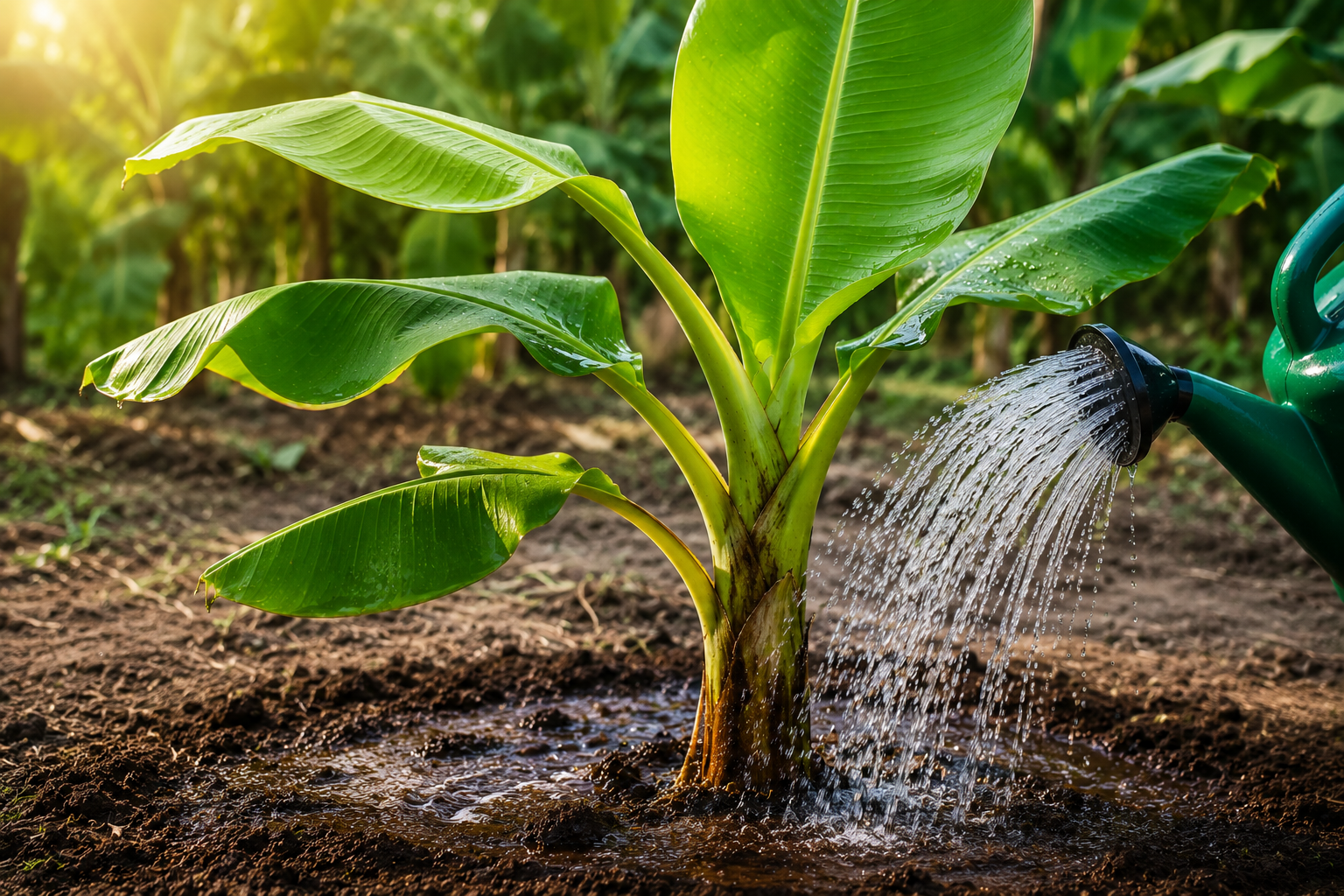
Bananas look tropical and dramatic. But they are surprisingly forgiving once you understand their watering needs. Still, watering mistakes remain the number one reason home-grown banana plants struggle. Too little water stunts growth. Too much water rots the roots. So how do you find the right balance?
In this guide, we will cover exactly how often to water banana plants. We’ll also look at how that schedule shifts by season and soil type. Plus, we’ll show how US growers in places like Florida, Texas, California, and Hawaii can adjust their approach for local climate. We will cover container-grown bananas too, since more homeowners now grow them on patios and in greenhouses across cooler states. By the end, you’ll have a clear, practical watering routine you can start using today.
How Often Should You Water a Banana Plant?
As a general rule, water your banana plant once or twice a week during the growing season. Increase that frequency during hot summer months. Aim for two or three times a week, especially if your plant sits in full sun. Cut back significantly during cooler months. Growth slows down then, and water needs drop along with it.
Skip the rigid calendar. Check the soil first instead. Push your finger about two inches into the soil near the base of the plant. If it feels dry at that depth, water it. If it still feels moist, wait a day or two and check again. This simple habit prevents both underwatering and overwatering. It works whether your plant lives in the ground or in a container.
Deep watering matters more than frequent light watering. Banana plants have shallow but wide-spreading roots. A slow, thorough soak encourages healthier root development than a quick daily sprinkle. Let your hose trickle slowly at the base for several minutes. Or use a soaker hose so the water has time to reach the root zone.
Why Bananas Need Consistent Moisture
Banana plants are heavy feeders and heavy drinkers. Their massive leaves are the reason why. Those broad leaves lose water quickly through evaporation, especially on hot, windy days. Agricultural researchers commonly note that banana plants need dozens of inches of water each month during active growth. This holds true particularly in tropical and subtropical climates.
Consistency matters more than sheer volume, though. Picture a banana plant cycling between bone-dry soil and a sudden flood of water. That plant will struggle more than one that gets steady, moderate moisture. Drought stress during early growth can reduce leaf development. That shortfall can carry through to smaller bunches and fewer hands of fruit later on. Water stress during fruit development affects fruit size and quality too. So consistency during the fruiting stage matters most if you want a solid harvest.
Signs You Are Overwatering or Underwatering
Learning to read your plant’s signals beats any fixed schedule. Your banana plant will tell you what it needs, if you know what to look for.
Overwatering typically shows up as yellowing leaves that feel limp rather than crisp. You might also notice slowed growth or a mushy feeling at the base of the stem. A sour smell in the soil usually signals root rot too. If you spot these signs, ease off watering right away. Check that your pot or planting site drains properly. Standing water around the roots kills banana plants fast. Drainage deserves just as much attention as watering frequency.
Underwatering looks different. Leaves may curl inward or develop dry, brown edges. The plant might droop noticeably during the hottest part of the day. It may perk back up once temperatures cool, though. If you notice this pattern repeating, increase your watering frequency. Check whether your soil drains too quickly to hold moisture as well.
Adjusting Your Watering Schedule by Soil Type
Soil composition changes everything about watering frequency. So it helps to know exactly what you’re working with.
Sandy soil drains quickly and dries out fast. Plants in sandy soil typically need watering every two to three days during warm weather. Loamy soil holds moisture more evenly. A schedule of every four to five days is often enough there. Clay soil retains the most water and drains the slowest. Overwatering becomes the bigger risk with clay, so water less often and watch closely for waterlogging.
Not sure what type of soil you have? A simple squeeze test can help. Grab a handful of moist soil and squeeze it. Sandy soil falls apart immediately. Loamy soil holds its shape briefly, then crumbles. Clay soil stays balled up and feels sticky. Once you know your soil type, you can fine-tune your routine instead of guessing.
Watering Banana Plants Across Different US Climates
Bananas grow recreationally in a wide range of American climates. Your ideal watering routine depends heavily on where you live.
In Florida, especially the humid, subtropical central and southern regions, bananas thrive on regular rainfall. Add occasional deep watering during dry spells too. Still watch drainage carefully there. Sudden heavy rains combined with extra watering can quickly waterlog the roots.
In Texas and other hot, dry states, banana plants need more frequent watering. This matters most during summer. High heat and low humidity pull moisture from the soil fast. Mulching heavily around the base helps retain moisture. It also cuts down how often you need to water.
In California, coastal areas with mild temperatures often need less frequent watering than the humid Southeast. Growers inland or near the desert should treat their bananas more like Texas growers do. Pay closer attention to summer heat in those spots.
In Hawaii, bananas grow natively and commercially. Rainfall often covers most of the plant’s needs there. Drier leeward regions still benefit from supplemental irrigation during dry seasons, though.
Cooler states like Ohio, Illinois, or the Pacific Northwest favor container gardening instead. Indoor or greenhouse-grown bananas need more attentive watering. Pots dry out faster than ground soil does. They also need better drainage monitoring, since indoor conditions trap excess moisture longer than an outdoor bed would.
Container-Grown Bananas: A Slightly Different Approach
Container-grown banana plants dry out faster than those planted directly in the ground. They typically need more frequent watering, sometimes every few days rather than weekly. Check the top inch or two of soil regularly. Water once it feels dry to the touch.
Make sure your container has drainage holes. A pot without proper drainage traps water at the bottom. That creates the same root rot risk you’d see in poorly drained garden soil. A layer of gravel or perlite at the bottom of the pot helps excess water drain more efficiently.
Bringing your banana plant indoors for winter? Reduce watering significantly. Indoor light and warmth rarely match outdoor summer conditions. The plant’s growth slows, and its water needs drop along with it.
Actionable Watering Tips for 2026
Start by installing a simple soil moisture meter if you want to remove the guesswork. These inexpensive tools give you a quick, accurate reading. They work better than relying purely on the finger test, especially for beginners still learning their plant’s rhythm.
Consider switching to drip irrigation or a soaker hose too. This works well if you’re growing bananas outdoors in a warm climate. These systems deliver water slowly and directly to the root zone. That reduces waste and helps prevent the surface evaporation that wastes water in traditional sprinkler setups.
Mulch heavily around the base of your plant, no matter your climate. A two-to-three-inch layer of mulch helps the soil retain moisture. It also moderates soil temperature and reduces how often you need to water overall.
Finally, adjust your schedule by season. Don’t stick to one routine year-round. Growth slows in cooler months, so your watering frequency should slow down too. Want to go deeper into banana plant care? Check out our full guide on growing banana plants at home. It covers fertilizing and pruning, which pair naturally with a solid watering routine.
For additional research-backed guidance, the University of Florida’s IFAS Extension publishes detailed banana growing information. It’s useful for both home gardeners and small-scale growers. You can read their full publication at edis.ifas.ufl.edu.
Frequently Asked Questions
How often should I water a banana plant in summer? Water two to three times a week during hot summer months. Always check the soil first. If the top two inches feel dry, water it again.
How often should I water a banana plant in winter? Cut back significantly in winter. Growth slows, so the plant needs far less moisture. Once every week or two is often enough, depending on your climate and whether the plant lives indoors or outside.
Can you overwater a banana plant? Yes, and overwatering is actually more common than underwatering. Watch for yellowing, limp leaves, a mushy stem base, or a sour smell in the soil. These all signal root rot from excess moisture.
Do banana plants need full sun and lots of water together? Yes. Banana plants generally need six to eight hours of direct sunlight daily. That sun exposure increases their water needs, especially during hot weather. Just make sure the soil drains well, so the extra water doesn’t pool around the roots.
How do I know if my soil drains well enough for a banana plant? Dig a small hole and fill it with water. Watch how quickly it drains. If water disappears within a few hours, your drainage is solid. If it sits for a full day or longer, amend your soil or switch to a raised bed or container instead.
Is drip irrigation better than hand watering for banana plants? Drip irrigation and soaker hoses generally outperform hand watering. They deliver water slowly and consistently to the root zone. This reduces surface evaporation and helps you maintain the steady moisture level banana plants prefer.
Do container banana plants need more water than ones in the ground? Yes, container plants dry out faster since there’s less soil volume to hold moisture. Check the soil every few days rather than waiting a full week between waterings.
What’s the biggest watering mistake new banana growers make? Most new growers water on a fixed schedule without checking the soil. Others panic-water whenever leaves look stressed, without figuring out whether the stress comes from too much or too little water. Checking the soil directly, rather than guessing from the leaves alone, prevents both mistakes.
Final Thoughts
Watering a banana plant well comes down to observation, not a rigid formula. Check your soil. Watch your plant’s leaves. Adjust your routine as the seasons change and your climate shifts. Maybe you’re growing bananas in humid Florida, dry Texas heat, or mild California coastlines. Or maybe it’s a container on a porch in a cooler state. Either way, the same core principle applies: consistent moisture, good drainage, and a watering routine that responds to what your plant is actually telling you. Get that balance right, and you’ll set your banana plant up for strong, healthy growth all year long.