

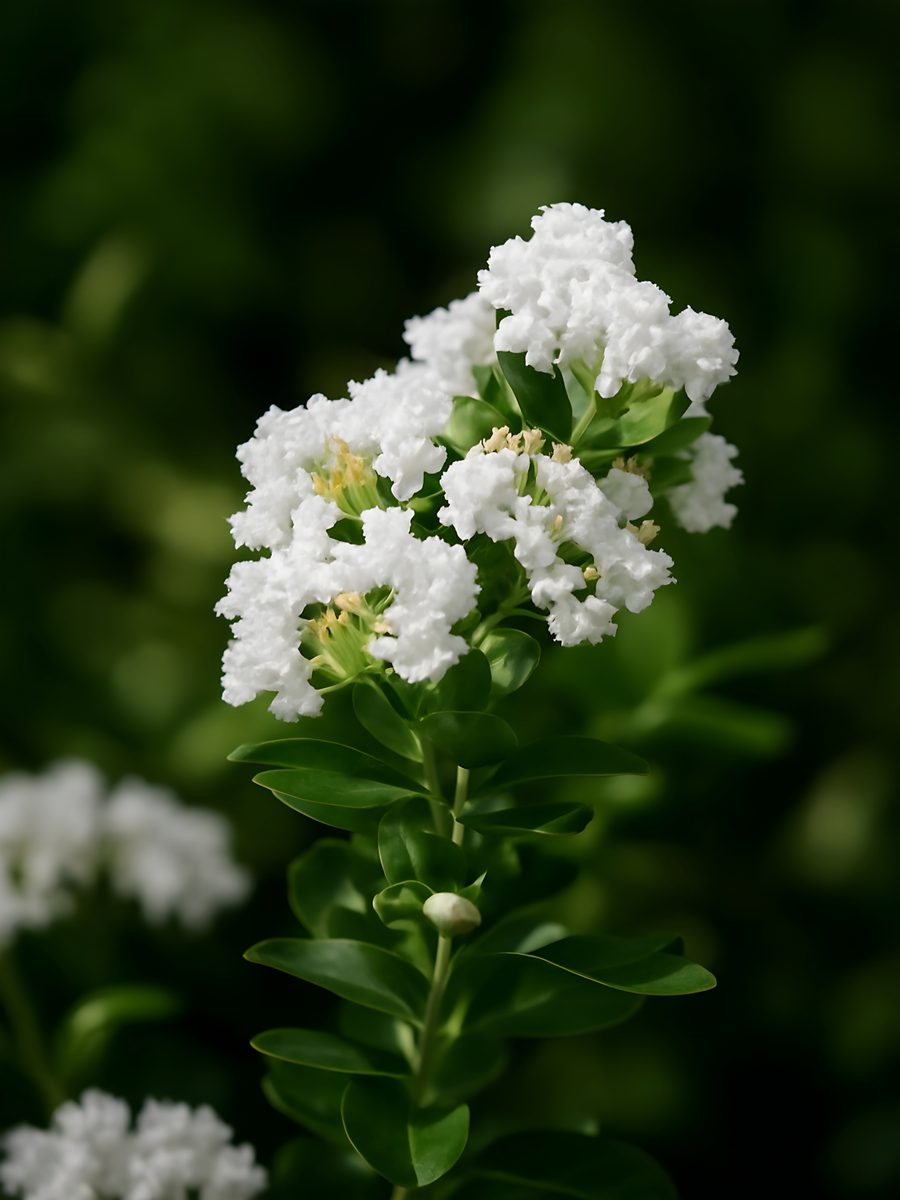
Drive through almost any Southern neighborhood in July, and you’ll spot it. A tree covered in huge, drooping clusters of pure white flowers, with smooth, cinnamon-colored bark peeking through wherever the old layer has peeled away. That’s almost certainly a Natchez crape myrtle, and it’s one of the most planted flowering trees in the country for good reason.
This guide covers everything you need to grow one successfully in 2026: planting, watering, fertilizing, pruning the right way, and avoiding the disease and pest issues that occasionally show up even on a variety this tough. I’ve pulled the care details from current university extension research and commercial grower data, so the advice reflects what’s actually working in yards across the US right now.
What Makes Natchez Different From Other Crape Myrtles
Natchez is a hybrid between Lagerstroemia indica and Lagerstroemia fauriei, developed at the U.S. National Arboretum decades ago. That fauriei parentage matters more than most gardeners realize. It’s the reason Natchez shows strong resistance to powdery mildew, the fungal disease that disfigures leaves and reduces blooms on many older crape myrtle varieties. It’s also the reason Natchez tends to shrug off aphids and scale insects better than most cultivars, especially when planted in full sun.
Beyond disease resistance, Natchez simply grows bigger and blooms longer than most white-flowering crape myrtles. Flower clusters can stretch up to 18 inches, the longest of any white cultivar, and a mature tree stays in bloom for 60 to 90 days straight, sometimes longer in the Deep South. Add in the exfoliating cinnamon-brown bark that reveals a smooth, mottled trunk underneath, and you get a tree with real appeal in every season. Spring brings fresh bronzy-red foliage. Summer brings the flowers. Fall turns the leaves orange and red. Winter shows off the bark. Few trees offer that kind of year-round performance.
Where Natchez Grows Best
Natchez thrives across USDA hardiness zones 7 through 9, and many growers report success in zone 6 with some winter dieback that resprouts each spring. That range covers most of the American South, from Texas and Oklahoma through the Gulf Coast states, up into the Carolinas, Virginia, and Tennessee. It also performs well in warmer pockets of California and the Pacific Northwest.
Full sun is non-negotiable if you want maximum blooms. Give it at least six hours of direct sunlight daily. Partial shade won’t kill the tree, but it will noticeably reduce flowering and can make it more prone to powdery mildew, since damp, shaded conditions favor fungal growth. Good air circulation around the canopy matters just as much as sunlight, so avoid planting Natchez too close to fences, walls, or other trees.
Soil matters too, though Natchez tolerates more variation than people expect. It handles sandy, loamy, and clay soils reasonably well, as long as drainage is decent. Slightly acidic to neutral soil, somewhere around pH 5.5 to 7, produces the best growth. In alkaline soil, watch for chlorosis, a yellowing of the leaves that signals the tree isn’t absorbing iron properly.
Planting Your Natchez Crape Myrtle the Right Way
Timing shapes success more than people assume. Plant in spring after the last frost, or in early fall between September and October if you’re in zones 7 through 9. Fall planting actually gives roots a head start, since they can establish through the cooler months before the following summer’s heat arrives. Avoid planting during the hottest part of summer, particularly when temperatures climb above 85 degrees, since transplant stress hits much harder in extreme heat.
Dig your planting hole about two to three inches shallower than the root ball, and twice as wide. That extra width matters, since it gives roots room to spread into loosened soil rather than fighting their way through compacted native ground. Position the tree so the top of the root ball sits slightly above the surrounding soil line. This small step prevents water from pooling around the trunk and causing rot, which is one of the more common mistakes first-time planters make.
If you’re planting more than one, space them 8 to 12 feet apart. That spacing accounts for the tree’s mature spread, typically 15 to 25 feet depending on growing conditions, and keeps airflow strong enough to discourage fungal issues down the road.
Watering and Fertilizing Through the Seasons
During the first growing season, water deeply once or twice a week rather than giving frequent shallow sprinklers. Deep watering encourages roots to grow downward in search of moisture, which builds a stronger, more drought-tolerant tree over time. Once established, typically after one to two years, Natchez becomes genuinely drought-tolerant and needs supplemental water only during extended dry spells.
Fertilizer requires a lighter touch than most gardeners expect. Apply a slow-release, balanced fertilizer in early spring, something close to a 10-10-10 formula works well. However, resist the urge to over-fertilize. Too much nitrogen pushes the tree toward leafy growth at the expense of flowers, and it also makes new growth more attractive to aphids. If your Natchez already grows vigorously each year, which most established specimens do, you may not need to fertilize at all beyond a yearly layer of compost or mulch.
Speaking of mulch, a two-to-three-inch layer around the base helps retain soil moisture, moderates soil temperature, and suppresses competing weeds. Keep it a few inches away from the trunk itself, since mulch piled directly against bark invites rot and pest problems.
Pruning: How to Avoid “Crape Murder”
This is where most Natchez owners go wrong, and it’s worth spending real time on. Gardeners across the South have developed a habit of chopping crape myrtles back hard every winter, cutting the main trunks down to stubs. Extension horticulturists have a name for this practice, and it isn’t flattering: crape murder. Clemson Cooperative Extension notes that topping is unnecessary for most crape myrtles and leads to weak, whippy regrowth and a less attractive tree overall, not a healthier one.
So what should you actually do? Late winter, before new growth emerges, is the right time to prune. Start by removing anything dead, damaged, or diseased, which you can technically do at any time of year without harming the tree. Beyond that, focus on structure rather than size reduction. Select three to five of the strongest trunks at ground level and remove the rest as suckers appear. As those main trunks mature, remove lower lateral branches gradually to develop a clean, tree-like form, a process sometimes called limbing up.
Look for branches that cross or rub against each other, along with any shoots growing inward toward the center of the canopy, and remove those too. This opens the canopy to better airflow and sunlight, which in turn reduces disease pressure. Make your cuts back to a side branch or close to the trunk rather than leaving stubs, since stubs invite decay.
If a Natchez has genuinely outgrown its space, the better long-term fix is choosing a different-sized cultivar for next time, or selectively removing whole trunks over a few seasons rather than topping everything at once. A properly pruned, unpruned-looking Natchez, one that’s never been topped, develops a naturally graceful, vase-like shape that no amount of aggressive cutting can replicate.
Common Pests and Diseases
Natchez earns its reputation as low-maintenance, but that doesn’t mean problem-free. Powdery mildew remains the most likely issue, particularly in shaded, crowded, or poorly ventilated spots. You’ll recognize it as a white, dusty coating on leaves and flower buds. Because Natchez carries strong genetic resistance, outbreaks tend to be milder than on older cultivars, and improving airflow around the tree often solves the problem without any spray treatment at all.
Aphids show up occasionally on tender new spring growth, and their sticky honeydew residue can lead to black sooty mold on leaves below. A strong blast from a garden hose knocks most aphid populations down without any chemical intervention, and avoiding excess nitrogen fertilizer helps prevent the tender, aphid-attracting growth in the first place. Japanese beetles occasionally skeletonize leaves in midsummer; hand-picking them off in the early morning, when they’re sluggish from the cool night air, works well on light infestations.
The pest worth watching more closely is crapemyrtle bark scale, an invasive insect that’s spread through parts of the Southeast and Southwest over recent years. It shows up as a white or gray, felt-like crust on stems and trunks, often accompanied by black sooty mold. If you spot this on your tree, don’t panic, but do act. Light infestations often respond to a soft brush and soapy water scrub of the bark, combined with dormant-season horticultural oil treatments. Severe infestations may call for a systemic insecticide applied by a professional, or in extreme cases, removal of the affected tree to prevent spread to neighboring plantings.
Seasonal Care Calendar for US Gardeners
Spring is planting and fertilizing season. It’s also when you’ll do your structural pruning, ideally before new leaves fully emerge. Watch for aphids on the fresh growth that follows.
Summer is bloom season, and honestly, the lowest-maintenance stretch of the year. Deep, infrequent watering during dry spells is about all a Natchez needs once established. Deadheading spent flower clusters isn’t required, but it can encourage a modest second flush of blooms later in the season if you’re up for the extra work.
Fall brings the color show, as leaves shift to orange and red before dropping. This is also an excellent secondary planting window in zones 7 through 9, since roots get time to establish before summer heat returns.
Winter is when the bark takes center stage, and it’s your pruning window for structural work. In cooler parts of the hardiness range, some dieback on young trees is normal and nothing to worry about; established Natchez trees resprout vigorously from the base each spring.
For region-specific guidance, especially around disease pressure and pruning timing for your local climate, Clemson Cooperative Extension’s crape myrtle resources are a genuinely excellent, research-based reference worth bookmarking.
Pairing Natchez With the Rest of Your Landscape
Because Natchez eventually reaches 20 to 30 feet tall with a wide canopy, it works best as a specimen tree or shade tree rather than tucked into a tight foundation bed. Many homeowners plant it near a patio or along a driveway, where the summer bloom and winter bark can both be appreciated up close. If you’re planning a broader landscape refresh, it’s worth reviewing our full guide to choosing flowering trees for your yard, since Natchez pairs particularly well with evergreen shrubs that provide a dark backdrop for those bright white summer blooms.
Frequently Asked Questions
How fast does a Natchez crape myrtle grow?
Natchez grows quickly, typically adding three to five feet of height per year once established. Most trees reach their full mature size of 20 to 30 feet within a decade.
What is the biggest mistake people make with Natchez crape myrtle pruning?
Topping, often called “crape murder,” is the most common mistake. Cutting main trunks down to stubs each winter creates weak regrowth and an unattractive shape instead of the healthier, fuller tree that light structural pruning produces.
Does Natchez crape myrtle need full sun?
Yes, for the best results. Natchez needs at least six hours of direct sunlight daily to produce its signature heavy bloom. Partial shade reduces flowering and increases the risk of powdery mildew.
How do I know if my crape myrtle has bark scale versus a harmless lichen?
Bark scale appears as a white or gray, felt-like crust that often comes with sticky black sooty mold nearby. Lichens, by contrast, look flat, crusty, and grayish-green, and they don’t damage the tree at all.
When should I fertilize my Natchez crape myrtle?
Early spring is the right time, using a balanced, slow-release fertilizer. Avoid heavy nitrogen applications, since they push leafy growth at the expense of blooms and attract aphids.
Can Natchez crape myrtle survive winter in colder zones?
It generally handles zones 7 through 9 well, and many gardeners in zone 6 grow it successfully too, though some winter dieback is common there. The tree usually resprouts vigorously from its base once warmer weather returns.
How far apart should I plant multiple Natchez crape myrtles?
Space them 8 to 12 feet apart to accommodate their mature spread and to keep airflow strong enough to discourage fungal disease.
Final Thoughts
Natchez crape myrtle earns its popularity honestly. It blooms longer than almost any comparable tree, shrugs off the diseases that plague other cultivars, and rewards a little patience with a genuinely graceful shape. The care itself isn’t complicated: give it sun, water deeply while it’s young, skip the heavy fertilizer, and resist the temptation to top it every winter. Do those few things consistently, and you’ll end up with a tree that puts on a show in every season, for decades to come.