

A home reverse osmosis (RO) system is worth buying if your tap water contains dissolved contaminants that a basic carbon filter can’t remove, such as lead, arsenic, nitrate, high total dissolved solids (TDS) or certain PFAS. It can also be worth it if you simply dislike how your water tastes. It’s not a good choice if your water is already clean and you only want better flavor. In that case a carbon filter does the job for less money and without wasting water.
Most U.S. households that go this route choose an under-sink system, usually with its own dedicated faucet. You pay for the purchase, installation, replacement filters and the water that goes down the drain. This article walks through each of these parts so you can decide whether the trade-offs make sense for your home.
How a home RO system actually works
Reverse osmosis forces water under pressure through a membrane that lets water molecules pass but blocks most dissolved salts, metals and larger molecules. The blocked material is flushed down the drain as wastewater. The membrane is the heart of the system, but it never works alone.
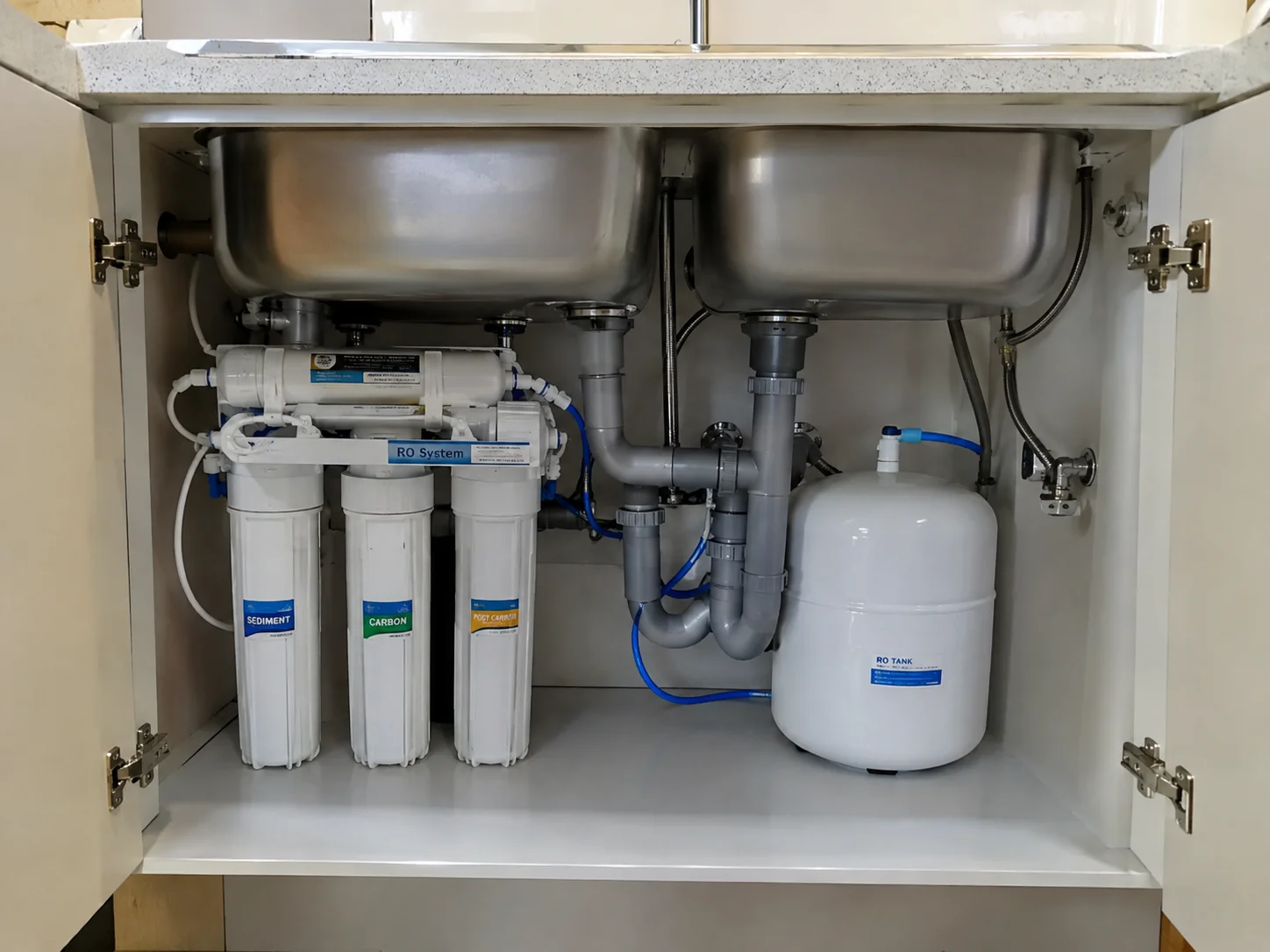
A typical under-sink unit has three jobs:
- Pre-filtration. A sediment filter and usually one or two carbon filters protect the membrane from sand, dirt and chlorine, which can damage it.
- The membrane itself. This stage removes most dissolved impurities.
- Post-filtration. A final carbon filter polishes the taste. Some units also add minerals back.
Treated water is stored in a small pressurized tank, usually a few gallons, and delivered through the dedicated faucet. Tankless designs skip the tank and use a booster pump to make treated water on demand. They are more compact and often waste less water, but they cost more and need an electrical outlet.
What an RO system removes, and what it doesn’t
The industry standard NSF/ANSI 58 covers point-of-use RO systems. Its baseline requirement is at least 75 percent TDS reduction when tested at 750 mg/L. Real-world TDS removal often runs 90 percent or better, depending on the membrane and your water. That is a baseline, not a guarantee of removing any particular contaminant.
Here is how RO generally performs:
| Contaminant type | RO performance | Notes |
|---|---|---|
| Dissolved salts, TDS | Strong | The main thing RO is built for |
| Lead, arsenic, chromium, other metals | Strong, if certified | Check that your specific model lists these claims |
| Fluoride, nitrate | Strong | Useful where levels run high |
| PFAS | Often strong, model-specific | Look for a certification claim naming PFAS |
| Chlorine, taste, odor | Handled by the carbon stages | The membrane isn’t the part doing this |
| Bacteria and viruses | Not a safe assumption | RO units aren’t meant for water that’s microbiologically unsafe |
| Dissolved gases (radon, hydrogen sulfide) | Poor | Needs different treatment |
Certification claims are specific to each model. NSF/ANSI 58 requires TDS reduction, while claims for other contaminants vary from model to model. A box that says “removes 99% of contaminants” without naming them, or without a listing you can look up, tells you very little. Always check the certification details for the exact model you’re considering. You can look up any model in the NSF certified drinking water treatment unit database before you buy.
A note on PFAS and current rules
Interest in RO has grown because of PFAS. As of mid-2026, the EPA has proposed allowing water systems to request two extra years, until April 2031, to meet the limits for PFOA and PFOS. The 4.0 parts-per-trillion limits themselves would not change. The agency also proposed removing parts of the rule that cover four other PFAS chemicals. These are proposals, and the final rules could differ. If the details matter for your decision, check the EPA’s website.
The practical takeaway is that utilities have a long runway to comply, so waiting for your city to fix the issue could take a while. If your utility’s test results show PFAS, a point-of-use system is a sensible interim step.
The case for an RO system
It handles many dissolved pollutants in one system. Carbon pitchers and faucet filters take care of chlorine and certain metals. Reverse osmosis removes a much wider range of dissolved materials, which is why it’s common in homes with well water, old pipes or farm runoff concerns.
Taste and clarity improve noticeably. If your tap water tastes salty, mineral-heavy or like a swimming pool, RO water usually tastes clean and neutral. Coffee shops often use RO for the same reason, though they usually add minerals back for flavor.
Ice and cooking benefit too. You can run a line to the refrigerator for clearer ice with fewer off flavors. Soups, rice and coffee made with RO water also taste consistent from batch to batch.
The drawbacks
Wastewater. Traditional RO systems send several gallons down the drain for every gallon of treated water they produce. The exact amount depends on water pressure, membrane condition and TDS. Pump-assisted and “efficiency” designs waste less, but manufacturer claims aren’t always backed by certification. An EPA WaterSense presentation on RO noted that advertised efficiency figures were not supported by NSF/ANSI 58 certification data. If water efficiency matters to you, look for a certified recovery rate rather than a marketing line. If you’re weighing other fixtures with plumbing and water-use trade-offs, see our guide to tankless toilets.
Water pressure sensitivity. RO membranes work best with good household pressure, and many manufacturers specify a minimum of about 40 psi. With low pressure, production slows, waste rises and the tank refills slowly. Homes on a well, or at the end of a municipal line, should check their pressure first. A booster pump can fix this at extra cost.
Mineral removal. RO removes beneficial minerals such as calcium and magnesium along with the unwanted ones. For most people this isn’t a health concern, because drinking water supplies only a small share of the minerals you get from food. Some people find the water tastes flat, which is why remineralization stages exist. If your tap water is a fluoride source you want to keep, note that RO removes most fluoride too.
Delivery and storage limits. A tank-based system delivers a good flow until the tank runs low. Filling a stockpot takes longer than at a regular tap, and a large dinner party can drain a small tank.
Plumbing. You need cabinet space, a spot for the faucet (drilled into the sink or countertop) and a drain connection. That last requirement can be a problem for renters.
What it costs
RO pricing varies widely between basic multi-stage units, tankless pump models and heavily certified systems, and it shifts with promotions and tariffs, so this article doesn’t quote specific prices. Instead, here are the cost components to compare:
- Purchase price. Budget under-sink units sit at the low end, while tankless, high-efficiency or heavily certified systems cost much more. Check current prices at major retailers and manufacturers.
- Installation. Many handy homeowners can install an under-sink unit in a few hours with basic tools. Hiring a plumber adds labor costs, which vary by area. Drilling a faucet hole in granite or quartz is the step most people prefer to hand off.
- Filters and membrane. This is the ongoing cost people miss. Pre-filters are usually replaced about once a year and the membrane every few years, though your water quality changes the schedule. Add up the cost from the manufacturer’s replacement list before you buy, because some inexpensive units use proprietary filters that cost a lot over time.
- Water and power. Wastewater adds to your water and sewer bill, and pump-assisted systems use a small amount of electricity.
A useful comparison is cost per gallon over five years, including filters. Divide your five-year spend by the gallons your household actually drinks and cooks with. For most families this lands well below bottled water, but the exact figure depends on local water rates and filter prices.
Is it worth it? A quick decision framework
You probably should buy one if:
- Your water test or utility report shows lead, arsenic, nitrate, elevated fluoride or PFAS above levels you’re comfortable with.
- You’re on a well with high dissolved solids and have confirmed the water is microbiologically safe.
- You live in an area with hard or salty water and want better-tasting drinking water.
You probably shouldn’t if:
- Your main complaint is chlorine taste. A certified carbon filter costs less and doesn’t waste water.
- You can’t modify your plumbing. A countertop RO unit is an alternative.
- Your water pressure is low and you don’t want to add a pump.
- Your water has a microbiological problem. Fix that with proper disinfection first.
Test before you shop. If you’re on city water, your utility must publish an annual water quality report, also called the Consumer Confidence Report. It’s free and shows what’s in the supply at the treatment plant, but not what’s added by the pipes in your home. Lead often comes from household plumbing, so a home test is more useful. Well owners need lab testing because no utility monitors private wells. Choose the system that fits your results, not the one with the most stages. If you’re buying an older home, our house inspection checklist covers the plumbing checks worth doing before you decide what treatment you need.
How to choose
Start with certification. Look up the model in the NSF database and make sure the contaminants you care about are actually listed. A product that says it “meets NSF standards” may only have certified individual components, not the complete unit.
Pick the type that fits your home.
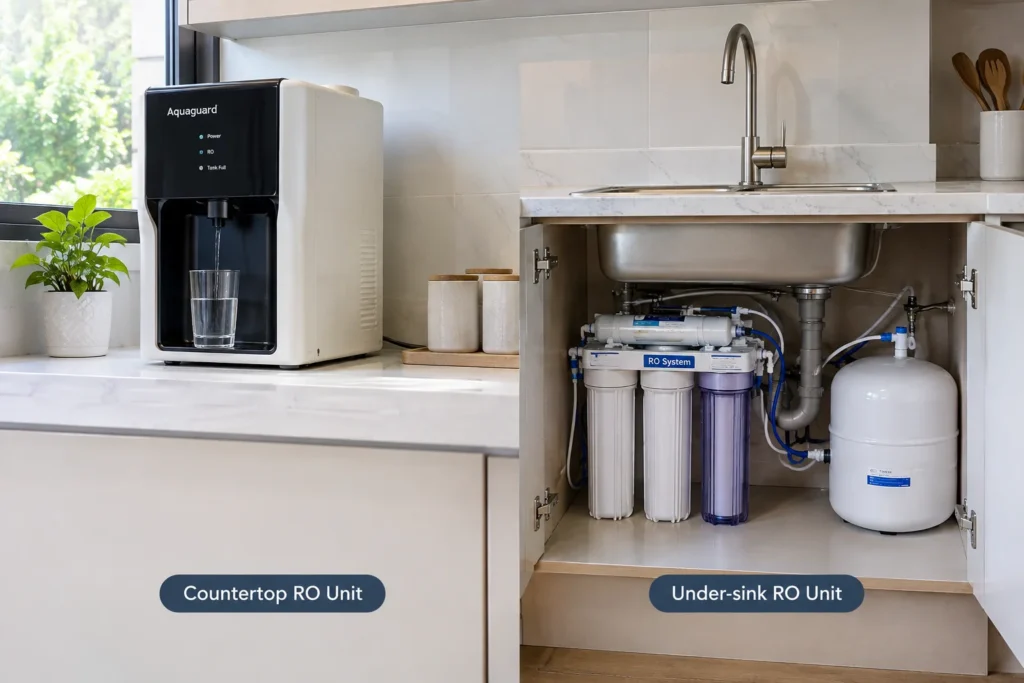
- Under-sink with tank: The most common choice and usually the lowest upfront cost. You’ll need cabinet space for the tank.
- Tankless: Delivers faster flow and saves space, but costs more and needs electricity.
- Countertop: Easiest for renters because there’s no plumbing work. It takes up counter space and usually has a lower capacity.
Check the filter supply. Before buying, make sure replacement filters are sold by independent retailers, not just on the manufacturer’s website. Compare prices across stores to get a realistic picture of ongoing costs.
Think about pretreatment. If your water is hard or contains iron or manganese, adding a water softener or a sediment and iron filter ahead of the RO system can protect the membrane and extend its life. Chlorinated municipal water is usually fine with the built-in carbon filters. Chloramine, which many cities use, can damage membranes more easily, so check that the system’s carbon block is rated to handle it.
Look at the warranty and support. A membrane that fails early is a real headache. A solid warranty and customer service that’s easy to reach matter more than one extra filtration stage.
Regional considerations
Hard-water areas, such as much of the Southwest and Midwest, can shorten membrane life without pretreatment. In parts of the Northeast and Midwest, older homes may have lead service lines or lead solder, making lead reduction a concern. Farming states often find nitrates in well water. Coastal regions and some southern areas with high sodium or salty water should watch their TDS readings. Wherever you live, your own test results matter more than regional trends.
Common mistakes
- Buying without testing the water. You can pay for capacity you don’t need or miss a contaminant RO won’t handle.
- Trusting a stage count. Seven stages with no certification can be worse than three stages with an NSF listing.
- Ignoring pressure. Even a great unit performs badly on low pressure.
- Skipping filter changes. A spent carbon pre-filter lets chlorine reach the membrane and shortens its life.
- Forgetting to sanitize at installation or after long gaps. Follow the manufacturer’s flush and sanitization instructions.
- Assuming RO makes unsafe water safe. It’s a drinking-water treatment device, not a disinfection system.
Maintenance basics
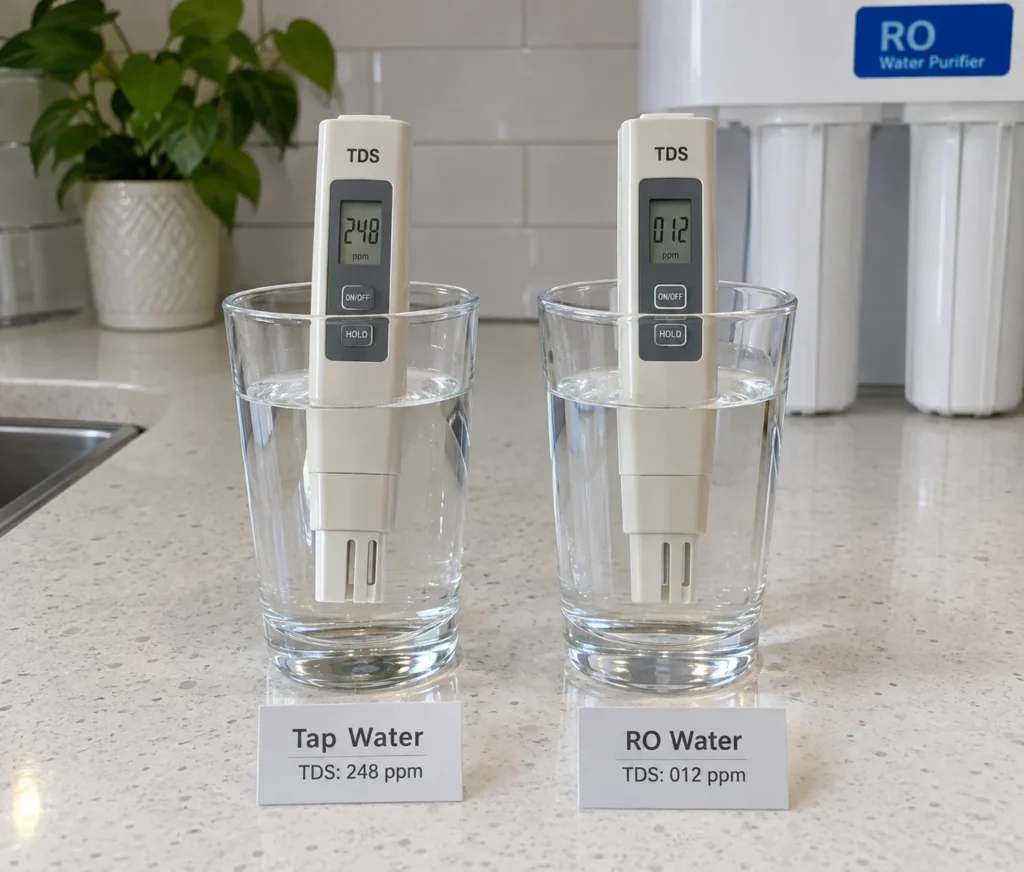
Replace pre-filters on a regular schedule, usually about once a year, replace the membrane every few years and change any post-filter according to the manufacturer’s schedule. Mark the dates on a calendar or set a phone reminder, because the system keeps running with worn-out filters and gives no warning. An inexpensive handheld TDS meter lets you compare tap water with RO water and spot a failing membrane. A sudden jump in the output reading suggests the membrane needs replacing. Keep in mind that a TDS meter measures dissolved solids only, so it cannot confirm that lead or PFAS are being removed.
FAQ
Is reverse osmosis water safe to drink long-term?
Yes, for most people. RO water is low in minerals, but you get most of your minerals from food. If your tap water is your source of fluoride and you want to keep it, talk to your dentist.
How much water does an RO system waste?
It varies a lot with the design and conditions. Traditional systems tend to waste several gallons per gallon produced, while efficient models, especially pump-assisted ones, waste less. Look for a certified recovery rate instead of trusting marketing claims.
Does RO remove PFAS?
Many certified RO systems are tested for PFAS, but not all of them are. Verify that the model’s listing names PFAS explicitly.
Can I install one myself?
Often, yes. Most under-sink kits are designed for DIY installation. The hard parts are drilling a faucet hole in stone and connecting the drain neatly. If you don’t feel confident, a plumber can usually handle it in a single visit.
How often do I replace the filters and membrane?
Pre-filters are typically swapped about once a year, depending on how much water you use and its quality. Membranes usually last about two to five years, again depending on your water and usage. Always follow the manufacturer’s schedule.
Do I need a whole-house RO system?
Usually not. RO is mainly for drinking and cooking water at a single tap. Whole-house RO is rarely used in homes because of the wastewater and cost. Many people choose a whole-house sediment filter or softener plus a point-of-use RO system instead.
Will RO work with well water?
It can, but only if you test first and pretreat as needed. Iron, manganese and hardness can clog a membrane, and RO does not disinfect well water.
Does RO make water acidic?
RO water is often slightly acidic because it lacks the minerals that buffer pH. This isn’t a concern for most people, but it’s why some systems include a stage that adds minerals back.
Bottom line
A home reverse osmosis system is a tool, not a universal upgrade. It makes sense when a test shows dissolved contaminants you want out of your water. It makes much less sense as a general upgrade for water that’s already good. Test first, choose a system whose exact model is certified for what you need, and budget for the filters, not just the box.
Sources & References
- NSF certified drinking water treatment unit database (NSF/ANSI 58 listings)
- U.S. EPA, proposed rule Extending the Compliance Deadline for the PFOA and PFOS Maximum Contaminant Levels (Federal Register, May 20, 2026)
- U.S. EPA, WaterSense stakeholder materials on point-of-use RO systems