

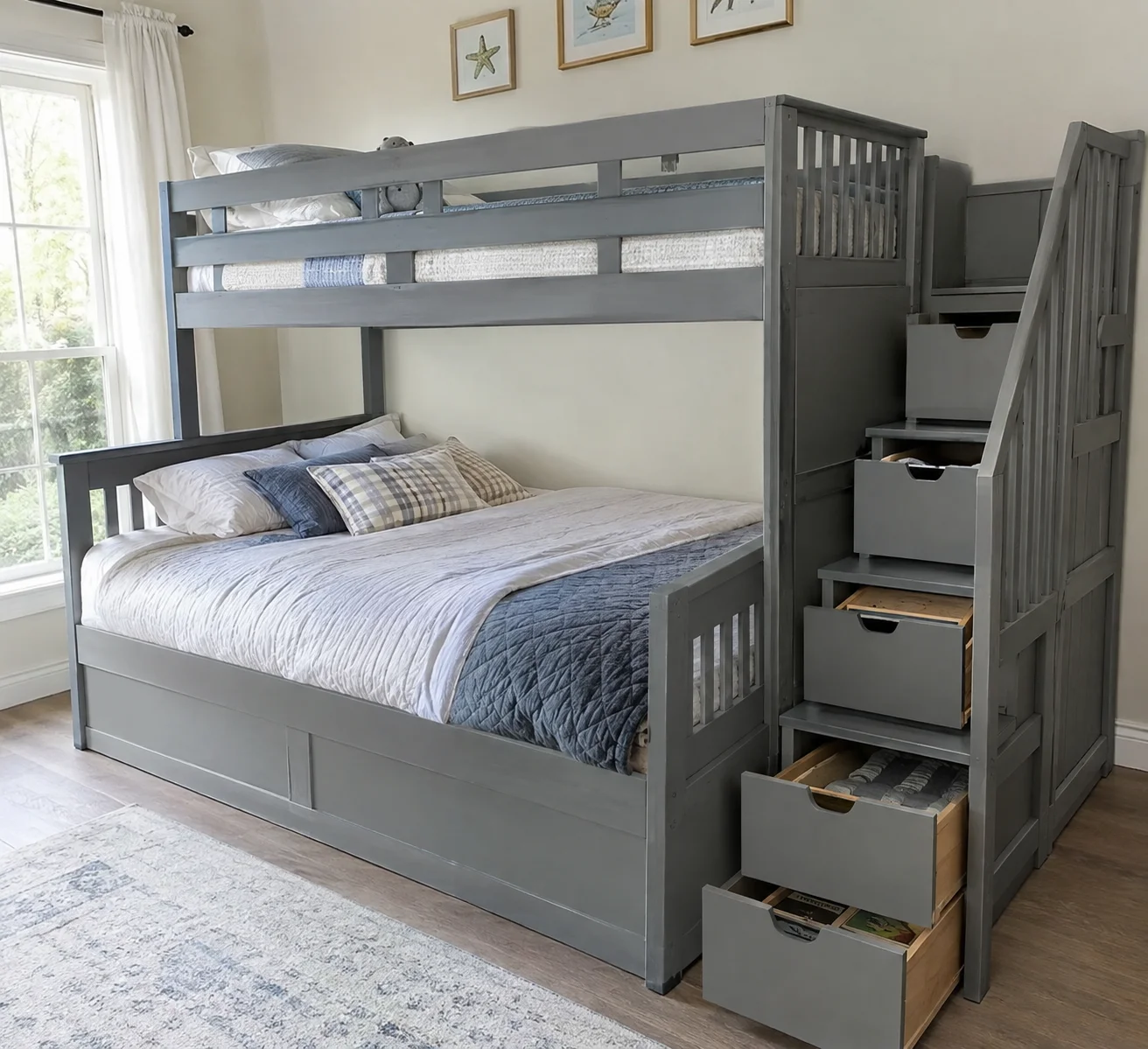
Bunk beds with storage combine the space-saving stack of a traditional bunk with built-in drawers, stairs, trundles, or under-bed compartments that replace furniture you’d otherwise need to buy separately. The best configuration depends on your room’s floor space, the ages of the kids using it, and how much storage you actually need versus how much floor clearance you’re willing to give up. This guide walks through the real trade-offs, current CPSC safety requirements, and what to check before you buy.
Quick Answer
For most families, a twin-over-twin or twin-over-full bunk bed with a stair-step storage unit offers the best balance of safety, storage, and usability. Stairs are safer than ladders for nighttime bathroom trips, and each step can double as a drawer. If floor space is tight, a ladder-access bunk with under-bed drawers on the bottom bunk saves more square footage while still adding real storage. Whatever style you choose, confirm it meets current CPSC guardrail and gap requirements under 16 CFR Parts 1213 and 1513 before you buy — this matters more than style or price.
Types of Storage on a Bunk Bed
Storage bunk beds aren’t one single design. They break down into a few distinct approaches, and each one solves a different space problem.
Stair-Step Storage
Instead of a ladder, the bed uses a full staircase to reach the top bunk, and each step opens as a drawer. This is the most storage-dense option, often adding three to five extra compartments. It also tends to be the safest climbing method for younger kids, since wide, flat treads let a child place their whole foot down, and most stair units include a built-in handrail. The trade-off is floor space. A staircase footprint takes up noticeably more room than a ladder, so this style fits best in larger bedrooms.
Under-Bed Drawers
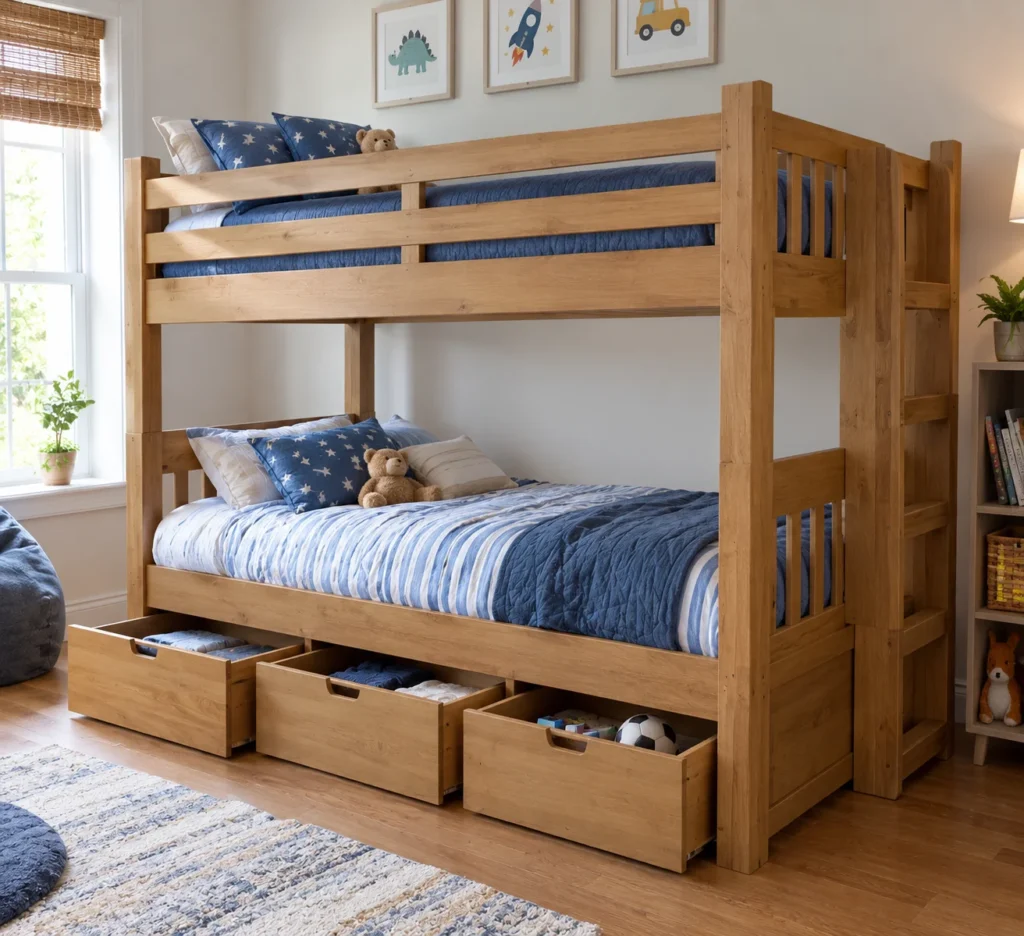
Drawers built into the base of the bottom bunk are the most space-efficient storage option, since they don’t add any extra footprint beyond the bed itself. This works well with either a ladder or stairs and is a good fit for smaller rooms where every square foot matters.
Trundle Storage
A pull-out trundle can serve two purposes: it either creates a third sleeping surface for a sleepover or guest, or it converts into a large flat storage drawer when you don’t need the extra bed. This flexibility makes it a popular choice for families who host guests occasionally but don’t want a permanently made-up third bed taking up space.
Bookshelf or Cubby Ends
Some bunk bed frames build shelving or cubby storage directly into the end panels, which works well for books, small toys, or a nightlight, though it adds less overall storage volume than drawers or a trundle.
Sizing and Configuration Options
Bunk beds come in more size combinations than most first-time buyers expect, and picking the right one depends on the ages and heights of the kids sleeping in it.
| Configuration | Best For | Notes |
|---|---|---|
| Twin over Twin | Siblings close in age, standard kids’ rooms | Most common and widely available size |
| Twin over Full | Older sibling on bottom, younger on top | Full-size bottom works well as kids grow |
| Full over Full | Teens or a shared room for two older kids | Needs a larger room footprint |
| Twin XL over Twin XL | Growing teens, college-age or guest rooms | Extra length matters more than most buyers expect |
| Queen over Queen | Adult or multi-generational households | Rare, heavier-duty construction required |
A common mistake is under-sizing for how fast kids grow. A twin bunk bought for a 7-year-old often feels cramped by age 12 or 13. So if your budget allows it, a twin-over-full or twin-XL configuration buys you more years of use before a replacement becomes necessary.
Safety Standards You Need to Know
This is the part of bunk bed shopping that matters more than color or finish, and it’s worth understanding before you fall in love with a specific style. The CPSC’s official bunk bed requirements, covering both adult beds (16 CFR Part 1213) and children’s beds (16 CFR Part 1513), spell out several specific rules manufacturers must follow.
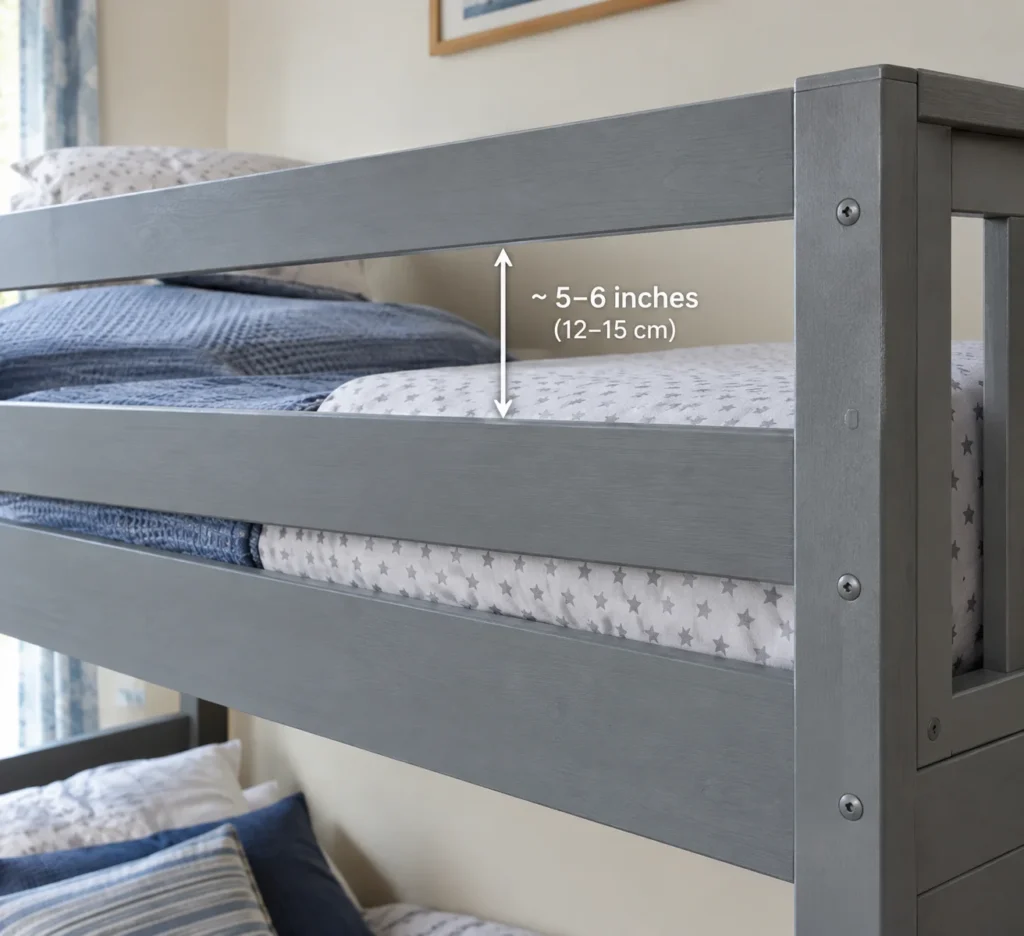
Guardrail height. The top of the guardrail must sit no less than 5 inches above the top of the mattress. If you plan to upgrade to a thicker mattress later, check that it won’t eat into this clearance.
Continuous coverage. A guardrail on the wall side of the bed must run continuously from end to end, with any gap between the rail and the bed’s end no greater than 0.22 inches. The guardrail on the open side doesn’t need to run the full length. But the gap between either end of that rail and the nearest end of the bed can’t exceed 15 inches.
Secure fasteners. Guardrails must attach with fasteners that require a deliberate release, or a mechanism that needs multiple separate motions to remove — this prevents a child from accidentally dislodging the rail from the inside.
Entrapment gaps. With no mattress on the upper bunk, the space between the bottom of the guardrail and the mattress foundation is tested with a wedge block to confirm it won’t allow a child’s body to pass through and become trapped.
Beyond the federal requirements, the CPSC and pediatric safety groups also recommend that children under age 6 not sleep on the top bunk at all, regardless of how well the guardrails perform, simply because younger kids are more prone to rolling and less able to judge the edge safely in the dark.
What to Check Before You Buy
Weight limits. Every bunk bed has a stated weight capacity for both the top and bottom bunk. Manufacturers publish this figure for a reason, so check it against the actual weight of whoever will be sleeping up top, not just their age.
Anchoring hardware. If drawers are built into a staircase, an open drawer shifts the unit’s center of gravity, so tall or top-heavy configurations should always be anchored to the wall using the included tethering hardware. Skipping this step is one of the more common — and preventable — safety mistakes buyers make.
Drawer slide quality. Cheaper storage bunk beds sometimes use basic slides that stick, bind, or wear out within a year or two of daily use. Reading recent reviews for the specific model, rather than relying on the product photos alone, usually surfaces this kind of issue quickly.
Material and construction. Solid wood frames generally hold up better over years of active kids climbing on and off the bed, compared to particleboard or lower-grade engineered wood. If you’re considering a solid wood option, our guide to solid pine wood bunk beds breaks down what to look for in that category specifically.
Room clearance. Measure ceiling height before ordering, especially in older homes with lower ceilings. A top bunk needs enough headroom for a child to sit up comfortably without hitting the ceiling, and this gets overlooked more often than you’d think.
Common Mistakes to Avoid
Buying based on the ladder without considering stairs. Ladders save floor space, but stairs are genuinely safer for nighttime use and add real storage. If your room can fit a staircase footprint, it’s usually worth the extra square footage.
Ignoring the age-6 top bunk guideline. Even with a fully code-compliant guardrail, most safety organizations advise against putting a child under 6 on the top bunk. Plan your bunk configuration around this if you have a wide age gap between kids.
Skimping on the mattress. A too-thick mattress on the top bunk eats into the required 5-inch guardrail clearance. Stick to a mattress thickness the manufacturer recommends for that specific bed, rather than upgrading to a thicker option without checking.
Forgetting to anchor the unit. Tall, top-heavy bunk beds — especially those with staircase storage — need wall anchoring. This step gets skipped more often than any other safety measure, usually because it feels optional. It isn’t.
Underestimating how fast kids outgrow twin sizing. A twin-over-twin bunk that fits perfectly at age 8 can feel tight within a few years. If your budget allows, sizing up to twin-over-full or twin-XL buys meaningfully more usable years.
Frequently Asked Questions
What’s the safest type of storage bunk bed?
Stair-step storage is generally considered safer than a ladder for regular nighttime use, since the wide, flat treads and built-in handrail reduce fall risk. That said, safety ultimately comes down to whether the specific bed meets CPSC guardrail and gap requirements, regardless of ladder or stair style.
At what age can a child sleep on the top bunk?
The CPSC and most pediatric safety organizations recommend against children under 6 using the top bunk, even on a fully compliant bed, due to higher fall risk at that age.
Do bunk beds with storage cost more than regular bunk beds?
Yes, generally. Built-in drawers, stairs, or a trundle all add material and manufacturing cost compared to a basic ladder-access bunk frame, though the added storage often replaces the need for a separate dresser or nightstand.
How much weight can a bunk bed with storage hold?
This varies by model and material, so always check the manufacturer’s stated weight limit for both the top and bottom bunk rather than assuming a standard figure across all bunk beds.
Is it safe to put an adult on the top bunk of a kids’ storage bunk bed?
Only if the bed is rated for that weight. Kids’ bunk beds are often built to lighter weight specifications than adult-rated models, so check the listed capacity before assuming it’s safe for an adult.
Can I add storage to a bunk bed I already own?
Sometimes. Under-bed storage bins or a separate rolling drawer unit can add storage to an existing bunk without replacing the frame, though built-in stair or drawer systems generally aren’t retrofittable onto a bed that wasn’t designed for them.
What’s the difference between a trundle and under-bed drawers?
A trundle is a full pull-out bed frame, usable either as extra sleeping space or, in some designs, as a large flat storage compartment. Under-bed drawers are fixed storage only and don’t convert into a sleeping surface.
Sources & References
- U.S. Consumer Product Safety Commission, Bunk Bed Safety Requirements
- U.S. Consumer Product Safety Commission, Requirements for Bunk Beds, 16 CFR Parts 1213 and 1513