

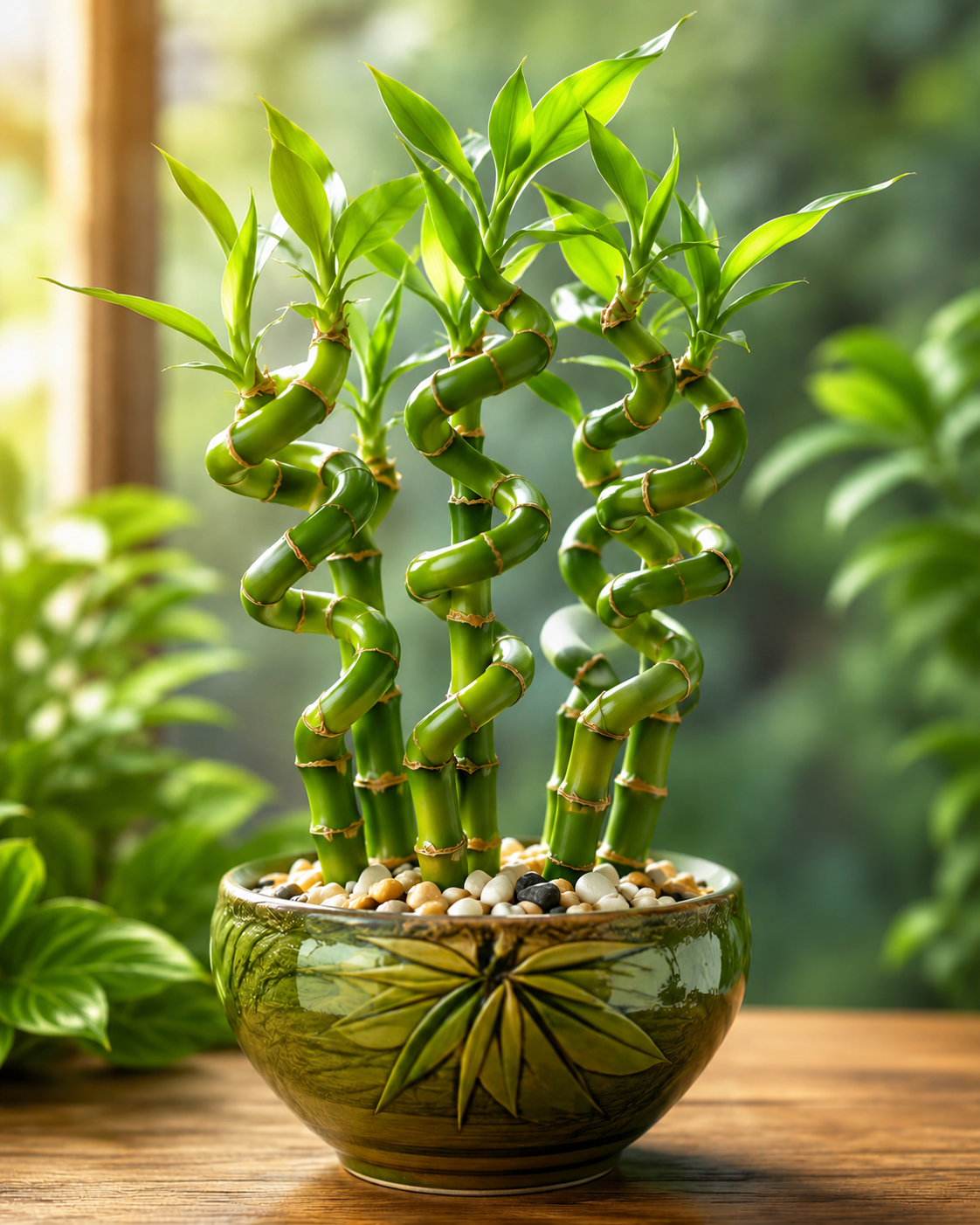
Walk into any plant shop, Asian grocery, or home décor store across the United States — from a Chinatown boutique in San Francisco to a garden center in suburban Ohio — and you’ll almost certainly spot it: a cluster of elegantly twisted green stalks rising from a glass vase filled with pebbles and water. That’s lucky curly bamboo, and it’s one of the most beloved good-luck plants in American homes and offices today.
But what exactly makes it “lucky”? Moreover, why are the stalks curled? Does the number of stalks actually matter? And perhaps most importantly, how do you keep one alive and thriving for years? In this guide, I’ll walk you through everything — the symbolism, the real-world benefits, and the step-by-step care tips you need.
I’ve grown lucky bamboo in my own home for years, gifted it at housewarmings and office parties. And watched it transform bare windowsills into conversation pieces. As a result, I’m confident this guide will give you the knowledge and confidence to choose, place, and care for your own lucky curly bamboo with ease.
What Is Lucky Curly Bamboo? (It’s Not Actually Bamboo)
Here’s a fun fact most people don’t know: lucky bamboo isn’t bamboo at all.
It’s Dracaena sanderiana, a tropical evergreen plant native to the rainforests of equatorial West and Central Africa. It belongs to the Asparagaceae family — which means it’s actually more closely related to asparagus than to the bamboo you’d find in a panda’s habitat. The plant was named after German-English horticulturist Henry Frederick Conrad Sander in the late 1800s, and the name has stuck ever since.
So why do we call it bamboo? Simply because its smooth, segmented green stalks bear a striking resemblance to true bamboo canes. That visual similarity, combined with centuries of symbolic association with bamboo in East Asian culture, made the “lucky bamboo” nickname impossible to shake.
Now, the curly version you see in stores is the same plant — just trained with a clever, time-intensive technique. First, growers place the stalks on a flat surface in a greenhouse and block light on three sides while exposing only one side to bright light. Because of this, the stalks naturally grow toward that single light source. Growers then carefully rotate and manipulate the stalks over many months. Sometimes over a full year — to gradually create those graceful spirals and curls. In other words, when you buy a curly lucky bamboo, you’re looking at a plant that took a skilled grower 12 months or more to shape. That’s part of what makes it so special.
The Meaning Behind Lucky Curly Bamboo
Lucky bamboo carries deep roots in feng shui — the ancient Chinese philosophy of energy, balance, and spatial harmony that dates back to at least the 9th century BC. In feng shui, the curled shape of lucky bamboo stalks is especially significant.
Beyond the curls, lucky bamboo is also believed to embody all five elements of feng shui simultaneously — which is rare and considered extremely powerful:
- Wood — the bamboo stalks themselves
- Water — the water or hydroponic medium it grows in
- Earth — the pebbles or soil anchoring the plant
- Fire — traditionally represented by a red ribbon tied around the stalks
- Metal — a glass or metallic container completes the set
Because of this five-element harmony, lucky bamboo is considered one of the most potent feng shui tools available. It doesn’t just bring one type of luck — instead, it invites balanced, holistic positive energy into your entire living or working space.
In the United States, lucky bamboo has moved well beyond Chinese-American households. Today, it’s a mainstream good-luck gift for new homes, new businesses, graduations, and even hospital rooms. Furthermore, in 2026 — the Year of the Fire Horse — feng shui practitioners particularly recommend lucky bamboo because its grounding Wood element energy helps temper and balance the year’s intense fire energy, creating a calmer, more harmonious home environment.
The Meaning of Stalk Numbers: Choose the Right One for You
One of the most fascinating aspects of lucky bamboo is that the number of stalks in an arrangement carries specific symbolic meaning rooted in Chinese numerology. Therefore, if you’re buying or gifting a lucky bamboo arrangement, the stalk count genuinely matters.
Here’s a quick reference guide to help you choose:
| Number of Stalks | Meaning |
|---|---|
| 1 stalk | Truth, simplicity, and commitment |
| 2 stalks | Love and double luck — ideal for couples |
| 3 stalks | Happiness, wealth, and longevity — one of the most popular |
| 4 stalks | Generally avoided — “four” sounds like “death” in certain Chinese dialects |
| 5 stalks | Balance of the five elements; harmony and personal power |
| 6 stalks | Wealth, prosperity, and smooth energy flow — great for offices |
| 7 stalks | Good health and harmonious relationships |
| 8 stalks | Abundance and financial growth — highly auspicious in Chinese culture |
| 9 stalks | Longevity, long-term good fortune, and spiritual growth |
| 10 stalks | Completeness and deep contentment |
| 21 stalks | All-encompassing blessings and good fortune |
One important note for American buyers: The number 4 is considered unlucky in Chinese feng shui because it sounds like the word for “death” in Mandarin and Cantonese. However, this association is culturally specific — Western cultures have no such connection to the number 4. That said, if you’re gifting to someone of Chinese, Vietnamese, Korean, or Japanese heritage, it’s definitely worth skipping the 4-stalk arrangement out of respect.
For most American households and offices, 3, 8, or 9 stalks are the most popular choices. Eight stalks, in particular, have surged in popularity among entrepreneurs and small business owners across the U.S. who want to attract financial prosperity and growth. Meanwhile, 3-stalk arrangements remain the go-to all-purpose choice for everyday gifting and home décor.
7 Genuine Benefits of Lucky Curly Bamboo
Beyond the symbolism, there are real, practical reasons why lucky bamboo has earned its place in millions of American homes. Here’s a closer look at what this plant truly brings to the table.
1. It Genuinely Improves Your Space’s Energy
Even if you’re skeptical of feng shui, the psychological research on indoor plants is clear: having live plants in your environment reduces stress, improves mood, and increases feelings of calm and well-being. Lucky bamboo, with its graceful curled form and vibrant green color, delivers this effect in a compact, low-maintenance package. In other words, you don’t have to believe in chi to benefit from it.
2. It Thrives in Low Light — Perfect for American Apartments
One of the most practical benefits of lucky bamboo is its remarkable adaptability to light conditions. Unlike many houseplants that demand bright south-facing windows, lucky bamboo thrives in indirect light and even tolerates the fluorescent lighting of offices, dim apartments, and interior rooms. As a result, it’s one of the best plants for urban dwellers across cities like New York, Chicago, Seattle, and Boston where natural apartment light can be frustratingly limited.
3. It Can Grow in Water — No Soil Needed
Lucky bamboo can grow entirely in water with nothing more than a glass vase and some clean pebbles. This means it’s uniquely mess-free compared to soil-based houseplants. There’s no potting mix tracking across your floors, no drainage trays to manage, and no overwatering concerns. For minimalist homes and busy office desks, this is a genuinely significant perk.
4. It’s Non-Toxic to Humans (With a Caveat for Pet Owners)
Lucky bamboo is safe for humans and non-toxic if accidentally touched or handled. However, it is toxic to cats and dogs, causing symptoms like vomiting, drooling, and loss of coordination if ingested. Therefore, if you have pets, place your lucky bamboo on a high shelf or in a room your animals can’t access. It’s a simple precaution that keeps everyone safe.
5. It’s an Exceptionally Thoughtful and Versatile Gift
In American gift culture, lucky bamboo has carved out a unique niche. Because it suits virtually any occasion — housewarming, graduation, promotion, retirement, or a simple “thinking of you” — it’s become one of the most reliable go-to gifts available. It’s also affordable (typically $10–$50 depending on size and arrangement), long-lasting, and carries genuine cultural significance that feels personal and intentional rather than generic.
6. It Adds Aesthetic Value to Any Space
The curled and spiraled stalks of lucky bamboo are genuinely beautiful objects. Styled in a clear glass vase with white pebbles, or in a ceramic pot with river rocks, lucky bamboo fits seamlessly into modern minimalist, Japandi, boho, and traditional décor styles. Additionally, it photographs extremely well — a bonus in the era of Instagram-worthy interiors and home décor social media.
7. It’s One of the Easiest Plants to Keep Alive
For people who have a track record of killing houseplants — which, honestly, describes most of us — lucky bamboo is wonderfully forgiving. It doesn’t demand constant attention, tolerates a wide range of temperatures found in most American homes (65°F–90°F), and will show you clearly when something is wrong through yellowing or browning leaves before it’s too late to course-correct. In short, it gives you time to fix your mistakes.
Complete Lucky Curly Bamboo Care Guide
Water: The Most Critical Factor
If you’re growing your lucky bamboo in water — the most common method — use filtered, distilled, or collected rainwater whenever possible. The reason this matters is that tap water in most U.S. cities contains fluoride and chloride, both of which can cause brown leaf tips and yellowing over time. If you only have tap water available, fill a container and let it sit uncovered for 24 hours. Doing so allows some of the chlorine to dissipate before the water touches your plant.
How often should you change the water? Every 7–10 days is ideal. In addition, clean the container every few months to prevent algae buildup, which can turn the water green and eventually harm the roots. When refilling, aim to cover just the roots — about 1 to 2 inches of water is all you need.
Light: Bright But Indirect Only
Lucky bamboo thrives in bright, indirect light. A spot near a north or east-facing window works best in most American homes. On the other hand, direct sunlight will scorch the leaves quickly, turning them yellow and then brown. If your only window gets intense afternoon sun, simply hang a sheer curtain to diffuse the light and protect the plant.
The plant will also tolerate low-light conditions — a common requirement in offices and interior rooms — though growth will slow down noticeably in dim settings. If you notice the stalks leaning toward a light source (which is exactly how growers create those curls in the first place), rotate the vase a quarter-turn every week to encourage balanced, upright growth.
Temperature and Humidity
Lucky bamboo prefers temperatures between 65°F and 90°F, which aligns well with typical American home and office conditions year-round. Even so, keep it away from air conditioning vents and heating radiators, as both create extreme temperature swings and dry air that the plant strongly dislikes.
In dry climate regions like the American Southwest — particularly Arizona, Nevada, and New Mexico — or during winter months when indoor heating reduces humidity, consider placing a small tray of water near the plant. Alternatively, occasionally misting the leaves will help maintain adequate moisture around the foliage.
Fertilizer: Less Is More
Lucky bamboo doesn’t need much fertilizer — and in fact, too much is far more dangerous than too little. If you’re growing it in water, a single drop of liquid fertilizer every 3–4 months is genuinely plenty. Over-fertilizing is the most common mistake new owners make, and it will cause the leaves to turn yellow and the stalks to weaken rapidly. Therefore, use a balanced, diluted liquid fertilizer at about one-tenth of the recommended strength, and resist the urge to feed it more often.
Soil Growing (If You Prefer)
While the water-growing method is most popular, lucky bamboo can also thrive beautifully in well-draining potting soil. Simply use a light, fast-draining mix — a cactus or succulent blend works particularly well. Water only when the top inch of soil feels dry, and always ensure the pot has drainage holes to prevent root rot from developing at the base.
How to Handle the Curls
The curled and spiraled form of your lucky bamboo was created through controlled light manipulation during cultivation. Once you bring it home, however, new growth will tend to grow straight unless you deliberately manage the light exposure. If you want the new growth to curl as well, place a cardboard box over the plant with one side open and facing a light source. Then rotate the plant slowly over weeks and months to guide the new growth into a spiral. It’s a patient process, but ultimately very satisfying to watch unfold.
Common Problems and How to Fix Them
Yellow leaves: This is almost always caused by too much direct sunlight, fluoride in tap water, or over-fertilizing. To fix it, move the plant to indirect light, switch to filtered water, and skip the next feeding. Usually, the plant will recover within a few weeks.
Brown leaf tips: This is typically a water quality issue caused by fluoride or chlorine in tap water. The simplest solution is to switch to filtered or distilled water immediately and maintain consistent watering habits going forward.
Mushy or soft stalks: Unfortunately, this signals root rot — typically caused by standing water that isn’t changed frequently enough. To address it, remove the plant from its container, trim any dark or mushy roots with clean scissors, rinse everything thoroughly, and replace with fresh clean water. Act quickly, because root rot spreads fast.
Algae in the water: This is a clear sign that too much light is hitting the water container directly. To resolve it, move the arrangement to a less bright spot, or switch to an opaque container that blocks light from reaching the water.
Where to Place Lucky Bamboo in Your Home: A Feng Shui Guide for American Homes
Placement matters enormously in feng shui, and fortunately, lucky bamboo is flexible enough to work well in most rooms. Here’s where to put it depending on your goals:
- Living room: Place near the front door or in the southeast corner (associated with wealth and abundance in the feng shui Bagua map) to attract prosperity into your household.
- Home office or desk: Six or eight stalks on your work desk are believed to attract professional success and smooth financial flow — particularly helpful during a job search or business launch.
- Kitchen: A small arrangement on the counter brings nourishing energy and warmth to the heart of the home, which in feng shui is one of the most important spaces to keep energetically balanced.
- Bedroom: Choose two stalks for a couple’s nightstand to promote love and harmony. However, keep it away from the direct line of the bedroom door, as feng shui cautions against plants placed directly in the doorway’s energy path.
- Bathroom: Yes, lucky bamboo can thrive in a bathroom — in fact, the natural humidity is a real benefit. Just ensure it still receives some indirect light, even if it’s just from a small window or a nearby hallway.
Avoid placing lucky bamboo in direct sunlight in any room, near air vents or drafts, or on the floor where it might be accidentally knocked over or damaged by foot traffic.
For more in-depth guidance on feng shui plant placement, the experts at The Spruce offer a thorough look at how to harness the energy of lucky bamboo in different areas of your home.
How to Give Lucky Bamboo as a Gift in the USA
Lucky bamboo is one of the most popular plant gifts in the United States, and for very good reason — it suits almost anyone and almost any occasion. Here are a few tips to make your gift feel genuinely intentional rather than like an afterthought:
- Choose the stalk number with purpose. For example, a 3-stalk arrangement for a friend going through a tough time (happiness, wealth, longevity) or an 8-stalk arrangement for a new business owner (financial abundance) communicates that you put real thought into it.
- Tie a red ribbon around the base of the stalks. In feng shui, red activates the fire element and amplifies the plant’s good fortune energy — and it also makes the presentation look polished and intentional.
- Pair it with a beautiful container. A sleek ceramic pot, a bamboo tray, or a clear glass vase with river stones elevates the overall presentation significantly and turns the plant into a proper gift rather than just a grocery store impulse buy.
- Avoid gifting 4 stalks if the recipient has Chinese, Vietnamese, Korean, or Japanese heritage, since the number 4 carries strong negative associations in those cultures.
If you’re in a major U.S. city, you’ll find quality lucky bamboo at Asian supermarkets, specialty garden centers, and online retailers like Lively Root and The Sill, both of which ship live plants with detailed care instructions included. For another low-maintenance, easy-to-grow houseplant, see our Tradescantia Nanouk care guide.
Frequently Asked Questions About Lucky Curly Bamboo
1. Is lucky bamboo really bamboo?
No — despite the name, lucky bamboo (Dracaena sanderiana) is not a true bamboo species. It’s actually a member of the Dracaena genus and is more closely related to asparagus than to bamboo. It earned the “bamboo” nickname simply because its segmented stalks look visually similar to true bamboo canes.
2. How do you make lucky bamboo stalks curl?
Curling lucky bamboo stalks is a slow, deliberate process that requires patience. Growers block light on three sides of the stalk while exposing one side to a bright light source, causing the stalk to naturally grow toward the light. Then, by repeatedly rotating and manipulating the stalk over many months — sometimes over a full year — they gradually create the signature spiral shape. You can attempt this at home using a cardboard box technique, though purchasing pre-curled stalks from a nursery is far more practical for most people.
3. How long does lucky bamboo live?
With proper care, lucky bamboo can live for many years — often a decade or more. The key factors are consistently using clean filtered water, keeping it away from direct sunlight, and avoiding over-fertilizing. In fact, many people report keeping the same lucky bamboo plant thriving for 5 to 10+ years with minimal effort.
4. Can lucky bamboo grow in soil instead of water?
Yes, absolutely. Lucky bamboo grows very well in well-draining potting soil, and many gardeners actually find that soil-grown lucky bamboo develops more robustly over the long term. Simply use a light, fast-draining mix, water when the top inch of soil feels dry, and make sure the pot always has drainage holes.
5. Why is my lucky bamboo turning yellow?
Yellow leaves or stalks are most commonly caused by one of three things: too much direct sunlight, fluoride or chlorine in tap water, or over-fertilizing. First, try moving the plant to indirect light. Next, switch to filtered or distilled water. Finally, reduce or eliminate fertilizer for a few months and observe whether the yellowing stops. If it continues despite these changes, check the roots for signs of rot.
6. Is lucky bamboo safe for cats and dogs?
Unfortunately, lucky bamboo is toxic to both cats and dogs. If ingested, it can cause symptoms including vomiting, drooling, dilated pupils, and loss of coordination. Therefore, always keep lucky bamboo safely out of reach of pets, or choose a pet-safe plant alternative — our Macho Fern is a non-toxic option if you have curious cats or dogs.
7. How many stalks of lucky bamboo should I get for good luck?
It depends entirely on what type of luck you’re hoping to attract. Three stalks (happiness, wealth, and longevity) are the most popular all-purpose choice. Eight stalks are considered especially auspicious for financial success in Chinese culture. Meanwhile, nine stalks are closely associated with longevity and all-around good fortune. In any case, avoid 4-stalk arrangements if you’re buying for someone of East Asian heritage.
8. Can I put lucky bamboo in my bedroom?
Yes — lucky bamboo is actually a wonderful bedroom plant. A 2-stalk arrangement on a nightstand is traditionally associated with love and harmonious relationships, making it especially meaningful for couples. Just make sure it receives some indirect light and is kept away from direct air conditioning or heating vents. Also, keep the water fresh and the container clean to avoid any musty smells developing in your sleeping space.
Final Thoughts
Lucky curly bamboo is one of those rare plants that earns its place in your home on multiple levels simultaneously. Symbolically, it carries centuries of meaning around prosperity, harmony, and good fortune. Aesthetically, its spiraling green stalks are genuinely beautiful and endlessly versatile. And practically, it’s one of the most forgiving, low-maintenance houseplants available — an ideal entry point for new plant parents and a reliable companion for experienced ones alike.
Whether you’re setting up a new apartment in Austin, refreshing a home office in Chicago, or looking for a meaningful housewarming gift for a friend in Seattle, a lucky curly bamboo arrangement is always a thoughtful, lasting choice that the recipient will genuinely appreciate.
So take your time choosing the right stalk number for your intention, find a spot with soft indirect light, use clean filtered water, and let this resilient little plant do what it’s been doing for thousands of years: quietly bring a sense of hope, balance, and harmony into your everyday space.