

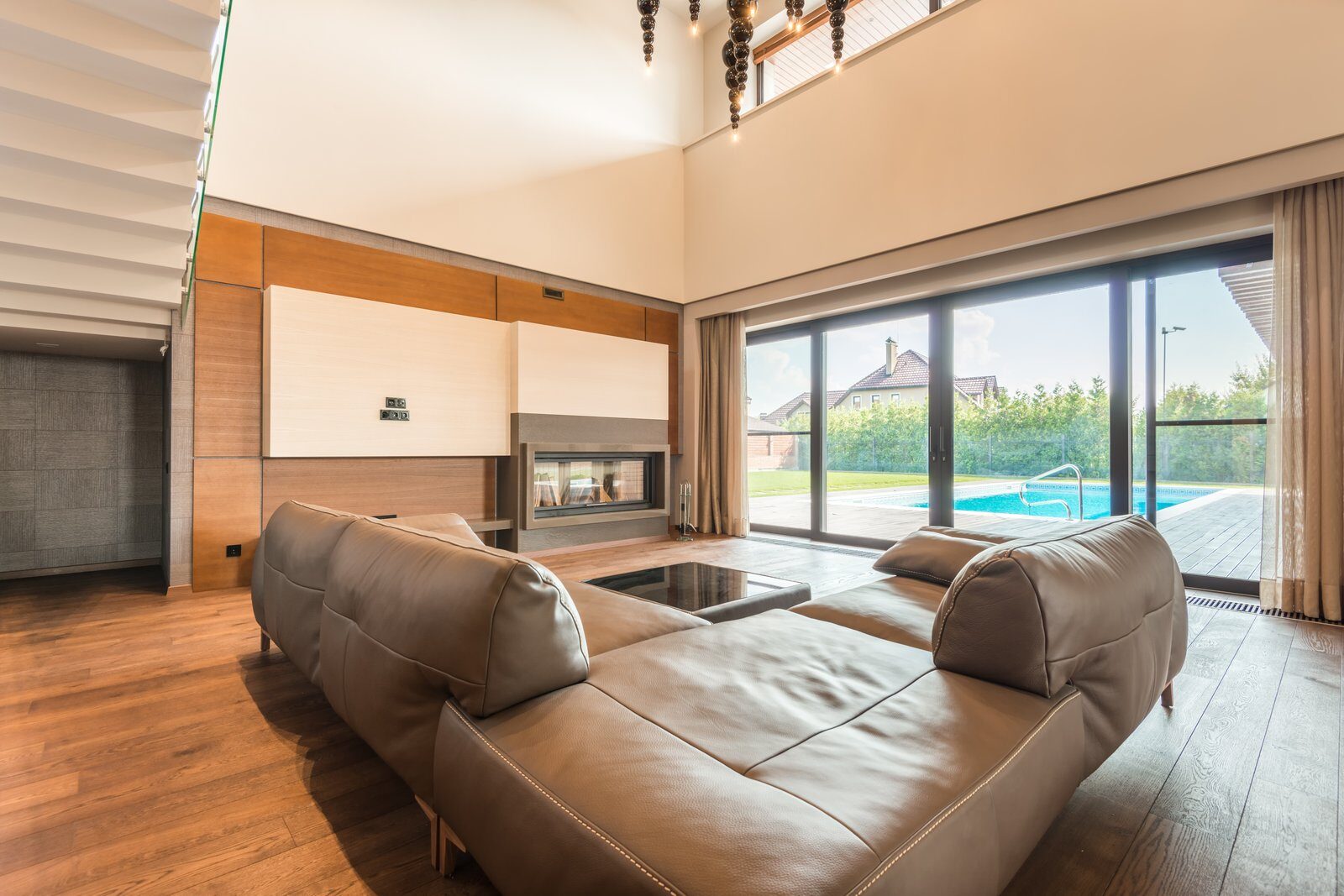
If you’ve been scrolling through home design feeds lately, you’ve probably noticed that Venetian plaster fireplaces are everywhere — and for good reason. There’s something about that layered, luminous finish that no paint or tile can quite replicate. It catches the light differently at every hour of the day, and around a fireplace, that quality is absolutely magnetic.
I’ve spent the last several years working with homeowners across the United States — from brownstones in Brooklyn to modern farmhouses in Austin to Spanish Revival homes in Southern California — and Venetian plaster consistently earns the “wow” reaction that clients are after. In this guide, I’m sharing 25 genuinely stunning design ideas, along with honest advice on what works, what doesn’t, and how to get it right in your own space.
What Makes Venetian Plaster Perfect for Fireplaces?
Before diving into the designs, it’s worth understanding why this material and this location are such a natural match.
Venetian plaster — known traditionally as marmorino or stucco veneziano — is made from slaked lime putty and marble dust. It’s been used since ancient Rome, and its revival in American interior design has been one of the more exciting trends of the last decade. Around a fireplace, it offers a few specific advantages that other finishes simply can’t match:
Heat tolerance. Lime-based plasters handle radiant heat well. Unlike painted drywall, which can yellow or crack near a firebox, a properly applied Venetian plaster finish stays stable even with regular use.
Depth and dimension. A flat painted surround can feel two-dimensional. Venetian plaster, applied in thin burnished layers, creates a surface that appears to glow from within. Next to flickering flames, that effect is genuinely beautiful.
Customization. Color, sheen level, texture, and application technique can all be adjusted. No two Venetian plaster fireplaces look exactly alike.
Durability. When sealed correctly, Venetian plaster is hard, moisture-resistant, and easy to clean — a real bonus in households where fireplaces get daily use through cold-weather months.
According to the Tile Council of North America, decorative wall finishes around hearths have grown significantly in residential applications since 2022, with plaster-based finishes leading the category in new construction and renovation projects.
25 Venetian Plaster Fireplace Ideas for 2026
1. Classic Off-White With a High-Burnish Finish
This is the foundational look — the one that started the whole trend. An off-white Venetian plaster surround, burnished to a soft satin sheen, reads as simultaneously timeless and fresh. It works in virtually any architectural style, from traditional Colonial homes in New England to new builds in the Mountain West.
The key is in the warmth of the white. Pure, cool white can feel clinical near a hearth. Ask your plasterer to lean toward a warm cream or ivory base — it’ll harmonize with the amber tones of firelight in a way that feels instinctively right.
2. Warm Terracotta for a Southwest Aesthetic
If you’re in Arizona, New Mexico, or anywhere with Spanish or Pueblo Revival architecture, warm terracotta Venetian plaster is a natural fit. The clay-orange tones connect visually to the landscape and to traditional adobe construction, while the burnished surface adds a refinement that feels contemporary rather than rustic.
Pair it with a chunky wood mantel in a weathered gray finish and iron firebox doors for a look that’s rooted in regional history without feeling like a theme.
3. Charcoal Gray for a Modern Statement
Deep charcoal Venetian plaster — think a color somewhere between slate and graphite — makes a genuinely dramatic statement. This works beautifully in modern and industrial-influenced homes, particularly in cities like Chicago, Seattle, or Denver where loft-style design is popular.
Go with a mid-sheen burnish rather than full polish here. The subtle texture in the finish keeps the dark surface from looking flat or painted.
4. Full-Wall Application in Sage Green
Rather than limiting the plaster to the immediate surround, take it floor-to-ceiling and wall-to-wall. This approach is gaining serious traction in 2026, particularly in homes with open-plan living spaces where the fireplace wall serves as the room’s visual anchor.
Sage green is a standout color choice for this treatment. It’s warm without being aggressive, earthy without being dark, and it pairs exceptionally well with natural wood, brass hardware, and linen upholstery.
5. Venetian Plaster in Dusty Rose for a Maximalist Living Room
Dusty rose sounds risky. In practice, it’s one of the most livable and sophisticated colors you can put on a plaster surround. The key is applying it in a slightly mottled, layered manner that adds visible depth — not a flat, even rose-pink, but something that shifts subtly from blush to mauve depending on the light.
Pair with deep teal or burgundy soft furnishings and you’ve got a space that feels like a well-edited maximalist fantasy.
6. Raw Concrete Effect in Pale Gray
Using Venetian plaster to mimic the look of polished concrete is a technique that’s particularly popular in contemporary urban homes. The application uses cool-toned gray with deliberate variation in coverage to suggest the imperfect uniformity of a poured concrete surface.
The advantage over actual concrete? Warmth. Plaster walls don’t feel cold to the touch the way concrete does, which matters quite a bit in a room centered on comfort.
7. Venetian Plaster With Limewash Overlay
This layered approach combines two traditional finishes for a result that looks genuinely ancient — in the best possible way. A base coat of Venetian plaster is applied and burnished, then a diluted limewash in a contrasting color is dry-brushed over the top. The result has the faded, sun-bleached quality of old European villas.
Popular in Mediterranean-inspired homes throughout Florida, California, and the Gulf Coast.
8. Navy Blue Floor-to-Ceiling Surround
Navy might be the single most requested Venetian plaster color I’ve seen in the last 18 months. On a full fireplace wall, deep navy plaster with a soft burnished sheen creates a jewel-box effect — a room within a room. It feels cocooning and intimate in a way that’s perfect for a library, a study, or a formal sitting room.
Brass sconces, a pale marble hearth, and antique gilt-framed art complete the look without overselling it.
9. Warm White With Embedded Stone Hearth
Let the plaster be the quiet, elegant backdrop for a more complex hearth assembly. A warm white or ivory Venetian plaster surround paired with a rough-hewn fieldstone hearth creates a layered material palette that feels gathered over time rather than designed all at once.
This combination is particularly at home in older houses in the Mid-Atlantic and Northeast, where stone foundations and wood-burning fireplaces are architectural givens.
10. Greige (Gray-Beige) for the Perfect Neutral
Greige is the interior designer’s reliable neutral, and in Venetian plaster it’s genuinely versatile. It can read warm or cool depending on what surrounds it, it works with virtually every wood tone from blonde oak to dark walnut, and it photographs extremely well — an increasingly relevant consideration for homeowners who plan to sell in the next few years.
11. High-Gloss Black for Drama
Full-polish black Venetian plaster is advanced territory — both technically and aesthetically. When it works, it’s absolutely jaw-dropping. The mirror-like surface reflects firelight in ways that seem almost alive.
It works best in rooms with high ceilings, significant natural light, and minimal clutter. Think a loft in New York City’s Tribeca neighborhood or a mid-century home in Palm Springs.
12. Tuscan Gold for Old-World Warmth
Golden-ochre Venetian plaster with metallic mica particles mixed in produces a finish that glows warmly in candlelight and firelight. This is a popular choice for dining rooms with fireplaces, for wine cellars, and for media rooms where the warmth of the color contributes to a sense of comfortable enclosure.
13. Matte Mushroom Tones for Organic Minimalism
Muted, organic tones — mushroom, taupe, warm beige, sand — applied in a matte to low-sheen finish have become the signature look of the organic minimalism trend that continues to dominate American interiors in 2026. Against a pale plaster surround, a simple steel-framed firebox insert and a floating walnut mantel look quietly extraordinary.
14. Two-Tone Application: Darker Below, Lighter Above
This technique divides the fireplace wall horizontally — either at mantel height or at a natural architectural break — and applies two related but distinct tones of Venetian plaster. The lower portion, typically darker, grounds the composition. The lighter upper section keeps the room feeling open.
It’s a sophisticated approach that adds architectural interest without requiring any actual structural work.
15. Venetian Plaster Around a Built-In Bookcase Fireplace
One of the most popular configurations in American homes right now is the built-in bookcase flanking the fireplace, and Venetian plaster is the ideal surface treatment to unify the whole assembly. Running the plaster continuously across the surround and into the recessed back panels of the bookcases creates a cohesive, custom-built look that reads as genuinely high-end.
16. Pale Blue-Gray for Coastal Homes
Along the Atlantic and Gulf Coasts — think Hilton Head, the Outer Banks, the Florida Panhandle — light blue-gray Venetian plaster fireplaces have become a beloved design signature. The color echoes ocean water and gray morning skies, and the luminous quality of the burnished surface reinforces the feeling of coastal light.
17. Deep Burgundy for a Moody Study
A fireplace in a dedicated home office or study is a luxury, and it deserves a finish to match. Deep burgundy Venetian plaster — applied with enough color variation to avoid looking flat — creates exactly the kind of serious, contemplative atmosphere that makes you want to sit down and actually think.
Pair it with dark wood shelving, leather furniture, and brass or bronze hardware.
18. Venetian Plaster Extended to the Ceiling
When the fireplace wall plaster extends up and across the ceiling in a continuous sweep, the effect is stunning. It creates a sense of the room being wrapped in the material — a cocooning, gallery-like quality that elevates even an otherwise ordinary space.
This application requires a plasterer with significant experience and a very steady hand, but the results justify the investment.
19. Warm Amber With a Waxed Finish
Amber-toned Venetian plaster finished with a natural wax rather than a synthetic sealant has a depth and warmth that’s hard to describe in words and easy to understand in person. The wax brings out the marble dust in the material, creating subtle sparkle throughout the surface.
This finish requires occasional re-waxing (every few years depending on use) but rewards that maintenance with a surface that ages beautifully.
20. Venetian Plaster on a Double-Sided Fireplace
Double-sided fireplaces — popular in open-plan homes where the hearth serves both a living area and a dining room — are a natural showcase for Venetian plaster. Because both surfaces are visible simultaneously, the three-dimensional quality of the plaster becomes even more apparent. Applying the same color on both faces of the surround ties the two spaces together elegantly.
21. White Venetian Plaster With a Wood-Burning Insert
The combination of crisp, high-burnished white plaster with a heavy cast-iron or steel wood-burning insert is one of those pairings that works in practically any house. The contrast between the sleek plaster and the rugged, utilitarian firebox insert is visually interesting without being jarring.
This is a particularly practical choice in regions like the Pacific Northwest and Upper Midwest, where wood-burning fireplaces remain popular and energy costs make them worth maintaining.
22. Concrete Gray With Integrated Floating Shelf
A medium-tone gray Venetian plaster surround, applied all the way to the ceiling, with a single thick floating shelf of live-edge wood or reclaimed timber serving as the mantel — this is one of the cleanest, most architecture-forward fireplace designs possible in 2026. No fussy molding, no decorative brackets. Just material and light.
23. Soft Lavender for a Bedroom Fireplace
Bedroom fireplaces are a luxury that more homeowners in the Northeast and Mountain states are choosing when they build or renovate, and soft lavender Venetian plaster is an inspired choice for that context. At low burnish, it creates a dreamy, atmospheric quality that’s genuinely restful.
Keep the rest of the room palette simple — white, cream, soft natural linen — and let the plaster surround be the singular statement.
24. Bold Rust-Red for a Modern Farmhouse
Rust and terracotta tones are in full force in 2026, and on a Venetian plaster fireplace surround they translate beautifully to the modern farmhouse aesthetic that remains dominant in suburban and rural American homes. The warm oxide red connects to barn wood, raw iron, and earth tones in a way that feels authentically connected to the agricultural heritage of American domestic architecture.
25. Custom Marbling Effect in Cream and Gold
A skilled Venetian plaster artisan can work the application technique to suggest natural marble veining — not a trompe l’oeil imitation, but an abstracted suggestion that captures the feeling of marble’s organic movement. Cream and gold is the most popular combination for this effect. It reads luxuriously without being ostentatious, and it bridges traditional and contemporary aesthetics with real elegance.
How to Hire the Right Venetian Plaster Contractor
This is where the majority of projects go wrong. Venetian plaster is a skilled craft, and the quality of the result is entirely dependent on the skill of the person applying it. Here’s what to look for:
Portfolio depth. Ask to see at least five to ten completed fireplace projects, ideally in person or via high-quality photographs that show the finish in multiple lighting conditions.
Material knowledge. A reputable plasterer should be able to explain exactly what products they use, whether lime-based or acrylic, and discuss the pros and cons of each honestly. Acrylic-based Venetian plaster products are more forgiving to apply but generally less beautiful and durable than authentic lime-based formulations.
Surface preparation. Ask specifically about their prep process. The adhesion and longevity of any plaster finish depends almost entirely on proper surface preparation — cleaning, priming, and in many cases, applying a base scratch coat.
References. Call them. Ask specifically about how the finish has held up over time.
Timeline and coats. A quality Venetian plaster application involves a minimum of two to three finish coats, with proper drying time between each. Any contractor who promises a single-day turnaround on a full surround should raise a red flag.
If you’re located in a major metro area — Los Angeles, New York, Chicago, Dallas, Miami, Atlanta — finding experienced plasterers is relatively straightforward. In smaller markets, you may need to source talent from a larger regional center and factor travel costs into your budget.
Venetian Plaster Fireplace: Cost Breakdown for 2026
Pricing varies significantly by region, material quality, and project complexity. Here’s a realistic range for US homeowners:
Basic surround (labor + materials, approximately 40–80 square feet): $800–$2,500
Full fireplace wall, floor to ceiling: $2,500–$6,000
Full fireplace wall with ceiling extension: $4,500–$10,000+
Custom marbling or specialty finishes: Add 20–40% to base labor cost
Major metro areas (NYC, LA, San Francisco): Expect the upper range and beyond. Labor rates in these markets reflect higher costs of living and limited artisan availability.
These figures represent professional, multi-coat lime-based applications. DIY kits exist and can yield reasonable results in the hands of a patient, detail-oriented homeowner, but replicating the depth and luminosity of a professionally burnished surface is genuinely difficult.
Maintenance Tips to Keep Your Venetian Plaster Fireplace Looking Its Best
The good news: Venetian plaster is low maintenance. The bad news: the few things that can damage it are easy to accidentally do.
Avoid abrasive cleaners. Wipe down with a soft, barely damp cloth. Harsh cleaners — even common household multi-surface sprays — can dull the burnished surface or break down the finish.
Reseal every three to five years. Whether your finish is sealed with a natural wax or a synthetic topcoat, periodic renewal keeps the surface protected and looking fresh.
Address cracks quickly. Hairline cracks occasionally develop, especially in new construction where the building is still settling. A competent plasterer can repair these seamlessly — but the longer you wait, the harder the repair.
Protect from direct water exposure. Venetian plaster is moisture-resistant, not waterproof. If you have an outdoor fireplace or a surround exposed to rain or heavy humidity, choose a properly waterproofed formulation or consider an alternative.
For more guidance on integrating Venetian plaster into your overall home renovation plan, see our complete guide to interior wall finishes for a deeper look at how different materials compare across applications.
Frequently Asked Questions
Can Venetian plaster be applied directly over brick? Yes, with proper preparation. The brick surface needs to be clean, structurally sound, and primed with an appropriate bonding agent before plaster application. Experienced plasterers do this regularly and the results are excellent.
Is Venetian plaster safe around a gas fireplace? Absolutely. Gas fireplaces produce less radiant heat than wood-burning ones, and Venetian plaster handles both without issue. Just ensure the plasterer maintains appropriate clearances from the firebox opening as specified by the manufacturer.
How long does Venetian plaster last? With proper application and basic maintenance, a Venetian plaster finish can last decades. Many historic Italian buildings still retain original plaster finishes that are hundreds of years old. The durability is one of the material’s great selling points.
Can I change the color later? Yes. Venetian plaster can be painted over, re-plastered over, or in some cases, mechanically removed. It’s not a permanent commitment in the way tile can be. Many homeowners have successfully refreshed Venetian plaster fireplaces with new tones without needing to strip the original application.
What’s the difference between Venetian plaster and limewash? Both are lime-based, but they’re distinct products with different results. Limewash is diluted lime paint that penetrates the surface and creates a chalky, matte, weathered finish. Venetian plaster is a denser, trowel-applied material that’s burnished to a smooth, luminous finish. Both are beautiful; they’re simply different looks.
Final Thoughts
A Venetian plaster fireplace isn’t just a design trend. It’s a considered investment in a material with centuries of track record, applied in a location where light, texture, and warmth converge naturally. When it’s done well — the right color, the right technique, the right craftsperson — it transforms a fireplace from a functional object into the genuine heart of a home.
If you’re planning a project in 2026, take your time with the color selection, invest in a skilled applicator, and don’t rush the process. The patience required to do this right is exactly what separates a Venetian plaster fireplace that people remember from one that simply fills the wall.
Whatever your style — understated and organic, bold and dramatic, coastal and airy, or rich and moody — there’s a Venetian plaster treatment in this list that will do exactly what a great fireplace surround is supposed to do: make the room feel complete.