

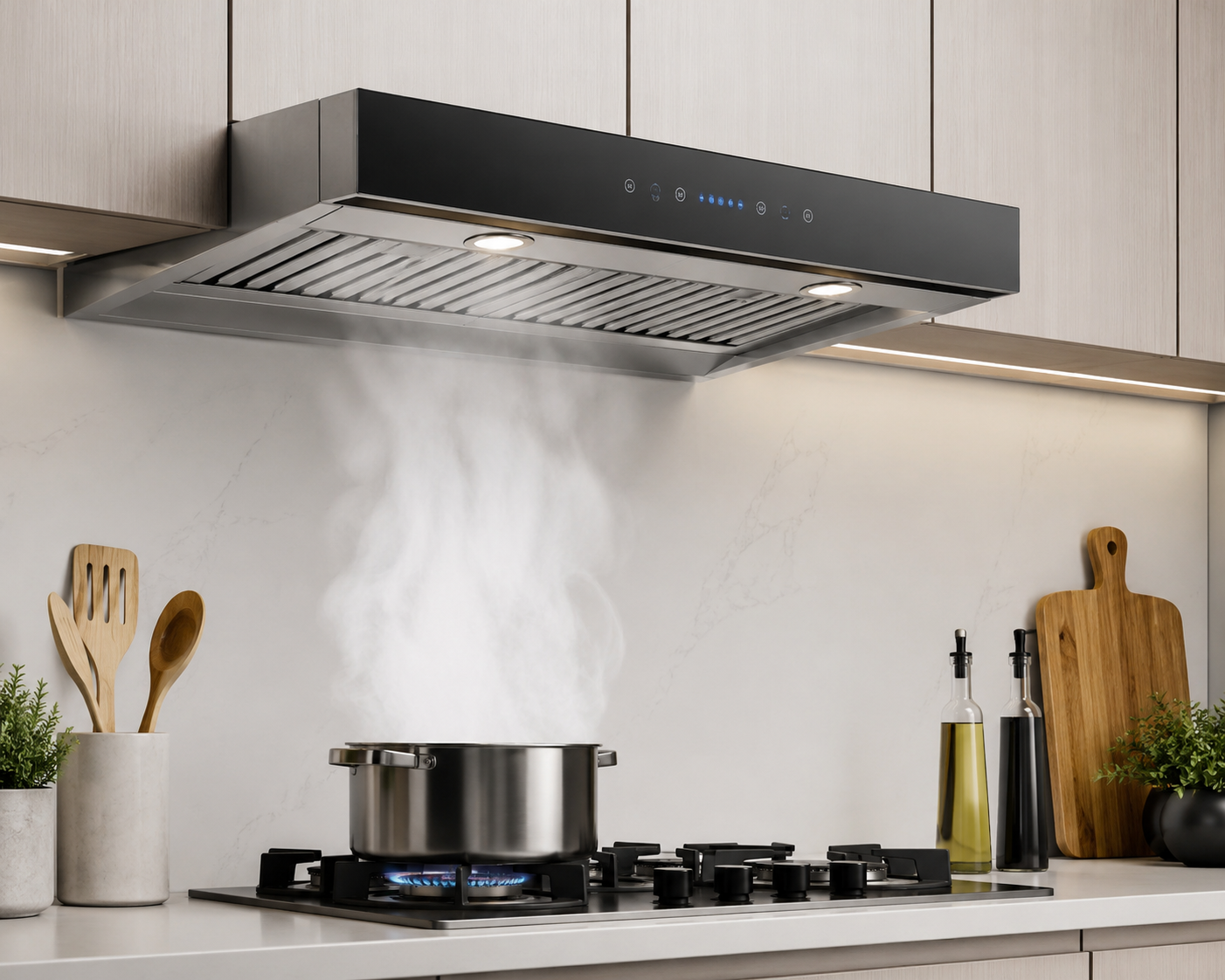
Cooking without a good range hood gets old fast. Smoke lingers, grease coats your cabinets, and your whole apartment smells like last night’s dinner. If your kitchen has no ductwork, though, a traditional vented hood is not an option. That is exactly where ductless range hoods come in.
A ductless, or “ventless,” range hood pulls smoke and cooking odors through a filter and then recirculates the cleaned air back into your kitchen. There is no vent pipe, no wall cutout, and no contractor visit required. In fact, most models install in under an hour. This makes them a popular pick for renters, condo owners, and anyone working with an older home that was never built with exterior venting in mind.
This guide walks through what actually matters when shopping in 2026, along with a few standout picks worth considering. We will also cover maintenance, installation, and the questions people ask most often before buying.
How Ductless Range Hoods Actually Work
Ductless hoods use a fan to pull air up through one or more filters. Most models rely on a combination of aluminum mesh filters and activated charcoal filters. The mesh filter traps grease particles first. Then the charcoal filter absorbs odors before the air gets pushed back into the room.
This setup differs quite a bit from ducted hoods, which push air straight outside. Because ductless models recirculate air instead of removing it, they generally cannot match the raw power of a ducted system. Still, today’s better models come surprisingly close, especially for everyday cooking like sautéing, simmering, and light stovetop use.
Because charcoal filters absorb odors rather than physically exhausting them, they need regular replacement. Most manufacturers recommend swapping the charcoal filter every three to six months, depending on how often you cook. Skipping this step is the number one reason people feel disappointed with their hood’s performance.
What To Look For When Buying a Ductless Range Hood
Shopping for a range hood can feel overwhelming at first, since specs sheets are full of numbers that mean little without context. Here is what genuinely matters.
CFM (Cubic Feet per Minute): This number measures airflow. Lighter cooks, like those who mostly boil pasta or make toast, can get by with 100 to 200 CFM. Serious home cooks who sear, stir-fry, or cook with gas should look for 300 CFM or higher. Heavy-duty cooking, including wok use or grilling indoors, benefits from 600 CFM or more.
Noise level (measured in sones): A quieter hood makes a real difference during everyday cooking. Anything under 3 sones runs fairly quiet, while models in the 6 to 7 sone range sound closer to a running dishwasher. If you cook daily, prioritize a lower sone rating, even if it means paying a bit more.
Filter type and replacement cost: Look closely at how often the filters need replacing and how much replacements cost. Some brands charge $15 to $20 per filter, while others use washable, reusable mesh that only needs occasional cleaning. Over a few years, this cost difference adds up.
Size and mounting style: Ductless hoods generally come in under-cabinet, wall-mounted, and insert styles. Under-cabinet models fit beneath existing cabinetry and suit most kitchen layouts. Wall-mounted units work well in open kitchens without upper cabinets. Insert models slide into an existing hood shell, which makes them ideal for renovations.
Controls and extra features: Touch controls, gesture sensing, and smartphone compatibility have all become more common in 2026. These features add convenience, but they are not essential. A dependable motor and solid filtration matter far more than flashy extras.
Top Ductless Range Hood Picks for 2026
Based on current market reviews, buyer feedback, and typical performance data across major retailers, here are standout picks across a few common categories.
Best Overall: Broan-NuTone’s non-ducted range hood line remains a go-to pick for good reason. It offers dependable airflow, straightforward controls, and a classic design that fits most kitchens without looking out of place. Replacement filters are widely available, which makes long-term upkeep simple.
Best Budget Pick: Comfee’s 30-inch convertible model delivers solid basic performance at a lower price point. It works well for apartments and smaller kitchens, and installation takes very little time. It will not out-power a professional-grade hood, but for everyday cooking, it gets the job done.
Best for Small Kitchens: CIARRA’s slim-profile ductless models are built specifically for tight spaces. Their compact depth keeps the hood from crowding your cabinets, which matters a lot in condos and smaller rentals.
Best High-Power Option: Several 600 to 700 CFM models, including options from COSMO and similar brands, cater to serious home cooks. These stronger units handle searing, wok cooking, and gas ranges far better than entry-level hoods.
Best Quiet Option: FIREGAS and comparable rust-resistant models tend to run quieter at moderate speeds, which makes them a strong pick for open-concept kitchens where noise carries into living spaces.
Before buying any model, always check current owner reviews and confirm exact CFM, sone ratings, and filter costs directly on the retailer’s product page, since manufacturers do update specs from year to year.
Ducted vs. Ductless: Which One Actually Makes Sense?
Ducted range hoods remain the gold standard for raw performance, since they exhaust air straight outside instead of recirculating it. That said, not every kitchen supports ductwork, and that is precisely where ductless models shine.
Renters, in particular, benefit from ductless hoods because installation requires no permanent changes to the building. Homeowners in older houses, especially those built before the 1980s, often lack existing duct pathways, and running new ductwork can get expensive fast. In these situations, a quality ductless hood offers a practical middle ground between doing nothing and undertaking a major renovation.
According to the U.S. Environmental Protection Agency, proper kitchen ventilation plays a meaningful role in maintaining healthy indoor air quality, since cooking releases particulates and combustion byproducts that can build up indoors. You can review the EPA’s guidance on improving indoor air quality for a deeper look at why ventilation matters beyond just odor control.
Installation Tips for Ductless Range Hoods
Most ductless range hoods install without professional help, which is one of their biggest selling points. Still, a few tips make the process smoother.
First, measure your available space carefully before ordering, since even a half-inch difference can cause fitting issues under existing cabinetry. Next, check whether your model requires hardwiring or simply plugs into a standard outlet, because this affects installation time significantly. Many newer models plug in directly, which means most people finish installation in under an hour.
Also, confirm your cabinet material can support the mounting hardware included with your hood. Older or particle-board cabinets sometimes need reinforcement before installation. Finally, always install the charcoal filter correctly before first use, since running the unit without it will send unfiltered air right back into your kitchen.
Maintenance Tips That Actually Extend Performance
A range hood only works as well as its filters allow. Clean the mesh grease filter every two to four weeks, either by hand or in your dishwasher if the manufacturer allows it. Replace charcoal filters every three to six months, even if you do not notice an obvious smell problem yet, since odor absorption fades gradually rather than all at once.
Wipe down the exterior surface regularly too, especially around the buttons and edges where grease tends to accumulate. If your model has a light, check the bulb periodically, since a burned-out bulb often gets mistaken for a bigger issue. Simple habits like these keep performance consistent for years rather than months.
How Much Do Ductless Range Hoods Cost in 2026?
Pricing has stayed fairly stable this year, though it still varies quite a bit by size and power. Budget models generally start around $70 to $100. These smaller units typically offer 100 to 200 CFM and basic mesh filtration, which suits light cooking needs.
Mid-range models usually run between $150 and $250. This price range often includes stronger motors, quieter operation, and better filter systems. Most everyday home cooks find their sweet spot somewhere in this bracket.
Premium options can climb to $300 or more, especially for wider units with 600 CFM or higher, smart controls, and premium finishes like brushed stainless steel. These models suit serious home cooks who want performance closer to a professional-grade system.
Do not forget ongoing costs either. Charcoal filter replacements typically run $15 to $25 each, and most households replace them two to four times a year. Over five years, that adds up to a meaningful chunk of your total cost, so factor it into your budget upfront rather than as an afterthought.
Common Mistakes to Avoid When Buying a Ductless Range Hood
A lot of buyers make the same handful of mistakes, and avoiding them can save real frustration down the road.
Choosing based on price alone. The cheapest option often comes with a weaker motor and a filter system that struggles with anything beyond light cooking. If you cook often, spending a bit more upfront usually pays off through better performance and fewer replacement parts.
Ignoring the noise rating. Many buyers focus entirely on CFM and skip right past the sone rating. As a result, they end up with a powerful hood that sounds like a jet engine every time they turn it on. Always check both numbers together before deciding.
Skipping filter maintenance. Even the best hood on the market will underperform if you forget to replace the charcoal filter on schedule. Set a calendar reminder if you tend to forget these small but important tasks.
Underestimating kitchen size. A hood that works beautifully in a small studio apartment may struggle in a larger, open kitchen. Match the CFM rating to your actual square footage and cooking habits, not just the hood’s price tag or appearance.
Overlooking mounting requirements. Some models need hardwiring, while others simply plug into a nearby outlet. Confirm this detail before purchasing, especially if you rent and cannot make permanent electrical changes to your unit.
Are Ductless Range Hoods Energy Efficient?
Most ductless range hoods use fairly modest amounts of electricity, especially compared to larger kitchen appliances. A typical motor draws somewhere between 65 and 200 watts, depending on speed and size. Running your hood for an hour a day costs only a small amount on your monthly electric bill.
LED lighting has also become standard on most 2026 models, which cuts energy use even further compared to older incandescent bulbs. Some manufacturers now advertise ENERGY STAR-adjacent efficiency claims, though range hoods themselves are not always covered under the official ENERGY STAR certification program the way refrigerators or dishwashers are. Still, choosing a model with LED lighting and a well-rated motor keeps long-term energy costs low.
If sustainability matters to you, look for hoods with variable speed settings rather than a single on-off switch. Lower speeds use less power for lighter cooking tasks, and you can reserve full power only for heavier cooking sessions. This small habit adds up over the life of the appliance, both in energy savings and filter longevity.
Local Considerations for U.S. Kitchens
Building codes and kitchen layouts vary quite a bit across the country, and that affects which range hood makes sense for your home. Many U.S. apartments built in dense cities like New York, Chicago, and Boston were never designed with exterior venting in older units, which makes ductless hoods especially popular there. Meanwhile, newer suburban builds across the Sun Belt more often include existing ductwork, giving homeowners the choice between ducted and ductless upgrades.
If you rent, always check your lease before installing any hardwired appliance, since some landlords require plug-in models only. For a deeper look at kitchen upgrades that work well in rental units, check out our complete guide to renter-friendly kitchen improvements, which covers several other simple upgrades beyond ventilation.
Final Thoughts
A ductless range hood will not match a professional exhaust system in raw power, but for most everyday kitchens, that level of power was never necessary anyway. Focus on CFM that matches your cooking style, a noise level you can actually live with, and a filter system that fits your budget long term. Get those three things right, and you will end up with a hood that keeps your kitchen fresher for years to come.
Frequently Asked Questions
Do ductless range hoods actually work? Yes, they do, though performance varies by model. A good ductless hood removes a large share of smoke and cooking odors, especially for everyday stovetop use. Heavy-duty cooking, like deep frying or wok searing, will always perform better with a true ducted system.
How often should I replace the charcoal filter in a ductless range hood? Most manufacturers recommend replacement every three to six months. Households that cook daily, especially with strong-smelling foods, should replace filters closer to the three-month mark.
Are ductless range hoods as powerful as ducted ones? Not quite. Ducted hoods exhaust air outside, which generally gives them an edge in raw airflow. That said, higher-CFM ductless models have closed much of that gap in recent years.
Can I install a ductless range hood myself? In most cases, yes. Many models simply mount under a cabinet and plug into a standard outlet, which means no electrician or contractor is required. Always check the manufacturer’s instructions first, since some models do require hardwiring.
What CFM do I need for my kitchen? Light cooks can get by with 100 to 200 CFM. Everyday home cooks should look for at least 300 CFM, while serious cooks using gas ranges or wok cooking will want 600 CFM or higher.
Are ductless range hoods good for renters? Yes, they are one of the most popular ventilation upgrades for renters, since they typically require no permanent changes to the apartment. Just confirm your lease allows any hardwired models before purchasing one.
How loud are ductless range hoods? Noise varies significantly by model. Quieter units run around 2 to 3 sones, while more powerful hoods can reach 6 to 7 sones on their highest setting, which feels comparable to a running dishwasher.
Do ductless range hoods need special cleaning? Not especially, but they do need consistent upkeep. Clean the mesh grease filter every few weeks, and replace the charcoal filter on schedule, even if odors seem manageable, since performance fades gradually over time.