

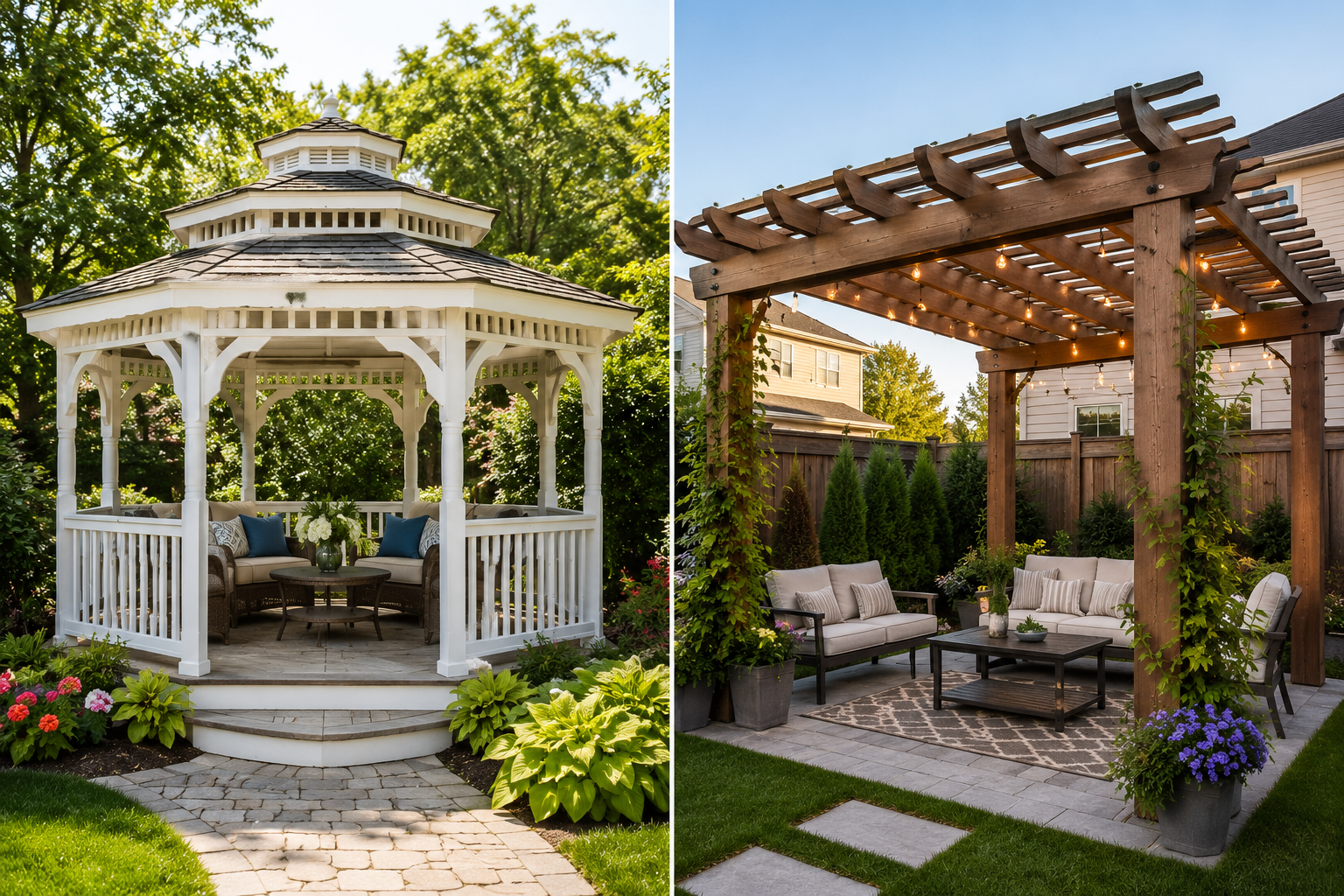
You want more usable space in your backyard. But you keep going back and forth between two options. A gazebo gives you full coverage and a classic look. A pergola gives you an open, modern feel with partial shade. Both structures add value and function to your outdoor space. So the right choice really comes down to your climate, your budget, and how you plan to use the area.
In this guide, we will break down the real differences between a gazebo and a pergola. We’ll also cover current 2026 pricing, permit requirements, and maintenance needs. That way, you can make a confident decision. Along the way, we’ll point out where local climate and city rules across the US can shift the right answer for your yard.
What Is a Gazebo?
A gazebo is a freestanding structure. It has a solid, often peaked or domed roof. That roof design gives you full protection from sun, rain, and wind. Because of that coverage, gazebos work well as a year-round outdoor room. This holds especially true if you add screens or curtains to block bugs and wind.
Most gazebos sit on their own foundation, separate from the house. That freestanding design makes them a strong choice for garden focal points. This works especially well in larger yards. The structure can anchor a seating area or an outdoor dining space there. Many homeowners also add flooring, lighting, and even electrical wiring. That turns a basic gazebo into something closer to an outdoor sunroom.
What Is a Pergola?
A pergola is an open structure with a slatted or louvered roof. Instead of blocking sunlight completely, a pergola filters it. So you get dappled shade rather than full shade. This makes pergolas a popular choice for patios. Many homeowners attach one directly to the house for a seamless indoor-outdoor flow.
Pergolas don’t need a solid roof or full flooring. Because of that, they generally cost less to build and install. Modern motorized louvered pergolas have changed this equation somewhat. They can open and close on demand. That flexibility lets a single structure handle both full sun days and sudden rain. That combination used to be the gazebo’s main advantage.
Gazebo vs Pergola: Cost Comparison in 2026
Pricing varies by material, size, and region. Still, current market data gives you a solid starting point for budgeting.
A standard pergola typically costs between $2,200 and $6,400 installed. Basic wood or vinyl kits sit at the lower end of that range. Custom-built or larger designs push costs higher. Motorized louvered pergolas cost significantly more. They often run from $8,000 up to $15,000 or beyond. That price includes automation, integrated lighting, and rain sensors.
A standard gazebo typically costs between $2,700 and $10,000 installed. Custom-built gazebos can run even higher. Some reach $15,000 to $30,000, depending on size and materials. The higher price reflects the more complex roof framing. It also reflects the added foundation work and the larger structural footprint most gazebos require.
As a general rule, an entry-level wooden gazebo costs roughly 30 to 50 percent more. Compare that to an entry-level wooden pergola of similar size. If you compare a high-end aluminum louvered pergola to a vinyl gazebo, though, the price gap narrows considerably. Want a detailed breakdown of current national pricing trends? Angi’s home improvement cost guides offer verified, regularly updated estimates. Check them before you request contractor quotes. You can review their full comparison at angi.com.
Weather Protection and Climate Considerations
Your local climate should weigh heavily in this decision. It’s one of the most overlooked factors homeowners run into after installation.
Do you live somewhere with long, sunny stretches and mild rainfall? Think much of California or the Southwest. A pergola often makes more sense there. You’ll get shade when you want it, plus airflow. You won’t pay for a fully enclosed structure you won’t use most of the year. Homeowners in Los Angeles, for example, often lean toward pergolas. Sunny days dominate the calendar there. A solid gazebo roof would block out the very sunshine many residents want to enjoy outdoors.
Do you live somewhere with heavy rain, strong wind, or significant snowfall? Think parts of the Midwest, the Pacific Northwest, or the Northeast. A gazebo tends to hold up better in those spots. Its solid roof sheds snow and rain more effectively. The enclosed structure protects furniture and guests from wind-driven weather too. Some homeowners in these climates add clear vinyl panels to their gazebo during winter. That extends usability into the colder months.
Can’t decide between full coverage and full flexibility? A motorized louvered pergola gives you a middle path. These systems open for full sun and close for complete rain protection. You get much of a gazebo’s weather resistance. And you still keep the pergola’s open, modern look.
Permits, Setbacks, and HOA Rules to Know Before You Build
Check your local permitting requirements before you commit to either structure. This step trips up more homeowners than any design decision.
Freestanding pergolas under roughly 100 to 200 square feet often only need a zoning review. They don’t always require a full building permit. However, any structure attached directly to your house typically needs a permit. It counts as a home addition in most municipalities. Motorized or solid-roof pergola systems face growing scrutiny too. Cities increasingly classify them as covered structures. That can trigger permit requirements regardless of size.
Gazebos over 100 square feet almost always require a permit. Any gazebo with electrical wiring or plumbing needs one as well. Most cities also enforce setback rules. These typically require 3 to 10 feet of clearance from property lines. They also require 5 to 15 feet from your home or another primary structure.
Do you belong to a homeowners association? Check its architectural review requirements too. HOA rules often go further than municipal codes. They can restrict structure height, roof style, or even paint color. Permit fees themselves usually run between $100 and $600 in 2026. But the real cost of skipping this step comes from potential delays or forced modifications after the fact.
Maintenance: What Each Structure Actually Requires
Long-term upkeep differs quite a bit between these two structures. That difference should factor into your decision just as much as upfront cost.
Wood pergolas need regular staining or sealing. Plan on this every one to three years to prevent warping, cracking, and sun damage. Aluminum and vinyl pergolas require far less maintenance. Usually, just occasional cleaning does the job, though they cost more upfront.
Gazebos carry similar material-based maintenance needs. But their added components, like flooring, screens, or electrical systems, add extra upkeep on top of the basic structure. A screened gazebo, for example, needs periodic screen repair or replacement. This matters most in areas with harsh sun or frequent storms.
Does low maintenance matter most to you? Vinyl or aluminum versions of either structure will save you time and money over the years. That holds true even though they cost more initially than wood.
Which One Adds More Home Value?
Both structures can boost your home’s resale value. Outdoor living space consistently ranks high on buyer wish lists. Landscaping improvements, including permanent outdoor structures, can add meaningful value to a home’s overall appeal.
Gazebos tend to add strong value in regions where outdoor living space is highly desirable. This works especially well where a permanent, all-season structure appeals to buyers. Pergolas often recover a strong share of their installation cost too. This happens particularly when they’re attached to the home and clearly extend the usable living space.
Is resale value a top priority for you? Talk with a local real estate agent about what buyers in your specific market tend to expect. Our guide on planning a backyard outdoor living space covers more details on which upgrades tend to pay off most in different regions.
Actionable Tips for Choosing Between a Gazebo and a Pergola
Start by mapping out how you’ll actually use the space. Do you want a dedicated outdoor dining area protected from rain? Lean toward a gazebo. Do you want a shaded seating area that still lets in natural light? A pergola fits better.
Next, check your local climate data for average rainfall and sun exposure. Areas with frequent rain favor a gazebo’s solid roof. Sunnier climates get more everyday use out of a pergola’s open design.
Then, call your local building department before you request quotes. Ask about permit requirements, setback rules, and whether your HOA has additional restrictions. This step can save you from a redesign after you’ve already paid for plans or materials.
Finally, get at least three contractor quotes for your specific structure and material choice. Prices vary significantly by region. So a national average won’t tell you what your project will actually cost in your zip code.
Frequently Asked Questions
Is a gazebo or pergola cheaper? Pergolas typically cost less than gazebos. A standard pergola runs between $2,200 and $6,400 installed. A standard gazebo runs between $2,700 and $10,000 or more, depending on size and materials.
Which is better for rain, a gazebo or a pergola? A gazebo offers better rain protection because of its solid roof. A standard pergola offers little rain protection. Motorized louvered pergolas can close completely, though, to match a gazebo’s weather resistance.
Do I need a permit to build a gazebo or pergola? It depends on size and attachment. Freestanding pergolas under about 100 to 200 square feet often skip a full permit. Gazebos over 100 square feet and any structure with electrical wiring almost always require one.
Which adds more value to my home, a gazebo or a pergola? Both can add meaningful resale value. Gazebos often appeal to buyers looking for permanent, all-season outdoor space. Pergolas add value especially when attached directly to the home.
Can a pergola be enclosed like a gazebo? Yes, to an extent. Adding curtains, retractable screens, or a motorized louvered roof lets a pergola offer more weather protection. Still, it won’t match a gazebo’s fully solid, enclosed design.
Which structure requires less maintenance? Vinyl or aluminum versions of either structure need less maintenance than wood. Between the two structures at the same material level, pergolas usually need slightly less upkeep. They have fewer components, like flooring or screens.
What size gazebo or pergola do most homeowners choose? Many homeowners choose a structure between 10×10 feet and 14×14 feet. That size fits comfortably in most backyards. It still allows space for furniture and movement.
Which is better for a small backyard, a gazebo or a pergola? A pergola generally works better in smaller yards. Its open design feels less bulky. It can often attach to the house instead of requiring its own separate footprint.
Final Thoughts
Choosing between a gazebo and a pergola comes down to how you want to use your backyard. It also depends on what your local climate demands. A gazebo gives you full, reliable protection and a classic garden feel. A pergola gives you an open, modern look with more flexibility and a lower price tag. Weigh your climate, your budget, your permit requirements, and your long-term maintenance tolerance. Do that, and you’ll land on the structure that actually fits your life, not just your Pinterest board.