

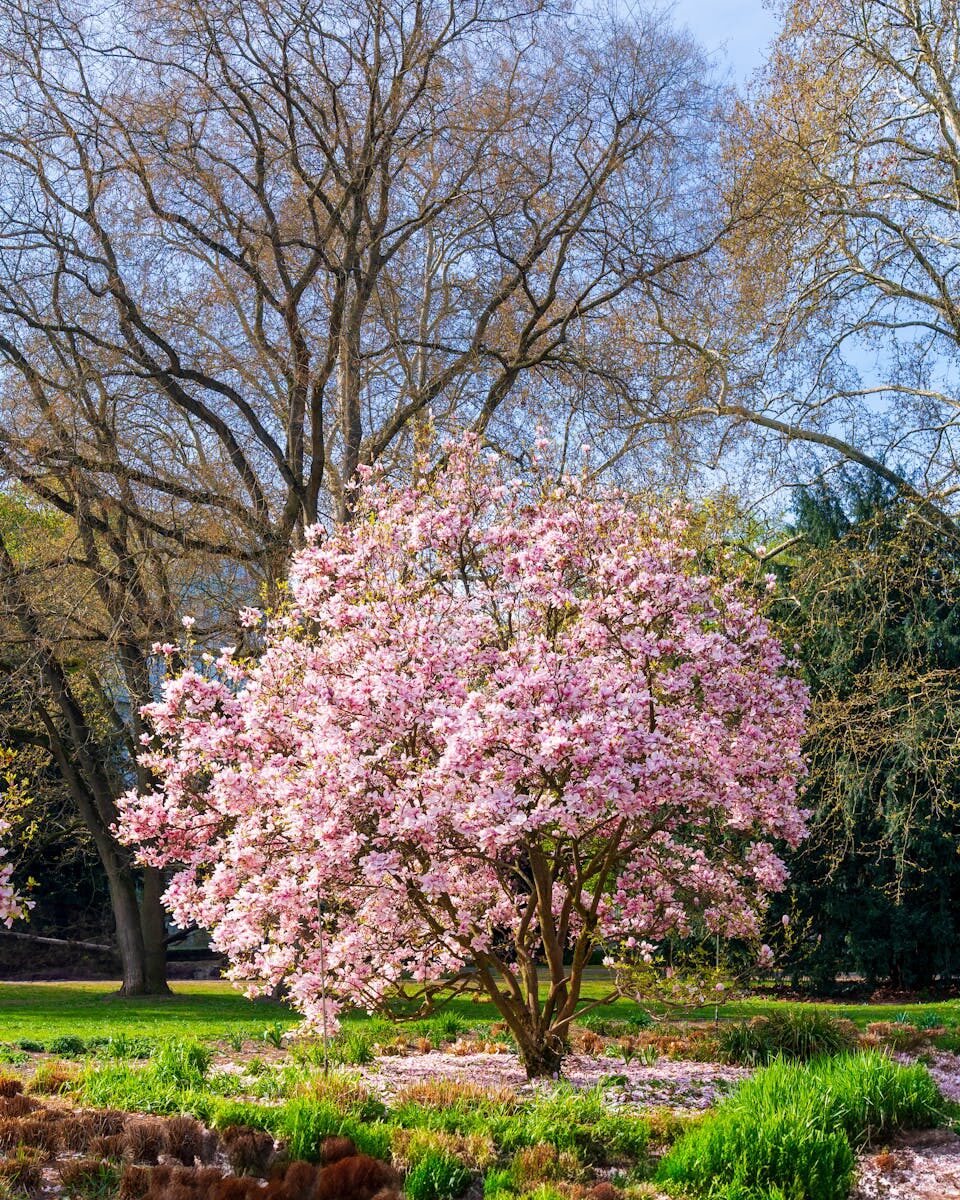
Some trees are planted for shade. Some simply because the nursery had them on sale and they looked healthy enough. And then there are specimen trees — the ones planted with pure intention, chosen for their beauty, their presence, and their ability to transform a landscape from ordinary to genuinely memorable.
If you’ve ever driven past a yard and found yourself slowing down to admire a single extraordinary tree — a Japanese maple blazing crimson in the fall, a weeping cherry cascading over a stone pathway, a towering dawn redwood commanding an entire front lawn — you’ve already experienced what a specimen tree can do. You just may not have had a name for it.
In 2026, as American homeowners continue to invest more meaningfully in outdoor living and curb appeal, specimen trees have moved firmly into the spotlight. Whether you’re landscaping a new property in suburban Atlanta, GA, refreshing a mature yard in Portland, OR, or designing a showcase garden in Dallas, TX, understanding specimen trees is the first step toward creating a landscape that leaves a lasting impression.
What Exactly Is a Specimen Tree?
A specimen tree is a tree planted primarily for its outstanding ornamental qualities — grown and positioned in the landscape so that it can be admired as an individual, standalone plant rather than as part of a mass planting, hedge, or canopy.
What makes a tree worthy of “specimen” status? It typically possesses one or more exceptional characteristics that set it apart:
- Dramatic seasonal color — fall foliage, spring blooms, or year-round evergreen richness
- Distinctive form or silhouette — weeping, columnar, spreading, or sculptural branching structure
- Unique bark or texture — papery white birch bark, the camouflage-patterned trunk of a sycamore, the deeply furrowed ridges of an old oak
- Exceptional flowers or fruit — flowering cherries, crabapples, magnolias, and dogwoods are classic examples
- Impressive scale — a tree large enough to define the spatial character of the entire yard
The key distinction is intentionality. A specimen tree is chosen, placed, and maintained with the conscious goal of making it the visual anchor of its surroundings. It’s the landscape equivalent of a statement piece in interior design — the element everything else is organized around.
Why Specimen Trees Matter: The Core Benefits
They Create an Instant Focal Point
Good landscape design, like good room design, relies on focal points — elements that draw the eye and give visual structure to a space. Without them, a yard can feel random and restless, full of plants that compete without any clear hierarchy.
A well-placed specimen tree resolves that immediately. The eye finds it, the mind relaxes, and the rest of the landscape falls into supporting context around it. It’s one of the most effective design moves available to a homeowner or landscape designer, and it works regardless of yard size or budget.
They Add Significant Property Value
Trees, in general, are known to increase property values — but specimen trees carry particular weight in that equation. A mature, healthy, extraordinary specimen tree is irreplaceable in a way that a shrub border or flower bed simply isn’t. It cannot be purchased at full size and installed overnight; it represents years or decades of growth.
According to the Arbor Day Foundation, mature trees can add anywhere from 10 to 15 percent to a property’s value. With signature trees in prominent landscape positions contributing meaningfully to both curb appeal and appraiser assessments. Learn more about trees and property value at arborday.org.
In competitive residential markets across the USA — Denver, CO, Raleigh, NC, Nashville, TN, Phoenix, AZ — a landscape anchored by a mature or well-established specimen tree routinely stands out in listing photos and buyer walkthroughs alike.
They Provide Environmental Benefits
Beyond aesthetics, specimen trees deliver genuine ecological value. A single large deciduous tree can transpire hundreds of gallons of water per day. Significantly cooling the microclimate around a home during summer months. Strategically placed, a specimen tree on the southwest corner of a house can reduce summer cooling costs meaningfully by blocking afternoon sun.
Specimen trees also provide habitat for birds, pollinators, and other wildlife. Native specimen trees in particular — like the American sweetgum, tulip poplar, or river birch. Support complex local ecosystems that non-native ornamentals often cannot replicate.
They Give a Landscape Permanence and Character
There’s something about a grand tree that a house simply cannot project on its own. Specimen trees age with a property in a way that communicates history, stewardship, and deep-rooted character. A neighborhood lined with mature specimen trees feels fundamentally different. More established, more dignified, more desirable — than one planted with nothing but foundation shrubs and turf.
For new construction homes especially, a single large or fast-growing specimen tree can do more to make a property feel established and lived-in than any other single landscaping investment.
Best Types of Specimen Trees for American Landscapes
Choosing the right specimen tree requires matching ornamental qualities with your specific climate zone, soil type, available space, and design goals. Here are some of the most outstanding performers across U.S. regions.
Japanese Maple (Acer palmatum)
Few trees in the world command as much admiration in as small a footprint as the Japanese maple. With hundreds of cultivars ranging from compact weeping forms to upright varieties reaching 25 feet, there is a Japanese maple for virtually every landscape scale and style.
Their appeal is undeniable: delicately dissected or lobed leaves in shades ranging from bright lime green to deep burgundy. Spectacular fall color in reds, oranges, and golds, and an elegant branching architecture.
Best for: USDA zones 5–8. Thrives across much of the eastern and western USA. Performs beautifully in Pacific Northwest gardens, Mid-Atlantic landscapes, and Southeast yards with partial afternoon shade.
Design use: Place as a front yard anchor near an entry pathway, or as a patio focal point in a courtyard or Japanese-inspired garden.
Weeping Cherry (Prunus pendula)
The weeping cherry is arguably the most celebrated flowering specimen tree in American residential landscaping — and for good reason.
Its pendulous, sweeping form is architecturally graceful even outside of bloom season. And it works equally well as a standalone lawn specimen or as a focal point at the terminus of a garden path.
Best for: USDA zones 4–8. Widely adaptable across much of the continental USA, from New England and the Midwest to the Upper South.
Design use: Plant in an open lawn area where its full weeping canopy can be appreciated from a distance. Underplant with spring bulbs — daffodils and grape hyacinth — to amplify the seasonal display.
Magnolia (Magnolia spp.)
Magnolias are the quintessential specimen trees of the American South, but their appeal and adaptability extend far beyond Georgia, Mississippi, and Louisiana. Both evergreen varieties (the classic Magnolia grandiflora) and deciduous types (saucer magnolia, star magnolia, Little Gem) offer outstanding specimen value.
The blooms are among the most spectacular in the tree world — large, fragrant, and produced in early spring on deciduous varieties or throughout summer on evergreens. The leathery, glossy foliage of evergreen magnolias provides year-round structure and privacy screening in addition to their ornamental role.
Best for: Evergreen varieties in zones 7–9; deciduous varieties in zones 4–9 depending on cultivar.
Design use: A Magnolia grandiflora planted as a front yard anchor in a Southern landscape is as timeless a design choice as exists. Deciduous varieties work beautifully near patios and outdoor living spaces where the spring bloom can be enjoyed up close.
River Birch (Betula nigra)
For landscape designers and homeowners seeking a native specimen tree with year-round interest and outstanding adaptability, the river birch is one of the very best choices available in the USA.
Its most distinctive feature is its exfoliating bark — peeling layers of creamy white, salmon, and cinnamon-brown that create extraordinary visual texture in the winter landscape. Unlike European white birch, river birch is highly resistant to the bronze birch borer.
Best for: USDA zones 4–9. One of the most widely adaptable native specimen trees in the country.
Design use: Plant as a multi-stem clump (three stems grouped closely together) for maximum bark effect. Works brilliantly near water features, in naturalistic gardens, and as a corner specimen in large residential yards.
Crape Myrtle (Lagerstroemia indica)
In the American South and Southwest, the crape myrtle occupies a place in residential landscaping that few trees can claim. It is the dominant ornamental tree of entire regions. And with good reason: it blooms prolifically from midsummer into fall in colors ranging from pure white to deep magenta, offers stunning fall foliage, and displays gorgeous mottled bark through winter.
Best for: USDA zones 6–9. Thrives in Texas, Oklahoma, Georgia, the Carolinas, Tennessee, Florida, and increasingly in California and Arizona.
Design use: As a multi-stem specimen in a front yard planting bed, along a driveway as a canopy accent, or flanking an entry. Note: avoid the common mistake of “crape murder” — the severe topping that disfigures these trees. Let them grow to their natural form for maximum beauty and structural integrity.
Dawn Redwood (Metasequoia glyptostroboides)
For homeowners with larger properties who want something truly extraordinary. A tree with prehistoric credentials and a silhouette unlike anything else in a typical American neighborhood — the dawn redwood is in a category of its own.
Once thought to be extinct and known only from fossils, living specimens were discovered in China in the 1940s. Today it’s a cherished landscape specimen: fast-growing, deciduous (unusual for a conifer), with feathery, soft needles that turn a warm russet-orange in fall before dropping.
Best for: USDA zones 4–8. A large-scale specimen that requires space — it can reach 70–100 feet at maturity.
Design use: Ideal as a landmark tree on larger properties or as a street tree in wide boulevards. In Midwest and Northeast landscapes with adequate space, it becomes a generational asset.
Ginkgo (Ginkgo biloba)
The ginkgo is one of the oldest living tree species on earth — a genuine living fossil. Its fan-shaped leaves and intense golden-yellow fall color make it one of the most visually stunning specimen trees available to American gardeners.
It is also remarkably tough. Ginkgos tolerate urban pollution, compacted soils, drought, and a wide range of conditions that would stress less resilient trees. They’re long-lived beyond measure — individual trees in Asia are documented at over 1,000 years old.
Best for: USDA zones 3–9. One of the most cold-hardy and widely adaptable specimen trees available. Note: plant only male varieties to avoid the malodorous fruit produced by female trees.
Design use: A powerful choice as a front yard focal point, a street-facing specimen, or an anchor in a formal garden design. Its symmetrical, upright form works particularly well in architectural or structured landscape settings.
Paperbark Maple (Acer griseum)
If there is a specimen tree that impresses garden designers and knowledgeable plant enthusiasts more than almost any other, it may well be the paperbark maple. Its cinnamon-colored bark peels in thin, papery layers year-round, creating a visual texture that is genuinely breathtaking in winter sunlight.
Best for: USDA zones 4–8.
Design use: Place where it can be backlit by low winter or afternoon sun to maximize the luminous quality of the peeling bark. Spectacular near patios, entry gardens, and anywhere it will be viewed at close range.
Landscaping Ideas Using Specimen Trees
Knowing which tree to choose is only half the equation. Where and how you place it determines whether it fulfills its potential as a true landscape centerpiece.
Create a Dramatic Entry Statement
The approach to a home is one of the highest-value opportunities in residential landscaping. A single specimen tree — a weeping cherry, a multi-stem river birch, or a Japanese maple — positioned to be viewed from the street as you approach the front door creates an arrival experience that flat foundation plantings simply cannot deliver.
Pair the tree with a simple, clean planting bed of groundcover or low ornamental grasses and allow the tree to breathe with space around it. Resist the urge to crowd it.
Use One as a Garden Room Anchor
In larger yards divided into defined outdoor “rooms” — a dining terrace, a lawn panel, a cutting garden — a specimen tree positioned at the corner or center of a space gives that room a sense of enclosure and identity. A shade-tolerant Japanese maple anchoring a shaded garden room, for example, creates a destination that draws the eye and rewards the walk.
Frame a View or Pathway
Two matching specimen trees placed on either side of a garden pathway create a natural gateway. Pair upright, columnar forms (columnar hornbeam, Princeton Sentry ginkgo) for formal symmetry, or use contrasting weeping and upright forms for a more dynamic, naturalistic effect.
Complement an Outdoor Living Space
A specimen tree positioned near a patio, deck, or pool area serves multiple functions simultaneously: it provides shade, creates privacy, adds seasonal interest overhead, and gives the outdoor room a sense of maturity and permanence that no pergola or umbrella can replicate. Choose flowering or fragrant varieties — like magnolia or fringe tree — to add a sensory dimension to the experience.
Design for Four-Season Interest
The best specimen tree selections offer something in every season — spring bloom, summer canopy, fall color, and winter bark, structure, or persistent fruit. When selecting your specimen, map out what it will look like in January and August, not just October. Trees like the paperbark maple, river birch, and crabapple deliver across all four seasons with distinction.
Related: How to Plan a Low-Maintenance Landscape Design for Your Home
How to Plant and Establish a Specimen Tree Successfully
Planting a specimen tree is an investment, and giving it the right start determines how quickly and fully it fulfills its potential.
1. Choose the right size to plant. Larger isn’t always better when it comes to planting trees. Research consistently shows that trees planted at smaller caliper sizes (1.5–2 inches trunk diameter) often establish faster. And catch up to larger-planted trees within a few years, because they experience less transplant shock. That said, if immediate visual impact is the goal — for a home sale, a special occasion, or a landscape renovation — larger specimens from a reputable nursery are a worthwhile investment.
2. Plant at the right depth. This is the single most common planting mistake made with trees. The root flare — the widening base where the trunk meets the roots — must be at or slightly above soil grade. Planting too deep is one of the leading causes of long-term tree decline in residential landscapes.
3. Water deeply and consistently in the first two years. The establishment period for a specimen tree is typically two to three years. During this time, consistent deep watering (slow, deep soaks rather than frequent shallow watering) is far more important than fertilization. A drip emitter or soaker hose ring placed at the drip line is an efficient approach.
4. Mulch correctly. Apply a 3–4 inch layer of organic mulch in a wide ring around the tree — extending to the drip line if possible — but keep mulch several inches away from the trunk. Never pile mulch against the trunk in a “mulch volcano.” Proper mulching conserves soil moisture, moderates temperature, and suppresses weed competition during the critical establishment years.
5. Stake only if necessary, and remove stakes promptly. Over-staking is nearly as damaging as under-staking. If your specimen tree requires staking for support, use soft, flexible ties and check them regularly. Remove all staking materials within 12 months of planting. Trees develop structural trunk strength by moving freely in the wind — permanent stakes prevent that process and produce weak trunks.
Final Thoughts
A specimen tree is one of the very few investments you can make in your property that genuinely appreciates over time — in beauty, in ecological value, and in the depth of character it lends to the landscape around it. Unlike a painted fence or a patio addition, a well-chosen specimen tree doesn’t just improve your property; it defines it.
Whether you’re drawn to the fiery drama of a Japanese maple, the stately permanence of a ginkgo, the ethereal spring bloom of a weeping cherry, or the prehistoric grandeur of a dawn redwood, there is a specimen tree suited to your space, your climate, and your vision.
Plant one well. Give it room to breathe. Watch it become the best thing about your yard — and maybe the best thing about your entire block.