

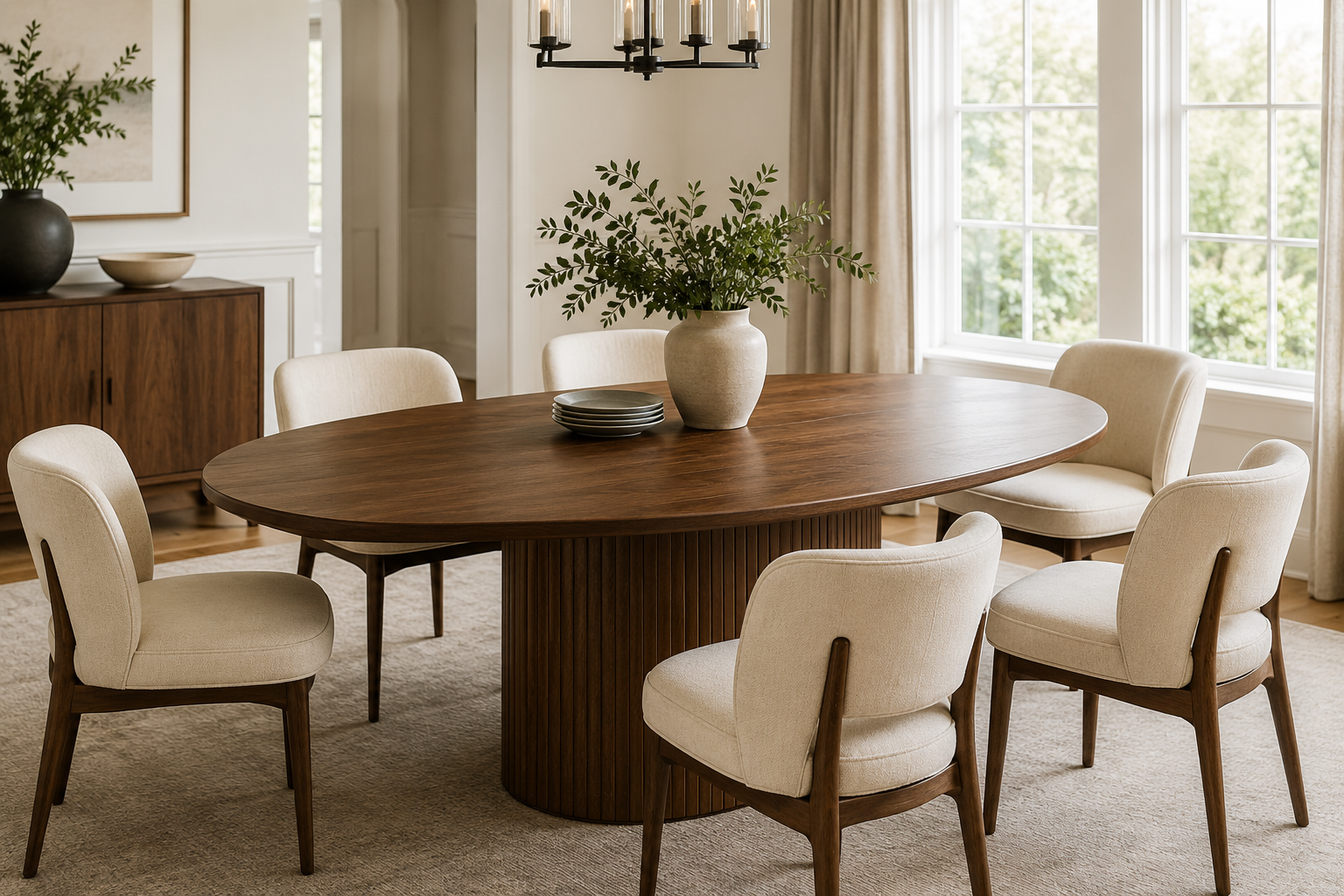
Shopping for a new dining table can feel surprisingly personal. After all, this is the piece where birthdays get celebrated, homework gets finished, and Sunday dinners turn into two-hour conversations. If you have been browsing showrooms or scrolling furniture sites lately, you have probably noticed that oval dining tables are having a real moment in 2026. They are showing up in everything from small city apartments to spacious farmhouse kitchens across the United States, and for good reason.
In this guide, we will walk through why oval tables continue to trend, which styles are leading the pack this year, how to pick the right size for your space, and what to look for in terms of materials and durability. We will also cover pricing, placement tips for typical American homes, and a few maintenance tricks that will keep your table looking new for years to come. By the end, you should feel confident enough to walk into a store, or click “add to cart,” without any second-guessing.
Why Oval Dining Tables Are Trending in 2026
Interior designers have been leaning into softer, rounded silhouettes for a few years now, and that shift shows no signs of slowing down. Oval tables combine the sociable, no-corners feel of a round table with the extra seating capacity of a rectangular one. As a result, they tend to work in almost any room shape, which is a big part of their appeal.
Beyond aesthetics, there are practical reasons homeowners are making the switch. First, oval tables reduce the risk of bumped hips and stubbed toes, since there are no sharp corners to navigate around. Second, they tend to fit better in narrow or awkwardly shaped dining rooms, which describes a huge number of homes built in the U.S. between the 1970s and 2000s. Finally, many newer oval designs include leaf extensions, so the table can expand for holiday gatherings and then shrink back down for everyday use.
According to design trend reports from major retailers, curved furniture, including oval and rounded-edge tables, has remained one of the top-requested styles heading into 2026, alongside warm wood tones and mixed-material bases.
Best Oval Dining Table Styles for 2026
Not all oval tables look alike, and the style you choose will shape the entire mood of your dining room. Here are the standout categories this year.
1. Modern Minimalist Oval Tables
Clean lines, matte finishes, and a single pedestal or trestle base define this look. These tables typically come in black, white, or natural oak tones, and they pair well with mixed dining chairs for a curated, collected-over-time feel. Because the base is often narrow, minimalist oval tables also offer more legroom, which is a small detail that makes a big difference during long dinners.
2. Modern Farmhouse Oval Tables
Farmhouse style has not gone anywhere, but the oval version feels fresher than the classic rectangular farmhouse table. Expect distressed wood finishes, turned or trestle legs, and warm brown or whitewashed tones. This style remains especially popular in suburban and rural areas across the Midwest and South, where larger dining rooms can comfortably fit a substantial farmhouse-style piece.
3. Mid-Century Inspired Oval Tables
Tapered wooden legs, walnut finishes, and a slightly retro silhouette define this category. Mid-century oval tables tend to be smaller and lighter in appearance, which makes them a smart pick for condos, apartments, and open-concept homes where visual “weight” matters.
4. Glam and Stone-Top Oval Tables
Marble, quartz, and travertine tabletops paired with metal or lacquered bases have surged in popularity this year. These tables photograph beautifully, and they tend to anchor a room rather than blend into it. However, natural stone requires more upkeep, so this style suits households that are comfortable with a bit of extra maintenance in exchange for a striking centerpiece.
5. Extendable Oval Tables
Extendable designs remain the most practical choice for many American families. A table that seats six on a normal Tuesday but expands to seat ten for Thanksgiving solves a real problem, especially since the average U.S. household hosts multiple gatherings each year. Look for self-storing leaves, since these save you from hunting through a closet every time company comes over.
How to Choose the Right Size
Getting the size right is arguably more important than picking a style, since even the most beautiful table will feel wrong if it overwhelms or underfills the room.
Start by measuring your space. As a general rule, you want at least 36 inches of clearance between the edge of the table and the nearest wall or piece of furniture, so chairs can slide out comfortably and people can walk past without squeezing through. If you have room for 48 inches, even better, especially in households where mobility or wheelchair access matters.
Match the size to your seating needs.
- A 60-inch oval table generally seats four to six people comfortably.
- A 72-inch oval table fits six to eight, depending on chair width.
- Anything over 84 inches usually accommodates eight to ten guests, which works well for larger families or frequent entertainers.
Consider your room’s proportions, not just square footage. A long, narrow dining room often suits an oval table better than a round one, since the elongated shape fills the space naturally without leaving awkward gaps on either side. Meanwhile, a nearly square room can work with either shape, so personal preference plays a bigger role there.
If you are unsure, painter’s tape is genuinely one of the most useful tools you can use before buying. Mark the table’s footprint directly on your floor, then walk around it for a day or two. You will know almost immediately whether the size feels right.
Oval vs. Round vs. Rectangular: Which Should You Choose?
This is one of the most common questions shoppers ask, and honestly, there is no universally correct answer. It depends on your room and your lifestyle.
Round tables promote conversation since everyone can see everyone else, but they seat fewer people for their footprint. Rectangular tables maximize seating and fit neatly against walls, but their corners can make small rooms feel cramped. Oval tables essentially split the difference: they offer more seating than a round table of the same width, while still keeping that soft, corner-free profile.
If your dining room is long and somewhat narrow, which describes many American homes with galley-style layouts, an oval table will likely feel more proportionate than either alternative.
Materials Guide: What Holds Up Best Long-Term
Material choice affects not just the look of your table, but also how well it survives daily life with kids, pets, and the occasional spilled glass of red wine.
Solid wood remains the gold standard for durability. Oak, walnut, and acacia are common choices in 2026, and all three can be refinished if scratches or water rings appear over the years. Solid wood tables cost more upfront, but they tend to last decades rather than years.
Engineered wood with veneer offers a budget-friendly middle ground. These tables look similar to solid wood at a glance, though they are less forgiving if you ever need to sand out a deep scratch.
Stone and quartz composite tops bring a luxurious look, and they resist heat and scratching remarkably well. That said, natural marble can stain if acidic liquids sit on it too long, so a sealant is worth asking about at purchase.
Glass tops create an airy, spacious feel, which works well in smaller rooms where you want the table to feel less visually heavy. However, glass shows fingerprints and dust more readily, so it demands more frequent wiping down.
For guidance on furniture material safety standards and testing, the Consumer Product Safety Commission publishes useful information on furniture stability and material regulations that apply to products sold in the U.S.
Placement Tips for American Dining Rooms
Home layouts vary widely across the country, so it helps to think about placement in the context of your specific region and home style.
In many Northeastern and Midwestern homes, particularly older colonials and craftsman-style houses, dining rooms tend to be fully enclosed and somewhat compact.
In newer construction across the Sun Belt, especially in Texas, Arizona, and Florida, open-concept layouts are far more common. Here, a larger oval table can serve as a visual anchor between the kitchen and living area, and sizes over 78 inches often look more proportionate against the open floor plan.
If your dining area doubles as a workspace, which has become increasingly common since more Americans continue working from home at least part-time, an oval table without a bulky center pedestal makes it easier to pull up a laptop without banging your knees.
Price Ranges in 2026
Pricing has held fairly steady compared to the past couple of years, though material costs continue to influence the higher end of the market.
- Budget range ($200–$500): Engineered wood or laminate tops, simple metal or wood legs. Suitable for apartments, starter homes, or secondary dining spaces.
- Mid-range ($500–$1,200): Solid wood or wood-veneer combinations, often with extension leaves included.
- Premium range ($1,200–$3,000+): Solid hardwood, marble, or designer stone tops, frequently sold through boutique or made-to-order retailers.
If you are furnishing your first home or working with a tighter budget, our dining room furniture buying guide covers additional tips on stretching your budget across chairs, lighting, and rugs as well.
Maintenance Tips to Keep Your Oval Table Looking New
A little routine care goes a long way, regardless of which material you choose.
Wipe wood tables with a slightly damp cloth rather than a soaking wet one, since standing water can seep into seams over time. Use coasters and placemats consistently, especially with lighter wood finishes that show water rings more easily. For stone tops, clean spills promptly and avoid harsh acidic cleaners, since these can dull the natural sheen. Glass tables benefit from a simple vinegar-and-water solution, which cuts through fingerprints without leaving streaks.
Additionally, rotate your table’s leaves in and out gently, since forcing a stuck extension can damage the internal rails over time. A quick check of the leg bolts twice a year also keeps the table sturdy, particularly if you have young kids who occasionally lean or climb on furniture.
Final Buying Checklist
Before you finalize a purchase, it helps to run through a short checklist:
- Measure your room and confirm at least 36 inches of clearance on all sides.
- Decide whether you need an extendable option for holidays or guests.
- Choose a material that matches your household’s daily habits, not just your Pinterest board.
- Test chair compatibility, since oval tables sometimes require slimmer chairs to maximize seating.
- Check return and assembly policies, especially for online purchases, since larger furniture items can be costly to ship back.
Taking a few extra minutes on these details now will save you from an expensive mistake later.
Frequently Asked Questions
1. Are oval dining tables still in style in 2026? Yes. Oval tables remain one of the top-requested dining styles this year, largely because they blend the seating capacity of rectangular tables with the softer, more social feel of round ones.
2. How many people can an oval dining table seat? It depends on the length. A 60-inch table typically seats four to six, while tables over 84 inches can comfortably seat eight to ten guests.
3. Is an oval table better than a round table for small rooms? Often, yes, especially in narrow rooms. An oval shape fills a rectangular room more naturally, while a round table can leave awkward, unused space on either side.
4. What is the best material for a family with kids? Solid wood tends to hold up best, since scratches and dents can usually be sanded out or touched up. Stone tops are also durable, though they require more careful cleaning.
5. Do oval tables need special chairs? Not necessarily, though slimmer or armless chairs can help maximize seating along the curved ends of the table.
6. How much clearance do I need around an oval dining table? Aim for at least 36 inches between the table’s edge and the nearest wall or furniture, so chairs can slide back and guests can walk around comfortably.
7. Are extendable oval tables worth the extra cost? For most American households that host holidays or large family gatherings, yes. The flexibility of expanding seating without buying a second table typically outweighs the higher price tag.
8. How do I clean a marble oval dining table? Wipe spills quickly, avoid acidic or abrasive cleaners, and use a sealant periodically to protect the stone’s natural finish from staining.
Final Thoughts
Choosing the right oval dining table really comes down to balancing three things: your room’s actual dimensions, how your household lives day to day, and the material that fits your maintenance comfort level. Once you nail down those three factors, the style decision becomes the fun part rather than the stressful one. Whether you land on a warm farmhouse design, a sleek marble-topped statement piece, or a practical extendable option for holiday hosting, an oval table is a versatile choice that should serve your home well for years to come.