

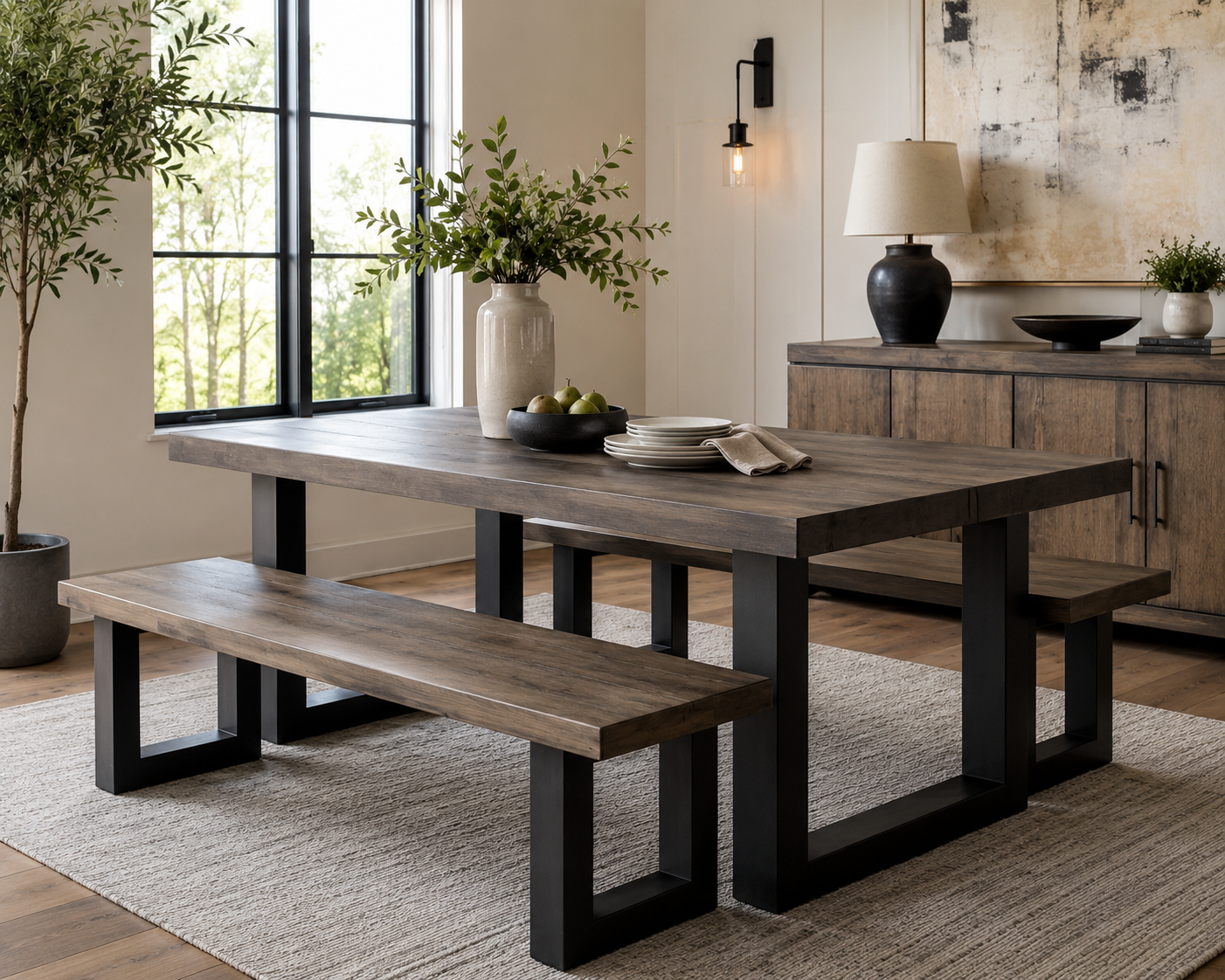
Thinking about swapping your dining chairs for a bench, or maybe just one side? You are not alone. Bench seating has moved from farmhouse kitchens into nearly every design style this year. It now shows up everywhere, from Nordic minimalism to warm, curated eclectic rooms. It is not hard to see why. A bench seats more people than a row of chairs in the same space. It also tucks away neatly when not in use. And it brings a relaxed, communal feel that formal dining chairs rarely match.
This guide walks through the best dining table with bench styles trending in 2026. We will also cover the sizing math, materials, and pricing you need before you buy. By the end, you should know exactly what fits your space and your household.
Why Choose a Dining Table With Bench?
Benches solve a real, practical problem. They let more people sit comfortably in less linear space than individual chairs require. Diners can shift and scoot rather than being locked into fixed chair positions. As a result, a bench can increase practical seating capacity by roughly 10 to 15 percent along one side of the table.
Space efficiency matters just as much. Many benches slide completely under the table when not in use. That “tuck-under” factor keeps walkways clear and makes small dining areas feel noticeably larger. For apartments, breakfast nooks, or open-concept homes, this alone can be worth the switch, especially where the dining area doubles as a walkway.
Benches also bring a specific mood into a room. Designers increasingly describe bench seating as “relaxed luxury.” It is a step away from stiff, formal dining sets toward something more communal and inviting. That shift fits how most people actually use their dining space today, whether for weeknight dinners, homework, or casual entertaining.
The Best Dining Table With Bench Styles for 2026
Wood and Bench, Nordic Minimalist
Honest materials define this look. Solid oak or walnut tables pair with a simple, backless wood bench. Finishes often lean toward a warm cerused or natural tone. Clean lines and minimal ornamentation keep the whole setup feeling calm and uncluttered.
Bench on One Side, Chairs on the Other
This remains one of the most popular combinations heading into 2026. A bench sits along one side of the table, while upholstered or sculptural chairs fill the rest. Designers favor this pairing because it blends flexibility with personality, and it photographs beautifully without feeling overly matched.
Upholstered Bench With Statement Chairs
Bouclé and velvet upholstered benches have grown significantly in popularity this year. Pairing a soft, cushioned bench with sleek, sophisticated dining chairs creates contrast that feels intentional rather than mismatched. This combination works especially well in dining rooms that double as a more formal entertaining space.
Industrial Live-Edge and Metal Bench
Live-edge wood tabletops paired with black metal bench frames bring urban, loft-style character into a dining space. This look suits converted lofts, open-concept kitchens, and homes leaning into a more rugged, textural aesthetic.
Curved Bench for Round or Oval Tables
Curved benches that follow the arc of a round or oval table have started showing up more often this year. They add visual cohesion while still offering flexible seating that can accommodate a varying number of guests night to night.
Built-In Banquette Bench
A banquette is a bench permanently installed along a wall, window, or corner. It works especially well in breakfast nooks and tight kitchen corners. Many built-in banquettes also include hidden storage beneath the seat, which adds real function beyond just seating.
Two-Tone Wood and Black Metal Base
Pairing a warm wood tabletop with a matte black metal base and bench frame creates strong visual contrast. Even so, it never feels cold. This combination works across a wide range of home styles. That versatility explains why it keeps showing up across so many 2026 dining room roundups.
Choosing the Right Bench Material
Solid Wood
Wood benches, especially oak, walnut, and maple, offer excellent durability and can be refinished for decades of use. They pair naturally with almost any table material and tend to hold their value well over time.
Upholstered
Upholstered benches bring genuine comfort for longer meals, especially compared to a hard wood surface. That comfort comes with a tradeoff, though. Fabric and cushioning need more care to protect against spills and stains. So this option suits households willing to spot-clean regularly, or those willing to invest in a performance fabric.
Metal Frame
Metal-framed benches, often paired with a wood or composite seat, deliver a modern look with easy maintenance. They tend to run more durable against daily wear than upholstered options, though they generally offer less cushioned comfort.
How to Size a Dining Bench Correctly
Sizing mistakes are one of the most common regrets buyers report after purchasing a bench. Start with the basic rule most designers use: plan for 18 to 24 inches of bench length per person. Tighter households comfortable sitting closer together can drop to 16 to 18 inches per person when needed.
Bench length should generally run 12 to 24 inches shorter than the table itself. That gap keeps proportions looking intentional rather than mismatched. A 48-inch bench typically seats two adults comfortably, while a 60 to 72-inch bench can accommodate three.
Height matters just as much as length. Standard bench height runs 17 to 19 inches. That matches most dining tables, which are built to a standard 28 to 30-inch height. Aim for at least 10 to 12 inches of clearance between the bench seat and the underside of the tabletop. That gap gives knees and thighs room to move.
Finally, plan clearance around the whole setup. Guidelines from the National Kitchen and Bath Association recommend at least 36 inches between the bench and the nearest wall or piece of furniture, so guests can sit down and stand up without feeling boxed in. Where people regularly walk past to reach a kitchen or hallway, add even more, closer to 42 to 48 inches.
Dining Table With Bench Pricing in 2026
Pricing varies widely depending on materials, brand, and how many pieces come in the set. Budget sets generally start around $130 to $400 for a table paired with one or two benches. These typically feature engineered wood or laminate construction with a metal frame.
Mid-range sets typically run $500 to $1,200 for a complete table, bench, and chair set. These are often solid rubberwood, or a mix of solid wood and veneer. Premium options can range from $1,200 up to $3,000 or more. Expect solid oak or walnut tables with upholstered benches, especially for larger sets designed to seat six or more.
Keep total cost in mind, not just the sticker price. A higher-quality solid wood set often lasts decades longer than a budget laminate option. That durability can make it the better long-term value, even at a higher upfront cost.
Mixing Benches and Chairs the Right Way
Mixing benches with chairs has become a defining trend this year, but it works best with a bit of intention. Keep seat heights consistent between the bench and chairs, so the table feels visually balanced rather than mismatched. A bench that sits noticeably higher or lower than the paired chairs can throw off the whole look.
Stick to two or three complementary styles at most. Combining too many textures, finishes, or silhouettes at once can make a dining space feel cluttered rather than curated. One simple approach works well. Pair a bench on one side with two matching chairs on the other. Then add one or two statement chairs at the ends for personality.
Styling Your Dining Table With Bench for Everyday Use
A great bench setup should work as hard on a Tuesday night as it does for a holiday dinner. Layer in a table runner and simple ceramic dinnerware to soften the look without overcomplicating cleanup. Add a few floor cushions nearby for overflow seating during larger gatherings, since a bench often makes it easy to squeeze in one or two extra guests without pulling out another chair.
Lighting matters more than people expect. A single statement pendant or a row of smaller fixtures above the table helps anchor the space, especially when a bench sits low and open along one side. Pair warm-toned bulbs with your wood finish for a cohesive, inviting glow during evening meals.
Rugs also help define the space, particularly in open-concept homes where the dining area blends into the living room. Choose a rug large enough that both the table and bench sit fully on top, even when the bench is pulled out from under the table. A rug that only covers part of the seating area can make the whole setup feel unfinished.
Seasonal and Regional Considerations for US Homes
Climate and household habits both affect which bench material makes the most sense. In humid regions like the Gulf Coast and Southeast, solid wood benches need a protective sealant to resist swelling and warping. Metal frames handle humidity with less maintenance, which makes them a practical choice for sunrooms or dining areas near exterior doors in these climates.
In colder regions across the Midwest and Northeast, dining areas near drafty windows or unheated additions can stress wood joints over time as temperatures swing. A well-sealed hardwood bench still performs well here, but it is worth checking joints periodically for looseness as the seasons change.
Households that entertain heavily around the holidays often benefit most from a bench-and-chair combination rather than an all-chair set. The bench absorbs extra guests without needing to store additional chairs in a closet or garage the rest of the year, which matters in smaller homes with limited storage space.
Practical Considerations Before You Buy
Think honestly about who will be using the bench daily. Benches without backrests work fine for shorter meals but can feel less comfortable during long dinners or extended work-from-home use. If your household regularly lingers at the table, consider a bench with a backrest or add supportive cushions.
Families with young children should also weigh safety and cleanup. Backless benches make it easier for kids to climb in and out independently, which some parents prefer. At the same time, upholstered benches near young children may need a more stain-resistant fabric to handle daily spills.
Finally, measure your doorways and hallways before ordering, especially for longer built-in-style benches. A bench that will not fit through a narrow hallway or stairwell turns into an expensive return. Confirm dimensions against your home’s actual access points, not just the room itself.
For more guidance on pairing your new bench with the right table shape and size, see our complete dining table buying guide. It covers shapes, materials, and seating capacity in more detail.
Final Thoughts
A dining table with bench seating offers real practical advantages alongside a genuine style upgrade. It saves space and increases seating flexibility. It also fits nearly every design direction trending in 2026, from Nordic minimalism to industrial loft style. Get the sizing right. Choose a material that matches how your household actually uses the table. Do that, and the bench you choose should serve your home well for years to come.
Frequently Asked Questions
How much bench space do I need per person?
Plan for 18 to 24 inches of bench length per person for comfortable seating. You can drop to 16 to 18 inches per person when hosting larger groups. Benches allow more flexible shifting than individual chairs, so tighter spacing still feels workable.
Should my bench match my dining chairs exactly?
No, and in fact, mixing a bench with different chairs is one of the most popular looks in 2026. Just keep seat heights consistent and limit yourself to two or three complementary styles for a cohesive, intentional look.
Is a dining bench comfortable for long meals?
Upholstered benches with a backrest offer the most comfort for extended sitting. Backless wood benches work well for everyday meals but can feel less comfortable during long dinners without added cushions.
What is the standard height for a dining bench?
Standard dining bench height runs 17 to 19 inches, matching most tables built to the standard 28 to 30-inch height. Counter-height and bar-height tables require taller benches to match.
How much does a dining table with bench set cost?
Budget sets typically start around $130 to $400. Mid-range solid wood sets generally run $500 to $1,200. Premium solid oak or walnut sets with upholstered benches can reach $1,200 to $3,000 or more.
Can a bench really seat more people than chairs in the same space?
Yes. Diners can shift more freely on a bench than in individual chairs. That flexibility can increase practical capacity by roughly 10 to 15 percent along one side of the table.
What material bench is easiest to maintain?
Solid wood and metal-framed benches generally require the least maintenance and hold up best to daily wear. Upholstered benches offer more comfort but need more regular cleaning to prevent stains from setting in.