

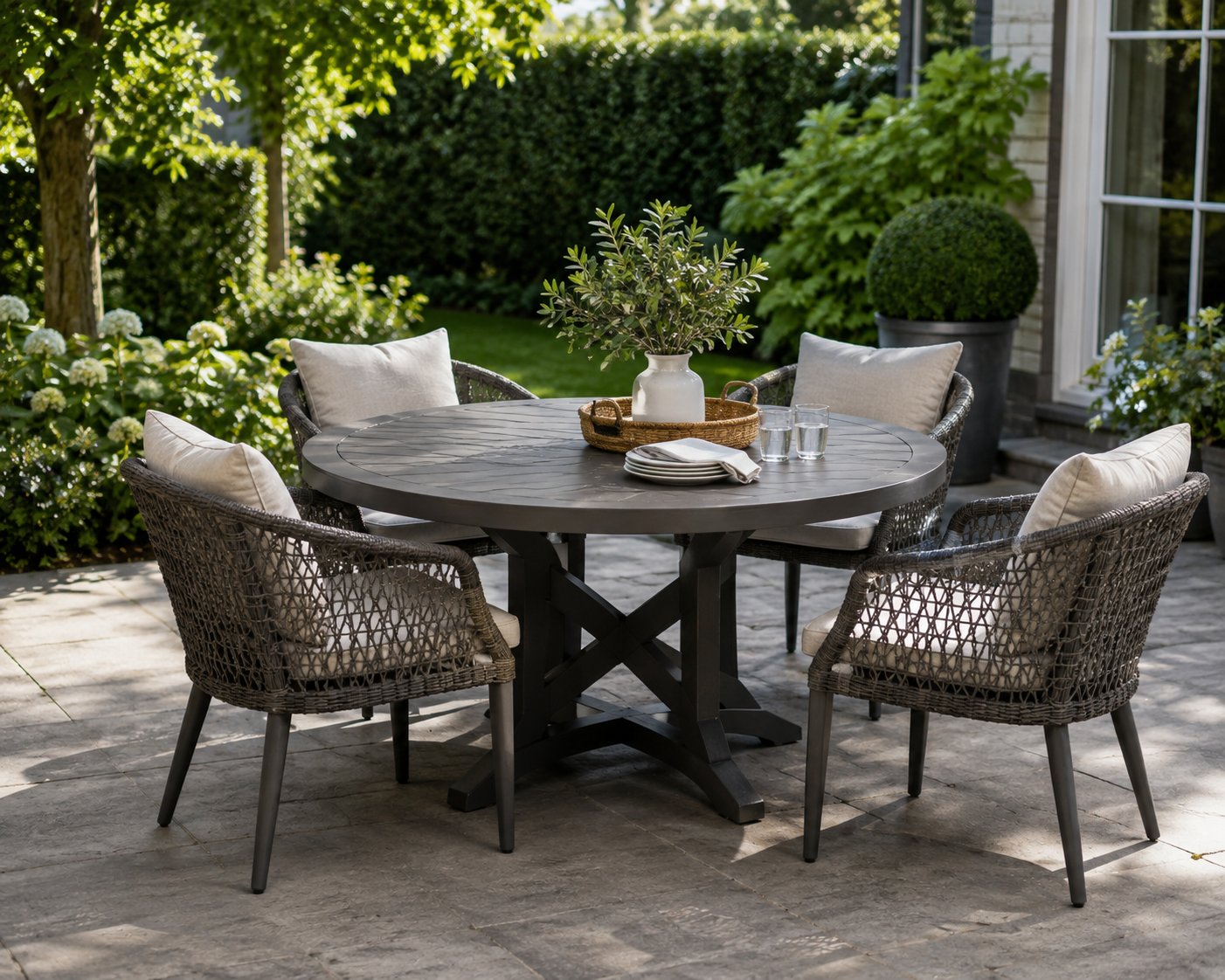
Shopping for a new patio table? A round outdoor dining table might be the smartest shape you can choose. It fits into tighter spaces than a rectangular table. It also encourages easier conversation, since everyone sits roughly the same distance apart. But shape is only half the equation. The material underneath determines whether your table survives a Texas summer, a Minnesota winter, or salty coastal air near the Gulf.
This guide covers everything you need to know before buying. We will walk through the most weatherproof materials, current pricing, sizing, and how to match your table to your specific climate. By the end, you should know exactly what to look for at the store or online.
Why Choose a Round Outdoor Dining Table?
Round tables have a real practical advantage in smaller backyards, patios, and balconies. There are no sharp corners to bump into while moving around a tight space. Seating also flows more naturally, since round tables do not force people into rigid head-of-table positions.
Design trends in 2026 have leaned further into this shape too. Curved, organic forms are showing up across outdoor furniture lines, from tables to chairs to planters. Round shapes create a softer, more relaxed feel outdoors, which fits the general shift toward comfort-focused backyard living that has picked up steam this year.
That said, round tables do have one tradeoff. They generally seat fewer people per square foot than a rectangular table of similar size. A 48-inch round table comfortably seats four, while a rectangular table of similar footprint might squeeze in six. So if you regularly host larger groups, this is worth keeping in mind before you buy.
What Makes Patio Furniture Truly Weatherproof?
“Weatherproof” gets thrown around loosely in furniture marketing. True weatherproof furniture needs to resist several things at once. It needs to resist moisture without warping or rotting. It needs to resist UV rays without fading or becoming brittle. And it needs to resist temperature swings without cracking, especially in regions with cold winters.
No single material handles every condition perfectly. Instead, the right choice depends on your specific climate and how much maintenance you are willing to do. A table that thrives in dry Arizona heat might struggle in humid Florida air, and vice versa.
Best Weatherproof Materials for Round Outdoor Tables
Aluminum
Aluminum remains one of the most popular choices for outdoor dining tables, and for good reason. It is lightweight, rust-resistant, and easy to move when you need to rearrange your patio. Powder-coated aluminum adds an extra protective layer, which further improves its resistance to corrosion, especially near coastal areas with salt in the air.
Teak
Teak is a dense hardwood packed with natural oils. Those oils help it resist moisture, cracking, and insect damage without any chemical treatment. Left untreated, teak weathers to a silvery gray patina that many homeowners actually prefer. If you want to maintain its original honey-brown color, though, it needs occasional oiling.
HDPE and Poly Lumber
High-density polyethylene, often shortened to HDPE or called poly lumber, has become one of the most durable synthetic options on the market. It does not splinter, rot, or peel. It also handles moisture better than almost any wood option, since it does not absorb water at all. Cleanup is simple too, usually just soap and water.
Powder-Coated Steel and Wrought Iron
Steel and wrought iron bring serious durability and a classic outdoor look. Powder coating adds rust resistance and extends their lifespan considerably. These materials tend to run heavier than aluminum, which actually works in their favor on windy patios, since heavier furniture is less likely to tip or blow around.
Concrete and Composite Tops
Concrete tabletops have grown in popularity recently, often paired with a wood or metal base. They resist stains, scratches, and weather exceptionally well. The tradeoff is weight. Concrete tables are heavy and difficult to move once placed, so pick your spot carefully before setup.
How Much Does a Round Outdoor Dining Table Cost in 2026?
Pricing varies widely depending on material, size, and brand. Entry-level round tables in aluminum or basic wrought iron typically start around $300 to $500. Mid-range options, including better-built aluminum, HDPE, and smaller teak tables, generally run $500 to $1,200.
Premium materials push costs higher. High-end teak tables can run $1,500 to $2,500 or more, especially in larger sizes. Concrete and stone-topped round tables often land in a similar range, sometimes reaching $3,000 or beyond for designer brands. Keep in mind that a higher price usually reflects better construction and longer expected lifespan, not just aesthetics.
It also helps to think about total cost over time rather than sticker price alone. A $1,800 teak table that lasts 20 years costs about $90 per year. A $400 basic wrought iron table that rusts out in 5 years costs about $80 per year, assuming you do not need to replace cushions or accessories along the way. The math often favors investing more upfront, especially in harsh climates.
Choosing the Right Size for Your Space
Round tables come in a range of standard sizes. A 36 to 42-inch table comfortably seats two to four people and works well for small balconies or compact patios. A 48-inch table typically seats four to six, making it a solid middle-ground choice for most backyards. Anything 54 inches or larger moves into six-to-eight-person territory, though at that size, some homeowners choose oval tables instead for easier seating.
Before buying, measure your patio space and leave at least 36 inches of clearance around the table for chairs to pull out comfortably. Cramped seating areas make outdoor dining feel more stressful than relaxing, so this step matters more than it might seem.
Matching Your Table to Your Climate
Climate should drive your material choice more than style alone. In humid regions like Florida, Louisiana, and the broader Gulf Coast, moisture resistance matters most. HDPE, powder-coated aluminum, and teak all perform well here, since none of them absorb water or develop mold easily.
In sun-heavy states like Arizona, Nevada, and inland California, UV resistance becomes the priority. Look for UV-stabilized HDPE or powder-coated finishes specifically labeled as fade-resistant. Cheaper plastics without UV treatment can become brittle and discolored within a single hot summer.
Coastal areas, from the Carolinas to the Pacific Northwest, deal with salt air that accelerates corrosion on untreated metal. Powder-coated aluminum handles salt exposure better than bare steel or wrought iron. If you live near the coast, this detail alone can double or triple your table’s lifespan.
Cold-climate regions across the Midwest and Northeast face a different challenge: freeze-thaw cycles. Materials that trap moisture, like untreated wood, can crack as water freezes and expands inside the grain. HDPE and sealed teak both handle this cycle far better than budget wood options.
2026 Design Trends for Round Patio Tables
Rounded, organic shapes continue trending across outdoor furniture collections this year. Earthy tones like terracotta, sage green, and warm neutrals are showing up more often than the cooler grays that dominated prior seasons. Rattan-effect resin has also gained popularity, since it mimics natural woven texture while staying lightweight and weather-resistant.
Mixed-material designs are trending too, often pairing a concrete or stone top with a wood or metal base. This combination balances durability with a warmer, more natural aesthetic than an all-metal or all-concrete piece alone.
Care and Maintenance Tips
Even the most weatherproof materials benefit from basic upkeep. Wipe down tables regularly with mild soap and water to prevent buildup of dirt, pollen, and grime. For teak, apply teak oil once or twice a year if you want to preserve its original color, or simply let it weather naturally if you prefer the gray patina look.
Use a fitted outdoor table cover during severe weather or winter storage, especially in regions with heavy snow or ice. If you have the space, storing furniture in a garage or shed during winter extends its lifespan significantly, even for materials rated as weatherproof.
Check screws, joints, and connections a few times per season. Outdoor furniture experiences more expansion and contraction than indoor pieces, so hardware can loosen over time. A quick tightening extends the table’s structural life considerably.
For more detail on how different frame materials hold up over time and what they typically cost to maintain, HomeAdvisor’s outdoor furniture material guide breaks down performance by climate and weather condition.
Pairing Chairs and Accessories With Your Round Table
Chair choice matters almost as much as the table itself. Mixing materials, like an aluminum table with wicker-back chairs, has become common in 2026 outdoor collections. This combination balances weight, comfort, and style without forcing every piece to match exactly. Cushions add comfort, but check that covers are removable and machine washable, since outdoor fabric collects pollen, dust, and moisture over a full season.
Many round tables include a center umbrella hole, which is worth considering even if you do not plan to buy an umbrella right away. Adding shade later becomes far easier when the hole already exists, rather than trying to retrofit one into a solid tabletop. If you live somewhere with intense afternoon sun, a table with an umbrella hole practically pays for itself in comfort during peak summer months.
Side tables also pair naturally with round dining sets. A small side table nearby gives you a spot for drinks, citronella candles, or a small potted plant, without crowding the main dining surface. This detail seems minor, but it noticeably improves how usable your outdoor space feels during actual meals.
Sustainability Considerations
More buyers are factoring sustainability into outdoor furniture decisions this year, and it is worth a quick mention. Some HDPE lines now use recycled plastic content, often sourced from milk jugs or other post-consumer waste. This gives budget-conscious buyers a way to reduce environmental impact without paying a premium.
Teak sourced from certified sustainable forestry operations costs slightly more, but it supports responsible harvesting practices rather than contributing to deforestation. Look for certifications from recognized forestry stewardship programs if this matters to your purchase decision. Aluminum, meanwhile, is highly recyclable at the end of its life, which makes it one of the more circular material choices in outdoor furniture overall.
None of this should override your climate and durability priorities discussed earlier. But when two similar options exist at a similar price point, choosing the more sustainable one costs little and adds real long-term value.
Round vs Rectangular: Which Shape Wins for Small Spaces?
For most small to mid-sized patios, round wins on flexibility. It fits into corners more naturally and does not visually dominate a space the way a long rectangular table can. Conversation also flows more easily around a circle, since no one sits isolated at either end.
Rectangular tables still make sense for larger families or frequent entertainers who need maximum seating capacity. If you regularly host six or more guests, a rectangular or oval table may serve you better despite the shape tradeoffs mentioned earlier.
Actionable Buying Tips
First, measure your space before shopping, not after. Bring those measurements with you, whether shopping in-store or online, so you do not fall in love with a table that will not fit. Second, match material to climate first, and style second. A gorgeous table that falls apart in two seasons is not actually a good value, regardless of price.
Third, check the warranty specifically for fading and rust protection, not just structural defects. Many budget tables carry only a one-year warranty on finish, even if the frame itself carries a longer structural guarantee. Finally, buy a table cover at the same time as the table itself. It is a small additional cost that meaningfully extends your table’s life, especially through winter months.
For more guidance on building out a full patio set, including chair materials and cushions that hold up outdoors, see our complete patio furniture buying guide, which covers seating alongside tables.
Final Thoughts
A round outdoor dining table can anchor your entire backyard setup, but only if you choose the right material for your specific climate. Aluminum and HDPE offer excellent all-around performance with minimal upkeep. Teak brings natural beauty at a higher price and slightly more maintenance. Concrete and composite tops deliver serious durability, provided you are comfortable with the weight. Whatever you choose, matching material to your local weather will matter more than any other single decision you make.
Frequently Asked Questions
What is the most weatherproof material for a round outdoor dining table?
HDPE, also called poly lumber, and powder-coated aluminum are generally considered the most weatherproof options. Both resist moisture, fading, and corrosion without requiring significant maintenance.
How big should a round outdoor dining table be for four people?
A 48-inch round table comfortably seats four people. Smaller 36 to 42-inch tables also work for four in a pinch, though they leave less elbow room.
Is teak or aluminum better for outdoor dining tables?
Both perform well outdoors. Teak offers natural beauty and long-term durability but costs more and needs occasional oiling if you want to preserve its color. Aluminum costs less, weighs less, and requires almost no maintenance beyond basic cleaning.
Can round outdoor tables be left outside all year?
Most weatherproof materials, including HDPE, teak, and powder-coated aluminum, can stay outside year-round. That said, using a fitted cover during winter or severe storms extends the table’s lifespan, even for highly durable materials.
How much does a good round patio dining table cost?
Entry-level tables start around $300 to $500. Mid-range options typically run $500 to $1,200, while premium teak, concrete, or stone-topped tables can cost $1,500 to $3,000 or more.
Does salt air damage outdoor dining tables?
Yes, salt air accelerates corrosion on untreated metal significantly. Powder-coated aluminum handles coastal conditions far better than bare steel or wrought iron, making it a smart choice for homes near the ocean.
What is the best round outdoor table material for hot, sunny climates?
UV-stabilized HDPE and powder-coated aluminum both hold up well under intense sun exposure. Cheaper untreated plastics can fade or become brittle after just one hot summer, so checking for UV protection matters.
How often should I clean and maintain my patio table?
Wipe down your table every few weeks during regular use, and check hardware for looseness a few times per season. Teak benefits from oiling once or twice yearly if you want to maintain its original color rather than letting it weather naturally.