

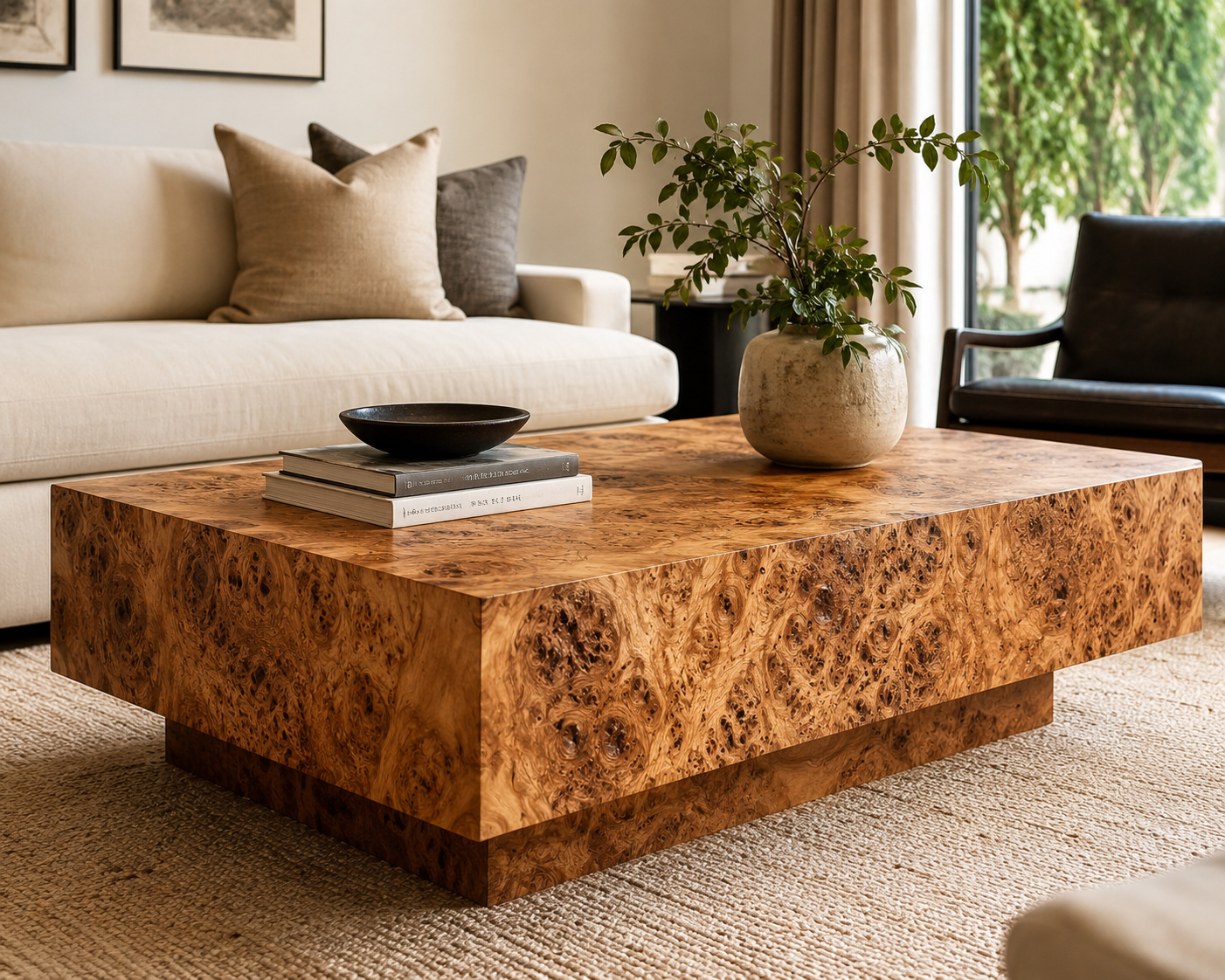
Burl wood is having a real moment in 2026. After years of pale, minimalist oak, homeowners crave character again. Burl wood delivers that character better than almost any other material. Its swirling grain patterns turn a simple coffee table into a real conversation piece.
This guide covers everything you need to know about the new live edge burlwood collection. We’ll explain what makes burl wood special. We’ll also cover pricing, buying tips, and care advice. By the end, you’ll know whether a burl wood coffee table fits your space and your budget.
Why Burl Wood Is Dominating 2026 Design Trends
Interior designers keep pointing to the same shift. Burl wood has emerged as a dominant trend for 2026. Its swirling grain and one-of-a-kind figure explain why. After years of flat, uniform finishes, people want furniture with a story.
This isn’t just a passing fad, either. Solid wood furniture has been valued for centuries. The term “live edge” only became popular recently. But the concept itself predates any modern trend cycle. It simply means showcasing raw, natural wood. So when you invest in a burl wood coffee table, you buy into something timeless. It won’t look dated in five years.
Darker wood tones are rising alongside burl this year too. Rich walnut, mahogany, and ebonized oak are making a comeback. They add sophistication and contrast to today’s white-and-gray palettes. A burl wood coffee table often pairs beautifully with these deeper tones. This works especially well when the base uses blackened metal or dark-stained wood.
What Makes Burl Wood Different From Regular Coffee Tables
Burl forms when a tree experiences stress. Injury, fungus, or environmental pressure can all cause it. Instead of growing in straight lines, the grain twists and knots. It forms dense, swirling patterns. No two burl slabs look alike. That’s exactly why designers pay a premium for it.
Compare that to a standard coffee table from a big-box retailer. Most use MDF, particleboard, or veneered plywood. These materials come from ground-up wood fibers pressed into flat sheets. They simply cannot replicate what a solid slab of burl wood offers.
The live edge itself adds another layer of appeal. Instead of a straight, factory-cut edge, you get the tree’s original bark line. It looks organic and unpredictable. Paired with burl’s dramatic figure, the result looks less like furniture. It looks more like functional art.
Inside the New Live Edge Burlwood Collection
The newest burlwood collections showcase a range of species. Walnut, redwood, maple, and buckeye burl each bring distinct character. Redwood burl glows with deep red warmth. Claro walnut delivers rich, chocolate tones with dramatic marbling. Buckeye burl tends to swirl with especially dense, eye-catching figure. That makes it a favorite for statement pieces.
Most collections pair these tabletops with a variety of base styles. Options range from minimalist hairpin legs to sculptural metal or reclaimed wood bases. This mix-and-match approach lets you choose freely. Pick a tabletop for its grain, then pick a base for its function.
You’ll also notice more sustainable sourcing language in today’s collections. Many makers now highlight ethically sourced timber. This often comes from storm-fallen trees, dead-standing wood, or selective harvesting. It’s not cut from live, healthy trees. If sustainability matters to you, ask retailers directly. Confirm whether their burl comes from salvaged or FSC-certified sources before you buy.
How Much Does a Burl Wood Coffee Table Cost?
Pricing varies widely, so it helps to understand where your money goes. A live edge coffee table typically costs between $500 and $1,500. Burl wood specifically sits at the higher end of that range. Its rarity and the labor involved in finishing it explain the added cost.
On the resale and vintage market, prices climb even further. The average selling price for a burl wood live edge table runs around $2,390. Entry-level pieces start near $685. High-end statement tables reach $5,500 or more. Museum-quality or antique pieces can command even higher prices.
New, made-to-order burl slabs follow a similar pattern. A single burl coffee table top can range from roughly $1,300 to well over $10,000. Size, thickness, and figure all affect the price. Large, heavily figured bookmatched slabs sit at the top of that range. Three factors drive this cost overall: material rarity, finishing labor, and simple uniqueness. No two pieces are ever alike.
If that range feels intimidating, know that smaller options exist. Compact slabs in the 36 to 42-inch range work well with simple hairpin legs. These can come in under $500, even in genuine live edge hardwood. You won’t get dramatic burl figure at that price point. Still, you get real solid wood and an authentic live edge.
Choosing the Right Burl Wood Coffee Table for Your Space
Size matters more than most buyers expect. Designers recommend a coffee table length equal to about two-thirds of your sofa’s length. So if you own a 90-inch sofa, aim for a table around 60 inches long. This proportion keeps the room visually balanced. It also ensures everyone seated can comfortably reach the table.
Height matters just as much. Standard coffee tables run 16 to 18 inches tall. But the number that really counts is your sofa’s seat cushion height. Ideally, your table should match that height, or sit one to two inches lower. This keeps drinks and books within easy reach.
Next, think about how the finish will interact with your existing decor. A glossy, epoxy-finished burl top creates a polished, contemporary look. A natural hardwax oil finish leans rustic and organic instead. Neither approach is wrong. Matching the finish to your room’s style makes the table feel intentional, not out of place.
Finally, consider your base material carefully. Metal bases, especially in black or brass, tend to modernize a burl top. They work well in contemporary spaces. Reclaimed wood or root-style bases lean more rustic. They pair naturally with farmhouse or bohemian interiors. If you’re unsure, check our complete coffee table sizing and style guide. It breaks down proportions and pairings in more detail.
Caring for Your Burl Wood Coffee Table
Solid wood ages far better than manufactured materials, and burl is no exception. Over time, most burl finishes develop a rich patina. This patina deepens their warmth and character. Cherry darkens toward a red-brown hue. Walnut mellows into a warmer, chocolate tone. This aging process actually improves the piece rather than wearing it down.
That said, proper care extends the table’s life considerably. Most makers finish burl tables with a hardwax oil. This finish stays durable, food-safe, and naturally water-resistant. It handles everyday spills like coffee, wine, and soda well. Clean spills promptly with a soft cloth. Avoid harsh chemical cleaners, since they can strip the natural finish.
Every six to twelve months, reapply a wash-and-wax product made for hardwax-finished wood. This simple habit keeps the surface protected. It also helps the grain stay vibrant rather than dulling over time. Keep your table out of direct, prolonged sunlight when possible too. UV exposure can gradually fade even a well-finished wood surface.
Unlike MDF furniture, solid hardwood generally holds its value well. MDF furniture has essentially zero resale value after just a couple of years. Solid hardwood furniture generally holds 40 to 70 percent of its original value on the resale market. Well-maintained walnut burl pieces often hold even more. Proper care isn’t just about looks. It genuinely protects your investment.
Is a Burl Wood Coffee Table Worth the Investment?
For many buyers, yes, especially when you consider cost-per-year. A quality burl wood table can realistically last for decades. It ages gracefully instead of needing replacement every few years, unlike cheaper alternatives.
It’s also worth remembering that no two burl tables are identical. When you buy one, you’re not just buying “a coffee table.” You’re buying a specific, irreplaceable slice of a specific tree. Decades of natural growth shaped that pattern. It can never be exactly reproduced. For homeowners who value individuality, that alone often justifies the premium.
Budget matters too, of course. A large, heavily figured slab isn’t always realistic right now. Smaller accent pieces or side tables in burl veneer offer a more affordable entry point. You still get the look without the full investment. According to the Forest Stewardship Council, FSC-certified wood products support responsible forestry practices. This applies to burl furniture too, so it’s worth asking about regardless of your price point.
Frequently Asked Questions About Burl Wood Coffee Tables
What exactly is burl wood? Burl forms when a tree experiences stress from injury, fungus, or environmental pressure. This causes the grain to grow in dense, swirling patterns instead of straight lines. The result is burl wood’s dramatic, one-of-a-kind figure.
How much does a burl wood coffee table cost in 2026? Prices vary widely. Entry-level live edge tables start around $500. Dramatic, heavily figured burl slabs can range from $2,000 to $10,000 or more for large, museum-quality pieces.
Is burl wood furniture a passing trend? No. The term “live edge” became popular recently, but showcasing natural, raw wood is a timeless approach. It predates modern trend cycles. Solid burl wood ages gracefully and holds its value far better than manufactured furniture.
How do I clean and maintain a burl wood coffee table? Wipe spills promptly with a soft cloth. Avoid harsh chemical cleaners. Reapply a hardwax wash-and-wax product every six to twelve months. Keep the table out of prolonged direct sunlight to preserve its finish and color.
What size coffee table should I pair with my sofa? As a general rule, your coffee table length should equal about two-thirds of your sofa’s length. Height should match your sofa’s seat cushions, or sit one to two inches lower for comfortable reach.
Does burl wood furniture hold its value? Yes, generally better than most furniture materials. Solid hardwood pieces, including burl, typically retain 40 to 70 percent of their original value on resale. Manufactured materials like MDF hold little to none after a few years.
Is burl wood sustainable? It can be, depending on sourcing. Many collections use timber from storm-fallen trees, dead-standing wood, or selective harvesting. Look for FSC-certified sourcing if sustainability matters to your purchase.
What wood species work best for a live edge burl coffee table? Walnut, redwood, maple, and buckeye burl rank among the most popular choices in 2026. Each offers a distinct color and grain character. Your choice often comes down to personal style and existing furniture tones.