

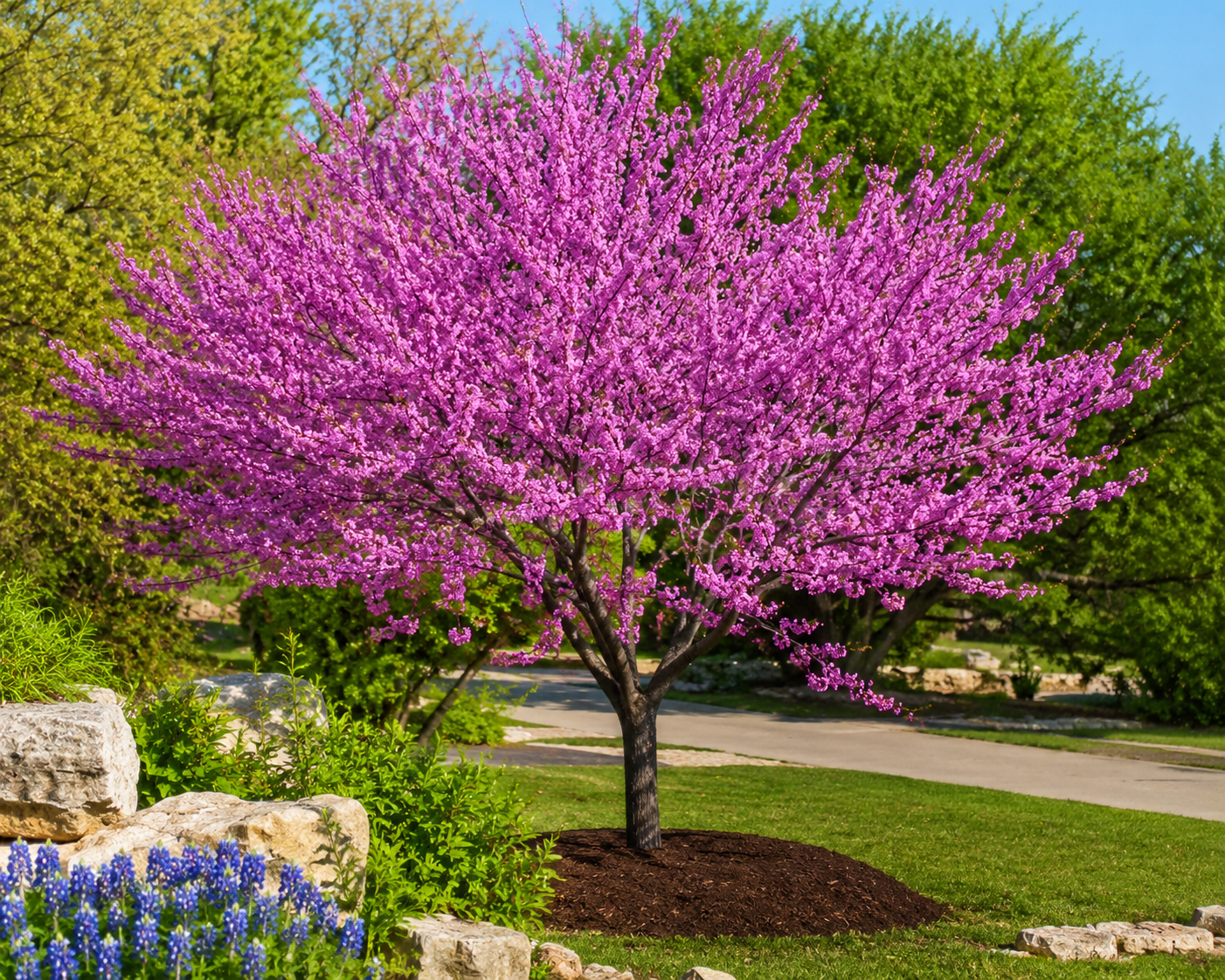
Few trees announce spring quite like the Texas redbud. One week, the branches look bare and unremarkable. The next, they burst into clouds of magenta-pink blossoms. If you live anywhere in Texas or the broader South, you have probably driven past one without even realizing it.
This guide walks through everything you need to know about growing and caring for a Texas redbud. We will cover planting, watering, soil, pruning, and common problems. We will also answer the questions homeowners ask most often before adding one to their yard.
What Makes the Texas Redbud Different
The Texas redbud, known botanically as Cercis canadensis var. texensis, is a native variety of the Eastern redbud. However, it behaves quite differently in the landscape. Its leaves are smaller, glossier, and waxier than those of its eastern cousin. That waxy coating helps the tree survive brutal summer heat. It also reduces water loss during long dry spells.
This variety evolved specifically for tough conditions. Its natural range stretches from southern Oklahoma through the limestone hill country of central Texas. From there, it continues down into northeastern Mexico. Because of that heritage, it thrives in alkaline, rocky soils that would stress out many other ornamental trees. If you garden anywhere near the Edwards Plateau, Blackland Prairies, or Cross Timbers regions, this tree already feels at home.
Homeowners in hotter, drier parts of the country often ask whether to plant an Eastern redbud instead. In most cases, the Texas redbud is the smarter choice. It handles heat, drought, and thin soils with far less fuss.
Mature Size and Growth Habit
Most Texas redbuds reach a mature height of 15 to 20 feet. Some sources report top heights up to 20 feet, with a similar or slightly wider spread. So plan for a canopy width of roughly 15 to 25 feet at maturity. That makes it a manageable size for most residential yards. It works well near a patio, along a fence line, or as a specimen tree by the front door.
Growth rate is a common point of confusion. Some growers describe it as fast growing in ideal conditions. Others, particularly in urban trial plantings, have observed a slower growth rate with excellent survival rates. In practice, expect moderate growth. Consistent watering during the first two years speeds things along considerably.
The tree typically grows as a multi-trunked, vase-shaped specimen. Many homeowners appreciate this natural form and skip heavy pruning altogether. Others prefer to train it into a single-trunk shape for a cleaner look near entryways.
When and Where to Plant
Fall and early spring are both good times to plant a Texas redbud. Cooler temperatures give roots a chance to establish before summer heat arrives. If you plant in fall, the tree spends the winter building root mass. Then it is ready to push new growth once spring arrives.
Site selection matters more than almost anything else. Choose a spot with full sun to partial shade. Six to eight hours of direct sunlight per day works best for strong blooming. That said, in the hottest parts of Texas, afternoon shade helps prevent leaf scorch during peak summer heat.
Drainage is non-negotiable for this tree. Avoid low, soggy spots where water tends to collect after rain. Standing water around the root zone is one of the fastest ways to kill a Texas redbud. Raised beds or sloped sites tend to work well if your yard holds moisture.
Soil type is fairly flexible. This tree tolerates rocky, sandy, loamy, and clay soils, as long as drainage is adequate. It particularly thrives in limestone-based, alkaline soil. That makes it a great fit for much of central and north Texas, where native soil chemistry runs alkaline.
Watering Guidelines by Season
Watering needs shift significantly as the tree matures. During the first one to two years after planting, deep and consistent watering is essential. Aim for roughly one inch of water, one to two times per week during warmer months. In cooler months, you can stretch that to once every two to three weeks.
Always water the root zone directly rather than the foliage. Wet leaves sitting in humid conditions invite fungal problems. Checking the soil every few days during the establishment period helps you catch dry spells early.
Once established, the story changes considerably. Mature Texas redbuds become genuinely drought tolerant. At that point, they typically need only occasional supplemental watering during extended dry periods. Overwatering an established tree causes more problems than underwatering it does. In fact, excessive irrigation combined with poor drainage has been directly linked to tree failure in several urban planting trials.
Pruning and Maintenance
Timing matters a great deal when it comes to pruning a Texas redbud. This tree blooms on old wood, meaning flower buds form the previous season. Because of that, pruning late in winter removes the very buds that would have bloomed in spring. Instead, prune shortly after flowering finishes, once the spring bloom show has ended.
Most maintenance pruning focuses on shaping the canopy and removing suckers. Suckers often sprout from the base of the trunk, and removing them keeps the tree looking tidy. You can also raise the canopy over time by removing lower branches. This creates clearance for walkways, patios, or mowing equipment underneath.
Beyond that, this tree asks very little of you. It is widely described as low maintenance once it settles into the landscape. A light annual shaping and an eye out for suckers usually covers everything it needs.
Common Pests and Diseases to Watch For
No tree is entirely problem-free, and the Texas redbud has a few known vulnerabilities. Borers are the most commonly reported pest issue. These insects tunnel into stressed or weakened wood, so keeping the tree healthy is your best defense. Some gardeners use natural controls, including predatory wasps, sticky tape wrapped around the trunk base, or beneficial nematodes applied to the soil near bore holes.
Redhumped caterpillars occasionally show up as well, feeding on foliage during summer months. On the disease side, leaf anthracnose, botryosphaeria canker, and verticillium wilt are the three most frequently cited issues in tree evaluation studies. Most of these problems become more likely when a tree is already stressed by poor drainage or excessive irrigation.
The takeaway here is simple. A well-sited, properly drained, appropriately watered tree rarely runs into serious pest or disease trouble. Stress is almost always the root cause behind these problems.
Wildlife and Pollinator Value
Beyond its ornamental appeal, the Texas redbud pulls real weight in a native landscape. Its nectar attracts butterflies, bees, and moths throughout the bloom period. It also serves as a larval host plant for Henry’s elfin butterfly, giving it genuine ecological value beyond just looking pretty.
Birds get something out of it too. Granivorous species feed on the seeds once pods mature later in the season. Even deer occasionally browse the leaves, though this is rarely a serious concern for established trees.
Interestingly, the flowers have culinary uses as well. In parts of Mexico, redbud blossoms are fried and eaten. Some home gardeners pickle the slightly acidic flowers for use in salads. That is a fun, low-stakes way to connect with a tree that already does so much for the landscape around it.
Choosing the Right Variety and Cultivar
If you want extra drought resilience, look for the cultivar known as ‘Sanderson’, which is often cited as one of the most drought-adapted Texas redbud selections available. For a more ornamental, cascading form, the ‘Traveller’ cultivar offers a striking weeping habit. It typically stays smaller, reaching only two to five feet tall with a wider spread.
When shopping at a nursery, always confirm you are getting Cercis canadensis var. texensis rather than the standard Eastern redbud. The two look similar on a small nursery tag, but their long-term performance in hot, dry, alkaline conditions differs quite a bit.
For homeowners specifically in central Texas, our California Lilac (Ceanothus) guide covers another drought-tolerant species that pairs well with redbuds in a low-water landscape design. And for a wider list of companions, see our 30 best plants for full sun and heat.
Regional Considerations Across the USA
While the Texas redbud clearly excels in its native range, it also performs well throughout USDA zones 6 through 9. That covers a wide swath of the American South and Southern Plains. Homeowners in Oklahoma, Arkansas, and even parts of the Southeast have successfully grown this variety, particularly where soil runs alkaline or where summer heat pushes other redbud varieties past their comfort zone.
If you live further north, in zones colder than 6, the standard Eastern redbud will likely serve you better. The Texas variety trades some cold hardiness for its impressive heat and drought tolerance. That is a fair trade for most of Texas, but it matters less if your winters run consistently harsh.
According to the Lady Bird Johnson Wildflower Center at the University of Texas at Austin, the Texas redbud’s natural range spans from the mountains of southern Oklahoma through the limestone spine of central Texas into northeastern Mexico. That native distribution explains exactly why this tree performs so reliably across such a wide swath of hot, dry American landscapes.
Final Planting Tips for Long-Term Success
A little planning at planting time pays off for decades. Start by digging a hole only as deep as the root ball, but two to three times as wide. This encourages roots to spread outward rather than staying compacted. Backfill with native soil rather than heavily amended potting mix, since redbuds actually prefer the leaner, rockier conditions found in unamended native soil.
Mulch around the base, but keep it a few inches away from the trunk itself. This prevents moisture buildup against the bark, which can invite rot or pest issues. Water deeply right after planting, then settle into the seasonal watering schedule outlined earlier in this guide.
Finally, be patient. This tree rewards a bit of restraint during its early years. Once established, a Texas redbud becomes one of the lowest-maintenance, highest-reward trees you can add to a Southern landscape.
Frequently Asked Questions
How fast does a Texas redbud tree grow? Growth rate varies depending on conditions and water availability. Some report fairly quick growth under ideal conditions, while others note a slower, steadier pace in urban plantings. Consistent watering during the first two years generally speeds things up.
How big does a Texas redbud tree get? Most mature specimens reach 15 to 20 feet tall, with a similar or slightly wider canopy spread. That makes it a manageable size for most home landscapes, patios, and front yards.
When should I prune a Texas redbud? Prune shortly after spring blooming ends, not during late winter. This tree blooms on old wood, so pruning too early removes the buds that would have flowered that season.
Is the Texas redbud drought tolerant? Yes, once established, it becomes highly drought tolerant. During the first one to two years, though, regular deep watering is important for building strong root systems.
Why are the leaves on my redbud turning yellow or scorched? Leaf scorch often results from too much direct afternoon sun in extreme summer heat, or from overwatering combined with poor drainage. Check your watering schedule first, and consider afternoon shade if scorch continues.
Can I grow a Texas redbud outside of Texas? Yes, it performs well throughout USDA zones 6 through 9, including much of the American South and Southern Plains. It struggles more in colder northern climates, where an Eastern redbud typically fares better.
What is the difference between a Texas redbud and an Eastern redbud? The Texas variety has smaller, glossier, waxier leaves and far greater heat and drought tolerance. It also handles alkaline, rocky soils better, which makes it the stronger choice for much of Texas and similar climates.
Do Texas redbuds attract pollinators? Yes, their spring blossoms attract bees, butterflies, and moths. The tree also serves as a larval host plant for Henry’s elfin butterfly, adding real ecological value to a native landscape.
[…] instead. If you want another full-sun flowering tree for spring rather than summer color, our Texas Redbud growing guide is worth a […]