

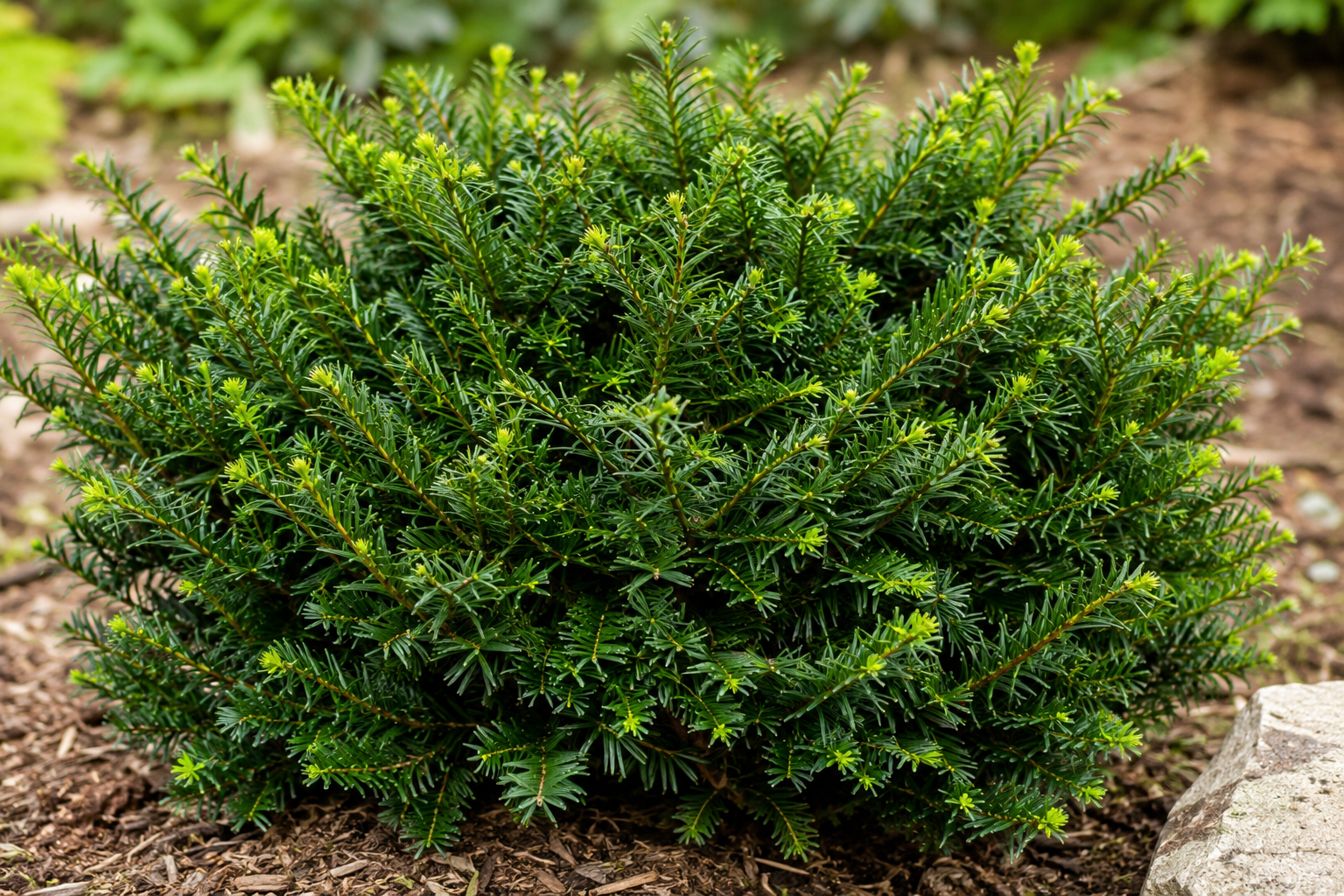
Do you need a hedge that stays green all winter? Does it also need to handle heavy pruning and grow well in shade? Hicks yew comes up again and again in that search. This tough evergreen shrub has anchored American landscapes for over a century. It still ranks among the most reliable hedge plants you can plant today.
This guide covers everything you need to know in 2026. You’ll learn what Hicks yew actually is, where it grows best, and how to plant it. We’ll also cover how to keep it looking sharp with the right pruning schedule, plus the safety issues you should know before planting one near kids or pets.
Quick Answer
Hicks yew (Taxus x media ‘Hicksii’) is a columnar evergreen shrub. It grows well in USDA zones 4 through 7. It tolerates full sun to full shade. At maturity, it typically reaches 9 to 18 feet tall with a 6 to 10 foot spread, though size varies by growing conditions. Plant it in well-drained soil, since it can’t tolerate standing water. Prune it once a year, ideally in early spring. Expect a slow to moderate growth rate of roughly 6 to 12 inches annually. Every part of the plant is toxic except the fleshy red aril around the seed, so keep this in mind around children and pets.
What Is Hicks Yew?
Hicks yew belongs to the Taxus x media group. This hybrid family crosses English yew (Taxus baccata) with Japanese yew (Taxus cuspidata). That hybrid parentage gives Hicks yew the best traits of both species. It carries the refined, ornamental look of English yew. It also picks up the cold hardiness of Japanese yew.
A nurseryman named Henry Hicks developed this specific cultivar in the early 1900s. He worked out of Hicks Nurseries in Westbury, New York. Growers selected this cultivar specifically for its narrow, upright growth habit. That column shape remains the plant’s signature feature today. Unlike many yews that sprawl wide, Hicks yew grows tall and tight. This makes it a natural fit for narrow hedges and privacy screens where space runs limited.
The foliage stays dark green year-round. Each needle shows a lighter green underside. In fall, female plants produce bright red berry-like structures called arils. These add seasonal color, and they also draw songbirds to your yard. Yews are dioecious, meaning individual plants are either male or female. Only female plants produce the red fruit.
Where Hicks Yew Grows Best
Hicks yew performs reliably across USDA Hardiness Zones 4 through 7, based on data from the Missouri Botanical Garden’s Plant Finder. That range covers a huge swath of the United States. It stretches from the upper Midwest and New England down through the mid-Atlantic and into parts of the South. Gardeners in states like Ohio, Pennsylvania, New York, and Virginia grow this shrub extensively. It handles cold winters far better than many other evergreen options.
One trait sets Hicks yew apart from most conifers. It genuinely thrives in shade. Many evergreens need full sun to stay dense and healthy. Hicks yew grows well under tree canopies, along north-facing walls, or beneath overhangs where other shrubs struggle. That shade tolerance makes it a popular pick for foundation plantings on the shadier side of a house.
Soil matters more than sun exposure here, though. Hicks yew needs well-drained soil above almost everything else. It tolerates a wide range of soil types, from sandy to loamy. However, it has almost no tolerance for standing water or consistently soggy conditions. Does your yard hold water after a heavy rain? Amend the soil or choose a different planting spot before you commit to this shrub.
Planting Hicks Yew: Step-by-Step
Timing matters when you plant Hicks yew. Aim for early spring or fall. Both seasons give roots time to establish before extreme summer heat or winter cold sets in. Avoid planting during the peak of summer if you can. Newly planted yews struggle with heat stress before their root systems settle in.
Start by digging a hole roughly twice the width of the root ball. Keep the depth no deeper than the root ball itself. Planting too deep is one of the most common mistakes gardeners make with yews. It can smother the root flare and slow establishment significantly. Set the plant so the top of the root ball sits level with, or just slightly above, the surrounding soil line.
Are you planting a hedge? Spacing matters just as much as depth. Most growers recommend spacing Hicks yew plants about 3 feet apart. That spacing creates a dense, unbroken hedge line within a few years. Wider spacing works fine for a looser, more natural screen, but it will take longer to fill in completely.
After planting, water thoroughly. This settles the soil around the roots and eliminates air pockets. Add a 2-inch layer of mulch around the base. Keep that mulch pulled back a few inches from the trunk itself, since mulch piled against the bark can trap moisture and encourage rot.
Watering and Fertilizing
Newly planted Hicks yews need consistent watering during their first one to two growing seasons. Water deeply once the top few inches of soil dry out. Avoid watering lightly and frequently instead, since deep watering encourages roots to grow downward. That deeper root growth builds more resilience over time.
Once established, Hicks yew becomes fairly drought tolerant. Mature plants generally only need supplemental watering during extended hot, dry spells. A weekly deep watering during summer heat waves usually keeps the plant healthy. This approach also avoids the overwatering that leads to root rot.
Fertilizing needs stay minimal for this plant. Apply a slow-release, balanced fertilizer in early spring during the first year after planting. This supports root establishment during that critical period. After that, most established Hicks yews do fine without regular fertilizing, especially in reasonably fertile soil. Does growth look slow, or does foliage appear pale? A light spring feeding can help, but heavy fertilizing usually isn’t necessary.
Pruning Hicks Yew
Pruning is where Hicks yew really earns its reputation among landscapers. Few evergreens tolerate heavy shearing as well as this one does. That’s exactly why it shows up so often in formal hedges, foundation plantings, and even topiary work.
Plan to prune at least once a year. Time that pruning for early spring, before new growth emerges. This timing lets you shape the plant cleanly. Any minor stress from pruning happens right before the plant’s most active growth period, which speeds up recovery. Are you maintaining a formal hedge shape? A second light trim in mid-summer can help keep lines crisp through the rest of the growing season.
When you prune, use sharp, clean shears to avoid tearing the foliage. Always cut just above a node where new growth can emerge. Hicks yew tolerates aggressive pruning well, so you can cut back significantly if a hedge has gotten overgrown. The plant will typically respond well and fill back in over one or two seasons. That resilience gives you real flexibility. It matters if you inherit an overgrown hedge or want to reshape a planting that’s outgrown its space.
Common Problems and How to Handle Them
Hicks yew earns its low-maintenance reputation partly because it faces relatively few pest and disease issues. That said, a handful of problems do show up occasionally, and catching them early makes a real difference.
Root rot ranks as the most serious risk. It almost always traces back to poor drainage or overwatering. Do you notice yellowing needles, or wilting despite adequate soil moisture? A general decline despite otherwise good care is another warning sign. Check your soil drainage first if you spot these symptoms. Improving drainage, or in severe cases relocating the plant, often solves the problem before it becomes fatal.
Winter burn occasionally affects Hicks yew in exposed, windy locations. This risk grows in colder zones or during particularly harsh winters. It shows up as browning or bronzing foliage, usually on the side of the plant most exposed to wind. Planting in a location sheltered from harsh winter winds helps prevent this. An anti-desiccant spray applied in late fall can offer additional protection in especially exposed sites.
Watch for weevils, mealybugs, and scale insects. These pests occasionally target yews, though the problems tend to stay localized rather than becoming widespread infestations. Deer generally avoid yew. However, a hungry deer population under food stress will sometimes browse on it anyway. Don’t assume total deer resistance in areas with heavy deer pressure.
Is Hicks Yew Toxic?
Yes, and this is genuinely important information if you have children, pets, or livestock with access to your yard. Every part of the Hicks yew plant is toxic, including the needles, bark, and seeds. One specific exception exists: the soft, fleshy red aril surrounding the seed is not toxic itself. The seed inside that aril, however, remains highly poisonous. The fruit as a whole still carries real risk as a result.
Both humans and animals can experience severe reactions after ingesting yew needles or seeds. In serious cases, ingestion can be fatal. Are you planting Hicks yew in a yard where young children play or pets roam unsupervised? Think carefully about placement. Consider fencing off the area, or choose a different shrub if supervision isn’t realistic.
Best Uses for Hicks Yew in the Landscape
Hicks yew’s narrow, columnar shape makes it especially useful in tight spaces. Many homeowners use it along property lines to build a tall, narrow privacy screen. This approach avoids eating up several feet of yard width the way a spreading shrub would. It also works well as a foundation planting along the shadier side of a house, where many other evergreens struggle to stay full and healthy.
Hicks yew tolerates salt spray and urban pollution reasonably well. As a result, it also performs well in coastal communities and dense city environments, where many other evergreens decline over time. Are you gardening near a busy street or within reach of winter road salt? This tolerance genuinely matters. It’s one practical reason this shrub remains popular in older Northeastern suburbs and coastal towns today.
For gardeners who want more design flexibility, our complete guide to evergreen privacy hedges breaks down how Hicks yew compares to other popular hedge options. That includes arborvitae and boxwood, if you’re still deciding which shrub fits your yard.
A Note on Cost and Sourcing in 2026
Nursery pricing for Hicks yew varies quite a bit depending on plant size and region. Smaller potted plants, typically in the one to three gallon range, usually run affordably at most garden centers and big box retailers. Larger, more established specimens meant for instant privacy screening cost significantly more, since they’ve already invested years of slow growth before reaching the nursery.
If you’re planting a long hedge, buying smaller plants and giving them time to grow in often makes more financial sense than paying a premium for instant-impact sizing. Local nurseries in your specific hardiness zone tend to offer plants already acclimated to regional conditions, which can give them an easier start compared to plants shipped in from a different climate zone entirely.
Frequently Asked Questions
How fast does Hicks yew grow?
Hicks yew grows at a slow to moderate pace, typically adding about 6 to 12 inches of height per year under good conditions. Because of that pace, expect a newly planted hedge to take several years to reach a mature, dense privacy screen.
How tall does Hicks yew get?
Mature height varies by source and growing conditions, but most Hicks yews reach somewhere between 9 and 18 feet tall. Some specimens eventually reach 20 feet if left unpruned. Regular pruning easily keeps the plant at a shorter, more manageable height if you prefer a lower hedge.
Does Hicks yew need full sun?
No, Hicks yew adapts well to a wide range of light conditions, from full sun to full shade. This flexibility makes it one of the few evergreen shrubs that genuinely performs well in shady yards, where many other conifers thin out or decline.
Is Hicks yew deer resistant?
Deer usually avoid Hicks yew, and it’s often listed among deer-resistant landscape plants. That said, resistance isn’t the same as immunity. Deer under heavy food pressure will sometimes browse on yew anyway, especially in winter months when other food sources run scarce.
When should I prune my Hicks yew hedge?
Early spring, before new growth appears, is the ideal time for the main annual pruning. If you’re maintaining a tightly shaped formal hedge, a light second trim in mid-summer can help keep the shape crisp through the rest of the season.
Can Hicks yew grow in wet soil?
No, this is one of the plant’s clearest limitations. Hicks yew has very little tolerance for standing water or consistently soggy soil. Poor drainage is the leading cause of root rot in this species, so always confirm good drainage before planting.
Is Hicks yew poisonous to dogs?
Yes, all parts of the plant except the fleshy aril around the seed are toxic to dogs, cats, and other animals. Ingestion can cause serious illness or death. Do you have pets with unsupervised yard access? Weigh this risk carefully before planting.
How far apart should I space Hicks yew for a hedge?
Most growers recommend spacing plants about 3 feet apart to form a dense, continuous hedge within a few growing seasons. Wider spacing works too, but it will take longer for the individual plants to grow together into a solid screen.
Final Thoughts
Hicks yew has earned its long-standing popularity honestly. It tolerates shade, resists deer, and shrugs off heavy pruning. It also holds its rich green color through even harsh winters. The tradeoffs are real but manageable. You’ll need well-drained soil and some patience while it establishes. Careful placement also matters if young children or pets share your yard.
For gardeners across USDA zones 4 through 7 who want a dependable, low-maintenance evergreen hedge, Hicks yew remains one of the most reliable choices available in 2026. It has held that reputation among landscapers for well over a century.