

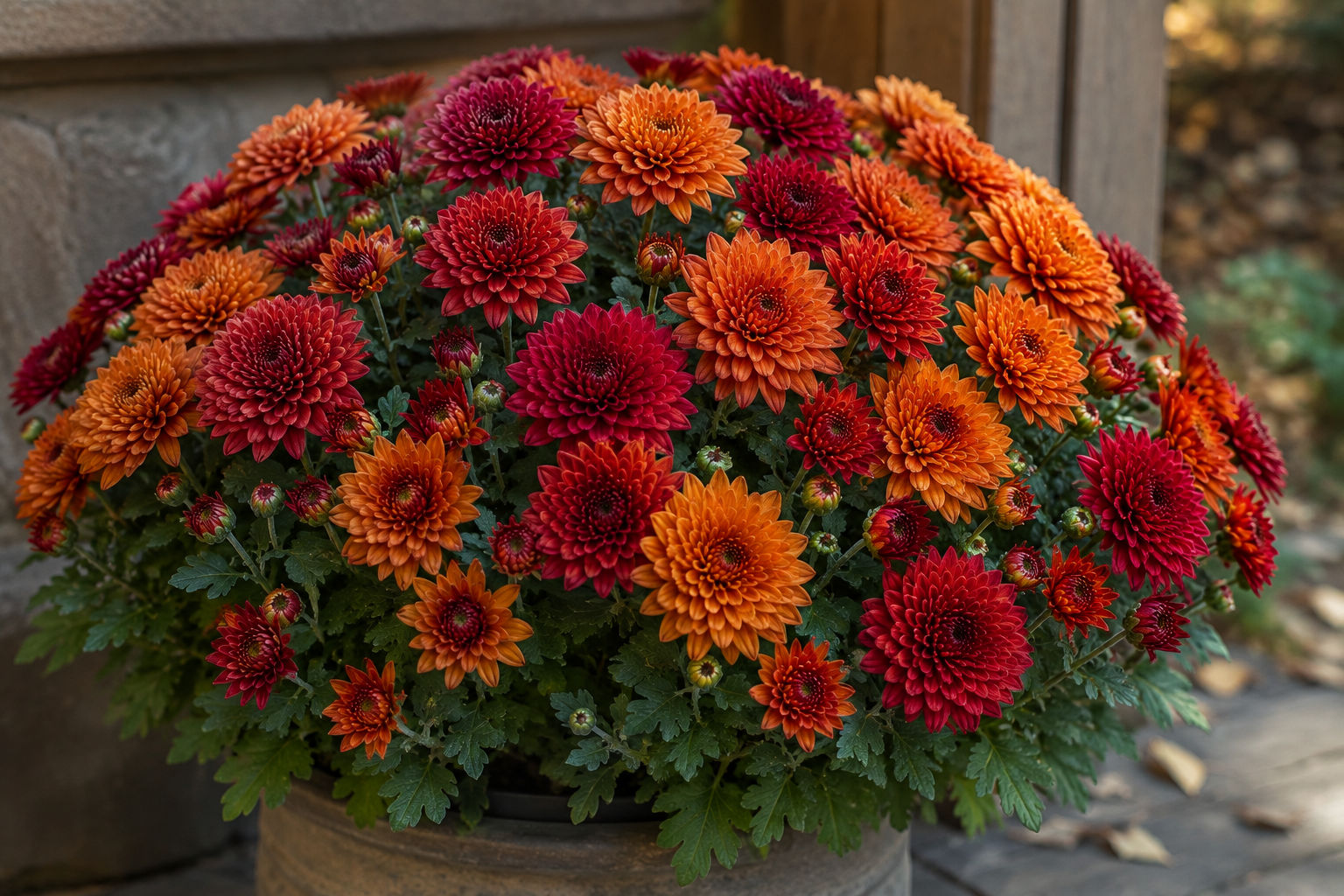
Few flowers say “fall has arrived” quite like a mum. You see them lined up outside grocery stores, tucked into porch planters, and paired with pumpkins on front steps everywhere. However, many people bring a mum home, enjoy it for a couple of weeks, and then watch it fade faster than expected.
The good news is that mums can last much longer than most people realize. With the right care, a single mum plant can bloom for weeks, and in many cases, come back year after year. This guide covers exactly how long mums last, what affects their bloom time, and the simple habits that keep them thriving well into the season.
How Long Do Mums Actually Last?
Most mums bloom for four to eight weeks. That said, the exact timeline depends on a few key factors. These include the variety you buy, the weather in your area, and how well you care for the plant once it comes home.
Cooler temperatures tend to help mums bloom longer. Once daytime highs drop below 70 degrees Fahrenheit, mums tend to hold their color much better than during a hot, late summer stretch. This is one reason mid to late fall often produces the longest-lasting displays.
There is also a difference between florist mums and garden mums. Florist mums are bred to bloom heavily for a short window, then they naturally decline. Garden mums, on the other hand, are true perennials. According to NC State Extension, garden mums are hardy in USDA zones 5 through 9 and can return for years if properly cared for, even though many gardeners simply toss them out after the season ends.
So, how do you get the most out of your mum, whether it is a florist variety or a hardy perennial? It starts with choosing the right plant in the first place.
How to Choose a Mum That Will Last Longer
Not every mum at the garden center is created equal. A little attention at the buying stage can add real time to your plant’s bloom period.
Look for plants with tight, unopened buds rather than ones already in full bloom. Fully bloomed mums look impressive on the shelf, but they are closer to the end of their cycle. Plants with mostly closed buds will open gradually over the following weeks, which stretches out your enjoyment significantly.
Skip any mums with yellowing leaves or spindly, weak stems. These are signs of a stressed plant, and stressed plants tend to decline faster once they get home. Instead, choose compact, bushy plants with healthy green foliage.
Timing matters too. Shopping early in the season gives you access to the widest color selection and the healthiest stock. Waiting until late October often means picking from whatever is left, which may already be past its prime.
Watering: The Single Biggest Factor in Mum Longevity
If there is one habit that determines how long your mum lasts, it is watering. Mums are thirsty plants, and both too much and too little water can shorten their bloom time significantly.
Water your mums deeply one to two times per week, adjusting based on rainfall and temperature. During hot, dry stretches, you may need to water more often. Always check the soil before watering. If the top inch feels dry, it is time to add water.
For potted mums, drainage matters just as much as watering frequency. Make sure the container has drainage holes, since soggy, waterlogged soil can lead to root rot. Water at the base of the plant rather than overhead, and let any excess drain away completely.
Indoor mums typically need less frequent watering than outdoor ones. Still, never let the soil dry out completely, since this can cause the blooms to wilt and drop earlier than they should.
Sunlight and Placement
Mums need plenty of sunlight to keep producing healthy blooms. Aim for at least six hours of direct sun each day. Without enough light, mums often become leggy, and their flowers may fade more quickly.
As the season progresses, the sun’s position shifts, and shadows grow longer. A spot that got full sun in September might be partially shaded by October. Because of this, it helps to check your mum’s location periodically and move it if needed.
If you live somewhere with especially intense afternoon heat, a little afternoon shade can actually help extend blooming, since it reduces stress during the hottest part of the day.
Deadheading and Grooming
Deadheading, or removing spent blooms, is one of the easiest ways to keep a mum flowering longer. As individual flowers fade, snip them off just above the next set of leaves. This redirects the plant’s energy toward producing new blooms instead of maintaining old ones.
Regular grooming also helps you catch problems early. While you are deadheading, look for yellowing leaves, pests, or signs of disease. Catching these issues quickly makes them much easier to manage.
Fertilizing for Stronger, Longer Blooms
Mums benefit from occasional feeding, especially if you plan to keep them beyond the first season. A balanced, phosphorus-rich fertilizer supports strong root development and encourages more abundant flowering.
Avoid heavy fertilizing once the plant is actively blooming, since this can sometimes push new leaf growth at the expense of flowers. Instead, focus fertilizing efforts earlier in the season, when the plant is still establishing itself.
Can Mums Survive Winter?
Yes, many mums can survive winter with the right preparation, particularly garden mums planted directly in the ground. Potted mums, however, are more vulnerable to cold since their roots are less insulated.
If you want to overwinter your mums, plant them in the ground at least six weeks before your area’s first hard frost. This gives the roots enough time to establish before cold weather sets in. Once temperatures drop, apply a thick layer of mulch, four inches or more, to protect the root system.
For potted mums, moving the container indoors or into a garage during the coldest stretches can help. Just remember they still need some light and occasional watering, even during dormancy.
Leave old stems standing through winter rather than cutting them back immediately. This might look untidy, but the dead foliage actually helps insulate the crown of the plant. Once new growth appears in spring, you can prune back the old stems to encourage fuller, bushier growth.
Common Problems That Cut Mum Blooms Short
A few issues come up again and again with mums, and most are avoidable with a little attention.
Browning leaves or petals. This is often caused by inconsistent watering, whether too much or too little. Pests can also cause browning, so it is worth inspecting the plant closely if you notice discoloration.
Wilting despite regular watering. This can point to root rot from poor drainage, or roots that are simply too crowded in their current pot. Repotting into a larger container with fresh, well-draining soil often solves this.
Fewer blooms than expected. This is usually tied to insufficient sunlight or a plant that was already past its prime when purchased. Choosing budded plants over fully bloomed ones at the store helps avoid this from the start.
Leggy, sparse growth. Pinching back the growing tips earlier in the season, roughly every four to six weeks until early August, encourages fuller, bushier plants with more blooms overall.
Popular Mum Varieties and What They Offer
Mums come in a wide range of shapes and colors, and knowing a bit about the different types can help you pick the right one for your space. Pompon mums have tightly packed, rounded blooms and tend to hold their shape well through the season. Spider mums feature long, thin, curling petals that give them a more dramatic, textured look. Decorative mums, meanwhile, offer large, layered blooms that work well as a focal point in a garden bed or large planter.
Color also plays a role in how mums fit into a fall display. Warm shades like burgundy, orange, and gold tend to pair naturally with pumpkins and autumn foliage. Cooler tones, including lavender and white, offer a softer look that can complement a wider range of home exteriors. If you are unsure which variety suits your space, most garden centers group mums by both bloom type and color, making it easy to compare options side by side.
Pests and Diseases to Watch For
Like most garden plants, mums can run into a few pest and disease issues, especially during humid or wet stretches of weather. Aphids are among the most common pests, often clustering on new growth and the undersides of leaves. A strong spray of water or a mild insecticidal soap usually clears up a minor infestation.
Spider mites can also be a problem, particularly during hot, dry weather. These pests are tiny and easy to miss at first, but they often leave behind a fine webbing and stippled, discolored leaves. Increasing humidity around the plant and rinsing foliage periodically can help keep populations in check.
Fungal issues, such as powdery mildew or root rot, tend to show up when air circulation is poor or when soil stays too wet for too long. Spacing plants adequately and avoiding overhead watering both help reduce the risk. If you notice fuzzy white patches on leaves or a musty smell near the roots, trimming affected areas and improving drainage can often resolve the issue before it spreads.
Catching these problems early makes a real difference. A quick visual check while watering or deadheading is usually enough to spot trouble before it seriously affects your mum’s bloom time.
Using Mums in Fall Arrangements and Containers
Mums are not just for garden beds and porch pots. They also work beautifully in mixed container arrangements alongside other fall favorites like ornamental kale, pansies, and millet grass. Combining textures and heights creates a fuller, more layered look than a single mum on its own.
When building a mixed container, place taller plants like millet or ornamental grasses toward the back or center, then fill in with mums for color and pansies for a low, spilling border. This layered approach not only looks more polished but also helps disguise any individual plant that starts to fade before the others.
Mums can also work as short-lived cut flowers indoors. While they will not last as long in a vase as they do in soil, changing the water every couple of days and trimming the stems at an angle can help extend their indoor display by several days.
Indoor vs. Outdoor Mums: What Changes
Mums behave a little differently depending on where you keep them. Indoor mums are usually grown as short-term decorative plants rather than long-term perennials. They need bright, indirect light and consistent watering, but they are more vulnerable to drying out in heated indoor air.
Outdoor mums, whether potted or planted directly in the garden, tend to hold up better over a longer stretch. They benefit from natural rainfall, more consistent airflow, and cooler nighttime temperatures, all of which support longer blooming.
If you are decorating your porch or entryway this season, pairing mums with other seasonal plants can extend your display well past the mums’ peak bloom. For more ideas on building a full seasonal look, check out our fall porch decorating guide for pairing suggestions that keep your entryway colorful from September through November.
Regional Considerations Across the U.S.
Where you live plays a real role in how long your mums last and how you should care for them. In warmer regions like the Southeast or parts of Texas, mums may bloom earlier but fade faster in lingering heat, so afternoon shade and consistent watering matter more. In cooler northern states, including much of the Midwest and Northeast, mums often bloom later into fall and can hold their color right up until the first hard frost.
Gardeners in dry climates, such as parts of the Southwest, should pay close attention to watering frequency, since soil dries out faster in low humidity. Meanwhile, in especially wet or humid regions, good drainage becomes even more important to prevent root rot and fungal issues.
Final Thoughts
Mums have a reputation for being short-lived, but that is not the full story. With the right variety, proper watering, enough sunlight, and a little seasonal grooming, a single mum can bloom for two months or longer. Some can even come back year after year with proper winter care. The next time you pick up a mum for your porch or garden, take a moment to choose one with tight buds and healthy foliage. Then, give it the consistent care outlined above. Your fall display will thank you for it, and depending on the variety, you might just be enjoying those same blooms again next year.
Frequently Asked Questions
How long do mums typically bloom? Most mums bloom for four to eight weeks, depending on the variety, weather conditions, and how well the plant is cared for. Cooler fall temperatures tend to extend blooming time compared to hot, late-summer weather.
Do mums come back every year? Garden mums are true perennials and can return for years if planted in the ground and properly protected over winter. Florist mums, however, are typically grown as short-term annuals and are less likely to survive long term.
Why are my mum’s leaves turning brown? Browning is usually caused by overwatering, underwatering, or pest issues. Check the soil moisture first, then inspect the plant closely for signs of insects or disease.
Should I buy mums with open blooms or tight buds? Tight, unopened buds are the better choice if you want your mum to last longer. Plants with mostly closed buds will open gradually over the following weeks, extending your overall enjoyment.
How often should I water my mums? Water deeply one to two times per week, adjusting based on temperature and rainfall. Always check the top inch of soil before watering, and make sure containers have proper drainage.
Can potted mums survive winter? Potted mums are more vulnerable to cold than those planted in the ground, since their roots have less insulation. Moving pots indoors or into a garage during the coldest weather can help them survive until spring.
Do mums need full sun? Yes, mums need at least six hours of direct sunlight daily to produce healthy, long-lasting blooms. Without enough light, plants often become leggy and may flower less.
When is the best time to plant mums for fall blooms? Late summer planting is ideal for fall color, while early spring planting gives mums more time to establish strong roots before their first blooming season.