

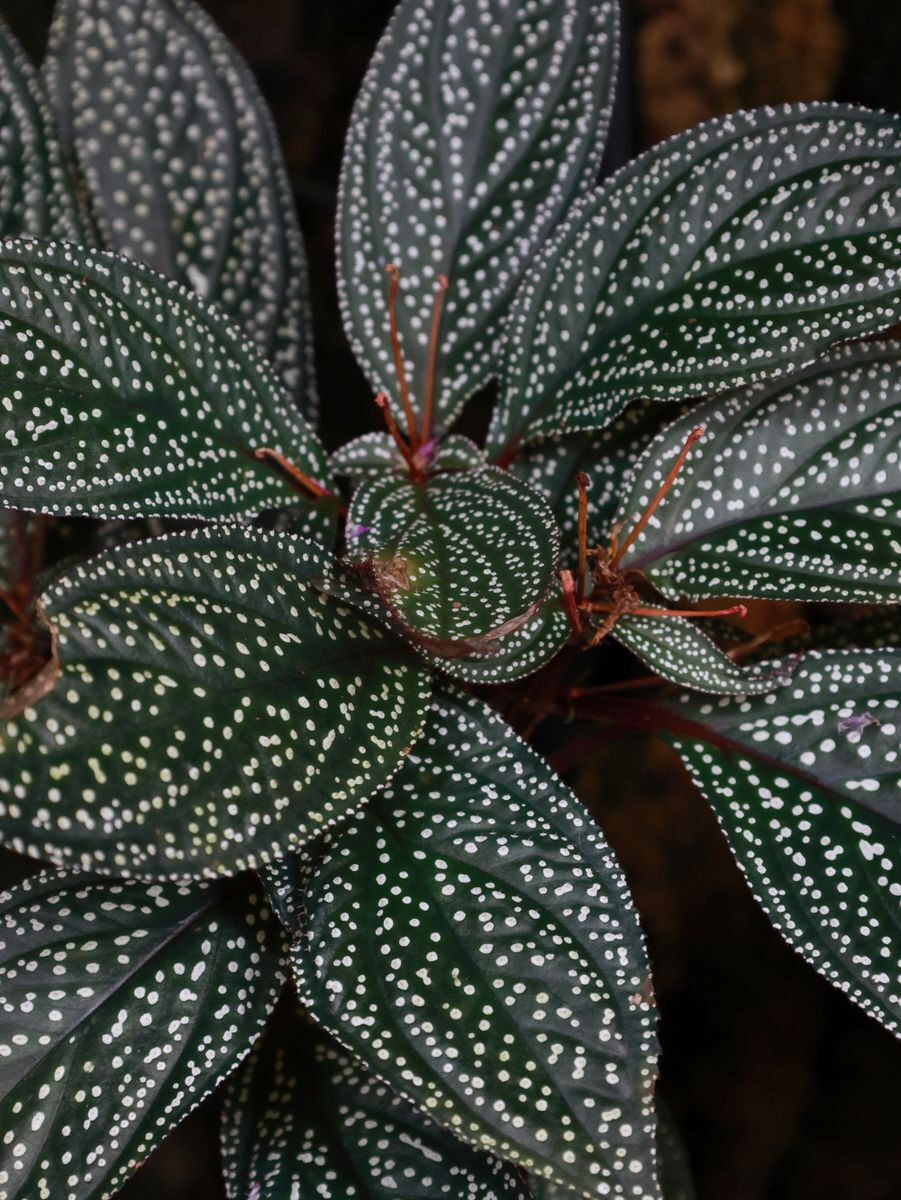
If you’ve ever walked past a jewel orchid at a local plant shop and done a double take — you’re not alone. The velvety, almost iridescent leaves with their intricate gold or silver veining have that effect on people. While most orchid enthusiasts chase after big, dramatic blooms, jewel orchid lovers know the real show is happening in the foliage.
I’ve been growing Ludisia discolor — the most popular species in this group — for several years now, and I can honestly say it’s one of the most rewarding houseplants I’ve ever kept. It doesn’t demand a lot of fuss, it thrives in low light conditions that would challenge most other plants, and once you understand its quirks, it practically grows itself.
This guide covers everything you need to know: from the basics of light and water, to soil mixes, humidity, propagation, and troubleshooting common problems. Whether you’re brand new to houseplants or a seasoned collector adding another gem to your shelf, this one’s for you.
What Is a Jewel Orchid, Exactly?
Before we get into the care specifics, it helps to understand what makes jewel orchids different from the orchids most of us are familiar with.
The term “jewel orchid” loosely refers to a group of terrestrial orchids — primarily Ludisia discolor, but also species from genera like Macodes and Anoectochilus — that are grown almost entirely for their foliage rather than their flowers. They originate from the tropical understory of Southeast Asia, particularly regions of Malaysia and Indonesia, where they grow on the forest floor in deep, dappled shade.
Unlike the Phalaenopsis or Cattleya orchids you’d pick up at a grocery store, jewel orchids don’t grow on trees (epiphytic). They grow in the ground (terrestrial), which changes everything about how you care for them — particularly when it comes to soil and watering.
Ludisia discolor is the most widely available variety and the one you’re most likely to find at nurseries across the US. It features dark, almost black-green leaves with fine white or reddish veining. You’ll also occasionally find Ludisia discolor ‘Alba,’ which has medium green leaves with silver veins. Less commonly, you might come across the Lightning Jewel Orchid (Macodes petola), known for its electric gold-veined leaves — a real showstopper.
Quick Care Overview
Before diving deep, here’s a quick-reference snapshot:
- Light: Low to moderate indirect light; north- or east-facing windows work best
- Water: Keep soil consistently moist but never waterlogged
- Humidity: 50–70% preferred
- Temperature: 65–75°F (18–24°C); keep away from cold drafts
- Soil: Well-draining mix: 70% potting soil + 30% perlite, or a sphagnum moss blend
- Fertilizer: Diluted balanced orchid fertilizer every 4–6 weeks during the growing season
- Repotting: Every 1–2 years, in a wide, shallow pot
- Propagation: Stem cuttings in water or moist sphagnum moss
Light Requirements: The Lower, the Better
One of the biggest reasons jewel orchids appeal to so many indoor gardeners in the US — especially apartment dwellers — is their genuine tolerance for low light. These plants evolved under the dense canopy of tropical rainforests, where only filtered, dappled light ever reached them.
In practice, this means a north- or east-facing window is ideal. You can also place them a few feet back from a south or west window, or use a sheer curtain to soften intense rays. Direct afternoon sun is a hard no — it will scorch and bleach those gorgeous leaves within days.
If you’re growing in a particularly dark corner or a room with small windows, a simple grow light on a 12-hour timer will do the trick. LED grow lights have come down dramatically in price and work beautifully for jewel orchids. Just keep the light source at least 12–18 inches above the plant to avoid heat stress.
One thing to watch: if the vein patterns start to fade or the leaves lose their rich depth of color, it usually means the plant is getting too much light. Move it somewhere dimmer and the color should recover within a few weeks.
Watering: Moist, Not Soggy
Getting the watering right is honestly the most important part of keeping a jewel orchid healthy, and it’s also where most people go wrong — usually by overwatering.
The goal is to keep the soil consistently moist, not wet. Think of the moisture level of a wrung-out sponge. You want the roots to have access to water without sitting in it.
A good rule of thumb: water when the top inch of the soil begins to feel dry. In most US homes, this will be roughly every 5–7 days in spring and summer, and every 10–14 days in fall and winter when growth slows.
A few practical tips:
- Use room temperature water. Cold tap water can shock the roots and cause leaf spotting, especially on the delicate velvety surface.
- Avoid water on the leaves. The soft, suede-like texture of the leaves can trap moisture and lead to fungal issues. Water directly at the base.
- Never let the plant sit in standing water. Empty saucers after watering. Root rot is the number one killer of jewel orchids, and it sets in fast when drainage is poor.
- Reduce watering in winter. The plant enters a semi-dormant period, and its water needs drop significantly.
In many parts of the US, tap water contains chlorine and fluoride that can build up in the soil over time. If your tap water is heavily treated (common in cities like Phoenix, Las Vegas, or Los Angeles), consider using filtered or distilled water, or simply leaving tap water out overnight before using it.
Soil and Potting Mix: Get This Right
Because jewel orchids are terrestrial rather than epiphytic, they need a real growing medium — not the pure bark chips you’d use for a Phalaenopsis. However, they also can’t tolerate dense, moisture-retaining potting mixes that stay soggy.
The sweet spot is a well-draining, slightly moisture-retentive mix. A reliable recipe that works well:
- 70% quality houseplant potting soil + 30% perlite — This is probably the most beginner-friendly option. The perlite opens up the structure, improves drainage, and prevents compaction.
- Sphagnum moss (pure or blended) — Many experienced growers swear by growing jewel orchids in 100% sphagnum moss. It holds moisture evenly while still being airy, and it’s what many terrariums use. The downside is it breaks down over time and needs replacing more frequently.
- Custom blend — A mix of peat moss or coco coir, perlite, and a small amount of orchid bark gives excellent results.
Soil pH should stay slightly acidic, in the range of 5.5 to 6.5. Most commercial houseplant potting mixes fall naturally within this range, so you typically don’t need to adjust it.
When it comes to containers, choose wide and shallow over deep and narrow. Jewel orchid rhizomes spread laterally, not downward, so a shallow pan-style pot gives them the room they want. The container depth from the soil line down should ideally be around 5 inches. Always choose a pot with drainage holes — no exceptions.
Temperature and Humidity: Think Tropical, Not Extreme
Jewel orchids like stable, warm conditions. The ideal temperature range is 65–75°F (18–24°C), which aligns well with the average American home — another reason these plants have become so popular across the US, from humid Florida to dry Colorado.
What they don’t tolerate is cold. Temperatures below 60°F (15°C) can cause leaf drop and stress the roots. Keep them away from drafty windows, exterior walls in winter, and air conditioning vents, which can create chilly microclimates even in warm months.
Humidity is where many indoor environments fall short, particularly in states with dry winters like Minnesota, Colorado, and the plains states. Jewel orchids prefer humidity in the 50–70% range. Standard home humidity often runs 30–40%, especially in winter.
Here are practical ways to boost humidity without a full humidifier setup, the same techniques covered in our Kimberly Fern care guide:
- Pebble tray method: Place the pot on a tray filled with pebbles and water. As the water evaporates, it creates a humid microclimate around the plant. Make sure the pot sits above the waterline.
- Grouping plants together: Plants naturally release moisture through transpiration. Clustering your jewel orchid with other humidity-loving plants raises the ambient moisture around all of them.
- Small humidifier: If you have multiple humidity-loving plants, a small ultrasonic humidifier on a timer is the most effective and reliable solution.
- Terrarium growing: Jewel orchids absolutely thrive in closed or semi-closed terrariums, which naturally maintain high humidity. This has become a hugely popular way to display them across US plant communities, particularly in the Pacific Northwest and Southeast.
Fertilizing: Light and Consistent Wins
Jewel orchids don’t need heavy feeding. In fact, over-fertilizing can burn the roots and cause more harm than good.
During the growing season (spring through early fall), feed with a diluted, balanced orchid fertilizer every 4–6 weeks. Look for a formula with roughly equal N-P-K ratios (like 20-20-20 or 10-10-10) and always dilute it to half the recommended strength. Liquid fertilizers work better than granular ones because they distribute evenly and are easier to flush out.
Stop fertilizing entirely in fall and winter. The plant is resting, its metabolic activity slows down, and unused fertilizer salts will accumulate in the soil and cause leaf tip burn.
Once a year in spring, flush the soil thoroughly with plain water to rinse out any built-up mineral deposits — especially if you’re using tap water regularly.
Repotting: When and How
Jewel orchids are slow to moderate growers and don’t need frequent repotting. Plan on moving up a pot size every 1–2 years, ideally in spring when growth is picking up.
Signs it’s time to repot:
- Roots visibly circling the bottom of the pot or escaping through drainage holes
- The plant has become top-heavy or unstable
- Soil has broken down and no longer drains well
- Growth has slowed significantly despite good care
When repotting, choose a container only one size larger than the current one. Going too large can lead to waterlogged soil around the roots, which invites rot.
Pro tip: Water the plant thoroughly 24 hours before repotting. Hydrated roots are more pliable and less likely to snap during handling — and jewel orchid stems are notably brittle, so gentle handling matters.
After repotting, hold off on fertilizing for 4–6 weeks to give the roots time to settle in without the added stress of nutrients.
Flowering: What to Expect
While jewel orchids are primarily grown for their leaves, they do flower — usually in late fall or early winter, producing upright spikes with small clusters of white blooms. The flowers are delicate and charming, though they lack the drama of most orchid blooms.
Here’s an interesting choice you’ll need to make: let it flower or pinch the spike?
- Let it flower if you enjoy the seasonal interest and the subtle white blooms. The plant will expend energy on flowering but will recover.
- Pinch the spike early if you want the plant to stay compact and produce more of those incredible leaves. Removing the flowering spike redirects energy back into vegetative growth.
To encourage flowering, try dropping nighttime temperatures slightly to around 59–65°F (15–18°C) in autumn. This temperature dip mimics the plant’s natural seasonal cue to bloom.
Propagation: One of the Easiest Orchids to Multiply
Here’s where jewel orchids really shine — they are exceptionally easy to propagate, and it’s one of the most satisfying aspects of growing them. The creeping, stem-based growth habit they’ve developed in the wild makes them naturally predisposed to rooting from cuttings.
There are two main methods:
Method 1: Stem Cuttings in Water
This is the most beginner-friendly approach, and it works remarkably well.
- Select a healthy stem with at least 2–3 leaves and make a clean cut just below a node using a sterilized knife or scissors.
- Remove the lower leaves, leaving only the top 2–3.
- Place the cut end in a jar or vase of clean water — distilled or filtered is best. Make sure no leaves are submerged.
- Position the jar in a warm spot with bright, indirect light (a north-facing windowsill is perfect).
- Change the water every few days to keep it fresh and prevent bacterial buildup.
- Roots should begin to appear within 1–2 weeks. Once they reach about 2–3 inches in length, pot the cutting up into your prepared soil mix.
Do not add fertilizer to the water while the cutting is rooting. Wait until roots are well-established in soil before feeding.
Method 2: Stem Cuttings in Sphagnum Moss
This method produces slightly stronger roots because the transition from moss to soil is gentler than from water.
- Take a stem cutting the same way — 10 cm or longer, cut below a node.
- Optionally, dust the cut end with cinnamon powder, which acts as a natural antifungal agent.
- Press the cutting into moist (not soaking) sphagnum moss and place it in a warm, humid spot — or enclose it in a clear plastic bag to retain humidity.
- Keep the moss moist and the temperature around 70°F. Roots typically develop within 3–6 weeks.
- Once rooted, pot up into your regular mix.
Method 3: Division
If your plant has grown large and bushy with multiple spreading stems, you can divide it when repotting. Gently separate sections, making sure each division has its own roots, and pot them up individually. New growth typically appears within a couple of weeks.
Common Problems and How to Fix Them
Yellowing Leaves
Usually a sign of overwatering or poor drainage. Let the soil dry out a bit more between waterings and check that your pot has adequate drainage. If the soil smells sour or the stems feel mushy at the base, root rot may have set in — remove the affected roots, let the plant dry briefly, and repot in fresh mix. Our Areca Palm guide covers the same root rot diagnosis and recovery steps.
Fading Leaf Color
Too much light. Move the plant further from the window or add a sheer curtain. The rich, deep coloring is one of the jewel orchid’s greatest assets — protecting it from excess light is non-negotiable.
Brown Leaf Tips
Often caused by low humidity, over-fertilizing, or fluoride buildup in the soil. Boost humidity, scale back on feeding, and flush the soil with clean water to clear out mineral deposits.
Leggy, Stretched Growth
Not enough light. The plant is reaching toward the nearest source. Move it closer to a window, or supplement with a grow light.
Wilting Despite Moist Soil
This is a red flag for root rot. Unpot the plant, inspect the roots (healthy roots are white or light tan; rotted roots are brown, mushy, and often smell unpleasant), trim away affected areas with sterilized scissors, and repot in fresh, well-draining mix.
Growing Jewel Orchids in Terrariums
If you want to create a truly show-stopping display — and bump up your success rate at the same time — terrariums are worth considering. The consistently high humidity and stable temperatures of a closed or semi-closed terrarium mimic the jewel orchid’s natural habitat almost perfectly.
Jewel orchids have become a staple of the vivarium and terrarium community across the US, particularly in plant circles in cities like Portland, Seattle, Austin, and New York. Their compact size (typically 8–12 inches tall) and creeping habit make them ideal for larger display terrariums alongside mosses, ferns, and other tropical understory plants.
For a terrarium setup, use a shallow substrate layer of leca (expanded clay aggregate) for drainage, followed by a barrier cloth, then your sphagnum or soil mix. Keep the terrarium away from direct sun and mist occasionally if it’s a semi-open style.
Ferns make excellent terrarium companions for jewel orchids — our Macho Fern care guide covers a great pairing option, though you’ll want a dwarf variety for a smaller enclosed terrarium.
Where to Buy Jewel Orchids in the US
Jewel orchids have gone from specialty-only to widely available over the past few years. Here’s where to look:
- Local independent nurseries and plant shops — Often carry Ludisia discolor in the houseplant section, particularly in cities on the East and West Coasts.
- Etsy — A fantastic source for rarer varieties like ‘Alba,’ Macodes petola, and other jewel orchid species. Many sellers are small-scale hobbyist growers with healthy, well-cared-for stock.
- Facebook Marketplace and local plant swap groups — Given how easy they are to propagate, jewel orchids are frequently offered in local plant trading communities at very low cost or even for free.
- Big box stores (Home Depot, Lowe’s, Trader Joe’s) — Increasingly carry basic Ludisia discolor in their seasonal houseplant sections, especially in spring.
Final Thoughts
The jewel orchid is genuinely one of the most underrated houseplants available to US growers right now. It thrives in the kind of low-light indoor conditions that challenge most plants, it’s forgiving of occasional neglect, it propagates so easily you’ll be gifting cuttings to friends within months, and those leaves — those extraordinary, velvet-dark leaves with their glowing veins — are simply unlike anything else in the houseplant world.
Whether you’re setting up a terrarium, adding texture to a dim shelf, or just looking for something that sparks conversation every single time someone walks into the room, the jewel orchid delivers.
For authoritative, research-backed guidance on orchid family taxonomy and ecology, the American Orchid Society is an excellent resource with extensive care databases and a thriving community of growers across the country.
Start with one plant, give it the conditions it asks for, and you’ll likely end up with a collection before you know it.