

Heat pump repairs usually cost between $150 and $700, though guides differ. One shows a range of $150 to $650 with an average around $400, and Thumbtack’s guide (updated July 2026) shows $164 to $722. Small electrical parts and sensors sit at the low end. Failures involving the compressor, coil or refrigerant circuit can cost thousands, and they often force a decision between repairing and replacing the system.
Those figures are averages, not quotes. What you’ll pay depends on the part that failed, the age of the system, how hard it is to reach and when you call for service. A few points are worth knowing before you call anyone.
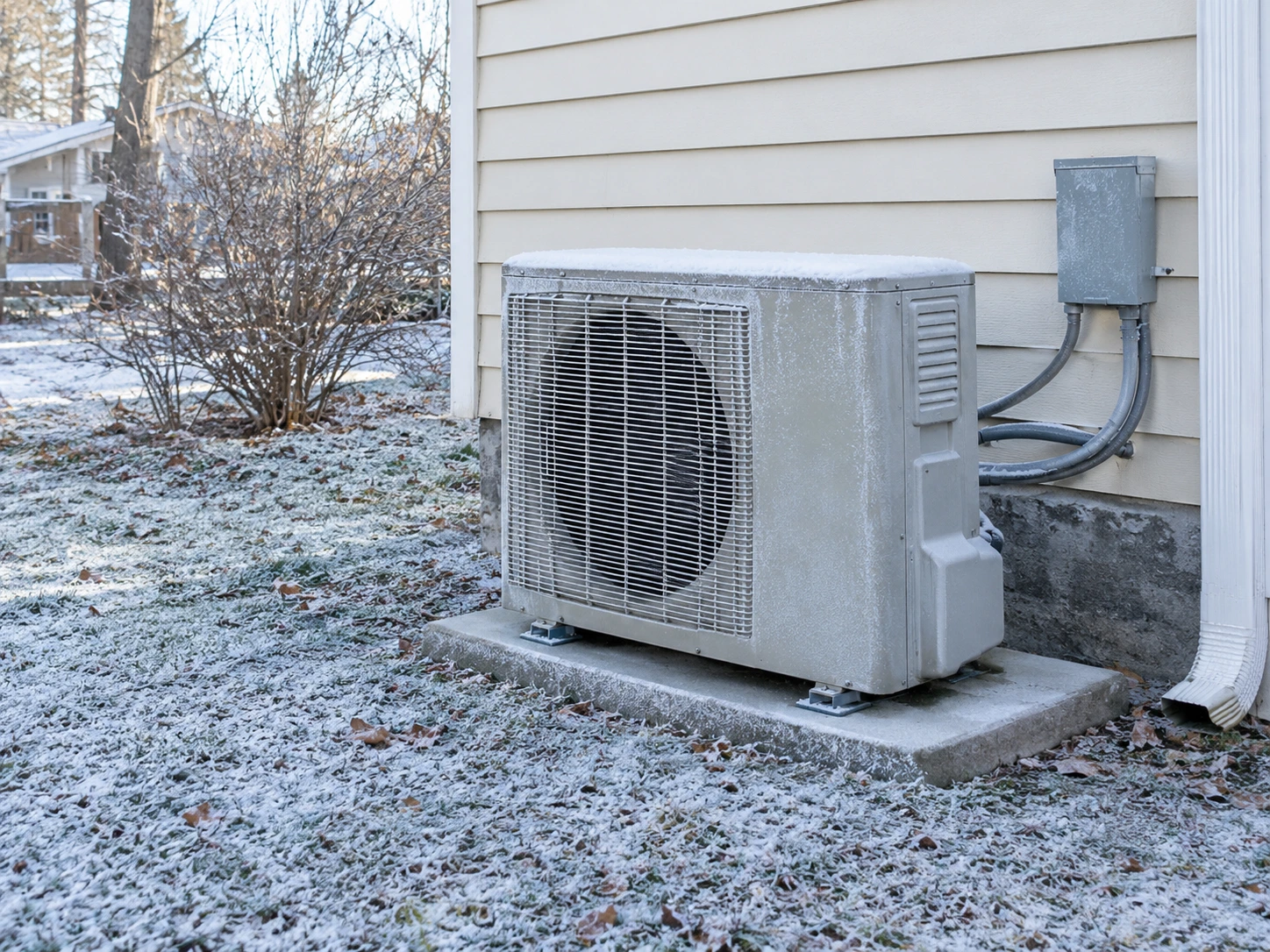
- A frosty outdoor unit is not always a sign of failure. Light frost is normal in winter, but a solid block of ice is not.
- When a heat pump won’t heat, the problem often turns out to be a dirty filter, a tripped breaker or a thermostat setting.
- If you get a repair quote on an older system, the math changes. The “5,000 rule,” explained below, is a quick first test of whether repairing makes sense.
What a heat pump repair usually costs
Cost guides agree on the broad shape even where they disagree on the details. Repairs fall into rough tiers.
| Repair type | Typical examples | What to expect |
|---|---|---|
| Minor | Thermostat settings, dirty filter, tripped breaker, clogged condensate drain | Free to roughly the cost of a service call |
| Moderate | Capacitor, contactor, sensors, defrost board, fan motor | Generally a few hundred dollars, with motors and control boards toward the higher end |
| Major | Reversing valve, refrigerant leak repair, coil replacement | Often high hundreds to a few thousand dollars |
| Compressor | Failed or seized compressor | One guide notes major repairs like compressor replacement can reach $2,800 |
This guide doesn’t list per-part prices, because published numbers vary widely between sources and the same part can cost very different amounts depending on brand and system size. Use the table to sanity-check a quote, not to predict one.

By symptom, one 2026 guide puts the cost of fixing a heat pump that won’t turn on at $150 to $400, and a heat pump that won’t defrost at $90 to $650.
What changes the price
The part itself. A run capacitor is a low-cost item. A variable-speed ECM fan motor or a driven compressor is not. Newer higher-efficiency systems often use specific parts and those parts cost more.
System type. Standard ducted air-source systems, ductless mini-splits, dual-fuel setups and geothermal systems all fix differently. Mini-split boards and inverter components can be expensive and not every general HVAC company keeps them in stock.
Age. With a lifespan of 10 to 15 years older units often have higher repair costs. Other sources say lifespan is to 12 to 20 years so the actual number depends a lot on climate, installation quality and upkeep.
Timing. A unit hidden behind a fence or on a rooftop takes time to fix. After-hours and winter-emergency calls usually have charges because everyone’s heat pump seems to break on the coldest night of the year.
Where you live. Labor rates in high-cost cities like the Northeast corridor or coastal California are usually higher than in much of the South and Midwest. Rural homes may pay more for travel.
Diagnostic fees. Many companies ask for a fee and some apply it to the repair if you go ahead. Ask before they send someone out, not after.
The most common heat pump problems and what’s behind them
1. The unit won’t turn on, or the outdoor unit won’t start
The usual suspects are a tripped breaker, a failed capacitor or contactor, a bad thermostat or control board, or a dirty filter that triggered a safety shutoff. Check the breaker and the thermostat first. If the indoor fan runs but the outdoor fan or compressor doesn’t, that points toward the capacitor or contactor. Those are the most routine electrical repairs in the trade, but they involve stored electrical charge, so this is a job for a technician.
2. Weak heating or warm-ish air
Before blaming the equipment, rule out the dull stuff: a clogged filter, blocked vents, or closed registers. Airflow is the most common cause, and the DOE warns that dirty filters, coils, and fans reduce airflow and can damage the compressor.
If airflow is fine, low refrigerant is the next suspect. A heat pump’s refrigerant circuit is sealed, so low charge means there’s a leak somewhere. Topping it off without finding the leak is a short-term fix at best.
One note on terminology: heat pump air in heating mode often feels cooler than furnace air. That’s by design and doesn’t indicate a fault. Supply air in the 90s °F can be normal.
3. Ice on the outdoor unit
This is the call that causes the most unnecessary panic. A light coat of frost is normal, and the system runs a defrost cycle to clear it. During defrost, the outdoor fan typically stops and steam may rise off the coil. According to one guide, the fan stops, steam rises off the coil, and the compressor runs.
Problematic ice looks different. It’s a thick shell that covers the whole unit, blocks the fan, or comes back quickly after a defrost. Common causes include a faulty defrost sensor, a failed defrost control board, a stuck reversing valve, low refrigerant, or a bad outdoor fan motor. Roof drip lines or icicles falling on the unit can overwhelm even a healthy system, which is worth checking.
What you can safely do:
- Clear snow, leaves, and debris from around the unit.
- Switch the thermostat to emergency or auxiliary heat so the house stays warm while you wait for service.
- With the power off, melt heavy ice gently with warm water. Don’t chip at it. The coil fins and refrigerant lines damage easily.
Emergency heat uses electric resistance elements, which cost a lot to run. Use it as a stopgap, not a setting.
4. Short cycling
If the system turns on and off every few minutes, something is wrong. Causes range from a dirty filter or coil, to a thermostat problem, to an oversized system, to a refrigerant issue. Short cycling is hard on compressors, so don’t ignore it. Oversizing is the one cause a repair can’t fix, and it’s more common than people think. Manual J load calculations exist to prevent it.
5. Strange noises or smells
Grinding or screeching often means a failing fan motor or bearings. Clicking at startup can mean an electrical component on its way out. A burning smell, especially from the air handler, warrants shutting the system off at the breaker and calling a pro. A musty smell is more often a drain or coil hygiene problem than an equipment failure.
6. Leaking water indoors
In cooling mode, the indoor coil produces condensate that should drain away. A clogged condensate line, a cracked pan, or a frozen indoor coil can cause leaks. Clearing a clogged drain is a cheap fix. A frozen indoor coil is a symptom of an underlying airflow or refrigerant problem, not the root cause.
7. Stuck in the wrong mode
If a heat pump blows cold air in heating mode or warm air in cooling mode, the reversing valve is a suspect, though a thermostat wiring or setting error is more common. A truly failed reversing valve is a moderate-to-major repair.
Things you can check yourself, and what to leave alone
Safe DIY checks:
- Replace or clean the filter. The DOE recommends cleaning or changing filters once a month or as needed.
- Confirm the thermostat is in the right mode and the batteries are fresh.
- Reset a tripped breaker once. If it trips again, stop and call someone.
- Clear debris, snow, and vegetation from around the outdoor unit.
- Look at the condensate drain for visible clogs.
Leave to a professional:
- Anything involving refrigerant. Handling refrigerant legally requires EPA Section 608 certification, and leaks need to be found and fixed, not just topped off.
- Capacitors, contactors, and control boards. Capacitors can hold a dangerous charge even with power off.
- Compressor, reversing valve, and coil work.
Step by step: what to do when your heat pump stops working
- Check the thermostat. Make sure it’s set to the right mode (heat or cool) and the target temperature is above or below the room temperature. Replace the batteries if it has them.
- Check the breaker. If it has tripped, reset it once. If it trips again, stop and call a technician.
- Check the filter and vents. Replace or clean a dirty filter, and open any blocked or closed registers.
- Look at the outdoor unit. Clear snow, leaves and debris. Light frost is normal, but a thick shell of ice is not.
- If the unit is iced over, switch to emergency or auxiliary heat to keep the house warm. With the power off, melt heavy ice gently with warm water, and don’t chip at it.
- Check the condensate drain. If water is leaking indoors, look for a visible clog in the drain line.
- Know when to stop. Turn the system off at the breaker and call a professional if you smell burning, hear grinding or screeching, or suspect a refrigerant leak.
- Before booking, ask whether there is a diagnostic fee and whether it’s applied to the repair. Check your warranty first.
- Get the diagnosis in writing, including the failed part and its cost, before approving work. Ask for a second opinion on any repair over about $1,000.
- Run the 5,000 rule. Multiply the unit’s age by the repair quote. If the result is over about 5,000, replacement may make more sense.
Repair or replace?
There’s no perfect formula, but these are the factors that matter most.
Age. A heat pump past 12 to 15 years that needs a major repair is a poor bet.
The 5,000 rule. Multiply the unit’s age by the estimated repair cost. If the result is over about 5,000, replacement usually makes more sense. A 12-year-old unit with a $500 repair scores 6,000, which leans toward replacement. A 6-year-old unit with the same repair scores 3,000, so repair it. It’s a rule of thumb, not a law, but it’s a useful sanity check against pressure at the kitchen table.
Repair history. Two or three service calls in a couple of years signal a system on the decline.
Efficiency. Older systems can cost noticeably more to run than current models, which tilts the long-term math toward replacing.
Replacement cost. Averages vary by source. One guide reports an average of $8,350 for heat pump replacement, while another puts the average new heat pump at $6,070. Carrier’s guide gives a much wider $6,000 to $25,000, with geothermal and high-efficiency systems at the top. Your home’s size, ductwork condition, and region drive the actual number.
A note about incentives: the federal 25C home-efficiency tax credit, which offered up to $2,000 for heat pumps, ended for installations after December 31, 2025. If you’re weighing replacement in 2026, don’t count on it. Check your state, utility, and local programs instead, since rebates vary widely.
The R-410A factor
If your system is years old it likely uses R-410A refrigerant. Because of the AIM Act new residential equipment is changing to refrigerants with global warming potential like R-454B and R-32. This does not mean your current system is no longer useful. As one HVAC training source says, the law reduces the production of R-410A, not the R-410A that is already in use.
What this means is that R-410A refrigerant will likely become more costly over time and a major leak on a system is a more expensive repair than it was before. One manufacturer says that refrigerant can cost $50 to $100 or more, per pound when labor and other costs are added. If a technician tells you that your system needs a refrigerant recharge, ask where the leak is and how much it will cost to fix it. Recharging a system that leaks over and over is the expensive way to avoid making a choice.
How to avoid overpaying
- Get the diagnosis in writing, including the failed part and what it costs, before approving work.
- Ask for a second opinion on any repair over about $1,000. A second diagnostic fee is cheap insurance.
- Check your warranty first. Manufacturer parts warranties often last several years but may require registration, and they commonly don’t cover labor. Registration deadlines and terms vary by brand, so check yours.
- Be wary of “you need a new system today” pitches for problems that haven’t been diagnosed.
- Ask whether it’s a part failure or a symptom. A capacitor that keeps failing may point to something else stressing the system.
- Don’t skip maintenance. The DOE says the energy-use difference between a well-maintained and a severely neglected heat pump ranges from 10% to 25%, and recommends professional service at least once a year. Tune-ups run roughly $100 to $250 in several cost guides, which is a small price against a compressor.
For more on keeping your system healthy, see the Department of Energy’s guide to operating and maintaining your heat pump. Facing another big home-system repair? See our guides to tankless water heater repair costs and the house inspection checklist.
Frequently Asked Questions
How much does a typical heat pump repair cost?
Most homeowners pay between roughly $150 and $700. Simple electrical repairs sit at the bottom and compressor or coil work at the top, sometimes beyond it.
Why is my heat pump running but not heating?
Start with the filter, thermostat mode, and blocked vents. If those are fine, the likely causes are low refrigerant, a faulty reversing valve, or a defrost problem. Heat from a heat pump also feels cooler than furnace heat, so make sure the air is actually cold before assuming a fault.
Is it normal for a heat pump to have frost or ice on it?
Light frost is normal in cold, damp weather, and the defrost cycle is designed to clear it. A thick ice shell, ice that blocks the fan, or ice that returns quickly means something has failed.
Should I use emergency heat if my heat pump stops working?
Yes, as a temporary measure while you wait for repairs. It uses electric resistance heat, which is expensive to run, so don’t leave it on indefinitely.
Is a heat pump worth repairing after 10 years?
Often yes, if the repair is modest. If the system is 12 to 15 years old and needs a compressor or major refrigerant repair, replacement usually deserves serious consideration. The 5,000 rule is a good starting test.
Can I add refrigerant myself?
No. Handling refrigerant requires EPA certification, and a heat pump’s refrigerant circuit is sealed, so low charge means a leak that needs fixing.
Does homeowners insurance cover heat pump repairs?
Typically not for wear and tear or age-related failures. Coverage may apply if a covered event, such as a storm or fire, damaged the unit. A home warranty or manufacturer warranty is more likely to help with ordinary breakdowns, so read the terms.
Are federal tax credits still available for a new heat pump?
Not for installations after December 31, 2025. Check state, local, and utility rebates, which vary by location.
Sources & References
- U.S. Department of Energy, Operating and Maintaining Your Heat Pump
- Fixr, Heat Pump Repair Cost (updated January 2026)
- Thumbtack, How Much Does It Cost to Repair a Heat Pump? (updated July 2026)
- HVAC School, R-410A Phase-Down Update
- ACHR News, Troubleshooting the Heat Pump Defrost Cycle
- IRS, Energy Efficient Home Improvement Credit (25C) guidance