

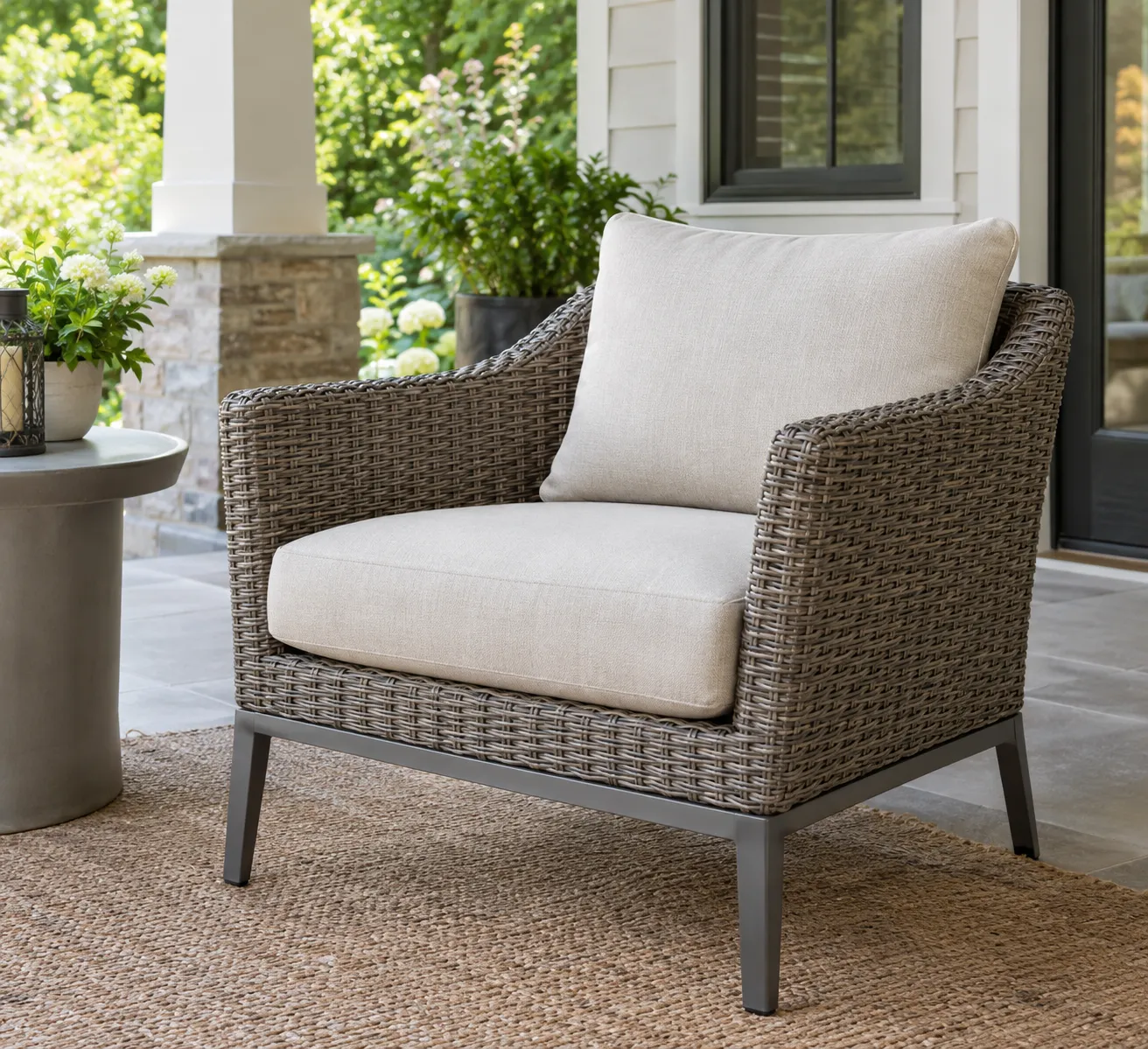
For outdoor use, buy a chair with a synthetic HDPE wicker weave over an aluminum frame. For indoor use or a covered porch, natural rattan is the better-looking choice, provided it never sits in rain or direct sun. Most disappointing wicker purchases come from putting the wrong one in the wrong place.
A note on how these picks were chosen. We haven’t sat in or tested any of these chairs. The picks below are based on manufacturer and retailer specifications, the materials each chair uses, and how those materials hold up in real conditions. They are starting points for your shortlist, not lab results. Prices and stock change often, so confirm both before you buy.
Wicker, rattan, and resin: what you’re actually buying
“Wicker” describes a weaving technique, not a material. A wicker chair can be woven from natural rattan, bamboo, or willow, or from synthetic strands. That distinction decides almost everything about durability.
Natural rattan is a plant material. It looks warm and organic and works well in living rooms, bedrooms, and sunrooms. It does not like weather. Serena & Lily’s care notes for its rattan furniture say to keep it indoors and out of the sun, and warn that cracking may occur in direct sunlight or a dry environment. Their fix is to moisten the rattan monthly with a damp cotton cloth.
Resin or synthetic wicker is the outdoor workhorse. The best version is HDPE (high-density polyethylene), which is nonporous and dyed all the way through, so scratches don’t reveal a different color underneath. A Wicker Warehouse buying guide advises avoiding PVC-based weaves, which are more prone to cracking and fading. That guide is from a retailer, so treat it as informed opinion rather than neutral testing.
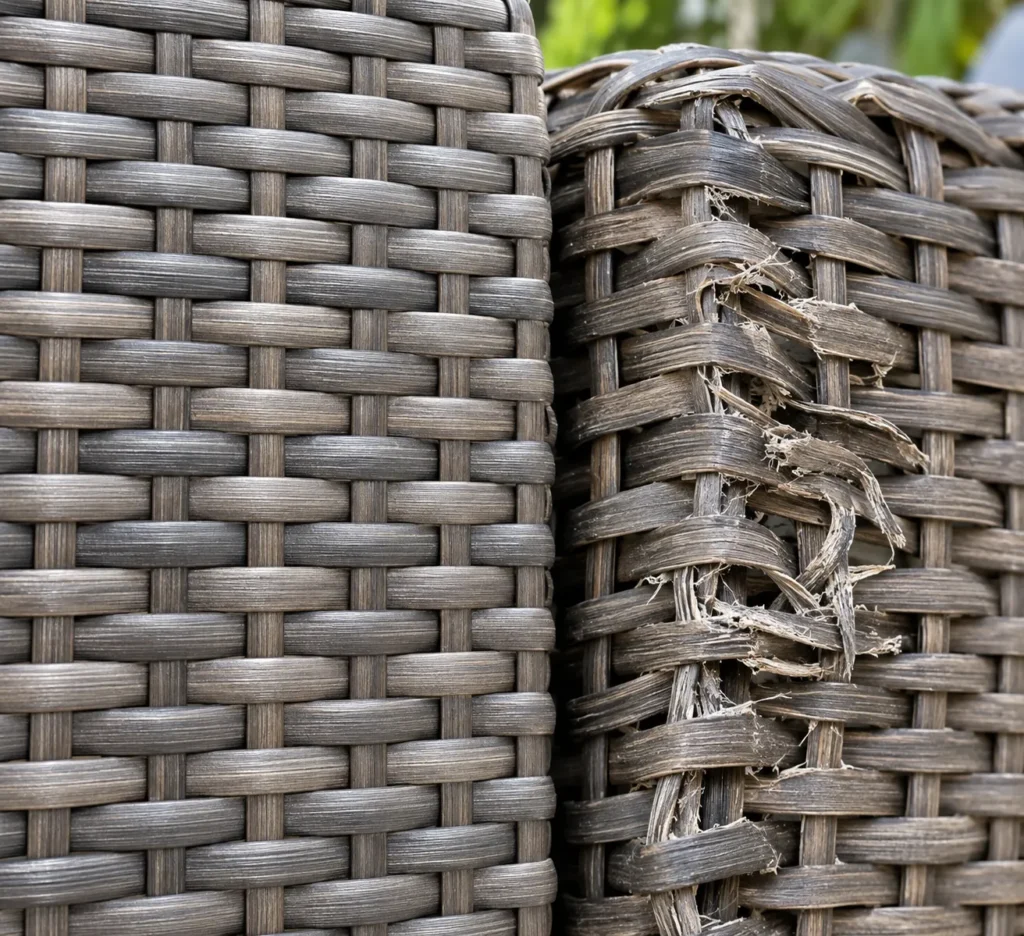
Consumer Reports’ older but still sensible advice is to choose untreated natural wicker only if it will be protected from the elements, and otherwise buy outdoor plastic wicker. It also suggests passing on pieces that are loosely wound or unraveling.
How to choose before you look at any specific chair
1. Check the frame first. The weave gets the attention, but the frame carries the weight. Aluminum doesn’t rust, which matters on humid Gulf Coast patios and near salt air on either coast. Steel frames can work if the powder coating is intact, but one scratch near a joint can start rust. Look for welded joints over bolted ones.
2. Confirm “indoor/outdoor” actually means outdoor. Some listings use that phrase loosely. Look for UV-resistant resin, weather-resistant cushions, and a stated outdoor rating. A seller that doesn’t say what the weave is made of is a red flag.
3. Match the chair to your climate.
- Southwest and high-sun states: UV exposure is the main enemy. Prioritize UV-stabilized HDPE and fade-resistant cushion fabric. Natural rattan will dry out and crack.
- Southeast and Gulf Coast: Humidity breeds mildew on cushions and in natural fibers. Choose aluminum frames and quick-drying cushions.
- Northeast, Midwest, and mountain states: Freeze and thaw cycles are hard on cheap resin. Plan to store cushions, and ideally the chairs, over winter.
- Pacific Northwest: Constant damp makes mold the issue. Good airflow under cushions and a covered spot help more than any particular brand.
4. Check weight capacity and dimensions. A listing for a budget pair of stackable chairs showed a 250-pound capacity and 24 by 21 by 32 inch dimensions, which is typical for dining-height wicker. Larger or taller people should look at lounge chairs rated higher.
5. Think about comfort honestly. Hard woven seats are fine for 45-minute dinners and miserable for an afternoon of reading. If you’ll linger, buy cushions or a lounge-style chair.
Our picks by situation
Best budget outdoor pair: Best Choice Products stackable wicker dining chairs
These come as a set of two. The listings describe a heavy-duty steel frame with aluminum foot caps wrapped in all-weather wicker, and the chairs stack for storage. They’re a reasonable way to furnish a deck or fire pit area cheaply.
The trade-off is the steel frame. It’s fine if you store the chairs under cover in winter and touch up any chips, but don’t count on it lasting a decade in a wet climate. Note too that many of the reviews on the retailer listing we checked were marked as incentivized, so read them with that in mind.
Best outdoor swivel or lounge chairs to compare: Pottery Barn, Serena & Lily, and World Market
Several 2026 editorial roundups list the same names for outdoor wicker swivel and accent chairs: the Pottery Barn Huntington swivel lounge chair, the Serena & Lily Tofino and Pacifica swivel chairs, and the World Market Montane oversized swivel chair. We haven’t verified each model’s frame or weave specs, so use these as a comparison set rather than a ranking. For any of them, confirm an aluminum frame, HDPE weave, and a named cushion fabric before you commit. The price gap between these and budget sets usually shows up in frame quality, weave density, and cushion fabric.
Best natural rattan statement chair for indoors: Serena & Lily Hanging Rattan Chair
This is a hand-bent rattan hanging chair with a scooped seat, measuring about 30 inches wide, 29 deep, and 44 high. Serena & Lily’s description says it’s for indoor use or a sheltered porch, and notes that it needs hardware and professional installation. Weight capacity is listed differently in different places: one description says 300 pounds and another 400, so confirm on the retailer’s page. Retailer listings put the price somewhere around $500 to $550.
Hanging chairs are a commitment. You need a ceiling joist or properly rated beam, and a renter probably can’t use one.
Best budget indoor accent chair: Safavieh Junie
Apartment Therapy’s editors describe the Junie as a wallet-friendly rattan and fabric chair at Walmart, with natural rattan and cream upholstery and a curved, vintage-leaning shape. It’s a sensible way to try the rattan look in a living room or bedroom without spending hundreds. Treat it as an indoor chair.
Best for restaurant-style durability and stacking: Flash Furniture Lila
This is sold as a pack of four and described as an indoor-outdoor restaurant stack chair. Commercial-grade chairs are built to be moved and stacked daily, which suits a large patio table or a covered gathering space. Check the listing’s specific material details, since the “rattan” in a product name often refers to the look rather than natural fiber.
Best outdoor rocker to shortlist: Serena & Lily Kiawah
Candie Anderson’s 2026 roundup of outdoor wicker accent chairs names the Kiawah rocking chair as its pick for a wicker rocker. It’s a good fit for a covered porch, where a rocker earns its keep. We haven’t verified the frame or weave specs, so check those first.
Quick comparison
| Use case | Look for | Watch out for |
|---|---|---|
| Exposed outdoor patio | HDPE weave, aluminum frame, UV resistance | PVC weaves, steel frames in wet climates |
| Covered porch | Resin or sealed rattan, quick-dry cushions | Blowing rain and direct afternoon sun |
| Living room or bedroom | Natural rattan, solid joinery | Dry air and radiators near the weave |
| Large dining area | Stackable, commercial-style chairs | Hard seats without cushions |
Before you buy: a quick checklist
- Decide where the chair will live: exposed patio, covered porch or indoors.
- Match the material to that spot: HDPE resin for outdoors, natural rattan only for indoors or a fully protected porch.
- Read the listing for the weave material, and skip sellers that don’t say what it’s made of.
- Check the frame: aluminum for wet or salty climates, and welded joints over bolted ones.
- Confirm “indoor/outdoor” is backed by a stated outdoor rating, UV-resistant resin and weather-resistant cushions.
- Check the weight capacity and dimensions against the people who will use the chair and the space it needs.
- Look for a tight, even weave, and pass on loosely wound or unraveling pieces.
- Decide on cushions if you’ll sit longer than a short meal, and choose removable, fast-drying outdoor fabric.
- Confirm the current price, stock and return terms on the retailer’s page, and read the reviews with any “incentivized” labels in mind.
- Plan storage: a breathable cover, a garage or indoor space for winter, and a cleaning routine matched to the material.
When wicker is the wrong choice
Wicker isn’t for every situation. Skip it if you have cats that scratch, since the weave snags and unravels. If you need a chair that feels firm and supportive for long sessions, such as a desk chair, a woven seat won’t deliver. And if your patio is fully exposed in a harsh climate, a solid HDPE lumber or aluminum chair may outlast any woven option.
Care and maintenance
For resin wicker, regular cleaning with mild dish soap, warm water, and a soft brush is generally enough. Avoid harsh solvents and be cautious with pressure washers, which can fray or loosen the weave. Wash the cushions according to their tags, and let everything dry fully before you cover or store it.
For natural rattan, dust with a vacuum brush attachment, wipe with a barely damp cloth, and follow the monthly moistening step the manufacturer recommends if your home’s air is dry. Keep it away from heating vents.
In every case, covers help more than any cleaning routine. Furniture that spends winter under a breathable cover or in a garage lasts noticeably longer than furniture left out.
Want to go deeper? See our guide to rattan chair types and uses, our settee bench guide, and our guides to a weatherproof round outdoor dining table, the Ashley Beachloft outdoor sectional and swivel chair garden ideas.
Frequently Asked Questions
What’s the difference between wicker and rattan?
Wicker is a weaving style. Rattan is a natural plant material often used to make wicker. A wicker chair can also be woven from synthetic resin, which is what most outdoor wicker uses.
Is wicker furniture good for outdoor use?
Resin wicker over an aluminum frame is. Natural wicker generally isn’t, unless it’s fully protected from rain and sun.
How long does outdoor wicker last?
It depends on the weave, the frame, and the climate. One retailer’s guide says HDPE wicker over aluminum can last 10 years or more with little upkeep, but that’s a seller’s claim. Expect less in harsh sun, constant damp, or freeze-thaw climates, and with budget steel-framed sets.
Can I put a wicker chair on a covered porch?
Usually yes, especially resin wicker. Natural rattan is more borderline. It does best indoors or on a deep, fully covered porch away from blowing rain and afternoon sun.
How do I stop wicker from cracking or fading?
For resin wicker, buy UV-stabilized HDPE and use covers. For natural rattan, keep it out of direct sun and dry air, and moisten it periodically as the manufacturer advises.
What’s the best wicker for a coastal home?
HDPE wicker with a powder-coated aluminum frame is the sensible choice, since salt air attacks steel quickly. Rinse the chairs with fresh water regularly.
Do I need cushions?
For anything longer than a short meal, yes. Look for fast-drying, UV-resistant outdoor fabric and removable covers.
Sources & References
- Consumer Reports, Find outdoor furniture that withstands the elements (older article; the basic materials advice still holds)
- Serena & Lily, Hanging Rattan Chair product description and care notes, via Remodelista and Gardenista
- Wicker Warehouse, Resin Wicker Patio Furniture (retailer guidance)
- Apartment Therapy, The 6 Best Rattan Accent Chairs
- Candie Anderson, 15 Best Outdoor Wicker Accent Chairs for Patios and Porches (2026)
- Best Choice Products retailer listings via Walmart