

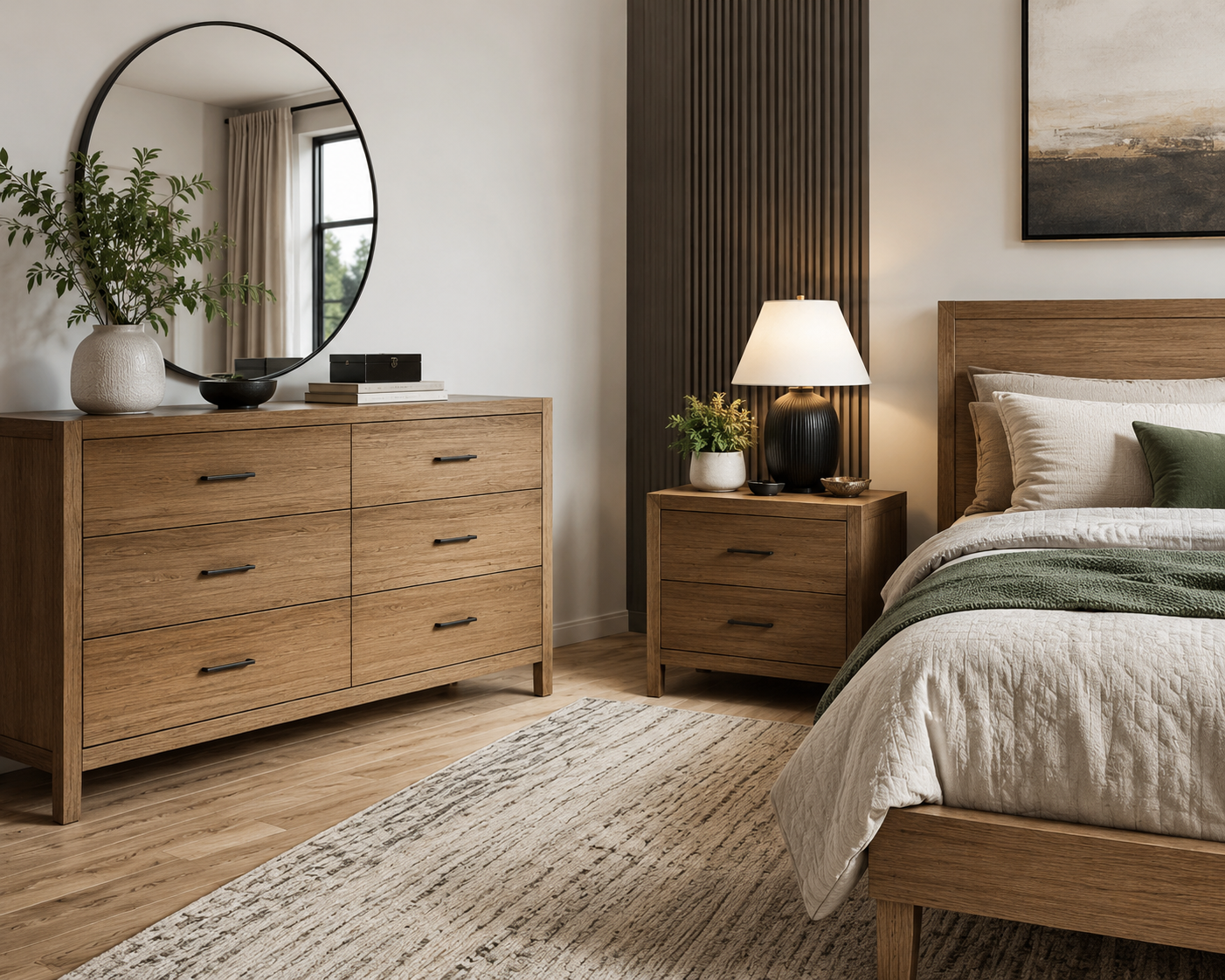
Your bedroom is the one room in the house that’s entirely yours. Yet most people spend more time choosing a kitchen faucet than they do selecting the furniture they see every single morning. That disconnect is worth fixing. A well-chosen dresser and nightstand set does more than store your socks. It anchors the visual identity of your bedroom, defines its tone, and affects how rested and organized you feel each day.
In 2026, the dresser has made a full comeback. After years of being dismissed as bulky and old-fashioned in favor of minimalist built-ins, the dresser is reclaiming its place as a key statement piece — not just a practical storage solution, but a way to bring personal expression back into the bedroom. Pair that with the right nightstands, and you have a cohesive, functional foundation that ties the whole room together.
This guide covers everything U.S. shoppers need to know before buying — styles, materials, sizing, what to avoid, and where to find the best value in 2026.
Why a Matching Dresser and Nightstand Set Makes Sense in 2026
The debate over matching versus mismatched bedroom furniture never really goes away. However, the conversation has shifted meaningfully this year. Interior designer Hanin Smith of HIDE Studio Interiors notes that matching nightstands and dressers create a minimalist aesthetic that actually frees you up to get more creative with bedding, window treatments, and other decorative elements. In other words, a cohesive furniture set gives you a calm visual foundation — and that foundation supports bolder choices elsewhere.
That said, designers also agree that buying a set doesn’t mean surrendering personality. Interior designer Kailee Blalock of House of Hive Design Co. recommends thinking of a set as a starting point, noting that even one small departure — like a different finish on a mirror — can bring depth and character to the space. So the smartest approach in 2026 is to buy a coordinated dresser and nightstand set, then layer in texture, lighting, and decor to make it feel curated rather than catalog-fresh.
Additionally, purchasing a set almost always delivers better value. Coordinated bedroom sets streamline aesthetics, simplify the design process, and typically cost less than sourcing equivalent individual pieces separately. For first-time buyers furnishing a new home or apartment, that combination of ease and savings is hard to ignore.
2026 Style Trends: What’s Dominating Bedroom Design
Understanding what’s trending helps you invest wisely in pieces that won’t feel dated in three years. In 2026, bedroom design continues to evolve around natural materials, textural contrasts, and calming color palettes that support both rest and mental wellness. Furniture that fits those goals tends to age exceptionally well.
Here are the dominant styles shaping dresser and nightstand sets right now.
Quiet Luxury is the most influential aesthetic of the moment. This movement favors muted palettes, natural materials, and no visible logos. With warm walnut, matte-lacquered oak, and bouclé upholstery leading the way. Dresser and nightstand sets in this style are understated, high-quality, and built to last. They suit master bedrooms particularly well.
Refined Heritage is closely related. This aesthetic brings back turned-wood details and rich stains reminiscent of 1940s furniture, favoring the same warm walnut and matte oak tones. If you’re drawn to pieces that feel like they have a story, this is the direction to explore.
Organic and Rounded Forms are also surging. Dressers with gently rounded fronts are stepping into the spotlight, nodding to the wider organic-form movement in 2026 interiors. And they help prevent bumps in tighter spaces, making them as practical as they are stylish. Pair one with a rounded nightstand and an oval mirror for a fully cohesive look.
Rustic and Country-Inspired sets remain popular across the U.S., particularly in the South and Midwest. Popular features in this category include barn-door styling, felt-lined drawers, and dark, organic wood finishes that balance tradition with modern functionality.
How to Choose the Right Dresser and Nightstand Set
Shopping for bedroom furniture is easier when you approach it with a clear framework. Before browsing, work through these key decisions.
Step 1: Measure your room first. This sounds obvious, but it’s the step most people skip. A dresser that looks perfect online can overwhelm a small bedroom in real life. As a general rule, leave at least 36 inches of clearance in front of a dresser for comfortable drawer access. Nightstands typically need 6 to 12 inches of clearance on each side of the bed. In compact U.S. apartments — especially in cities like New York, Chicago, or San Francisco — a 5- or 6-drawer dresser may serve better than a wide 9-drawer version.
Step 2: Match nightstand height to your mattress. The nightstand tabletop should sit roughly level with, or slightly below, the top of your mattress so you’re not reaching awkwardly in the dark. Standard mattress heights range from 18 to 25 inches in the U.S. when including a box spring or platform base. Always measure before you order.
Step 3: Choose your style anchor. Decide whether the dresser or the nightstand will be the visual centerpiece. In most bedrooms, the dresser draws more attention due to its size. Therefore, invest more in that piece and let the nightstands play a supporting role.
Step 4: Align hardware and leg profiles. Consistent hardware matters — if the dresser uses brushed-brass pulls, the nightstand should echo that finish. Leg profiles matter too: tapered legs, block legs, and turned legs carry distinct style associations, and mixing incompatible profiles creates visual dissonance.
Materials Guide: What to Look For and What to Avoid
Material quality determines how a set looks after five years — not just how it looks in the showroom. Here’s what to know before you buy.
Solid Wood is the gold standard for durability and longevity. For optimal longevity, prioritize solid wood sets — materials like mango wood, rosewood, and teak offer excellent durability and character. Solid wood furniture can be refinished, repaired, and handed down. It costs more upfront, but it rarely needs replacing.
Engineered Wood and MDF are perfectly acceptable at mid-range price points, provided the construction is good. Look for dovetail joinery in drawers, soft-close slides, and a furniture-grade veneer rather than a printed wrap. Avoid sets where drawers wobble or the veneer shows seams at the edges — those are signs of low-grade construction that deteriorates quickly.
Metal Accents — particularly brushed brass, matte black, and antique bronze — are widely popular in 2026 sets. They add contrast and help a set feel intentional rather than generic. In addition, metal frames combined with wood surfaces (such as a walnut-top nightstand with black metal legs) offer a mid-century modern look that sells especially well in U.S. markets right now.
Cane and Rattan Accents deserve a mention. Sets combining solid wood with woven cane — like mango wood dressers featuring cane-front drawers — bring a natural tone that complements a wide range of bedroom decors. They’re especially well-suited to coastal, bohemian, and organic-modern styles.
Best Dresser and Nightstand Sets by Budget (2026)
No matter your budget, good options exist at every price point. Here’s how to think about each tier.
| Budget Tier | Price Range | Typical Retailers | What You Get |
|---|---|---|---|
| Budget | $200–$500 | IKEA, Walmart, Amazon (Stone & Beam) | Engineered wood/MDF; focus on drawer quality over finish |
| Mid-Range | $500–$1,500 | Pottery Barn, West Elm, Article, Wayfair | Solid wood becomes available; better hardware; often USB charging built in |
| Premium | $1,500+ | Restoration Hardware, Mitchell Gold + Bob Williams, bespoke woodworkers | Dovetail joinery, hand-applied finishes, solid hardwood throughout |
Budget ($200–$500 for the set): At this range, you’re typically working with engineered wood or MDF. Focus on drawer quality — smooth glides and sturdy pulls matter more than surface finish. Sets from IKEA, Walmart, and Amazon’s in-house brands (like Stone & Beam) cover this tier. Shoppers consistently report that sets featuring three coordinated pieces — dresser, nightstand, and mirror — offer the best value at this price point, particularly those with rustic or dark-finish styling.
Mid-Range ($500–$1,500 for the set): This is where quality takes a meaningful jump. Solid wood construction becomes available, hardware improves noticeably, and assembly is often simpler and more robust. Retailers like Pottery Barn, West Elm, Article, and Wayfair’s higher-end lines dominate here. Furthermore, many mid-range sets now include USB charging ports built into nightstand drawers — a feature that U.S. buyers increasingly expect.
Premium ($1,500 and above): At this level, you’re investing in heirloom-quality pieces. Expect dovetail joinery, hand-applied finishes, and solid hardwood throughout. Brands like Restoration Hardware, Mitchell Gold + Bob Williams, and bespoke American woodworkers operate in this space. These sets are particularly worth the investment for a primary bedroom you plan to keep for a decade or more.
Features Worth Paying Extra For
Not every upgrade is worth the cost. However, some features genuinely improve daily life and justify a higher price.
Built-in USB and outlet ports on nightstands are one of the best practical upgrades available in 2026. Sets that include built-in outlets and USB ports on nightstands let you charge phones, tablets, and bedside lamps without searching for an outlet behind the bed. For households where multiple devices charge overnight, this feature reduces clutter significantly.
Soft-close drawer mechanisms feel like a small luxury — until you’ve lived without them. They prevent the late-night slam that wakes a sleeping partner. Moreover, they extend the life of drawer hardware by eliminating the impact stress of hard closing.
Anti-tip hardware is a safety essential, especially in homes with children or pets. Features like drawer-stop anti-tip rails are particularly important for dressers in nurseries or kids’ rooms. Many U.S. states have started recommending anti-tip furniture straps as standard practice following high-profile tipping incidents in recent years.
Felt-lined drawers protect jewelry, watches, and other valuables from scratches. They also signal higher-quality construction overall. If a set includes felt lining, it usually means the manufacturer paid attention to the details throughout. Once your surfaces are set, our accent tables guide covers styling ideas for the dresser top and any extra surface space.
Sizing Reference: What Fits Where
Room size should drive your dresser and nightstand choices as much as aesthetics do. Use these U.S. standard guidelines as a starting point.
| Room Size | Recommended Dresser | Recommended Nightstand |
|---|---|---|
| Small (under 120 sq ft) | Narrow, under 36″ wide, taller for vertical storage | Wall-mounted floating nightstand |
| Standard (120–180 sq ft) | 6-drawer, 48–60″ wide | Freestanding, 1–2 drawers |
| Master (180+ sq ft) | 9-drawer or dresser-plus-chest combo | Larger, 3 drawers with extra surface area |
For a small bedroom (under 120 sq ft), choose a narrow dresser — ideally under 36 inches wide — with vertical height to maximize storage without consuming floor space. Floating nightstands mounted to the wall are an excellent alternative to freestanding ones, as they free up visual and physical space around the bed.
For a standard bedroom (120–180 sq ft), a 6-drawer dresser in the 48–60 inch width range fits well. Standard freestanding nightstands with one to two drawers complement without crowding the space.
For a master bedroom (180 sq ft and above), there’s room for a full 9-drawer dresser or even a dresser-plus-chest combination. Larger nightstands with three drawers and additional surface area work proportionally here, and the scale of larger pieces enhances rather than overwhelms.
Where to Shop for Dresser and Nightstand Sets in the USA
The U.S. furniture market in 2026 offers more choices than ever, both in-store and online. Each channel has real advantages.
Online retailers like Wayfair, Article, and Joss & Main offer the widest selection and the easiest price comparison. However, always check assembly requirements before ordering — some sets arrive in multiple large boxes and require significant setup time. Reading verified customer reviews specifically about delivery condition and assembly is essential.
Brick-and-mortar showrooms like IKEA, Pottery Barn, and Restoration Hardware let you assess drawer quality, material feel, and finish tone in person before committing. Showroom visits are especially valuable for premium purchases, since digital photography consistently makes surfaces look warmer and more polished than they are in real life.
Local and regional furniture stores often carry American-made options not available through national chains. Supporting domestic manufacturers also typically means shorter lead times — a significant advantage in 2026, when supply chain delays on imported furniture remain an issue for some product categories.
For deeper guidance on bedroom design and furniture selection, the American Society of Interior Designers (ASID) offers consumer resources and a directory of qualified local designers who can help match furniture choices to your specific space.
If you’re also shopping for the bed itself, our cloud bed frame buying guide covers a comfort-forward option that pairs well with a quiet-luxury dresser set.
Frequently Asked Questions
What is the standard height for a nightstand next to a bed?
The ideal nightstand height matches or sits slightly below your finished mattress surface. In the U.S., most standard mattress setups — including a platform base or box spring — land between 20 and 26 inches high. As a result, most nightstands are designed between 24 and 30 inches tall. Always measure your specific mattress height before ordering to avoid a mismatch.
Is it better to buy a matching dresser and nightstand set or mix pieces?
Both approaches can work well, depending on your goals. A matching set creates visual cohesion and simplifies decision-making — particularly useful in smaller bedrooms where too many competing finishes feel chaotic. Mixing pieces adds character, but requires a more deliberate eye for coordinating hardware, wood tones, and proportions. For most buyers, a matching set is the lower-risk starting point, and you can always introduce accent pieces over time.
How many drawers do I actually need in a dresser?
That depends on your storage habits and closet situation. A standard 6-drawer dresser handles most adults’ folded clothing comfortably. If you have a large walk-in closet, however, a 3- or 4-drawer dresser may be sufficient since the dresser primarily handles overflow. Conversely, if your bedroom has limited closet space — common in older U.S. homes built before the 1970s — a 9-drawer configuration provides meaningful relief.
What wood finishes are most popular for bedroom sets in 2026?
Warm walnut, matte natural oak, and wire-brushed or whitewashed finishes dominate in 2026. Dark espresso finishes remain popular in traditional and rustic-style bedrooms across the South and Midwest. Meanwhile, painted finishes — particularly crisp white and soft sage green — are strong sellers in farmhouse and coastal styles popular in states like Florida, the Carolinas, and the Pacific Northwest.
Are dresser and nightstand sets from IKEA worth buying?
IKEA sets offer exceptional value at the entry-level price point, and their modular design often makes customization easier than competing brands. The trade-off is that engineered wood construction doesn’t age as gracefully as solid wood, and drawer mechanisms on lower-cost lines are less smooth over time. For a guest room, rental property, or first apartment, IKEA sets are an excellent choice. For a primary bedroom you plan to keep for a decade, it’s worth stretching the budget to mid-range solid wood options.
How do I keep a dresser and nightstand set looking new longer?
Wipe surfaces with a soft, slightly damp cloth rather than spray cleaners that can damage finishes over time. Use felt pads under items placed on top of the dresser to prevent scratches. Keep the furniture out of direct sunlight to prevent fading — particularly important in sun-heavy U.S. states like Arizona, California, and Texas. Additionally, avoid placing drinks directly on nightstand surfaces; a coaster is one of the cheapest ways to protect a finish indefinitely.
What’s the difference between a dresser and a chest of drawers?
A dresser is typically wider and shorter, usually featuring two columns of drawers side by side. A chest of drawers is narrower and taller — a single column of stacked drawers. Both serve similar storage functions, but a dresser offers more surface area on top for styling, while a chest uses less floor space. Many bedroom sets allow you to choose one or the other, so the right pick depends on your room dimensions and how you like to organize clothing.
Can I use a dresser in a bedroom without a closet?
Absolutely. In many older U.S. homes — particularly pre-war apartments in cities like New York, Boston, and Chicago — closet space is minimal or nonexistent. In those cases, a large dresser combined with a wardrobe or armoire provides all the storage a full closet would. Choose a dresser with at least 6 drawers and deep drawer dimensions (at least 4 inches of interior depth) to maximize the storage capacity per square foot.
[…] the rest of the room, our dresser and nightstand set guide covers matching storage furniture sized for a shared kids’ […]
[…] time on the manufacturer’s box. If you’re outfitting the rest of the room too, our dresser and nightstand set guide covers matching storage […]
[…] you’re weighing this against a matching dresser and nightstand set for the same room, our dresser and nightstand guide covers sizing for shared bedrooms. Ranch and farm guest houses represent another strong fit. This […]