

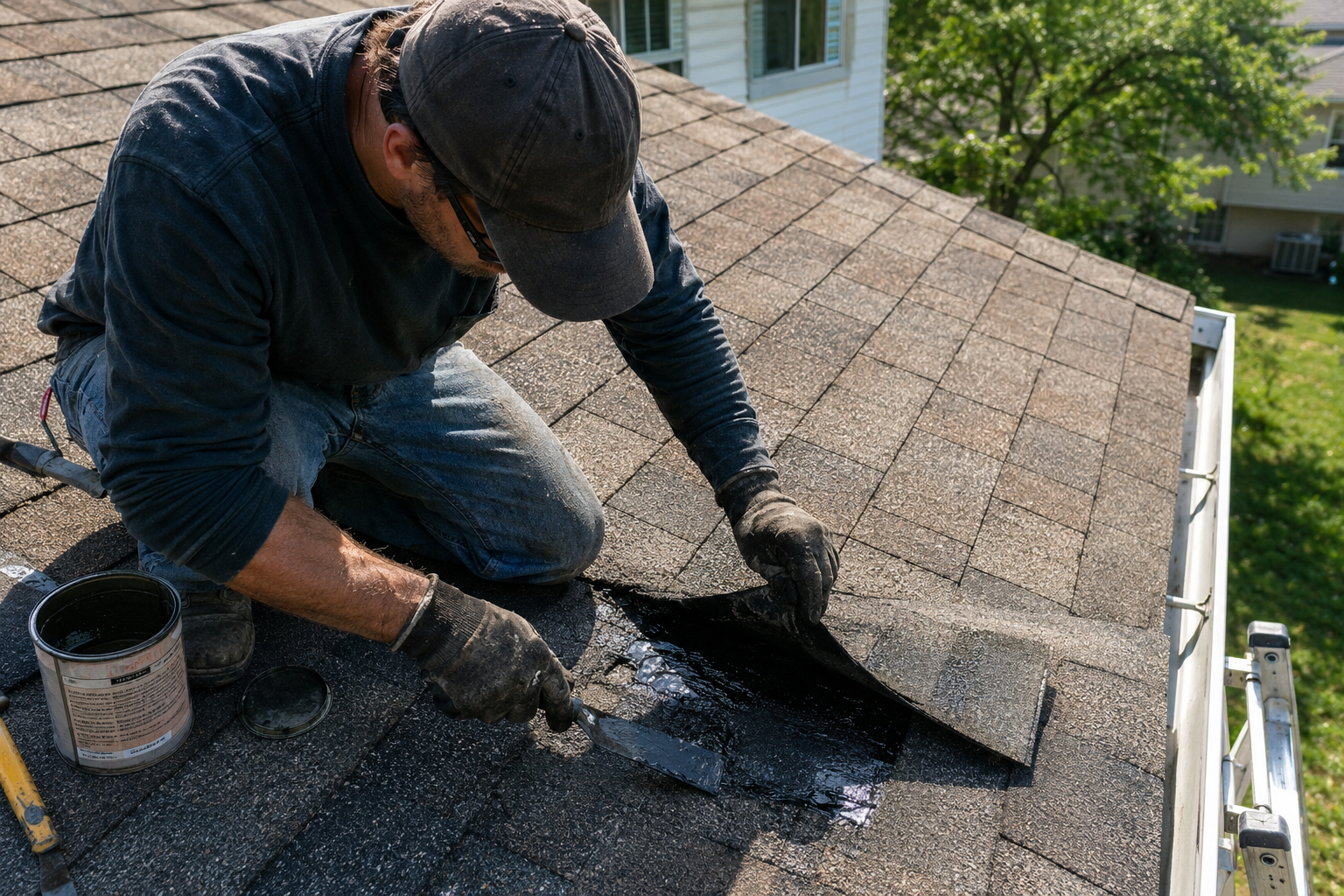
A water stain on your ceiling never means good news. Maybe it’s small and light brown. Maybe it’s already spreading toward the light fixture. Either way, that stain means water found a way in, and it probably won’t stop on its own. Every year, thousands of U.S. homeowners deal with this exact moment, and most of them have no idea what caused it or what it will cost to fix.
This guide walks through the most common causes of roof leaks, what repairs actually cost in 2026, and how to fix minor issues yourself. You’ll also learn when a leak signals something more serious, and how to hire the right contractor if it does. Whether you’re dealing with an aging asphalt roof in the Midwest or storm damage after a Gulf Coast hurricane season, the fundamentals here apply nationwide.
What Causes Roof Leaks?
Most roof leaks trace back to a handful of common culprits. Understanding which one you’re dealing with makes a huge difference in both cost and urgency.
Damaged or missing shingles top the list. Wind, hail, and age all wear shingles down over time. Once a shingle cracks or blows off, the underlying roof deck loses its protection. Rain gets in fast after that.
Flashing failures cause a surprising number of leaks. Flashing is the thin metal material sealing joints around chimneys, vents, and skylights. It’s also used where two roof planes meet, in what’s called a valley. Flashing can corrode, crack, or pull loose over time, and once it fails, water follows the path of least resistance straight into your attic.
Cracked or deteriorated pipe boots are another frequent cause. These rubber or plastic collars seal around vent pipes that stick up through your roof. Sun exposure breaks down the rubber over years, and once it cracks, water seeps in around the pipe with every rainfall.
Clogged gutters cause leaks indirectly, but they cause plenty of them. When gutters back up, water has nowhere to go. It pools along the roof edge instead, and that standing water eventually works its way under shingles and into the fascia board.
Ice dams plague homes in colder Northern states every winter. Snow melts near the warmer upper roof, then refreezes at the colder eaves. That ice buildup blocks proper drainage, and meltwater backs up under shingles instead of running off the roof normally.
Skylights are notorious leak points, mostly because they interrupt the roof’s continuous surface. The flashing around a skylight has to work harder than flashing anywhere else on the roof, so it fails more often, too.
Roof Leak Repair Costs in 2026
Pricing varies a lot depending on where you live, what material your roof uses, and how bad the damage has gotten. Still, national data from 2026 gives us a reliable baseline.
Most homeowners pay between $350 and $1,500 for roof leak repair, with a national average around $800. That range shifts depending on severity and material, though. Simple fixes cost far less than that average suggests, while major structural repairs cost considerably more.
Here’s a rough breakdown by repair type:
- Pipe boot replacement: $150 to $400
- Flashing repair: $300 to $800
- Valley leak repair: $400 to $1,200
- Missing shingle replacement: $150 to $400
- Major structural or decking repair: $1,500 to $3,000 or more
Material also drives the price. Metal roofing typically runs $5 to $18 per square foot to repair, while slate and tile fall between $10 and $20 per square foot. Asphalt shingles remain the cheapest to repair, since materials stay widely available and labor stays fairly straightforward compared to specialty roofing types.
Location matters too. Coastal states with frequent storms, along with high-cost metro areas nationwide, often see repair estimates run 20 to 30 percent higher than the national average. If you live in a hurricane-prone area like Florida or the Gulf Coast, or a hail-heavy region like Texas or Colorado, budget accordingly and expect contractor demand to spike right after major storms.
Repair vs. Replace: How to Decide
Not every leak calls for a full roof replacement, but some do. Making the wrong call in either direction wastes money.
Repair usually makes sense if your roof is under 15 to 20 years old and the damage stays localized to one area. A single flashing failure or a handful of missing shingles almost always falls into repair territory, especially if the rest of the roof looks sound.
Replacement becomes the smarter option once repair costs start approaching 25 to 30 percent of what a full replacement would cost. It also makes sense if your roof has already passed 80 percent of its expected lifespan, if leaks keep appearing in multiple unrelated spots, or if you’ve called for repairs three or more times in the past couple of years. At that point, you’re just delaying the inevitable and paying for it in installments.
A full roof replacement typically starts around $12,000 and climbs from there, depending on size, material, and roof complexity. That’s a big number, so it’s worth getting a second opinion before committing to full replacement based on one contractor’s recommendation alone.
DIY Roof Leak Fixes You Can Handle Safely
Some roof leak repairs are genuinely manageable for a confident homeowner. Others aren’t, and knowing the difference matters more than any specific repair technique.
Safe DIY territory generally includes:
- Resealing a small crack with roofing sealant or caulk
- Replacing a single damaged or missing shingle
- Clearing clogged gutters to restore proper drainage
- Applying roofing cement around a minor flashing gap
Leave these to a professional:
- Any repair requiring you to walk on a steep or high roof
- Structural repairs involving damaged decking
- Full flashing replacement around chimneys or skylights
- Anything involving suspected mold growth, since prolonged moisture exposure indoors can create real health risks
Speed matters more than people realize here. According to the U.S. Environmental Protection Agency, mold can begin growing indoors within 24 to 48 hours wherever moisture lingers, so a slow leak behind drywall or insulation can turn into an air-quality problem long before you ever spot a stain on the ceiling.
If you do tackle a small fix yourself, always work from a stable ladder, avoid walking on wet or icy shingles, and never attempt roof work alone. A second person nearby, even just to hold the ladder steady, makes a real difference in preventing falls, which remain one of the most common causes of home DIY injuries nationwide.
How to Find and Diagnose a Roof Leak
Water rarely drips straight down from where it enters your roof. It often travels along rafters or sheathing before showing up somewhere else entirely, which makes diagnosis trickier than it sounds.
Start in the attic, if you have access. Look for dark stains, damp insulation, or visible daylight coming through the roof deck. A flashlight helps enormously here, since even bright spots can hide subtle moisture damage in dim attic lighting.
If you can’t find the source from inside, head outside and inspect common trouble spots directly. Check flashing around chimneys, vents, and skylights first. Look closely at valleys where two roof sections meet, since debris and granule buildup often collect there and mask underlying damage.
During an active rainstorm, if it’s safe to do so, watching from inside your attic with a flashlight can help you pinpoint exactly where water enters in real time. That’s often faster and more reliable than guessing based on ceiling stains alone.
Insurance and Roof Leak Repairs
Homeowners insurance often covers roof leak repair, but only under certain conditions. Sudden, accidental damage from a storm, falling tree limb, or hail event typically qualifies for coverage. Gradual deterioration from age or poor maintenance usually doesn’t, since insurers generally treat that as a maintenance issue rather than a covered loss.
Document everything before you start any repair work. Take clear photos of the damage, note the date you first noticed it, and keep any relevant weather records if a storm caused the issue. Filing a claim without documentation slows the process considerably and sometimes leads to a lower payout than you’d otherwise receive.
Contact your insurance company before hiring a contractor whenever possible. Many insurers require an adjuster inspection before repairs begin, and starting work early can complicate or even void your claim in some cases.
Preventing Future Roof Leaks
Prevention costs far less than repair, and most preventive steps take only a few hours a year.
Inspect your roof twice annually, ideally in spring and fall, and again after any major storm. Clean gutters regularly to keep water flowing properly away from your roofline. Trim overhanging tree branches, since they drop debris that clogs gutters and can physically damage shingles during high winds.
Check attic ventilation and insulation levels too, particularly if you live in a colder climate prone to ice dams. Proper attic ventilation keeps roof surface temperatures more consistent, which reduces the melt-and-refreeze cycle that causes ice dams in the first place.
If you’re planning a broader roofing project this year, our complete guide to choosing a roofing contractor walks through exactly what questions to ask before signing a contract, since picking the wrong contractor causes more repeat leaks than almost any other single factor.
Regional Considerations Across the U.S.
Roof leak risks and repair urgency shift depending on where you live, and it helps to know your region’s specific pressure points.
In the Northeast and Upper Midwest, ice dams cause the majority of winter leaks. Proper attic insulation and ventilation matter more here than almost anywhere else in the country.
In the Southeast and Gulf Coast, hurricane season drives most major roof damage, typically from late summer through fall. Wind-driven rain can force water under shingles even when the roof itself sustains minimal visible damage, so post-storm inspections matter even after relatively mild weather events.
In the Southwest, intense UV exposure breaks down roofing materials faster than in milder climates, particularly rubber pipe boots and sealants. Regular inspection catches this degradation before it turns into an active leak.
In hail-prone regions like Texas, Colorado, and the Plains states, sudden hailstorms can cause widespread but sometimes subtle shingle damage. If a major hailstorm hits your area, scheduling a roof inspection within a few weeks is a smart, low-cost precaution, even if you don’t see obvious leaking yet.
Final Thoughts
Roof leaks rarely fix themselves, and waiting almost always makes the repair more expensive. A small leak caught early might cost a few hundred dollars to resolve. The same leak, ignored for a season or two, can turn into thousands of dollars in structural damage, mold remediation, and interior repairs. Learn your roof’s common trouble spots, inspect it regularly, and don’t hesitate to call a professional once damage extends beyond a simple patch. That approach protects both your home and your budget over the long run.
Frequently Asked Questions
How much does it cost to fix a roof leak in 2026? Most roof leak repairs cost between $350 and $1,500, with a national average around $800. Simple fixes like pipe boot replacement can cost as little as $150, while major structural repairs can climb past $3,000.
Can I fix a roof leak myself? Small fixes like resealing a crack, replacing a single shingle, or clearing clogged gutters are generally safe for a confident homeowner. Structural repairs, steep roof work, and anything involving suspected mold should go to a licensed professional instead.
How do I know if my roof leak is covered by insurance? Sudden damage from storms, hail, or falling debris typically qualifies for coverage. Gradual wear from age or lack of maintenance usually doesn’t. Document the damage with photos and contact your insurer before starting repairs.
What’s the most common cause of roof leaks? Damaged or missing shingles cause the largest share of roof leaks nationwide, followed closely by flashing failures around chimneys, vents, and skylights.
Should I repair or replace my roof? Repair generally makes sense if your roof is under 15 to 20 years old and the damage stays localized. Replacement becomes the smarter choice once repair costs approach 25 to 30 percent of full replacement cost, or if leaks keep recurring in different spots.
How long does a roof leak repair take? Most minor repairs, like flashing resealing or shingle replacement, take just a few hours to complete. Larger repairs involving decking or structural damage can take one to three days, depending on severity and weather conditions.
Why does my roof leak only during heavy rain? Heavy or wind-driven rain can force water under shingles or through small gaps that stay dry during light rainfall. This pattern often points to flashing issues or wind-driven infiltration rather than a straightforward crack or hole.
Can a small roof leak cause mold? Yes. Mold can begin growing within just a day or two in areas with persistent moisture, which makes prompt leak repair important for indoor air quality, not just structural protection.
[…] your project started because of water damage rather than a planned upgrade, our roof leak repair guide covers causes, costs, and fixes in more […]
[…] before closing whenever you can, especially for anything structural or related to the roof — a roof leak that’s gone unaddressed for a year behind a vacant house is a very different repair job than […]