

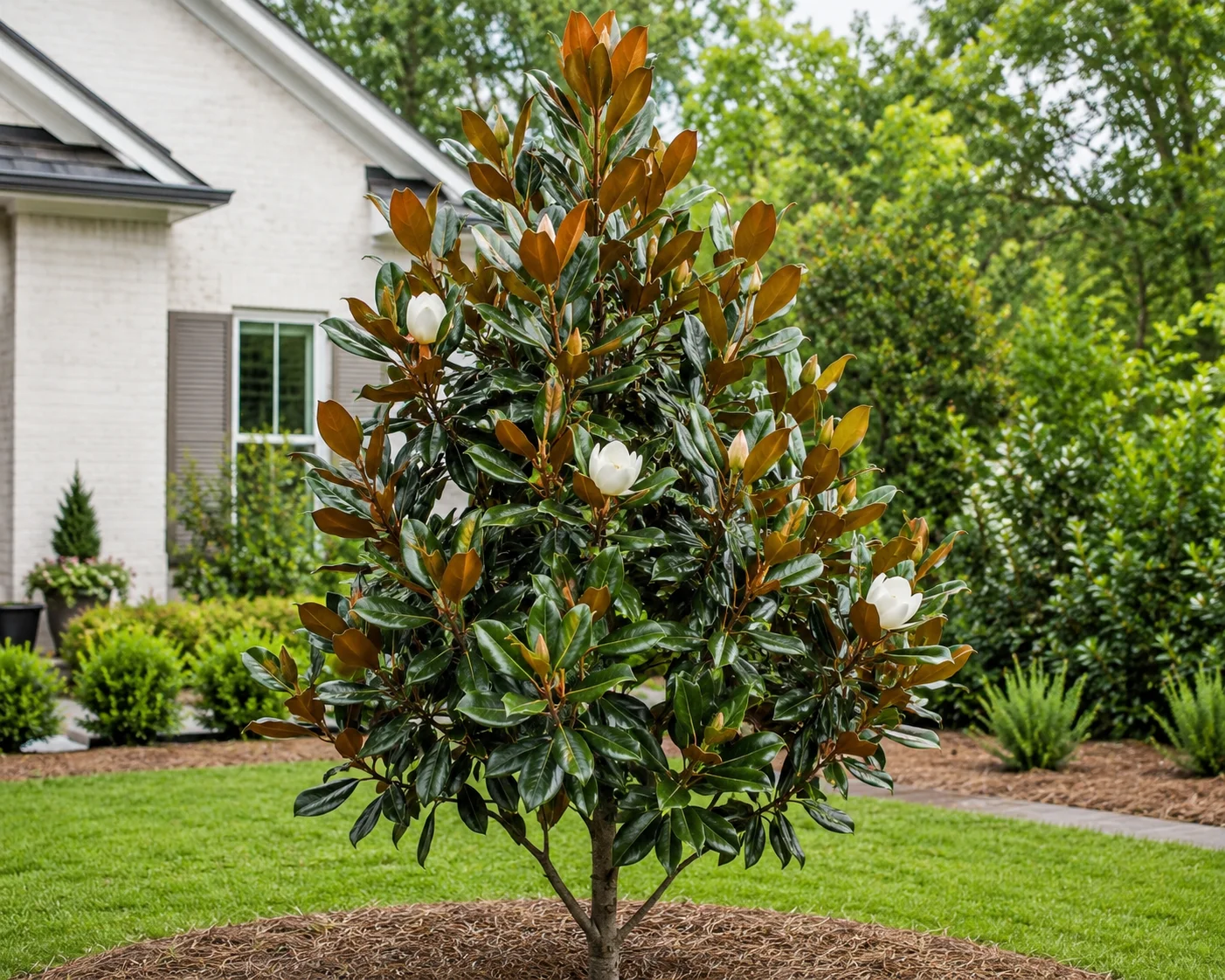
If you love the look of a Southern Magnolia but your yard simply doesn’t have room for an 80-foot tree, Teddy Bear Magnolia solves that problem nicely. This compact cultivar delivers the same glossy leaves, fuzzy bronze undersides, and huge fragrant blooms as its full-size cousin. However, it stays small enough to actually fit a suburban front yard.
I’ve watched this cultivar grow in popularity across the South and Southwest over the past several years, and the demand makes sense. Homeowners want that classic magnolia charm without the massive footprint. This guide covers everything you need before you plant one, including honest growth rate numbers, mature size, and the care steps that actually matter.
What Is a Teddy Bear Magnolia?
Teddy Bear Magnolia (Magnolia grandiflora ‘Southern Charm’) is a dwarf cultivar of the Southern Magnolia. Breeders selected it specifically for its compact, dense form and slower spread. Unlike a standard Southern Magnolia, which can reach 60 to 80 feet tall, Teddy Bear typically tops out around 15 to 20 feet, with a spread of roughly 10 to 12 feet.
The name comes from its foliage. Each leaf has a thick, velvety, reddish-brown underside that looks and almost feels like a teddy bear’s fur. That texture, paired with deep green, glossy tops, gives the tree year-round visual interest even when it isn’t blooming.
From late spring through summer, Teddy Bear produces large, creamy white flowers with a sweet, lemony fragrance. Bees, beetles, and other pollinators flock to these blooms, so the tree pulls double duty as both an ornamental feature and a wildlife-friendly addition to your yard.
Teddy Bear Magnolia Growth Rate
Here’s where a lot of buyers get surprised. Teddy Bear Magnolia grows at a moderate pace, not a fast one. Most sources put annual growth somewhere between 12 and 24 inches per year under good conditions.
That moderate pace actually works in your favor. A slower-growing tree tends to develop denser branching and a more compact, uniform shape. Fast growers often end up leggy or unevenly filled out.
Expect your tree to reach its full mature size within 7 to 15 years, depending on your climate, soil quality, and care routine. Trees in warmer zones with consistent watering tend to land on the faster end of that range. Trees in cooler zones or drier soil often take longer to fill out.
Flowering timelines follow a similar pattern. Many Teddy Bear Magnolias begin blooming within 5 to 7 years of planting, though younger nursery starts sometimes flower even sooner since they’ve already had a few years of growth before you bring them home.
Where Teddy Bear Magnolia Grows Best in the U.S.
Teddy Bear Magnolia thrives in USDA hardiness zones 7 through 9, which covers a wide band of the country.
- Southeast (Georgia, South Carolina, North Carolina, Alabama): This is the tree’s natural comfort zone. Warm, humid summers and mild winters closely match the conditions Southern Magnolia evolved in.
- Texas and the Gulf Coast: Teddy Bear performs especially well here, tolerating both heat and the occasional heavy rain event once established.
- Oklahoma: The tree earned a spot on the Oklahoma Proven list after horticulture faculty at Oklahoma State University evaluated its performance across the state’s tough, variable climate.
- Pacific Northwest and coastal California: Mild winters and moderate summers suit this cultivar well, though gardeners here should watch for slower growth in cooler coastal microclimates.
- Zone 7 edge regions (parts of Virginia, Tennessee, and inland Carolinas): Young trees benefit from a wind-protected planting site and a thick mulch layer through their first few winters, since late frosts can stress unestablished roots.
If you’re outside zones 7 through 9, this particular cultivar likely won’t survive your winters without significant protection, so it’s worth checking your exact zone before committing.
How to Plant a Teddy Bear Magnolia
Getting the planting process right sets the tone for years of healthy growth. Follow these steps for the best results.
1. Choose a site with full sun to partial shade. Six or more hours of sunlight produces the fullest form and the best flowering. Partial shade works too, but expect a slightly looser growth habit.
2. Test your soil drainage first. Magnolias dislike consistently soggy roots. Dig a hole, fill it with water, and watch how quickly it drains. Slow drainage means you’ll need to amend the site or choose a slightly raised planting area.
3. Dig a hole as deep as the root ball and two to three times as wide. Planting too deep smothers the root flare and invites rot over time.
4. Keep the root flare visible at the soil surface. This single detail prevents more long-term magnolia problems than almost any other planting step.
5. Backfill with your native soil, lightly amended with compost if your soil is particularly poor. Heavily amended holes can actually discourage roots from spreading outward into the surrounding yard.
6. Water deeply and consistently after planting. During the first two weeks, water daily. Taper to every other day for the next two months, then move to a weekly schedule as the tree establishes.
7. Apply two to four inches of mulch around the base, keeping it a few inches away from the trunk itself to avoid rot.
8. Give it room to grow. Since mature spread reaches 10 to 12 feet, plant at least that far from structures, fences, or other trees.
Ongoing Care and Maintenance
Watering
Once established, typically after the first full growing season, Teddy Bear Magnolia becomes fairly drought-tolerant. That said, extended dry spells still benefit from a deep watering session every week or two, especially during peak summer heat.
Fertilizing
Feed in early spring with a balanced, slow-release fertilizer formulated for acid-loving plants. This timing supports strong new growth right as the season kicks off.
Pruning
This cultivar rarely needs heavy pruning thanks to its naturally dense, compact form. A light prune after flowering, mainly to remove dead or crossing branches, keeps the tree tidy without stressing it. Avoid removing lower limbs unless necessary, since magnolias can respond poorly to aggressive pruning.
Pest and Disease Watch
Teddy Bear Magnolia stays relatively problem-free compared to many ornamental trees. Occasionally, scale insects or magnolia borers show up, particularly on stressed or drought-weakened trees. Regular inspection during the growing season catches most issues early, before they spread.
According to Clemson Cooperative Extension’s Home & Garden Information Center, Southern Magnolia and its cultivars generally remain mostly problem-free, though scale insects and boring beetles can occasionally affect stressed trees. That guidance lines up closely with what most Teddy Bear owners actually experience in the landscape.
Landscaping Ideas for Teddy Bear Magnolia
Because of its compact size, Teddy Bear Magnolia fits into far more design styles than a standard Southern Magnolia ever could.
Specimen tree: Planted alone on a front lawn, it becomes an instant focal point, especially during its summer bloom period.
Evergreen privacy screen: Spaced 8 to 10 feet apart, a row of Teddy Bear Magnolias creates a dense, fragrant screen without overwhelming a smaller property line.
Container planting: Younger trees adapt well to large containers, making this cultivar a solid option for patios or courtyards where in-ground planting isn’t possible.
Foundation and courtyard planting: Its compact spread makes it one of the few magnolias that can sit reasonably close to a home’s foundation without long-term root or structural concerns.
If you’re comparing Teddy Bear against other compact evergreen options for your yard, our guide to small ornamental trees for front yards covers several additional low-maintenance choices worth considering.
Frequently Asked Questions
How fast does a Teddy Bear Magnolia grow? It grows at a moderate pace, typically adding 12 to 24 inches of height per year under good conditions. Most trees reach mature size within 7 to 15 years.
How tall and wide does a Teddy Bear Magnolia get? Most mature specimens reach 15 to 20 feet tall with a spread of about 10 to 12 feet, making it far more compact than a standard Southern Magnolia.
What zones is Teddy Bear Magnolia hardy in? It grows reliably in USDA zones 7 through 9. Outside that range, winter cold typically becomes too severe without significant protection.
Does Teddy Bear Magnolia need full sun? It prefers full sun to partial shade. Full sun produces the fullest form and the strongest bloom display, while partial shade still works with a slightly looser growth habit.
How long does it take for a Teddy Bear Magnolia to bloom? Most trees begin blooming within 5 to 7 years of planting, though nursery starts that already have a few years of growth may flower sooner.
Is Teddy Bear Magnolia drought tolerant? Once established, yes, to a reasonable degree. Young trees need consistent watering during their first one to two growing seasons, after which they handle short dry spells reasonably well.
Can Teddy Bear Magnolia grow in a container? Yes, particularly while young. It will eventually need a larger container or an in-ground spot as it matures, but it adapts well to patio or courtyard growing in the meantime.
Does Teddy Bear Magnolia attract pests? It stays relatively pest-free overall. Occasional issues with scale insects or magnolia borers tend to show up mainly on stressed or drought-weakened trees, so routine care goes a long way toward prevention.
Final Thoughts
Teddy Bear Magnolia gives you the classic Southern charm of a full-size magnolia without demanding a massive yard to match. Its moderate growth rate, dense evergreen form, and low-maintenance reputation make it one of the more forgiving flowering trees you can plant in zones 7 through 9. Get the planting depth right, keep watering consistent through that first year, and this tree will likely reward you with decades of glossy foliage and fragrant summer blooms.