

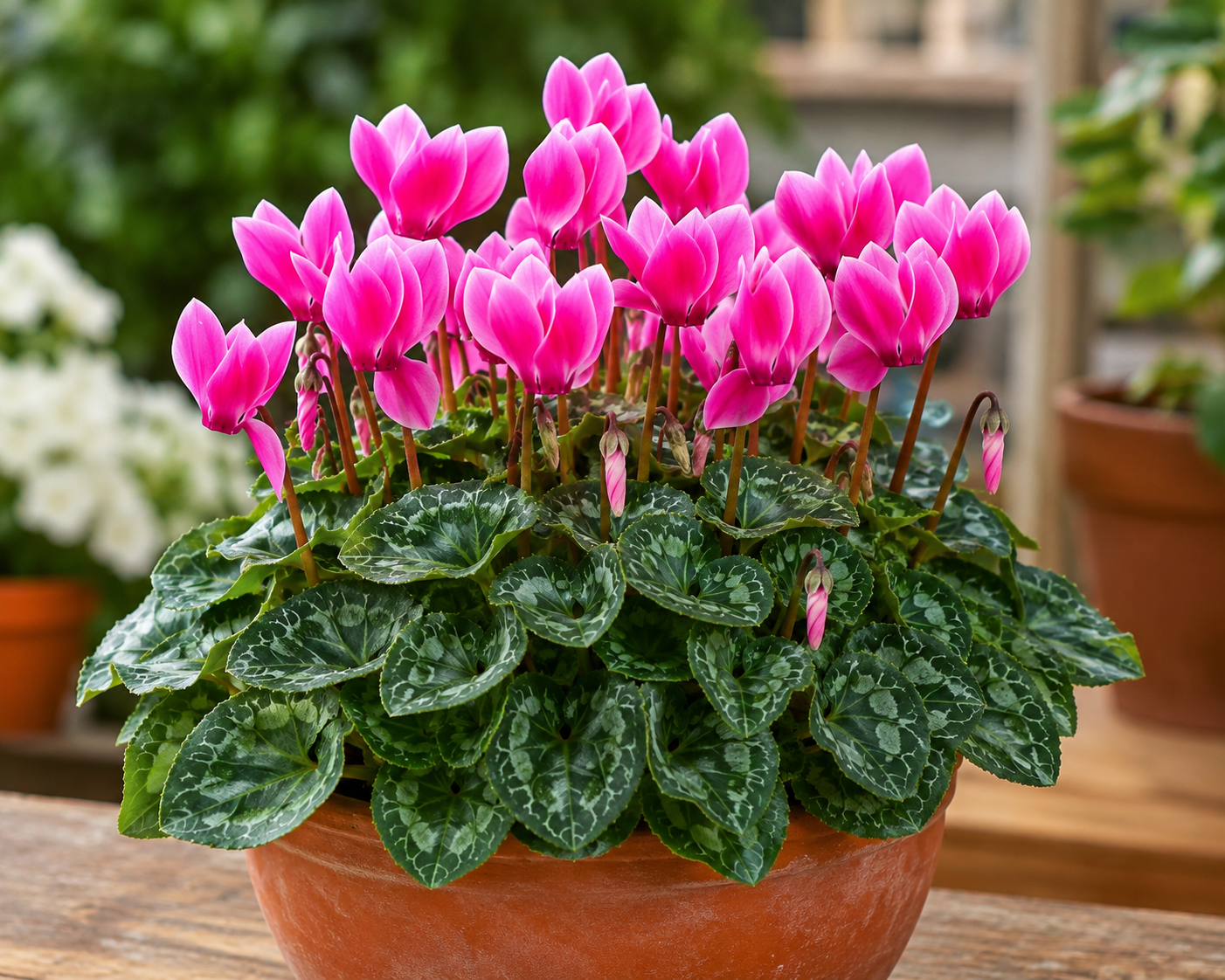
Have you ever bought a beautiful cyclamen at the garden center, planted it with the best intentions, and watched it collapse into mush within weeks? You’re not alone. Cyclamen might be one of the most misunderstood plants sold in American nurseries today. It looks delicate. It’s marketed as a houseplant. Yet it behaves nothing like the tropical foliage plants sitting next to it on the shelf.
I’ve grown cyclamen both indoors and in shaded garden beds across different U.S. climates for years. The same five mistakes come up again and again. Each one is small. But every single one is enough to kill an otherwise healthy tuber. This guide walks through what to do instead, using the most current growing recommendations available as of mid-2026. It also covers the regional context that most generic plant guides skip entirely.
Why Cyclamen Trips Up So Many Gardeners
Cyclamen is a tuberous perennial, not an annual. Many big-box stores sell it as disposable seasonal decor anyway. That single fact changes everything about how you should plant and care for it. The plant grows from a corm-like tuber that sits partially above the soil line. In other words, it behaves more like a succulent bulb than a typical bedding plant.
Most people treat it like a petunia instead. They bury it too deep, water it from the top, and place it somewhere too warm. As a result, the plant rots from the crown down. By the time yellow leaves appear, it’s often too late to save it. Understanding one distinction, tuber versus root ball, is the foundation for every step below.
Step 1: Match the Cyclamen Type to Your Climate Zone
Don’t dig a hole or fill a pot just yet. First, figure out which type of cyclamen you’re working with. Two very different categories get sold under the same name.
Florist’s cyclamen, or Cyclamen persicum, is tender. It generally only survives outdoors in USDA hardiness zones 9 and 10. That covers places like coastal Southern California, South Florida, and parts of the Gulf Coast. Everywhere else in the country, it needs to live as a houseplant or a temporary seasonal container plant on a porch.
Hardy cyclamen species tell a different story. Cyclamen hederifolium and Cyclamen coum tolerate much colder winters. They can thrive outdoors in zones 5 through 9. That makes them a genuinely good option for gardeners in the Mid-Atlantic, the Pacific Northwest, and much of the Midwest.
So here’s the first step most gardeners skip: check the plant tag against your actual zone. Say you live in Minnesota and buy florist’s cyclamen expecting it to naturalize in your perennial border. You’re setting yourself up for disappointment. Look specifically for hardy species labeled for garden use instead, if you want a plant that returns year after year outdoors.
Step 2: Time Your Planting to the Season, Not the Store Display
Garden centers stock cyclamen heavily around the winter holidays. That leads a lot of shoppers to assume it’s meant to be planted then. In reality, timing depends entirely on whether you’re growing indoors or outdoors. Getting this wrong is the second big mistake.
Fall through winter is genuinely the right window for indoor florist’s cyclamen. That’s the plant’s natural bloom cycle, and it thrives in cool, bright rooms during those months. Hardy outdoor cyclamen work on a different schedule. Late summer to early fall, generally August through September across most of the U.S., is the ideal planting time. This gives the tubers time to establish roots before the ground freezes. It also lines up with their natural autumn or spring bloom cycle.
So if you’re planting hardy cyclamen tubers directly in garden soil, don’t wait until spring just because other bulbs go in then. Waiting too long means the tuber misses its natural growth window. It may sit dormant, doing nothing, for an entire extra year.
Step 3: Prepare Soil That Drains Fast, Not Soil That Holds Moisture
This is where I see the most damage done, even among experienced gardeners. Cyclamen tubers rot almost instantly in heavy, waterlogged soil. Yet many people plant them in standard potting mix or dense clay garden beds without amending anything first.
Cyclamen originated in rocky Mediterranean terrain. The plant is genetically wired to expect sharp drainage and a bit of neglect between waterings. For containers, mix standard potting soil with perlite, coarse sand, or fine bark at roughly a one-to-one ratio. This keeps water moving through quickly. For garden beds, choose a site with naturally loose, humus-rich soil. Ideally, plant under deciduous trees, where the canopy provides dappled shade in summer and lets in more light once leaves drop in fall and winter.
Avoid low spots in the yard, too, where water tends to pool after rain. Even a slight raised bed or a gentle slope makes a meaningful difference for long-term tuber health.
Step 4: Get the Planting Depth Right (This Is the Big One)
One single step is responsible for more dead cyclamen than anything else. Unlike tulip or daffodil bulbs, which you bury completely, a cyclamen tuber wants to sit with its top half exposed above the soil surface.
Bury the whole tuber, and moisture collects around the crown with nowhere to evaporate. That invites rot within days. Plant it too shallow with too little anchoring, and the tuber can dry out or get knocked loose. The right approach sits in the middle. Nestle the tuber into the soil so roughly the top third to half remains visible above the soil line. Then firm the surrounding soil gently, without packing it down hard.
Orientation matters too for outdoor plantings. Look for the side with small root nubs or slightly rounded growth points; that’s typically the top. Place it facing upward. When in doubt, plant it a little shallower rather than a little deeper. A partially exposed tuber recovers far more easily than a smothered one.
Step 5: Water From Below, Then Ease Off Completely During Dormancy
The fifth mistake happens after planting, once the excitement of getting the tuber in the ground wears off. Most people water cyclamen the same way they water everything else: straight from the top with a hose or watering can. That repeatedly soaks the exposed crown and eventually causes it to rot.
Water from below whenever possible instead. For container plants, set the pot in a shallow tray of water for ten to fifteen minutes. This lets the soil wick moisture up through the drainage holes. Then let it drain fully before setting it back in place. For garden beds, direct your hose or drip line at the surrounding soil rather than directly over the tuber itself.
Cyclamen also needs a genuine rest period, usually sometime in summer. The foliage dies back, and the plant goes dormant. Cut back watering dramatically during this phase. A corm that’s actively resting doesn’t need moisture, and it can rot if kept damp. Resume regular watering only once new leaf growth appears in late summer or early fall. That signals the plant is waking back up for its next bloom cycle.
Regional Notes for U.S. Gardeners
Local climate plays a bigger role with cyclamen than with most common garden plants. It’s worth thinking through your specific region before you commit.
The Pacific Northwest offers mild, wet winters and cool summers. This makes it one of the best regions in the country for growing hardy cyclamen outdoors as a true perennial, though gardeners still need to watch drainage carefully given the region’s rainfall. The Southeast and Gulf Coast tell a different story. Humidity and heat make outdoor success trickier outside of the coolest months. Many gardeners there treat cyclamen as a fall-through-spring container plant that gets moved indoors once summer heat arrives.
Winters get colder in the Midwest and Northeast, but hardy species can still survive in the ground with a light mulch layer for protection. Florist’s cyclamen should stay indoors year-round in these regions, since freezing temperatures will kill it outright. The Southwest faces the opposite problem. Intense summer heat is the bigger threat in low-desert areas like Phoenix. Shade placement and consistent watering during the growing season matter more than cold protection here.
Working on other cool-season plantings this year? Pair this project with our fall bulb planting guide, so your cyclamen and companion bulbs go in around the same window with compatible care routines.
A Quick Recap of What Actually Works
Here are the five steps in order. Pick the right species for your hardiness zone. Plant hardy types in late summer or early fall. Use fast-draining soil rather than standard potting mix. Keep the top of the tuber exposed instead of burying it completely. Water from below, and respect the plant’s summer dormancy period.
None of these steps are complicated on their own. But skipping even one is usually enough to explain why a seemingly healthy cyclamen suddenly declines.
According to horticultural guidance from the New York Botanical Garden, watering technique and cool, humid growing conditions rank among the most important factors in keeping cyclamen healthy long-term. This matters particularly because the partially exposed tuber is so vulnerable to waterlogging.
Frequently Asked Questions
Is cyclamen a perennial or an annual? Cyclamen is a true perennial that grows from a tuber. Garden centers often display and sell it like a seasonal annual, though. With the right care, including a proper summer dormancy period, the same tuber can rebloom for multiple years in a row.
Can I grow cyclamen outdoors in my area? It depends on which type you have. Florist’s cyclamen generally only survives outdoors in USDA zones 9 and 10. Hardy species like Cyclamen hederifolium can handle outdoor winters in zones 5 through 9. Check your specific hardiness zone and the plant tag before deciding.
Why do my cyclamen leaves keep turning yellow? Yellowing leaves are almost always a watering issue. Either too much moisture sits around the crown, or the plant isn’t getting enough overall. Switch to bottom watering and confirm your soil drains quickly. This usually resolves the problem within a few weeks.
How deep should I plant a cyclamen tuber? Plant it shallow enough that roughly the top third to half sits above the soil surface. Fully burying the tuber is one of the most common causes of rot and plant failure.
When is the best time to plant cyclamen outdoors? Late summer through early fall is best, generally August or September for most U.S. regions. This gives hardy cyclamen enough time to establish roots before winter and align with its natural growth cycle.
Do cyclamen need direct sunlight? No. Direct sun can actually scorch the leaves and stress the plant. Cyclamen prefers bright, indirect light indoors or dappled shade outdoors, along with cool temperatures roughly between 50 and 65 degrees Fahrenheit.
Why did my cyclamen stop blooming after the first season? This usually happens when the plant doesn’t get a proper dormancy period. Keep watering and fertilizing year-round without letting the foliage die back, and the tuber never gets to rest in summer. The plant often skips its next bloom cycle entirely as a result.
Are cyclamen safe to have around pets? No. Cyclamen tubers are toxic if ingested, particularly to cats and dogs, and can cause vomiting or more serious symptoms in larger amounts. If you have curious pets, place containers somewhere they can’t reach, or stick to hardy garden varieties planted well out of paw’s reach.