

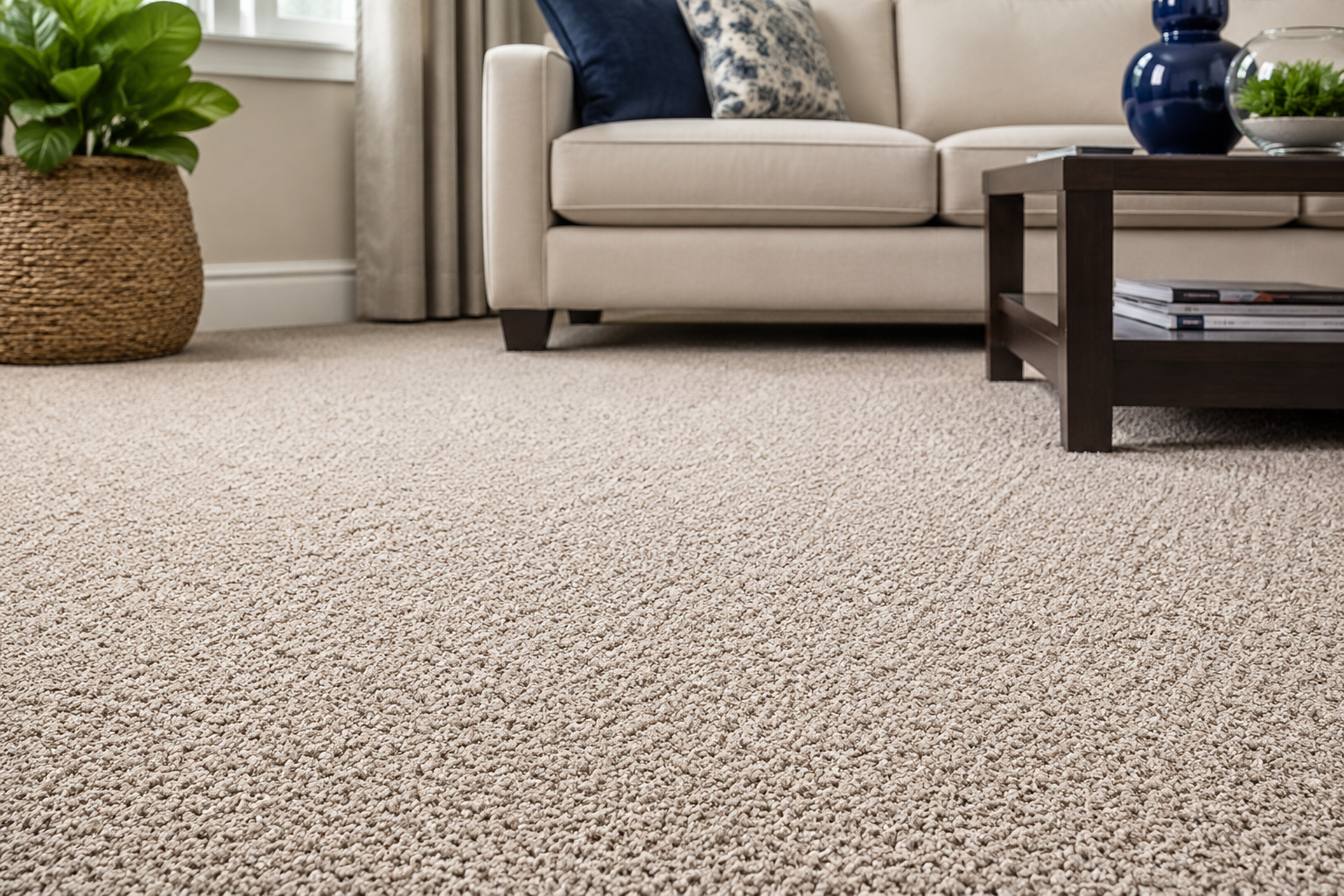
Shopping for new carpet? Nylon probably came up in your first conversation with a flooring dealer. That is not an accident. Nylon has been the go-to residential carpet fiber in the US for decades, and it still dominates showroom floors in 2026. But is it actually the right choice for your home? That depends on your budget, your household, and how long you plan to stay in the house.
This guide breaks down what nylon carpet is, where it shines, where it falls short, and what it actually costs installed right now. We will also cover a few details most dealers gloss over, like the difference between nylon Type 6 and Type 6,6. By the end, you should know exactly what to ask for at the store.
What Is Nylon Carpet, Exactly?
Nylon is a synthetic fiber made from petroleum-based polymers. It was first developed in the 1930s. Early uses included stockings and toothbrush bristles. Eventually, manufacturers realized nylon’s strength and bounce-back made it perfect for carpet too.
Today, nylon remains the most popular synthetic fiber in residential carpet. Why? It combines durability, softness, and stain resistance better than almost any other option in its price range. Polyester and olefin cost less. Wool costs more. Nylon sits in the middle, and for many households, that middle ground is exactly right.
The Pros of Nylon Carpet
Outstanding Durability
Nylon is the toughest mainstream synthetic fiber on the market. It resists crushing, matting, and wear better than polyester or olefin. This matters most in high-traffic zones like stairs, hallways, and living rooms. A quality nylon carpet can last 15 to 20 years with proper care. Compare that to polyester, which typically lasts 5 to 12 years.
Resilience and Bounce-Back
Nylon fibers contain a structure that allows them to recover after being flattened. Foot traffic compresses carpet fibers over time. Nylon springs back, especially after steam cleaning. This is one reason nylon still looks fresh in homes where polyester would already show visible traffic lanes.
Strong Stain Resistance
Modern nylon carpets, especially solution-dyed versions, resist stains impressively well. Solution-dyed nylon has color built into the fiber itself rather than applied afterward. That means spills sit on the surface rather than soaking into the color layer. Many nylon products also carry factory stain treatments and lifetime stain warranties.
Great for Pets and Kids
Ask any flooring pro which fiber handles pets best, and nylon comes up constantly. It resists claw snags, bounces back from rough play, and holds up to frequent vacuuming and steam cleaning. Families with dogs, cats, or young kids often find nylon is worth the extra upfront cost.
Hypoallergenic Qualities
Nylon does not trap dust and allergens deep within its fibers the way some natural materials do. Regular vacuuming keeps it allergen-friendly. That makes it a reasonable choice for households managing allergies, though no carpet fiber is completely allergen-free.
Wide Style Range
Because nylon takes dye so well, it comes in more colors and patterns than almost any other fiber. Cut pile, loop pile, frieze, and textured styles are all widely available in nylon. That flexibility makes it easier to match existing decor or achieve a specific look.
The Cons of Nylon Carpet
Higher Upfront Cost
Nylon costs more than polyester or olefin. Budget-grade options start around $3 per square foot installed. Premium nylon can reach $7.50 or more. If your budget is tight and durability matters less, polyester might make more financial sense in the short term.
Not Fully Water-Resistant
Nylon absorbs some moisture, unlike olefin or solution-dyed polyester. In humid climates or homes near water sources, that absorption can lead to mildew if spills are not cleaned quickly. This matters more in basements and in humid regions like the Gulf Coast or the Southeast.
Environmental Impact
Nylon is petroleum-based, and its production is energy-intensive. That said, its long lifespan reduces how often it needs replacing, which softens its overall footprint. Some brands now offer regenerated nylon, like ECONYL, made from recycled fishing nets and old carpet. If sustainability matters to you, ask your dealer about recycled-content options specifically.
Requires Some Maintenance
Nylon holds up well, but it still needs regular vacuuming and occasional professional cleaning to maintain stain resistance and appearance. Skipping maintenance shortens its effective lifespan, even though the fiber itself is durable.
Nylon Carpet Cost in 2026
As of mid-2026, nylon carpet installed typically runs $3 to $7.50 per square foot. That range includes the carpet material, an 8-pound rebond pad, and standard labor. Entry-level nylon starts around $3 to $4 per square foot and already outperforms most polyester at a similar price. Premium nylon, with denser construction and better warranties, runs $5 to $7 per square foot or higher.
Here is what that looks like in real rooms.
| Room | Size | Installed Cost |
|---|---|---|
| Bedroom (12×12) | 144 sq ft | $430–$1,080 |
| Living room | 300 sq ft | $900–$2,250 |
| Whole-home job | 1,000 sq ft | $3,000–$7,500 |
Several factors push those numbers up or down. Stairs add $3 to $6 per step. Old carpet removal adds $0.50 to $1.50 per square foot. Subfloor repairs, if needed, run $2 to $5 per square foot. Padding upgrades, like memory foam or moisture-barrier pads, add $0.40 to $1.80 per square foot depending on quality.
Regional pricing also varies. Labor costs in major metro areas, especially on the coasts, tend to run higher than in the Midwest or rural South. Getting quotes from at least three local installers is still the best way to know what nylon actually costs in your specific zip code.
Nylon vs Other Carpet Fibers
| Fiber | Cost | Lifespan | Best For |
|---|---|---|---|
| Polyester | Lowest | Under 12 years | Bedrooms, guest rooms, light traffic |
| Triexta | Mid | Moderate | Stain resistance without nylon’s price tag |
| Olefin (polypropylene) | Lowest of synthetics | Short if crushed | Low-traffic spaces, commercial loop-pile |
| Nylon | Mid-high | 15–20 years | High-traffic zones, pets, kids |
| Wool | $6–$15+ /sq ft | Long | Softness and natural look, premium budgets |
For most US households balancing budget, durability, and family needs, nylon remains the safest all-around pick, even with its higher sticker price.
Type 6 vs Type 6,6 Nylon: Does It Actually Matter?
Carpet dealers rarely explain this clearly, so here is the short version. Nylon Type 6 uses a single monomer called caprolactam. Nylon Type 6,6 uses two monomers, adipic acid and hexamethylenediamine, resulting in a denser molecular structure. In theory, Type 6,6 offers slightly better resilience and stain resistance.
In practice, construction quality matters more than the chemistry label. Density, twist level, and pile style affect real-world performance more than whether you choose Type 6 or Type 6,6. A well-built Type 6 carpet from a reputable brand will often outperform a poorly constructed Type 6,6 product. Ask your dealer for the face weight in ounces per square yard instead. A mid-grade residential nylon typically runs around 40 ounces, while premium options run 50 or higher.
Solution-Dyed vs Piece-Dyed Nylon
This distinction matters more than the Type 6 vs Type 6,6 debate. Solution-dyed nylon has color added during fiber production, so the pigment runs all the way through each strand. Piece-dyed nylon gets its color applied after the fibers are woven into carpet.
Solution-dyed nylon resists fading from sunlight and cleaning chemicals far better than piece-dyed versions. It also handles bleach-based cleaners without discoloring, which matters for households with pets or young kids. If stain and fade resistance are priorities, ask specifically for solution-dyed nylon before you buy.
Where Nylon Carpet Makes the Most Sense in US Homes
Climate and lifestyle both shape whether nylon is your best fit. In humid regions like Florida, Louisiana, or coastal Georgia, choose solution-dyed nylon and pair it with a moisture-resistant pad to reduce mildew risk. In drier climates like Arizona or Colorado, standard nylon performs well without special precautions.
Households with pets or kids benefit most from nylon’s durability, especially in high-traffic zones like stairs, hallways, and family rooms. For low-traffic spaces like guest bedrooms or formal dining rooms, a cheaper polyester or triexta may deliver similar results for less money. Many homeowners mix fibers by room, saving nylon’s cost premium for the areas that actually need it.
How to Maintain Nylon Carpet the Right Way
Vacuum at least once or twice weekly, more often in high-traffic areas. Clean spills immediately, since even stain-resistant nylon performs best when messes do not sit for hours. Schedule professional steam cleaning every 12 to 18 months to restore fiber bounce and remove embedded soil that vacuuming alone cannot reach.
It also helps to use cleaning products and equipment tested under the Carpet and Rug Institute’s Seal of Approval program, which certifies products proven to clean effectively without damaging carpet fibers. Using uncertified products can void some manufacturer warranties, so it is worth checking before your next deep clean.
Nylon Carpet Brands and Warranties Worth Knowing
Brand matters less than construction quality, but it still helps to recognize the major players. Mohawk’s SmartStrand and Wear-Dated lines are widely available and generally reliable at mid to premium price points. Shaw’s Anso nylon has a long track record in the industry and often comes with strong stain and texture-retention warranties. Stainmaster, technically a fiber brand rather than a manufacturer, licenses its name to several carpet makers and remains a household name for stain resistance.
When comparing warranties, focus on three specific categories: stain resistance, texture retention, and wear. A strong nylon product often carries a lifetime stain warranty alongside a 15 to 25 year texture-retention warranty. Read the fine print, though. Many warranties require professional cleaning on a set schedule, using CRI-certified products, to stay valid. Skip that step, and you may lose warranty coverage even if the carpet is still under its stated term.
It also helps to ask whether the warranty is prorated. Some manufacturers reduce their payout the longer you have owned the carpet, so a 20-year warranty might only cover a fraction of replacement cost after year 10. A non-prorated warranty, while less common, offers much stronger protection for the price you paid upfront.
Regional Considerations Across the US
Carpet needs shift depending on where you live. In the Pacific Northwest and New England, where basements and mudrooms see damp conditions for much of the year, solution-dyed nylon paired with a moisture-barrier pad reduces mildew risk significantly. In the Sun Belt, from Texas to Arizona, sun exposure through large windows can fade piece-dyed carpet faster, so solution-dyed nylon again earns its keep near south-facing rooms.
Homes in the Midwest and Northeast, where salt and de-icing chemicals get tracked in during winter, benefit from nylon’s resistance to chemical staining near entryways — pairing it with a good entry door mat catches most of that debris before it ever reaches the carpet. Meanwhile, in coastal humid regions like the Gulf Coast, ventilation matters as much as fiber choice. Even the best nylon carpet can develop odor issues in a poorly ventilated room, so pairing good carpet with proper humidity control matters just as much as the fiber you choose.
Actionable Tips Before You Buy
First, always ask for three specifics in writing: the nylon type, the dye method, and the face weight. A reputable dealer answers all three without hesitation. Second, prioritize pad quality over carpet price alone. A cheap pad under a great carpet shortens its lifespan significantly. Third, negotiate. Carpet retailers expect it, especially independent local stores. Ask about bundled pricing on carpet, pad, and installation together.
Finally, think room by room rather than treating your whole house as one decision. Save premium nylon for stairs, hallways, and family rooms. Consider polyester or triexta for bedrooms and low-traffic spaces. That approach often cuts your total project cost by hundreds of dollars without sacrificing durability where it counts.
If you’re weighing carpet against hard flooring for part of the home, our bamboo vs. hardwood comparison covers cost and lifespan for that alternative.
Final Verdict: Is Nylon Carpet Worth It?
For most American households, yes. Nylon costs more upfront than polyester or olefin, but its longer lifespan often makes it the better value over time. A $6 per square foot nylon carpet that lasts 18 years costs roughly $0.33 per square foot per year. A $3 per square foot polyester carpet that lasts 8 years costs about $0.38 per square foot per year. The math tends to favor nylon, especially in busy households.
That said, nylon is not automatically the right choice for every room. Low-traffic spaces rarely need its extra durability. Budget carefully, choose fiber by room, and confirm the dye method and construction quality before you sign anything.
Frequently Asked Questions
How much does nylon carpet cost installed in 2026?
Nylon carpet installed typically costs $3 to $7.50 per square foot. That includes the carpet material, standard padding, and labor. Premium nylon with better warranties runs toward the higher end of that range.
How long does nylon carpet actually last?
Quality nylon carpet lasts 15 to 20 years with regular maintenance. Lifespan depends heavily on foot traffic, padding quality, and how often you vacuum and professionally clean it.
Is nylon or polyester better for homes with pets?
Nylon generally performs better for pets because of its superior durability and resistance to matting and claw snags. Polyester resists stains naturally and costs less, but it flattens faster under heavy pet traffic.
What is the difference between nylon Type 6 and Type 6,6?
Type 6,6 has a denser molecular structure and, in theory, slightly better resilience. In practice, construction quality, density, and dye method matter more than the type label alone.
Does nylon carpet work well in humid climates?
Yes, but choose solution-dyed nylon and pair it with a moisture-resistant pad in humid regions. Nylon absorbs some moisture, so quick cleanup of spills matters more in humid areas than in dry climates.
What does solution-dyed nylon mean, and why does it matter?
Solution-dyed nylon has color added during fiber production, so pigment runs through the entire strand. This makes it far more resistant to fading and staining than piece-dyed nylon, which only has color applied to the surface.
Is nylon carpet a good long-term investment compared to hardwood or vinyl plank?
Nylon costs less upfront than hardwood or luxury vinyl plank, but those materials typically last longer overall. For homeowners who want softness and comfort underfoot at a moderate price, nylon remains a strong choice, especially in bedrooms and family rooms.
How often should I clean nylon carpet to maintain its warranty?
Most manufacturers recommend professional steam cleaning every 12 to 18 months, using products certified under the CRI Seal of Approval program. Skipping this step can void stain-resistance warranties on many nylon products.