

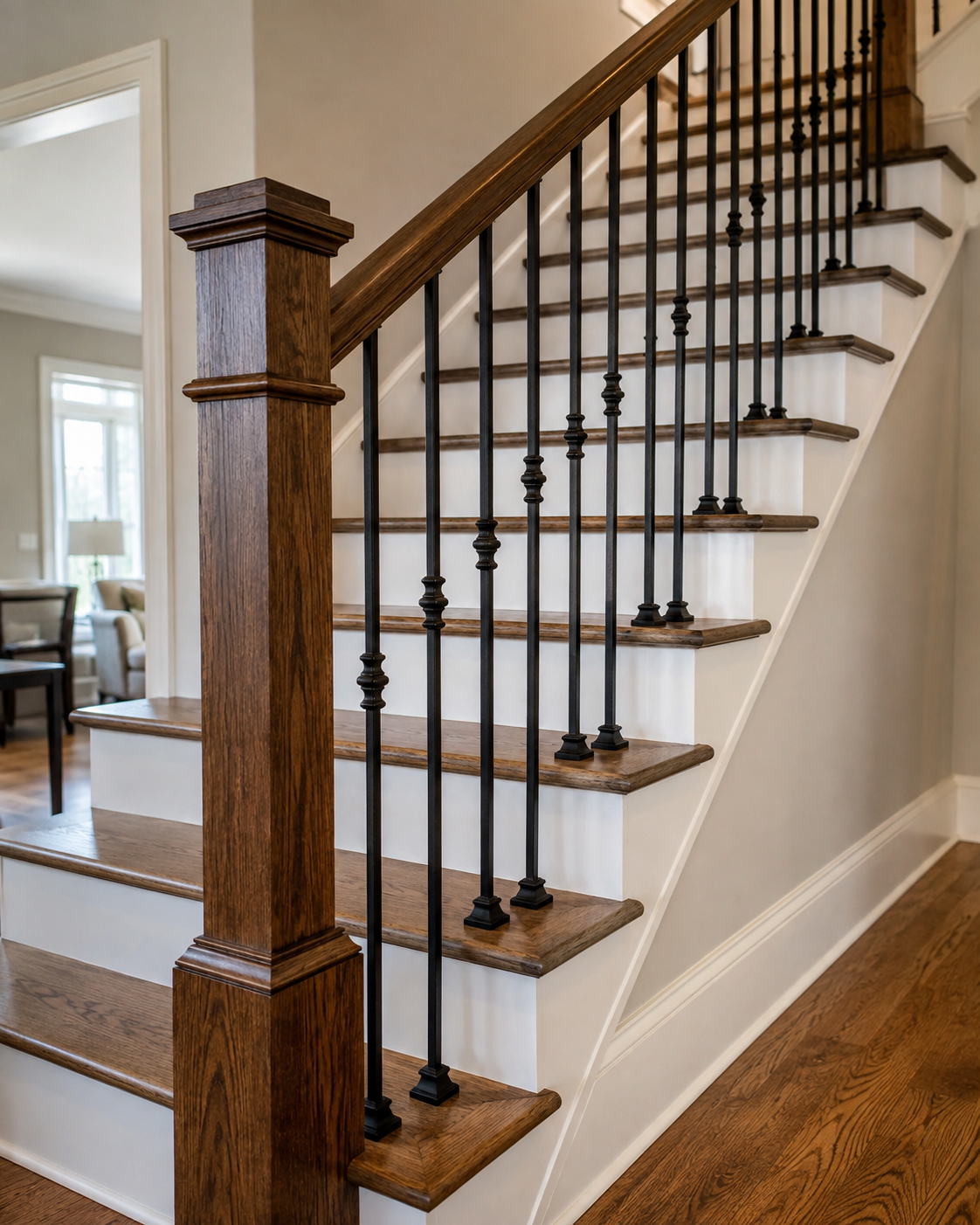
Your staircase sees more daily traffic than almost any other feature in your home. Yet banisters often get overlooked until they start looking dated or worn. That is a missed opportunity, since a banister update can transform an entryway or open-concept space without the cost of a full renovation.
This guide walks through 25 banister styles trending in 2026, organized by material so you can compare options that fit your budget and home style. We will also cover code basics, real installation costs, and how to actually choose between all these options. By the end, you should have a clear shortlist instead of an overwhelming Pinterest board.
Why Your Banister Matters More Than You Think
A staircase is often the first thing guests see when they walk through your front door. Because of that, designers increasingly treat banisters as architectural focal points rather than simple safety features. A dated, bulky spindle railing can drag down an otherwise updated home. Meanwhile, a well-chosen banister can make even a modest staircase feel expensive.
Beyond looks, your banister affects daily function too. Grip comfort, sightlines, and how much light passes through the railing all shape how a space feels to live in. So this is not purely a cosmetic decision, even though it often gets treated that way.
Understanding Banister Codes Before You Start
Before falling in love with a style, it helps to understand a few code basics. Most US jurisdictions follow the International Residential Code, which sets minimum safety standards for stairs and railings. According to the International Code Council, stair handrails generally must sit between 34 and 38 inches above the tread nosing, while guardrails along open sides must reach at least 36 inches high.
Baluster spacing matters just as much as height. The widely used rule requires that a 4-inch sphere cannot pass through any gap in the railing, which prevents small children from slipping through. Cable and glass systems in particular need careful spacing to meet this standard, so confirm compliance with your contractor before finalizing a design. Local jurisdictions sometimes add stricter requirements, so always check with your building department before starting work.
Wood Banister Styles
1. Traditional Turned Spindles
Classic turned wood spindles remain a timeless choice for colonial and traditional-style homes. Their rounded profile and repeating pattern feel warm and familiar, especially in older homes where matching the original architecture matters.
2. Craftsman Square Balusters
Square, straight balusters give a cleaner, more architectural look than traditional turned spindles. This style pairs especially well with Craftsman and mid-century homes, where simple geometric lines already define the interior.
3. Modern Wood Slab Handrail
A thick, flat wood cap rail has become a defining feature of the “warm minimalism” trend gaining traction this year. Paired with simple metal or glass infill, it softens an otherwise cool, modern staircase.
4. Two-Tone Wood and Black Metal
Combining a warm wood handrail with matte black metal balusters creates high contrast without feeling cold. This pairing works in nearly any home style, from farmhouse to contemporary, which explains its ongoing popularity.
5. Reclaimed Wood Rustic Rail
Reclaimed or distressed wood brings texture and history into a staircase, especially in farmhouse or industrial-style homes. Each board carries slightly different grain and character, so no two rustic rails look identical.
Metal and Iron Banister Styles
6. Classic Wrought Iron Scrollwork
Ornamental wrought iron with scrollwork and decorative patterns suits traditional, Mediterranean, and Spanish colonial homes especially well. It requires a powder-coated finish to resist rust and stay low-maintenance over time.
7. Matte Black Horizontal Bars
Horizontal matte black bars have become one of the most requested modern railing styles heading into 2026. The horizontal lines create a strong architectural statement while keeping the staircase visually open and airy.
8. Powder-Coated Steel Minimalist Rail
Simple, thin steel balusters in a matte or satin finish suit minimalist and Scandinavian-inspired interiors. This style prioritizes function and clean lines over decorative detail.
9. Brass and Gold Accent Railings
Warm metal accents, especially brushed brass, are resurging alongside the broader Art Deco revival happening in interior design this year. Even a small amount of brass, like a handrail bracket or newel post cap, adds noticeable warmth.
10. Industrial Pipe Railing
Exposed black pipe fittings create an industrial, loft-style look that pairs naturally with wood treads and concrete or brick walls. This style works especially well in converted warehouse spaces or basement staircases.
Cable Railing Styles
11. Stainless Steel Horizontal Cable
Horizontal cable infill delivers an open, unobstructed view while still meeting safety code. It suits modern, coastal, and mountain-view homes particularly well, since it keeps sightlines clear.
12. Cable With Wood Top Rail
Pairing cable infill with a warm wood cap rail softens the industrial edge of an all-metal cable system. This combination has become one of the most popular mixed-material choices for 2026 remodels.
13. Cable With Black Metal Posts
Swapping wood or steel posts for slim matte black posts creates an even more minimal, low-profile look. This style photographs especially well in open-concept homes with lots of natural light.
Glass Banister Styles
14. Frameless Glass Panels
Frameless glass railings, held by discreet standoff hardware, create a nearly invisible barrier that maximizes light and views. This remains one of the more expensive options, but it delivers a dramatic, high-end result.
15. Framed Glass Panel Railing
A metal frame around each glass panel adds structural support and a slightly more traditional look than frameless systems. This style tends to cost less than fully frameless glass while still keeping the staircase open.
16. Glass and Wood Combination
Pairing a wood cap rail with glass infill panels remains the single most requested combination heading into 2026. It balances warmth and openness better than glass or wood alone.
Mixed-Material and Statement Styles
17. Sculptural Curved Staircase Railing
Curved, flowing handrails that follow organic lines rather than straight edges are increasingly treated as functional art. This style works best on open, spiral, or floating staircases where the curve can become a true focal point.
18. Art Deco Emerald and Brass
Rich, saturated colors like emerald green combined with brushed brass accents bring old Hollywood glamour into a modern home. This look works especially well in entryways where the staircase serves as a first impression.
19. Floating Stair, Open Riser Railing
Open riser stairs paired with minimal railing infill create a light, airy feel throughout an open floor plan. Because open risers must still meet the sphere-passage rule, careful design is essential here.
20. Integrated LED Lighting
Motion-sensor LED strips built into handrails or hidden beneath treads add both safety and a genuine wow factor after dark. This trend blends smart home technology with everyday practicality, rather than technology for its own sake.
21. Laser-Cut Metal Panel Infill
Custom laser-cut metal panels, often in geometric or nature-inspired patterns, turn a staircase into functional art. Panel density can also be adjusted to add privacy where needed, which makes this option more versatile than it first appears.
Regional Considerations Across the US
Climate affects banister material choice more than most homeowners realize, especially for staircases near entryways, mudrooms, or exterior access points. In humid regions like the Gulf Coast and the Southeast, untreated wood can swell, warp, or develop mold over time. Powder-coated metal or sealed hardwood handles humidity far better in these areas.
Coastal homes, from the Carolinas to Southern California, face a different challenge: salt air. Salt accelerates corrosion on untreated steel and iron, so powder-coated aluminum or marine-grade stainless steel makes more sense near the ocean. Standard wrought iron can still work, but expect more frequent maintenance if you live within a few miles of saltwater.
Cold climates across the Midwest and Northeast bring their own considerations, particularly for stairs near unheated entryways or basements. Temperature swings can cause wood to expand and contract, occasionally loosening joints over time. Metal railings generally handle these swings with less maintenance, though condensation on glass or metal near cold entry points is worth planning for as well.
Dry climates like Arizona and inland California pose less risk to metal and glass, but wood finishes can dry out and crack faster under intense sun exposure through windows or skylights near the staircase. A UV-protective finish helps wood hold up better in these conditions.
Budget-Friendly Banister Updates
22. Paint or Refinish Existing Wood
Simply repainting an outdated wood banister in matte black or a warm updated stain can transform its look for a fraction of a full replacement cost. This remains one of the most cost-effective updates available.
23. Swap Balusters Only
Replacing just the balusters, while keeping the existing handrail and posts, cuts costs significantly compared to a full system replacement. This works especially well when your handrail and structure are still in good condition.
24. Add Cable Infill to Existing Posts
If your existing posts and handrail are structurally sound, retrofitting cable infill between them can modernize the look without a full teardown. This approach works best with a contractor experienced specifically in cable systems.
25. Refinish the Handrail Cap Only
Sometimes the handrail itself is the most worn, high-touch part of the staircase. Refinishing or replacing just the cap rail, while leaving balusters and posts untouched, offers a quick, affordable refresh.
What Does a Stair Banister Cost to Install in 2026?
Material choice drives cost more than almost any other factor. Wood railings remain the most affordable option, typically running $20 to $60 per linear foot installed. A full 25-foot staircase project in wood generally lands between $900 and $2,500.
Wrought iron sits in the mid-range, usually costing $65 to $135 per linear foot installed, or roughly $1,600 to $3,400 for an average staircase. Custom, hand-forged ironwork with heavy scrollwork can push well past $200 per linear foot.
Cable railing systems vary widely, from around $60 up to $500 per linear foot, depending on cable grade, post material, and design complexity. Glass sits at the top of the price range, generally running $100 to $600 per linear foot installed, with fully frameless custom systems reaching the higher end of that range.
Budget updates cost far less. Repainting an existing banister often runs a few hundred dollars in materials, while swapping only the balusters typically costs a fraction of a full system replacement. Always get at least two or three quotes from local contractors, since labor rates and regional pricing vary considerably across the country.
How to Choose the Right Style for Your Home
Start with your home’s existing architecture rather than the trendiest option you have seen online. A sleek cable system can look out of place in a traditional colonial home, just as ornate wrought iron scrollwork can clash with a minimalist mid-century interior. Matching your banister to your home’s overall character almost always looks more intentional than chasing a trend in isolation.
Next, think honestly about maintenance. Wood requires refinishing every 7 to 10 years, while powder-coated metal and glass need far less upkeep beyond routine cleaning. If you have young children or pets, prioritize tighter baluster spacing and sturdy post attachment over purely aesthetic choices, even where code technically allows more open designs.
Finally, budget for the whole project, not just materials. Complex staircases with landings, curves, or multiple flights require more labor and hardware than a single straight run. Getting a detailed, itemized quote upfront helps you avoid surprises once the work actually begins.
For more detail on planning a full staircase remodel, including treads, stringers, and lighting, see our complete staircase renovation cost guide, which walks through budgeting for the entire project beyond just the railing.
Final Thoughts
Your banister does far more than keep you safe on the stairs. It sets the tone for your entryway and often for your entire home’s design language. Whether you choose a bold cable system, a warm wood and glass combination, or a simple repaint of your existing railing, matching style to your home’s character and your household’s needs will always outperform chasing a trend for its own sake.
Frequently Asked Questions
What is the most popular stair railing style for 2026?
Mixed-material designs, especially wood paired with either glass or metal, remain the most requested combination this year. Matte black horizontal bars and cable infill systems also continue trending strongly in modern and contemporary homes.
How much does it cost to replace a stair banister?
Most homeowners spend between $900 and $2,500 for a standard 25-foot wood or basic metal railing project. Premium materials like glass or custom wrought iron can push total costs to $6,000 or more.
What is the code-required height for a stair handrail?
Under the International Residential Code, stair handrails generally must sit between 34 and 38 inches above the tread nosing, while guardrails on open sides need to reach at least 36 inches. Always confirm requirements with your local building department, since some jurisdictions add stricter rules.
Can I update my banister without replacing the whole staircase?
Yes. Many homeowners simply repaint existing wood, swap out only the balusters, or retrofit cable infill onto existing posts. These updates cost significantly less than a full system replacement while still refreshing the overall look.
Is cable railing a good choice for homes with kids or pets?
Cable railing can work well for families, but spacing and tension matter more than with solid balusters. Professional installation ensures the system meets the required sphere-passage rule and stays taut over time.
How often does a wood banister need refinishing?
Most wood railings need refinishing every 7 to 10 years, depending on sun exposure, humidity, and daily wear. Interior stairs typically need less frequent attention than exterior wood railings exposed to weather.
What banister style works best for small or narrow staircases?
Slim, low-profile styles like cable railing or thin steel balusters tend to make narrow staircases feel more open than bulky traditional spindles. Glass also works well here, since it keeps sightlines clear without visually shrinking the space.