

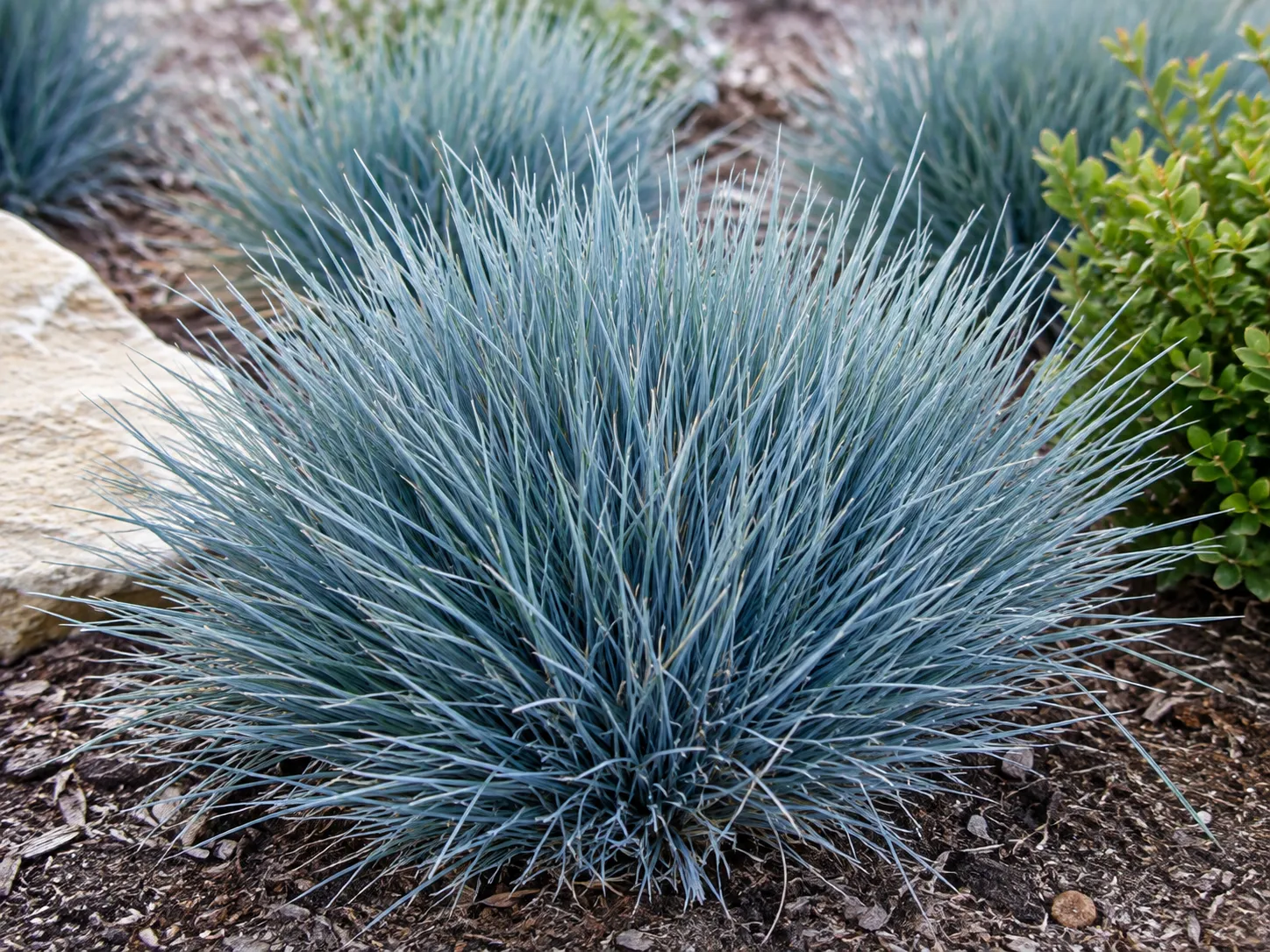
If you’ve ever walked past a garden and stopped to admire those soft, silvery-blue mounds of grass catching the afternoon light, there’s a good chance you were looking at Elijah Blue Fescue. It’s one of those plants that earns its place in the garden not by demanding attention, but by quietly being beautiful in almost every season.
I’ve grown Elijah Blue in my own front border for three years now, and honestly, it’s one of the most rewarding low-maintenance plants I’ve ever added to a garden bed. In this guide, I’ll walk you through everything you need to know. From planting and soil prep to dividing, troubleshooting, and designing with this versatile ornamental grass. Whether you’re a first-time gardener or a seasoned landscaper looking for a reliable performer, this article has you covered.
What Is Elijah Blue Fescue?
Elijah Blue Fescue (Festuca glauca ‘Elijah Blue’) is a compact, cool-season ornamental grass known for its striking powder-blue foliage and tidy, mounding growth habit. It typically grows 8–12 inches tall and wide, forming a dense hemisphere of fine-textured blades that hold their color remarkably well throughout the growing season.
Unlike many ornamental grasses that sprawl or flop, Elijah Blue stays neat and contained — which is a big part of why it’s become such a staple in American home gardens, commercial landscapes, and urban planters alike. In addition to its visual appeal, it’s drought-tolerant, deer-resistant, and thrives in conditions where other plants struggle.
Key facts at a glance:
- Botanical name: Festuca glauca ‘Elijah Blue’
- Type: Cool-season ornamental grass; semi-evergreen
- Mature size: 8–12 inches tall, 10–12 inches wide
- USDA Hardiness Zones: 4–8
- Sun requirement: Full sun to light shade
- Water needs: Low to moderate; drought-tolerant once established
- Bloom time: Late spring to early summer
- Flower color: Tan to golden-wheat seed heads
- Soil preference: Well-draining, lean, slightly acidic to neutral (pH 5.5–7.0)
- Deer resistant: Yes
- Toxicity: Non-toxic to humans and pets
Why Gardeners in the US Love Elijah Blue Fescue
Across the United States, Elijah Blue has earned a loyal following for several practical reasons. First and foremost, it performs exceptionally well across a wide range of climates — from the Pacific Northwest to the Mid-Atlantic and the Upper Midwest. Furthermore, it’s one of the few ornamental grasses that genuinely thrives in lean, dry soil, making it ideal for areas where irrigation is limited or rainfall is unpredictable.
In states like California, Colorado, and Texas — where water conservation has become a critical landscaping concern — Elijah Blue has emerged as a top choice for xeriscaping projects. It delivers visual impact without demanding regular watering, which makes it both environmentally responsible and budget-friendly over time.
Beyond its practicality, the color is simply hard to beat. That distinctive blue-gray tone pairs beautifully with a wide range of garden companions: coral and orange flowers for contrast, whites and silvers for a cool, monochromatic effect, and burgundy-leaved shrubs for dramatic visual tension.
Where to Plant Elijah Blue Fescue
Before you dig a hole, choosing the right location is the single most important decision you’ll make for this plant’s long-term health.
Sunlight
Elijah Blue performs best in full sun — a minimum of 6 hours of direct sunlight per day. In full sun, the foliage develops its most intense blue coloration and the plant maintains its tightest, most attractive mounding form.
That said, it will tolerate light afternoon shade, particularly in hotter climates like the Deep South or the desert Southwest. However, too much shade causes the plant to flop, lose its blue color, and become more susceptible to rot. In short, when in doubt, go with more sun rather than less.
Soil
Good drainage is non-negotiable for Elijah Blue Fescue. It will tolerate poor, rocky, or sandy soils far better than rich, heavy clay. In fact, overly fertile soil tends to make the plant soft and floppy rather than compact and upright.
If your soil is heavy clay, amend the planting area with coarse sand and compost to improve drainage. Alternatively, consider planting Elijah Blue in a raised bed or a container where drainage can be more easily controlled. It genuinely thrives in conditions that would stress most ornamental plants.
Spacing
For ground cover plantings or mass displays, space plants 10–12 inches apart to allow for their mature spread. For use as individual accent plants or border edging, 12–18 inches gives each plant room to develop its full, rounded form without crowding.
How to Plant Elijah Blue Fescue
Planting Time
The best time to plant Elijah Blue Fescue in most parts of the US is early spring or early fall. Both seasons give the plant time to establish its root system before the stress of summer heat or winter cold arrives.
Avoid planting in the peak of summer, especially in warm climates. The combination of heat stress and transplant shock during the hottest months can significantly set back establishment — and in some cases, it can be fatal to a young plant.
Step-by-Step Planting Instructions
Step 1 — Prepare the planting site. Loosen the soil to a depth of 10–12 inches and remove any weeds, rocks, or debris. If drainage is questionable, work in a 2–3 inch layer of coarse sand or grit.
Step 2 — Dig the planting hole. Make the hole twice as wide as the root ball and the same depth. Elijah Blue should be planted at the same depth it was growing in its nursery container — no deeper.
Step 3 — Loosen the roots. Gently tease apart any circling or compacted roots before placing the plant in the hole. This encourages outward root growth and faster establishment.
Step 4 — Backfill and firm the soil. Fill the hole with the original soil (no need to enrich it), firming gently around the base to eliminate air pockets.
Step 5 — Water thoroughly. Give the plant a deep initial watering to settle the soil around the roots. After that, water every few days for the first two to three weeks while the plant establishes.
Step 6 — Apply a light mulch layer. A 1–2 inch layer of gravel or decomposed granite around the base helps retain moisture and suppress weeds without trapping excess humidity against the crown — which can cause rot.
Elijah Blue Fescue Care: Ongoing Maintenance
One of the best things about Elijah Blue is how little it asks of you once it’s established. Nevertheless, a few simple care practices will keep it looking its best year after year.
Watering
During the first growing season, water regularly to support root establishment — roughly once or twice per week, depending on rainfall and temperature. After the plant is established (typically after the first full growing season), it becomes highly drought-tolerant and generally needs supplemental watering only during extended dry spells.
In most parts of the US, established Elijah Blue can get by on natural rainfall alone. However, in the arid West or during unusually hot, dry summers, a deep watering every two to three weeks will keep the foliage looking its best.
Importantly, avoid overwatering. Root rot is the primary way Elijah Blue dies, and it almost always results from waterlogged soil rather than drought. When in doubt, let the soil dry slightly between waterings.
Fertilizing
Here’s where many gardeners make a well-intentioned mistake: Elijah Blue Fescue does not need — and generally does not benefit from — regular fertilizing. Rich soil and heavy feeding actually cause the plant to grow loose, floppy, and less blue.
If your soil is extremely poor or compacted, a single light application of a balanced slow-release fertilizer (such as 10-10-10) in early spring is sufficient. Otherwise, skip the fertilizer entirely and let the plant do what it does naturally in lean conditions.
Cutting Back and Grooming
In late winter or very early spring — before new growth begins — cut the plant back by about one-third to one-half of its height. This removes the previous year’s dead or tatty outer blades and encourages fresh, vibrant growth from the center.
Use clean, sharp garden scissors or hand shears for this task. Avoid cutting into the green crown of the plant, as this can damage the growing point. In addition, you can comb through the clump with a gloved hand or a wide-toothed rake in early spring to pull out dead blades without cutting — many gardeners prefer this gentler approach for established plants.
Deadheading
Elijah Blue produces attractive tan-wheat seed heads in late spring to early summer. These are generally considered ornamental and are best left in place — they add texture and movement to the garden. However, if you prefer a tidier look or want to prevent self-seeding (which is minimal), simply snip the flower stems at the base once they begin to brown.
Dividing Elijah Blue Fescue
One of the more important maintenance tasks for Elijah Blue is division. Over time — typically every 2–3 years — the center of the clump begins to die out, leaving a brown, hollow center surrounded by healthy green growth on the outside. This is completely normal for fescue grasses and is not a sign of disease.
When you see this happening, it’s time to divide. Division not only rejuvenates the plant but also gives you free new plants to expand your garden or share with neighbors.
How to divide Elijah Blue Fescue:
- Dig up the entire clump in early spring or early fall.
- Use a sharp spade, garden knife, or even an old bread knife to cut the clump into sections. Each section should have healthy roots and green outer growth.
- Discard the dead center portion.
- Replant the healthy sections at the same depth, water them in well, and treat them as new transplants for the first few weeks.
Most gardeners find that dividing every two to three years keeps their plants vigorous, tightly mounded, and consistently blue.
Common Problems and How to Fix Them
Even though Elijah Blue is generally low-maintenance, a few issues can arise — particularly when growing conditions aren’t quite right.
Crown Rot
Cause: Waterlogged soil, poor drainage, or excessive mulch piled against the crown. Solution: Improve drainage by amending the soil or relocating the plant. In the meantime, remove any mulch from around the base and allow the area to dry out. If the damage is severe, the plant may need to be replaced.
Loss of Blue Color
Cause: Insufficient sunlight, overly fertile soil, or the plant reaching the end of its vigor cycle. Solution: First, check the sun exposure — if the plant has been shaded by neighboring plants over time, pruning nearby shrubs or relocating the fescue to a sunnier spot will often restore the color. Furthermore, avoid fertilizing, as rich soil tends to push green growth at the expense of the blue pigmentation.
Flopping or Loose Growth Habit
Cause: Too much shade, overwatering, or overfertilization. Solution: Move the plant to a sunnier location and reduce watering frequency. As a general rule, a lean, slightly stressed Elijah Blue is a more attractive Elijah Blue.
Brown Center (Die-Out)
Cause: Natural aging of the clump — completely normal after 2–3 years. Solution: Divide the plant as described above. This will immediately restore vigor and appearance.
Designing with Elijah Blue Fescue
Part of what makes Elijah Blue so versatile is how well it plays with other plants. Here are some proven design combinations used by landscape professionals across the US.
With orange and coral flowers: Pair Elijah Blue with Hemerocallis (daylilies) in orange or coral tones for a vibrant, complementary contrast. The cool blue of the grass makes warm flower colors sing.
With burgundy foliage: Plant alongside Berberis thunbergii ‘Crimson Pygmy’ (Japanese barberry) or Heuchera in deep purple shades for a sophisticated, moody combination. The contrast between blue-gray and burgundy-red is consistently stunning.
As a border edging: Mass plantings of Elijah Blue along a path or driveway edge create a low, flowing ribbon of silver-blue that looks polished and intentional without requiring constant upkeep.
In containers: Elijah Blue thrives in containers, particularly when paired with trailing plants like Sedum or Bacopa and an upright thriller like Salvia or ornamental pepper. The blue foliage adds a cool, structured contrast to the container composition.
In rock gardens: Because it tolerates poor, dry, rocky soil, Elijah Blue is a natural fit for rock gardens and gravel plantings. It pairs beautifully with alpine plants, sedums, and low-growing thymes.
For more design inspiration and planting combinations from horticultural experts, the Royal Horticultural Society’s official Elijah Blue Fescue plant guide offers extensive cultivation guidance and growing notes backed by one of the world’s most trusted horticultural authorities.
If you’re pairing it with flowering perennials rather than grasses, our guide to 30 plants for full sun and heat covers companions that share the same lean-soil, low-water preferences. For another striking ornamental grass, see our Zebra Grass growing guide.
Elijah Blue Fescue in Different US Climates
Pacific Northwest (Zones 7–8): Performs well but watch for excessive moisture in winter. Ensure good drainage and avoid heavy mulching. The mild, wet winters of the region can encourage crown rot if water pools around the base.
California and the Southwest (Zones 7–10): An excellent xeriscaping choice. Plant in fall for best establishment, and provide afternoon shade in the hottest inland areas. In coastal California, it performs nearly year-round with minimal care.
Midwest and Upper Midwest (Zones 4–6): Fully cold-hardy. Cut back in late winter before new growth emerges. It may look ragged by late winter, but it recovers quickly and reliably in spring.
Southeast and Gulf Coast (Zones 7–9): This is the most challenging region for Elijah Blue due to high humidity and heat. Plant in full sun with excellent drainage, and treat the plant as a cool-season annual in the hottest zones if needed. In addition, choose a location with good air circulation to reduce fungal issues.
Mid-Atlantic and Northeast (Zones 5–7): One of the best regions for Elijah Blue. It thrives in the four-season climate, holds color well through summer, and rebounds reliably after winter.
Frequently Asked Questions
How fast does Elijah Blue Fescue grow? Elijah Blue is a moderate grower that typically reaches its mature size of 8–12 inches in its first full growing season. After that, it holds its compact, mounded form reliably from year to year. It doesn’t spread aggressively through runners or rhizomes, so it stays where you plant it — one of the reasons it’s so widely used in formal garden designs.
Does Elijah Blue Fescue spread or self-seed? Generally, it does not spread aggressively. It grows in a tight clump and, while it does produce seeds, self-seeding is minimal under typical garden conditions. However, deadheading the flower stems before seeds mature will prevent any unwanted seedlings if you prefer to keep plantings controlled.
How often should I water Elijah Blue Fescue? During the establishment phase (the first growing season), water once or twice per week. Once fully established, Elijah Blue is drought-tolerant and typically needs supplemental water only during extended dry spells — roughly every two to three weeks in hot, dry conditions. The most important rule is to avoid waterlogging the soil, as root rot is the most common cause of plant failure.
Can Elijah Blue Fescue grow in pots or containers? Absolutely — and it does so very well. Use a well-draining potting mix and ensure the container has adequate drainage holes. Container-grown plants may need more frequent watering than in-ground plants, particularly in warm weather. Furthermore, divide or repot the plant every two to three years to prevent it from becoming root-bound and dying out in the center.
Why is my Elijah Blue Fescue turning brown? There are several possible causes. First, browning in the center of the clump is normal in mature plants and simply signals it’s time to divide. Second, browning across the entire plant can indicate overwatering and root rot, underwatering during a heat wave, or winter dieback in colder zones. In most cases, cutting the plant back in early spring will reveal whether there’s healthy green growth underneath — if so, the plant is likely fine.
Is Elijah Blue Fescue deer-resistant? Yes — it is considered deer-resistant by most gardening authorities, including university extension programs across the US. Deer generally avoid ornamental grasses in favor of more palatable garden plants. That said, no plant is completely deer-proof in areas with very high deer pressure or during harsh winters when food is scarce.
How do I keep Elijah Blue looking blue and vibrant? The key factors are full sun, lean soil, and minimal fertilizer. Plants in part shade will gradually lose their blue intensity and become more green-gray. Rich or heavily fertilized soil has a similar effect. In addition, dividing the plant every two to three years to remove the dead center keeps the foliage consistently dense and vibrant rather than ratty and sparse.
When is the best time to buy and plant Elijah Blue Fescue? Spring is the most widely available time to purchase Elijah Blue at US nurseries and garden centers, typically from March through May. However, fall planting (September to October) is equally successful and often even better for root establishment in warmer climates. Mail-order nurseries tend to ship in spring and fall, which conveniently aligns with the ideal planting windows.
Final Thoughts
Elijah Blue Fescue is, without question, one of the hardest-working plants you can add to a low-maintenance garden. It asks for little — good drainage, plenty of sun, and occasional division — and in return it delivers year-round structure, reliable color, and a versatility that few ornamental plants can match.
Whether you’re planting a single specimen in a container, edging a front walkway with a mass planting, or weaving it through a xeriscape design, Elijah Blue earns its place. As a result, it consistently ranks among the top ornamental grasses recommended by US landscape professionals and extension gardening programs alike.
If you’ve been on the fence about adding it to your garden, consider this your sign to go ahead. You’ll be glad you did by the end of the first growing season.
This article reflects current horticultural guidance, personal growing experience, and publicly available extension resources as of May 2026. Growing conditions vary by region — consult your local cooperative extension office for the most specific advice for your area.
[…] flush of bloom keeps them tidy. If you’d rather lean into ornamental grasses instead, our Elijah Blue Fescue guide covers another low-maintenance, drought-tolerant […]
[…] grasses, whose texture and movement complement the anemone’s tall, swaying stems — our Elijah Blue Fescue guide covers a good option here. Asters and toad lilies also bloom around the same late-season window, […]
[…] it in mixed borders. Pair it with Russian sage, lamb’s ears, ornamental grasses, or our Elijah Blue Fescue for another texture-forward companion. The soft textures play against the bold leaves. Yellow or […]