

Published September 6, 2026
The Coral Bark Japanese Maple, Acer palmatum ‘Sango-kaku,’ earns its spot in more front yards than almost any other ornamental tree. It looks good in every season, not just fall. This guide covers real mature size numbers, the pruning rule that trips up most first-time owners, and why the bark color sometimes fades on older trees.
What Is a Coral Bark Japanese Maple?
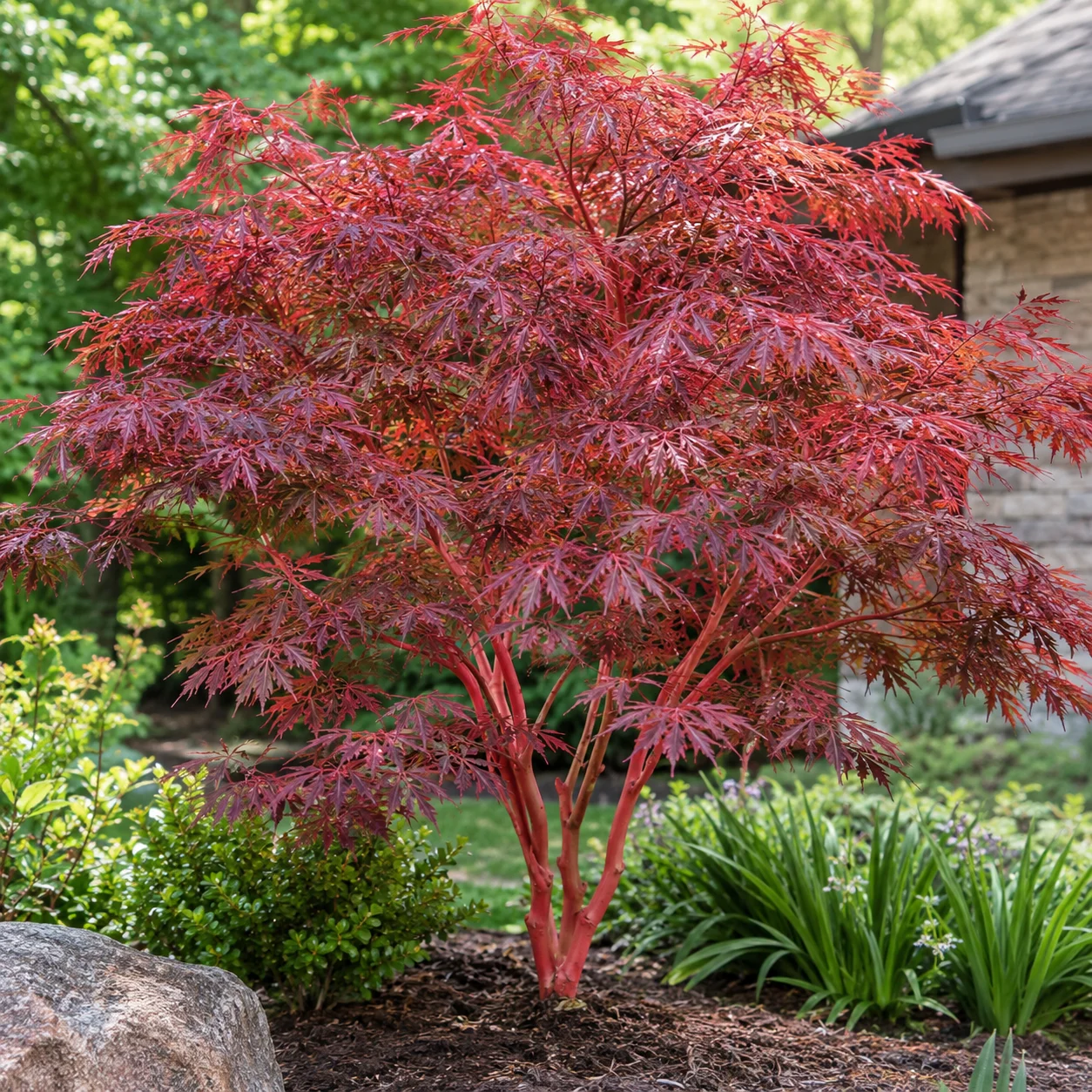
‘Sango-kaku‘ is a cultivar of Acer palmatum, prized for its bright coral-red bark on young branches. That color intensifies through winter. It gives the tree genuine four-season interest instead of going dormant and forgettable once the leaves drop.
The foliage tells its own story through the year. New leaves emerge with a reddish tinge in spring. They shift to light green through summer, then finish in golden yellow come fall. Combined with the winter bark display, it’s one of the few trees that earns a spot as a true focal point rather than background landscaping.
Mature Size and Growth Rate
Here’s what to expect over the life of the tree:
- Mature height: 15–25 feet
- Mature spread: 15–20 feet
- Growth rate: Moderate
- Mature shape: Upright vase shape when young, rounding out with age
- USDA Hardiness Zones: 5–8
- Lifespan: Up to 80 years under ideal conditions
That size range matters for placement. This isn’t a small ornamental shrub. Give it real room, both above and below ground. A mature specimen can eventually rival a small shade tree in footprint. Plant it too close to a patio or walkway, and you’ll be pruning against its natural shape for years. That works against the whole reason people choose this tree in the first place.
Where to Plant It: Sun, Soil, and Spacing
Sunlight: This is one of the more climate-dependent Japanese maples when it comes to sun exposure. In cooler northern zones, full sun brings out the best bark color and fall foliage. In hot southern climates, closer to zone 8, dappled or afternoon shade helps prevent leaf scorch. That shows up as crispy, browned leaf edges during peak summer heat.
Soil: Well-drained, slightly acidic soil works best. Like most Japanese maples, ‘Sango-kaku’ doesn’t tolerate soggy roots. Standing water is one of the more common ways these trees decline over a season or two.
Spacing: Give it at least 15 to 20 feet of clearance from structures, fences, and other trees, matching its mature spread. Plant it too close to a house foundation or driveway edge, and you’ll spend years fighting its natural vase shape with pruning.
Watering: Keep soil consistently moist during the first two growing seasons while roots establish. After that, the tree becomes reasonably drought-tolerant. A deep watering during extended dry spells in summer still helps prevent stress-related leaf scorch.
The One Pruning Rule Everyone Gets Wrong
Prune ‘Sango-kaku‘ in summer, after the leaves have fully developed. Never prune it in late winter or early spring. Cutting it during dormancy, or as sap starts rising, causes the tree to “bleed” heavily from the cut. That can weaken the branch and, in some cases, invite disease into the wound. This is the single most common mistake I see with new Japanese maple owners. Instinct says to prune dormant trees in late winter, the way you would many other species. With this one, that instinct works against you.
Beyond that timing rule, pruning needs stay minimal. Remove dead or crossing branches, and thin selectively to maintain the open, airy structure. That structure shows off the bark and branch pattern, especially important in winter when the coral color is the whole point.
Common Problems With Coral Bark Japanese Maple
Bark Color Fading Over Time
One issue catches long-term owners off guard: the coral bark color isn’t permanent on every branch. As branches age, the vibrant red often fades to a duller brown-gray. Only the newest growth retains that bright coral tone. This isn’t a disease or a care mistake; it’s normal aging. Some owners address it with selective pruning to encourage fresh young growth, which keeps more coral-colored wood visible year to year.
Leaf Scorch
Crispy, browned edges on leaves during summer usually point to leaf scorch. A combination of heat, wind, and inconsistent watering causes it, not any pest or pathogen. It’s more common in hotter zones and on trees planted in full afternoon sun without adequate root moisture. Consistent deep watering during heat waves is the most effective prevention.
Verticillium Wilt
This soil-borne fungal disease affects Japanese maples more than many other ornamental trees. It causes wilting and dieback on one side of the canopy first. There’s no reliable cure once a tree is infected. That makes prevention through good soil drainage and careful root handling during planting the more practical strategy. Suspect verticillium wilt? A local extension office or certified arborist can confirm through soil or tissue testing, since symptoms can resemble other stress-related issues.
For detailed cultural information specific to this cultivar, the Missouri Botanical Garden Plant Finder is a reliable source. It covers care details and known issues in more regional depth than most retail nursery pages.
What Does a Coral Bark Japanese Maple Cost in 2026?
Pricing depends heavily on size at purchase. This is a tree where paying more for a larger specimen genuinely saves years of waiting. As of September 2026, smaller 3-to-4-foot trees run around $160 to $175. Larger 5-to-6-foot specimens run closer to $190 to $230. Some retailers price container size separately, with smaller starter trees available for under $100.
Given the moderate growth rate, buying a larger tree upfront makes more sense here than it does for faster-growing species. This matters especially if you want that winter bark display to be a real landscape feature within the first few years, rather than a decade out.
Comparing Japanese maple varieties for your yard? Our Japanese Maple Varieties Guide breaks down ‘Sango-kaku’ against Bloodgood, Crimson Queen, and other popular cultivars by size, color, and sun tolerance.
Frequently Asked Questions
How big does a Coral Bark Japanese Maple get? Most mature specimens reach 15 to 25 feet tall with a 15 to 20-foot spread. Growth happens at a moderate rate, so reaching full mature size typically takes 15 to 20 years, depending on growing conditions.
When should I prune my Coral Bark Japanese Maple? Prune in summer, after the leaves have fully developed. Pruning in late winter or early spring causes heavy sap bleeding, which can weaken branches and stress the tree unnecessarily.
Why is the bark on my Coral Bark Japanese Maple turning brown instead of coral? This is normal aging, not a problem. The bright coral color only shows on younger branches, and it naturally fades to brown-gray as wood matures. Selective pruning to encourage new growth can help maintain more visible coral color.
Does Coral Bark Japanese Maple need full sun or shade? It depends on your climate. In cooler northern zones, full sun brings out the best color. In hot southern climates, afternoon shade helps prevent leaf scorch during peak summer heat.
Is Coral Bark Japanese Maple deer resistant? Yes, it’s generally considered deer and rabbit resistant. That makes it a reasonably safe choice in areas with wildlife browsing pressure, though no plant is completely deer-proof under extreme conditions.
What causes leaf scorch on Japanese maples? Leaf scorch results from a combination of heat, wind exposure, and inconsistent soil moisture, not a pest or disease. Consistent deep watering during hot, dry stretches is the most effective way to prevent it.
How much does a Coral Bark Japanese Maple cost? Pricing typically ranges from around $100 for smaller starter trees to $230 or more for larger 5-to-6-foot specimens. Buying a larger tree upfront often makes sense given the tree’s moderate growth rate.
[…] If you’re planning landscaping for a home you’ve recently purchased or are preparing a property for sale, columnar evergreens like this one are worth factoring into your overall site plan early, since they take a few years to reach their full screening height. For more details read our guide on Coral Bark Japanese Maple […]
[…] to round out your container garden beyond fruit trees? Our Coral Bark Japanese Maple growing guide covers another compact, container-friendly tree that adds year-round interest to patios and small […]