

A trash can doesn’t have to look like a trash can. Manufacturers now build kitchen, bathroom, and office bins with real design intent. Think sculptural shapes, matte finishes, hidden lids, and colors chosen to match cabinetry instead of just hiding it. If you’re tired of a beige plastic bin sitting in the corner of an otherwise nice room, there’s a genuine market of well-designed alternatives. Most of them cost less than you’d expect.
Quick answer: For most homes, a step-open or touch-top can in stainless steel, matte black, or a soft color like sage or terracotta gives you the best mix of style and daily usability. Expect to spend $50–$120 for a solid mid-range kitchen can. Premium brands like simplehuman or Brabantia run $150–$300 and up. Bathroom and office cans in stylish finishes typically run $15–$60.
Why the Trash Can Became a Design Object
Open-concept kitchens changed the math. When your kitchen is visible from the living room or dining area, every appliance and fixture becomes part of your decor. That includes the can you use forty times a day. Brands responded by treating waste bins the way they’d treat a light fixture or a faucet — as something worth designing deliberately, not just defaulting to whatever’s cheapest and biggest.
That’s why trash cans now get marketed in curated color palettes. Matte black, gunmetal, stone gray, and sage green have replaced “white” and “stainless steel” as the default options. Shapes have diversified too. You’ll find slim rectangular cans for tight galley kitchens, rounded touch-top cans for a softer look, and woven natural-fiber bins for spaces going for a warmer, less clinical feel.
What Makes a Trash Can “Catchy” Without Being Impractical
A good-looking can that’s a pain to use every day isn’t actually a good buy. Before you fall for a design, run it through these practical filters.
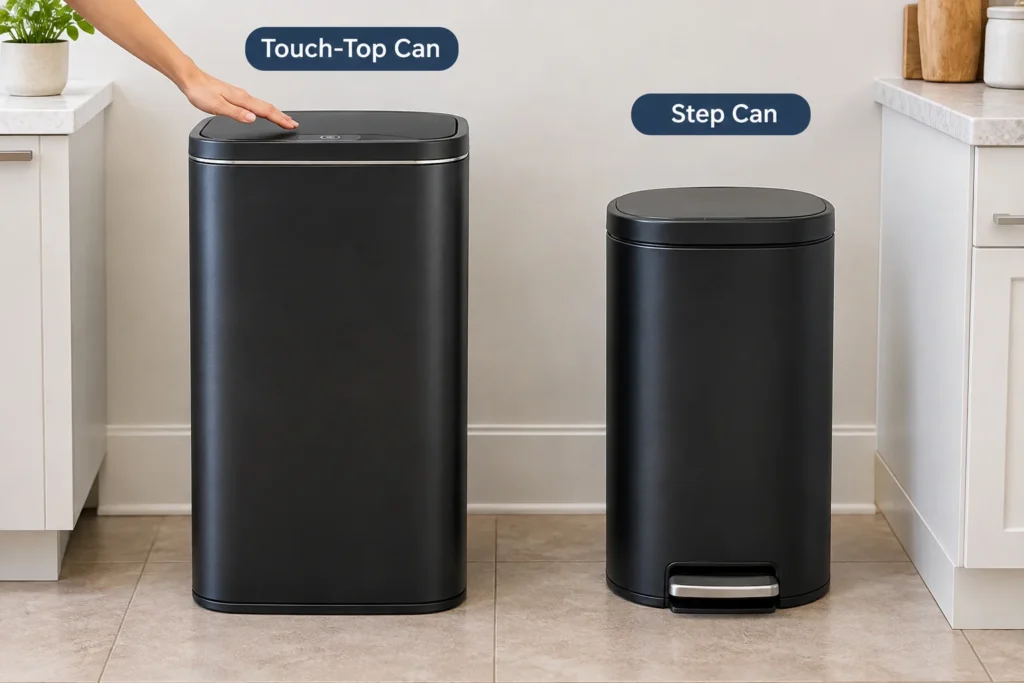
Opening mechanism. Step pedals are the most reliable long-term. There are no batteries and no sensor lag, and they work fine even when your hands are full. Touch-top lids look sleeker and show up often in premium lines, but the mechanism can loosen over years of use. Sensor cans are the most hands-free option available. They can also be slow to respond, or they can trigger falsely in high-traffic spots.
Liner and bag fit. This is the detail most buying guides skip. A stylish can that doesn’t hold a standard trash bag properly will drive you crazy. Bags slip, bunch up, or show above the rim. U.S. kitchens typically use 13-gallon “tall kitchen” bags as the standard size. Look for models with a bag-retention rim, clips, or a removable inner bucket. That last feature also makes emptying less messy.
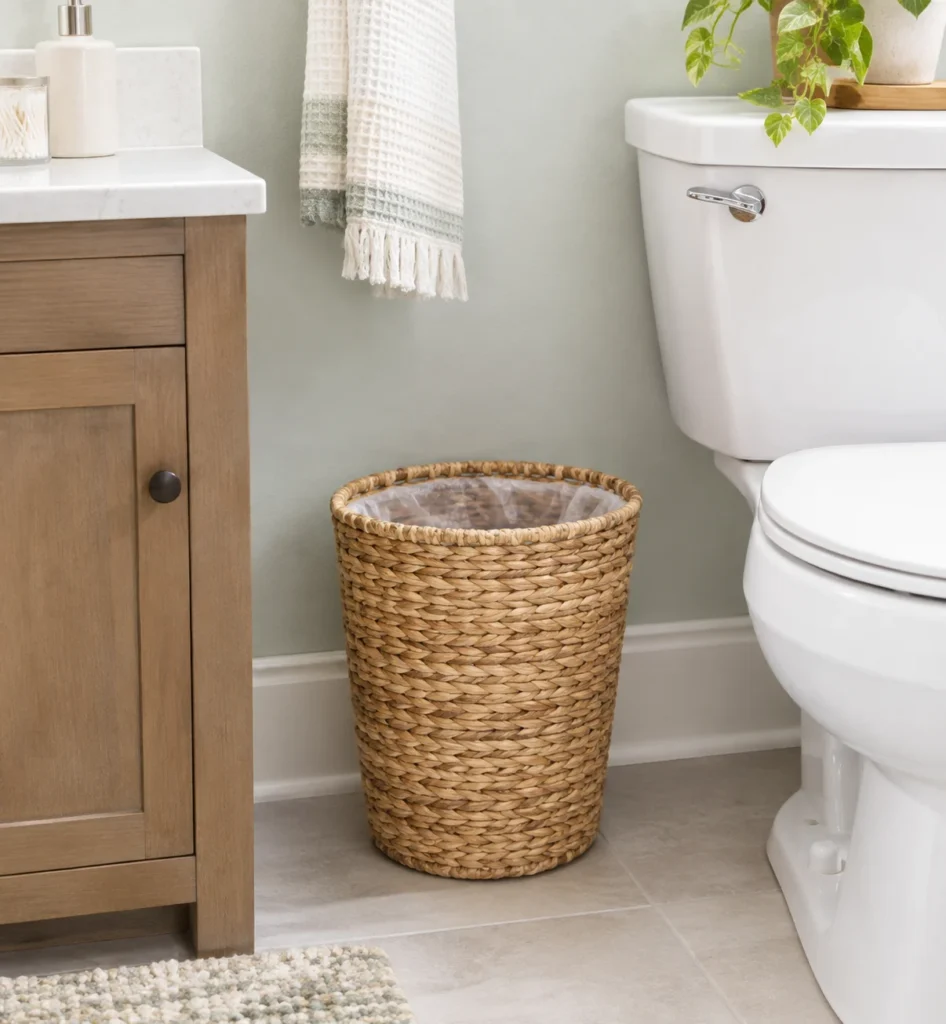
Material and finish durability. Matte and fingerprint-resistant coatings on stainless steel are worth paying for in a high-traffic kitchen. Plain polished stainless shows every touch. Powder-coated steel holds color well, but it can chip if scraped against cabinetry. Woven natural fiber, like water hyacinth or seagrass, looks great in a bohemian or coastal-style room. It generally needs a plastic liner, though, and it isn’t ideal near moisture, like directly under a sink.
Capacity vs. footprint. A 13-gallon can is the standard “full kitchen” size for a typical U.S. household. Smaller households or bathrooms do fine with 2–8 gallons. Bigger isn’t always better. An oversized can in a small kitchen just becomes the biggest thing in the room, which defeats the point of choosing a stylish one in the first place.
Trash Can Styles by Room
Kitchen
This is where design and daily function collide the most. Kitchen cans get used constantly and are usually the most visible bin in the house. Step cans in the 11–13 gallon range with a soft-close lid hit the sweet spot for most U.S. kitchens. You get enough capacity for a few days between bag changes without eating up too much floor space. Slim rectangular profiles tend to fit better next to cabinetry and under counters than round ones do.
If your kitchen has stainless appliances, a matching stainless or gunmetal can ties the room together. Got warmer wood tones or a farmhouse look instead? Matte black, olive, or a woven natural-fiber can reads more intentional than stainless does.
Bathroom
Bathroom cans are smaller, usually 1.5–4 gallons, and they get judged on a different scale. They sit in plain view next to the toilet or under the sink, so texture and color matter more than capacity here. Ceramic, woven rattan-style, and small step cans with a soft finish are popular choices for matching towel and rug palettes. Avoid porous natural materials in bathrooms with poor ventilation. Moisture exposure will shorten their lifespan.
Home Office
Open-top cans with a slim, architectural shape work well here. You’re not dealing with food waste or odor concerns the way you are in a kitchen. A lot of people skip a liner altogether for a home office can. That makes a smooth interior that wipes clean easily worth prioritizing over a fabric or woven exterior.
Outdoor / Garage
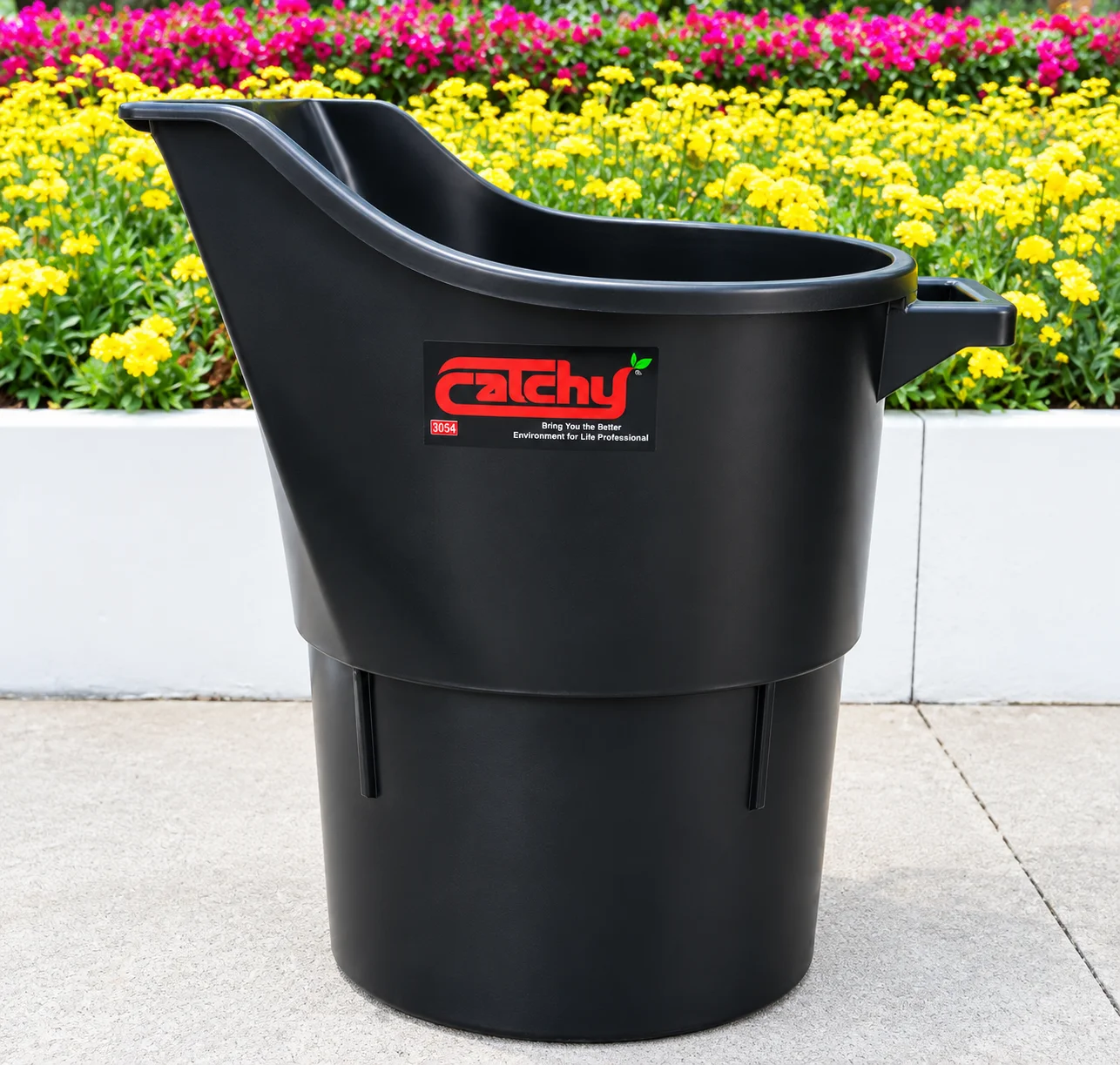
This category runs by its own rules. Outdoor cans need to handle weather and, depending on where you live, wildlife. Heavier-gauge galvanized steel or animal-resistant polyethylene cans with locking lids matter more than aesthetics here, especially in regions with raccoons, bears, or strong storms. Style still exists at this tier — matte finishes, wood-look composite designs for patios — but durability should decide the purchase.
Kitchen Trash Can Comparison
| Type | Typical Price (USD) | Best For | Drawback |
|---|---|---|---|
| Basic step can (painted steel/plastic) | $25–$50 | Renters, budget kitchens | Finish scratches or fades over time |
| Stainless step can, fingerprint-resistant | $50–$100 | Most households wanting a clean look | Slightly heavier, pricier than plastic |
| Touch-top sensor can | $80–$250 | Hands-free convenience, larger households | Batteries/charging, mechanical wear over years |
| Premium designer (simplehuman, Brabantia, Vipp) | $150–$350+ | Long-term investment, visible kitchens | Higher upfront cost |
| Woven natural-fiber bin | $30–$70 | Bohemian/coastal decor, low-odor spaces | Needs a liner, not ideal near sinks |
Prices are general market ranges based on current retail listings. Expect variation by retailer, sale timing, and exact model.
Common Mistakes When Buying a “Stylish” Trash Can
Buying for the photo, not the kitchen. A can that looks perfect in a showroom photo can feel completely wrong next to your actual cabinets and lighting. Matte black, for instance, reads very differently under warm yellow kitchen lighting than under a cooler LED.
Ignoring the lid mechanism’s long-term reliability. Touch-top and sensor lids are the features most likely to fail first. Hinges loosen, sensors lag, and batteries die at inconvenient times. If you go this route, check whether the model has a manual open option as a backup.
Underestimating odor control needs. A gorgeous can with no gasket or sealed lid will still let kitchen odors escape, especially with food scraps. If odor is a real concern in your household, prioritize a sealed or gasketed lid over pure aesthetics. Some premium models advertise carbon filters or odor-blocking seals specifically for this.
Mismatching scale. A tall, narrow designer can might look sculptural in a magazine spread. It can tip over easily, though, if your kitchen floor isn’t perfectly level — common in older U.S. homes. Check the base width and stability rating, not just the capacity, before buying.
Assuming natural materials are low-maintenance. Woven and wood-toned cans need more care than steel or plastic. You can’t wipe them down the same way, and they’re more vulnerable to spills and humidity.
Maintenance Tips That Extend the Life of a Nice-Looking Can
Wipe metal and powder-coated finishes with a soft cloth rather than abrasive scrubbers, which dull matte coatings over time. For fingerprint-resistant stainless, a microfiber cloth with a small amount of dish soap usually handles smudges fine. On sensor or touch-top cans, check the battery compartment every few months, even if it’s still working. Corrosion from old batteries is a common, preventable failure point. For woven-fiber cans, keep them away from direct moisture. Vacuum out crumbs instead of wiping with a wet cloth.
Where to Shop and What to Expect
Big-box retailers like Target and Walmart carry solid mid-range step and touch-top cans, generally in the $25–$80 range, with decent color and finish variety. The Container Store and specialty home retailers carry more design-forward options with a wider color palette, usually $60–$150. Premium brands like simplehuman, Brabantia, and Vipp typically sell through their own sites, Williams Sonoma, and higher-end home retailers. Prices for their higher-capacity or motion-sensor models climb toward $200–$350. Independent and boutique makers, like Etsy sellers and small design firms, offer the most unique, one-of-a-kind designs. Expect a premium price and sometimes a longer lead time, since pieces may be made to order.
If you’re renovating a kitchen or updating a home’s interior more broadly, think about the trash can alongside your other fixture and hardware choices. A finish that matches your cabinet pulls or faucet will read as more cohesive than one chosen in isolation. And if your kitchen renovation involves plumbing work near the sink, it’s worth handling a garbage disposal repair at the same time, rather than tackling it as a separate project later.
Frequently Asked Questions
What size trash can do I need for a kitchen?
Most U.S. households do well with a 13-gallon can, which matches standard “tall kitchen” trash bags. Smaller households can often get by with 8–11 gallons. Larger families or frequent cooks may prefer 13–16 gallons.
Are touch-top trash cans worth the extra cost?
They’re convenient when your hands are full. But the mechanism is the most likely part to wear out over years of daily use. If reliability matters more than the sleek look, a step can is the safer long-term choice.
How do I keep a stylish trash can from showing fingerprints?
Look for “fingerprint-resistant” or “fingerprint-proof” finishes on stainless steel and matte coatings. This is now common on mid-range and premium cans, not just top-tier models.
What’s the best trash can material for odor control?
A sealed or gasketed lid matters more than the material itself. Stainless steel and powder-coated steel both work fine as long as the lid seals well. Some premium models add carbon filters for extra odor control.
Can I use a natural-fiber (woven) trash can in the kitchen?
Yes, with a liner. It suits lower-moisture areas like a home office or living room better, though. Pair it with a removable plastic inner bucket if you use it in a kitchen.
Do colorful trash cans cost more than neutral ones?
Generally not much more. Color options usually cost the same as neutral finishes within a given model line. Limited-edition or boutique colors can carry a small premium.
What’s a reasonable budget for a stylish kitchen trash can?
For most households, $50–$120 gets a genuinely well-designed, durable can. You don’t need premium-brand prices to get something that looks intentional. At the high end, you’re mainly paying extra for advanced sensors, filtration, and brand design pedigree.
How often should I replace a kitchen trash can?
There’s no fixed timeline. A well-maintained step can in steel or powder-coated finish can reasonably last 5–10+ years. Sensor and touch-top mechanisms tend to be the limiting factor and may need replacing sooner.
A Few Recommendations by Situation
- Small apartment kitchen: A slim, stainless step can (8–11 gallons) fits tight spaces without dominating the room.
- Family kitchen with heavy daily use: A 13-gallon step can with a bag-retention rim holds up better long-term than a sensor model.
- Design-forward, visible kitchen: A matte black or gunmetal touch-top can from a premium brand earns its price if it’s a focal point.
- Bathroom or home office: A small ceramic or woven can adds texture without needing much capacity.
- Outdoor or garage use: Skip the design-forward options. Prioritize a heavy-gauge, animal-resistant can with a locking lid.
Sources & References
- EPA – Reducing and Recycling Waste at Home — for readers looking to pair a new trash can setup with better recycling and waste-reduction habits.