

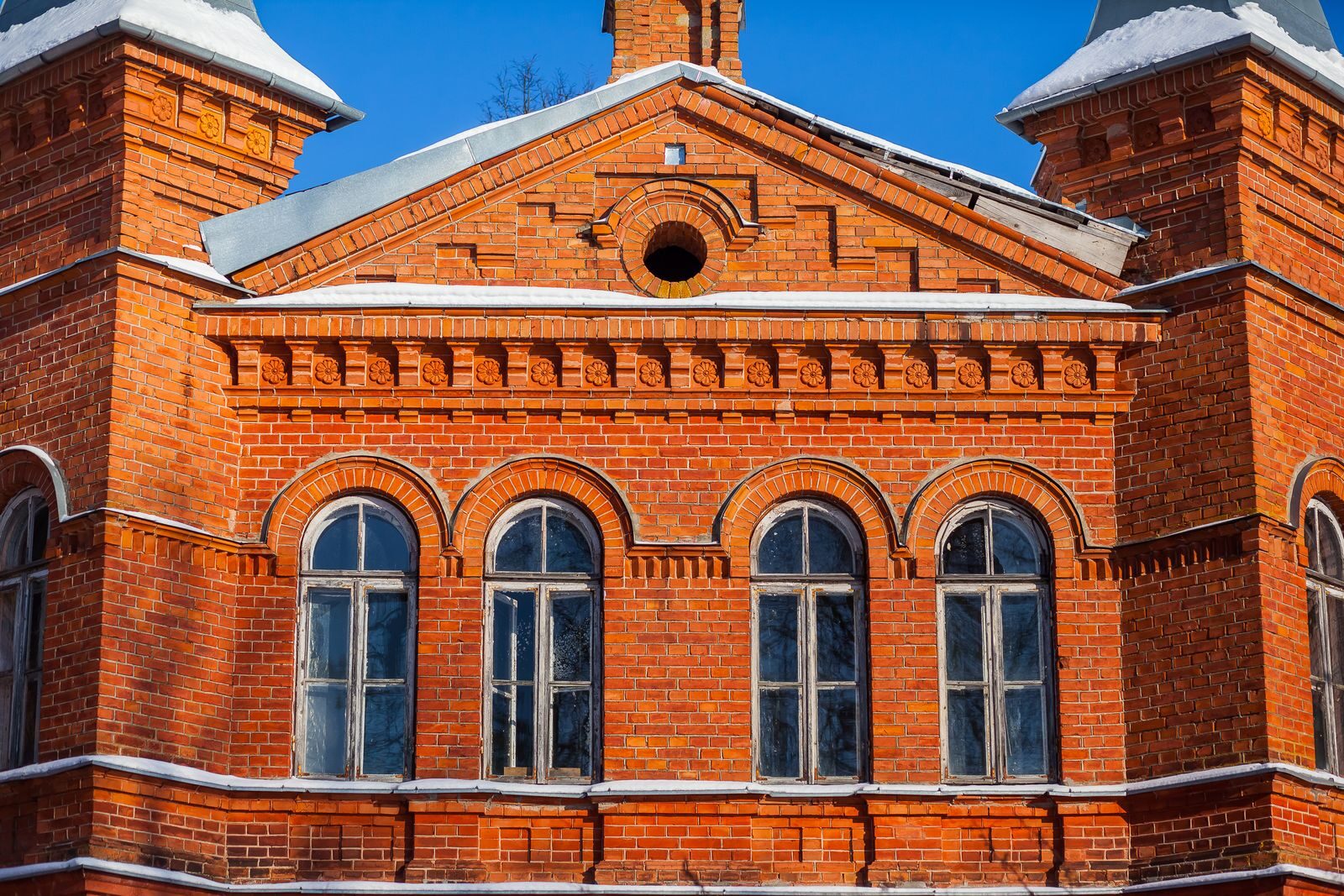
If you’ve ever driven through a classic American neighborhood — the kind with wide front porches in Virginia, handsome row homes in Philadelphia, or stately colonials in the Midwest — you already know what reddish brick does to a home. It grounds it. It makes it feel permanent, like it belongs exactly where it stands.
But here’s what most homeowners don’t realize: “reddish brick” isn’t one thing. It’s a whole family of materials with different compositions, strengths, price points, and best-use cases. Whether you’re building a new home from scratch, re-siding an existing one, or simply adding a brick accent wall to your kitchen, choosing the wrong type can cost you — literally and aesthetically.
I’ve spent time researching the brick market, talking to masonry professionals, and digging into 2026 cost data so you don’t have to guess. So let’s start from the beginning and work through everything you need to know.
What Makes a Brick “Reddish”? The Science Behind the Color
The reddish color in traditional clay bricks isn’t paint or stain — it’s chemistry. Natural clay contains iron oxide, and when manufacturers fire that clay in a kiln at high temperatures (typically between 1,800°F and 2,400°F), the iron oxide reacts and produces the characteristic red-to-orange hue we associate with classic American brickwork.
The exact shade depends on two key variables. First, the iron content of the clay: higher iron content produces a deeper, more saturated red. Second, the kiln temperature and firing duration: hotter fires push the color toward darker reds and even brownish tones, while slightly cooler fires tend to produce more orange or salmon shades.
This is why bricks from Virginia and the Carolinas often carry a distinctly warmer, earthy red compared to bricks produced from Pennsylvania shale, which lean more toward a blue-gray red. As a result, regional clay deposits drive much of the regional architectural character you see across the country. That’s worth keeping in mind as you shop.
The Main Types of Reddish Brick (And What They’re Actually Good For)
1. First-Class Burnt Clay Bricks
These are the gold standard. Manufacturers make first-class bricks from high-quality plastic earth — clay that is free from saline deposits — and they fire them to precise temperatures. When you knock two of them together, you’ll hear a sharp, metallic ring. That sound is your quality assurance, so always do this test before you buy.
What sets them apart:
- Dense, with low water absorption (under 15%)
- High compressive strength (up to 35 MPa)
- Straight edges and consistent surfaces
- Uniform reddish color throughout
Best uses: Load-bearing exterior walls, structural foundations, exposed brick facades, fireplaces, and anywhere the brick will stay visible for generations.
In the USA: First-class clay bricks serve as the default for new residential construction across the Mid-Atlantic, Southeast, and Midwest. Brands like General Shale, Boral Bricks, and Old Carolina Brick Company all produce well-regarded first-class products for the American market.
2. Second-Class Burnt Clay Bricks
Second-class bricks are still solid and widely useful, but they come with slightly more tolerances — small surface cracks, minor size variations, or a less uniform color. They’re strong enough for most residential applications; however, contractors typically plaster or cover them in mortar so the imperfections don’t show.
Best uses: Interior partition walls, walls that will be plastered or painted, boundary fences, and lower-visibility exterior sections.
Practical tip: In cost-sensitive builds, many contractors use first-class brick on street-facing facades and second-class brick on side and rear walls. This strategy trims material costs meaningfully without hurting curb appeal.
3. Third-Class Bricks (Use with Caution)
Third-class bricks don’t go through a full firing process, which gives them a reddish-yellow color rather than a true red. Because they’re under-fired, they have rough, irregular surfaces, lower compressive strength, and notably high water absorption. That high absorption is a real problem in wet climates like the Pacific Northwest, Gulf Coast, or anywhere that sees heavy freeze-thaw cycles.
Best uses (if any): Temporary or low-importance structures in dry climates, rubble fill, or situations where the brick won’t carry a significant load or face weather exposure. In most US residential projects, these simply aren’t a good idea.
4. Red Hollow Bricks
Hollow bricks are a more modern product. They have voids or cells running through them — think of a Swiss cheese cross-section. Because of those cavities, they’re lighter, easier to handle, and better at insulating than solid bricks. Furthermore, the cavities can serve as channels for rebar or insulation fill, which adds structural and thermal value.
Best uses: Internal partitions, non-load-bearing walls, garden walls, raised planting beds, and decorative accent applications where you want the weight savings without giving up the reddish-brick aesthetic.
Energy efficiency note: The air cavities in hollow bricks provide measurable thermal resistance. In 2026, as US utility costs continue to climb, that added insulation value makes hollow bricks an especially practical choice for interior walls.
5. Thin Brick Veneer
Thin brick veneer has quietly transformed brick’s role in American home renovation over the past decade. It’s exactly what it sounds like: real fired-clay brick that manufacturers slice down to 3/8 to 1 inch thickness so you can adhere it directly to an existing wall substrate.
The big advantages:
- No structural modifications or foundation ledge required
- Much lighter than full brick (ideal for re-siding projects)
- Works on interior walls, kitchen backsplashes, and accent features
- Delivers a fully authentic brick look and texture
Best uses: Re-siding existing homes, interior accent walls, kitchen and bathroom feature walls, commercial renovations, and any application where full masonry isn’t structurally feasible. If you want brick on a budget or on an existing home, thin veneer is usually your best starting point.
6. Antique and Reclaimed Brick
For homeowners who want something truly distinctive, reclaimed brick is worth serious consideration. Suppliers salvage these bricks from demolished factories, warehouses, and old buildings, and consequently they carry a weathered, lived-in character that new materials simply can’t replicate. In cities like Chicago, Baltimore, and Boston, there’s a thriving market for reclaimed bricks with real historical provenance.
Things to know before buying reclaimed brick:
- Quality varies significantly, so always inspect for cracking, efflorescence, and structural integrity
- Mortar removal is labor-intensive, which increases installation costs
- Color and texture are genuinely one-of-a-kind — no two pallets are identical
- Always check for lead paint on very old stock (pre-1978)
Where Reddish Brick Gets Used: A Room-by-Room and Project Guide
Exterior Siding and Facades
This is where reddish brick truly earns its reputation. A full brick exterior isn’t just beautiful — it’s functional armor. Brick handles freeze-thaw cycles, humidity, hurricane-force winds, and fire exposure better than virtually any other common cladding material. For homeowners in the Northeast, Great Lakes region, and mountain states, ASTM C216 Grade SW (Severe Weathering) brick is specifically the right choice, because it’s rated for climates with 100+ freeze-thaw cycles annually.
Moreover, brick pays you back at resale. According to Remodeling Magazine’s 2026 Cost vs. Value report, brick exteriors carry a 4–8% resale premium nationally, with the biggest lifts in the Midwest and Southeast where buyers equate brick with quality construction.
Fireplaces and Fire Pits
The warmth of reddish brick around a fireplace is a design classic for good reason — brick is thermally stable, fire-resistant, and visually compelling all at once. However, not all bricks belong in a firebox. For the firebox itself, you need refractory fire bricks, which engineers design to withstand temperatures between 1,750°F and 3,300°F. Standard clay bricks work well for the surrounding surround and mantle, so you can use both types together effectively.
Interior Accent Walls
Exposed brick interior walls remain a strong design trend in 2026, and they show no signs of slowing down. In fact, the current direction pairs exposed reddish brick with warm neutrals — creamy mushroom tones, sage greens, and natural wood — rather than the high-contrast industrial palettes that dominated earlier in the decade. Thin brick veneer makes this achievable in virtually any home, including new construction with standard drywall interiors.
Driveways, Pathways, and Patios
Brick pavers offer excellent longevity, drain well when you install them correctly, and allow for easy repairs — you simply pull out and replace individual units rather than tearing out entire sections. For outdoor paving in climates with ground frost, always specify pavers that meet ASTM C902 for pedestrian traffic or ASTM C1272 for vehicular traffic. Choosing the right rating upfront saves you from costly replacements later.
Garden and Retaining Walls
Both hollow bricks and standard clay bricks perform well in landscape applications. However, for retaining walls taller than 3 feet, you should always consult a structural engineer first. Soil pressure loads grow quickly with wall height, and many municipalities also require permits for retaining structures above a certain threshold. Don’t skip this step.
2026 Brick Cost Guide for US Homeowners
Prices have stabilized compared to the volatility of 2022–2023, but materials and labor costs remain elevated. Here’s a realistic snapshot of what to expect this year:
| Application | Cost Range (2026) |
|---|---|
| Brick materials (per brick) | $0.35 – $0.90 |
| Brick materials (per 1,000) | $350 – $900 |
| Brick siding installation (per sq. ft.) | $9 – $28 |
| Average full home re-siding | ~$24,000 (1,600 sq. ft. home) |
| Thin brick veneer installed | $8 – $18 per sq. ft. |
| Full brick veneer installed | $12 – $20 per sq. ft. |
| Mason labor | $70 – $110 per hour |
| Brick paver installation | $9 – $18 per sq. ft. |
Regional note: Labor costs vary significantly by geography. Urban markets in the Northeast and on the West Coast typically run 20–30% above national averages. In contrast, the South and parts of the Midwest generally offer more competitive mason rates. If you’re in Atlanta, Dallas, or Charlotte — three cities with strong brick traditions and healthy contractor competition — you’ll likely find better pricing than in Boston or San Francisco.
Smart cost-saving tip: If the full-facade budget feels out of reach, consider bricking only your front facade. Covering 250–750 square feet of street-facing wall typically costs $3,000–$13,500. That approach delivers most of the curb appeal and resale value benefit of a full brick exterior at a fraction of the total cost.
2026 Design Trends: Where Reddish Brick Fits In
The design story around brick in 2026 centers on warmth and intentionality. After years of the all-white minimalist exterior dominating design publications, the pendulum has clearly swung back toward organic textures, earthy tones, and materials that feel grounded and built to last.
For reddish brick specifically, the freshest looks involve several key approaches. First, designers now pair reddish brick with “greige” trim — creamy mushroom and warm taupe tones — rather than stark white. That pairing lets the brick’s natural color variation breathe instead of competing with high contrast. Second, muted sage or earthy olive front doors are trending strongly, because red and green sit opposite each other on the color wheel and create a naturally harmonious, grounded palette. Third, mixing materials — combining brick with cedar, natural wood accents, or dark metal window frames — adds depth and visual interest without overwhelming the exterior.
Additionally, design professionals recommend the 60-30-10 rule as a practical framework: brick handles 60% of the exterior visual, a secondary trim color covers 30%, and an accent door or shutter color takes 10%. It’s a simple formula, and it works.
In the American South especially, classic reds and earthy oranges remain perennially popular. They look beautiful against lush greenery and the region’s characteristic red clay landscape. In the Mid-Atlantic and Northeast, meanwhile, deeper reds with hints of brown — what designers sometimes call “colonial red” — continue to anchor traditional architectural styles beautifully.
How to Choose the Right Reddish Brick for Your Home
Here’s a practical decision framework you can follow step by step.
Step 1: Define the Application
First, decide exactly where and how you’ll use the brick. Are you building structural walls, re-siding an existing home, doing interior work, or creating landscape features? Each use case narrows your brick type options considerably. Full structural walls require first-class burnt clay or an equivalent engineered product. Re-siding projects, on the other hand, almost always make more sense with thin brick veneer, because it avoids the weight and foundation complications of full brick.
Step 2: Consider Your Climate
American climates vary dramatically, so not every brick performs equally across all conditions. Here’s how to match your brick to your region:
- Freeze-thaw climates (Northeast, Midwest, Mountain West): Specify ASTM C216 Grade SW brick with water absorption under 8%. Don’t compromise here — a brick that can’t handle moisture expansion in freezing temperatures will spall and crack within just a few years.
- Hot, humid climates (Gulf Coast, Southeast): Brick performs excellently in these conditions. Therefore, prioritize low water absorption to resist moisture intrusion and slow mold growth.
- Arid climates (Southwest, Interior West): Clay brick performs fine here, though stucco dominates the region. Hollow bricks can additionally help with thermal comfort given the extreme daily temperature swings.
Step 3: Test Quality Before You Commit
Before you finalize a brick order, run these simple quality checks that masonry professionals use every day:
- Ring test: Strike two bricks together. A clear, ringing metallic sound means the brick is well-fired and dense. A dull thud, however, signals a weak or under-fired product.
- Scratch test: Drag your fingernail across the surface. Good brick shows little to no powdering. If powder comes off easily or the surface crumbles, the brick is too soft and porous.
- Water absorption test: Weigh a brick dry, soak it in water for 24 hours, then weigh it again. Weight gain under 20% is acceptable; anything higher indicates porosity that will cause trouble in wet or freezing conditions.
- Visual inspection: Look for straight edges, uniform color (in new brick), and the absence of significant cracking, lime nodules, or efflorescence.
Step 4: Match the Brick to Your Home’s Architectural Style
This step is often underweighted, yet it matters enormously for the final result. A sleek, contemporary home with flat rooflines and large window expanses looks jarring next to rustic, heavily textured reclaimed brick. Conversely, a traditional colonial home can look oddly clinical with an overly smooth, uniform modular brick. So think about your home’s bones before you choose.
General pairings that work:
- Traditional/Colonial homes → Classic red or colonial red face brick with a running or Flemish bond pattern
- Craftsman bungalows → Warmer orange-reds with a rough-textured face in Roman or Norman brick format
- Modern/Contemporary → Smooth-faced brick in darker red or wire-cut textures; modular or Roman proportions enhance the horizontal, linear effect
- Rustic/Farmhouse → Reclaimed or antique brick, tumbled brick, or handmade-style bricks with rich color variation
Step 5: Request Samples and View Them in Natural Light
Finally, never skip this step. Brick showroom lighting is controlled and flattering, but the brick on your home will face morning sun, afternoon shade, overcast skies, and golden-hour evening light. Request a pallet or board sample, lean it against your home’s exterior, and observe it across at least two full days before you commit. What looks perfect indoors can look surprisingly different on your actual facade.
A Quick Note on Maintenance
One of reddish brick’s greatest selling points is its low maintenance profile compared to wood, vinyl, or fiber cement siding. But “low maintenance” doesn’t mean “no maintenance,” so it helps to know what to watch for.
- Efflorescence (white salt deposits on the surface): This is usually a cosmetic issue in new brick that diminishes over time. If it persists, you can clean it with a diluted muriatic acid solution.
- Mortar joint deterioration: Depending on climate and original mortar quality, you’ll likely need repointing (tuckpointing) every 25–50 years — removing deteriorated mortar and replacing it without disturbing the brick. This affordable preventive step dramatically extends a brick facade’s life.
- Spalling: If bricks start flaking or crumbling, it typically signals moisture infiltration combined with freeze-thaw damage. Address the moisture source promptly, because delaying repairs makes them more expensive.
- Stair-step cracking: Cracks along mortar joints in a stair-step pattern can indicate foundation settlement. In that case, you should call a structural engineer rather than patching the cracks cosmetically.
For more detailed guidance on brick maintenance and structural assessment, the Brick Industry Association (BIA) publishes free Technical Notes that are among the most authoritative resources available to American homeowners and contractors.
Frequently Asked Questions
Q: What is the difference between red brick and reddish brick?
“Red brick” refers to traditionally fired clay bricks with a deep, uniform red color. “Reddish brick,” however, is a broader descriptor that includes any brick with red, orange-red, or red-brown tones. In practice, most clay bricks fall somewhere on this spectrum rather than displaying a perfectly uniform red.
Q: How long does reddish brick last on a home exterior?
Clay brick exteriors routinely last 100 years or more when you install and maintain them properly. The brick itself is extremely durable; it’s the mortar joints that need periodic attention. For most US climates, repointing every 25–50 years is the primary maintenance task you’ll face.
Q: Is reddish brick a good choice for all US climates?
Brick performs well in virtually all US climates, but it’s especially important to choose the correct ASTM grade for your specific region. Grade SW (Severe Weathering) brick is the right call in freeze-thaw climates. In warmer, wetter climates, low water absorption becomes the key quality metric. Overall, brick is arguably the most climate-versatile common exterior cladding material available.
Q: Can I add brick to an existing home that doesn’t have a brick exterior?
Yes — and this is actually very common. Thin brick veneer (3/8 to 1 inch thick) adheres to most existing wall substrates without requiring foundation modifications. Full brick veneer is also possible on many homes, but it typically requires a structural ledge or angle iron support, which may involve foundation work. A licensed masonry contractor can assess your specific situation and tell you which option makes sense.
Q: How much does it cost to brick the front of a house in 2026?
Bricking just the front facade typically costs between $3,000 and $13,500, depending on facade size and brick type. That investment delivers most of the curb appeal and resale value benefit of a full brick exterior at a fraction of the total price. For a full home re-siding, however, the national average in 2026 runs approximately $24,000 for a 1,600-square-foot home.
Q: Does reddish brick increase home resale value?
Yes, consistently. According to Remodeling Magazine’s 2026 Cost vs. Value data, brick exteriors carry a 4–8% resale premium nationally. The strongest premiums show up in the Midwest and Southeast, where buyers broadly associate brick with quality construction, low maintenance, and long-term durability.
Q: What’s the best mortar color to use with reddish brick?
Mortar color has a significant effect on the overall look of a brick facade, so choose carefully. Buff or gray mortar is the most popular choice for reddish brick, because it creates subtle contrast without competing with the brick’s warmth. Dark gray or charcoal mortar, on the other hand, produces a more dramatic, contemporary look. Either way, always request mortar color samples alongside your brick samples so you can evaluate them together.
Q: Is reddish brick eco-friendly?
Clay brick comes from naturally abundant raw materials (clay and shale), needs no chemical preservatives, and lasts an extremely long time — all of which reduce replacement frequency and lifecycle waste. Furthermore, builders can fully reclaim and reuse clay bricks at end of life. The main environmental drawback is the energy-intensive kiln firing process. Overall, though, brick compares favorably to vinyl, fiber cement, and many composite materials on lifecycle environmental impact, especially when you factor in its 100-year-plus lifespan.
Final Thoughts
Choosing reddish brick for your home is one of those decisions that ages well in every sense — aesthetically, structurally, and financially. However, it’s not a one-size-fits-all material. The right brick for a colonial revival in Richmond, Virginia is probably not the right brick for a modern farmhouse in Scottsdale, Arizona. Climate, architecture, budget, and application all shape the decision.
So take your time, order samples, and don’t skip the quality tests. The brick you install today could still stand — and look beautiful — a century from now. Very few building materials can make that claim.