

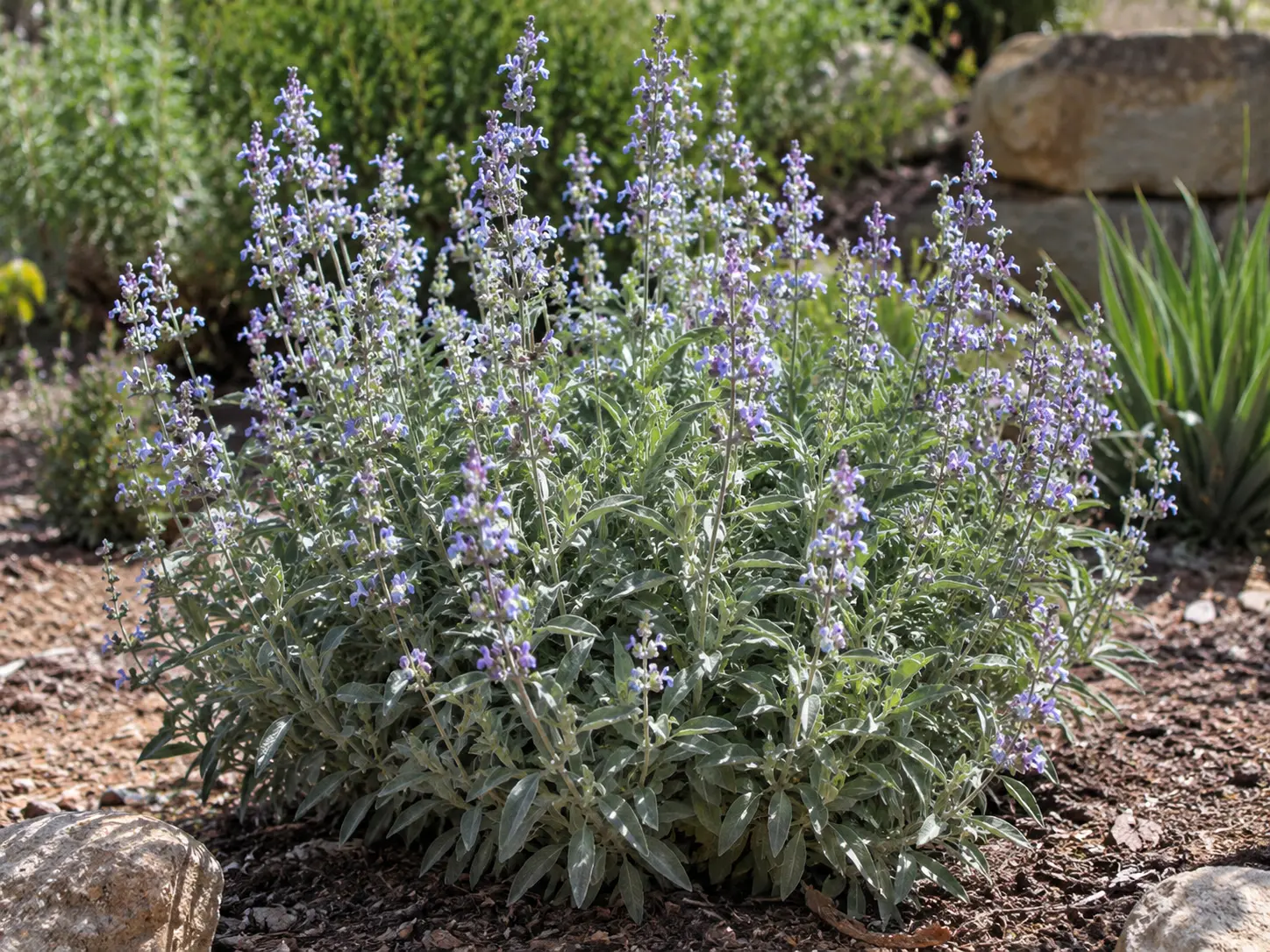
White sage (Salvia apiana) is a silvery, aromatic shrub native to the coastal sage scrub and chaparral of Southern California and Baja California. Many Native peoples in that region hold it sacred and use it in ceremony, while gardeners grow it for its silvery foliage, its drought tolerance and the bees, hummingbirds and moths it attracts.
Here is the short version of the rest of this article. The cultural meaning of sage is real and deserves respect. The health claims about sage are mostly unproven. Wild white sage is under pressure from poaching and habitat loss. The best way to enjoy it is usually to grow your own in a sunny spot with very well-drained soil in USDA zones 8 to 10.
What white sage is
White sage is an evergreen shrub that usually grows to about three to five feet tall and wide. Its leaves are woolly and a pale gray‑white color. They give off a strong pleasant scent. In spring white sage sends up tall flower stalks that can reach seven or eight feet high and those stalks are covered with tiny white to pale lavender blooms.
White sage belongs to the Salvia family. It is not the same as the sage you find on your spice rack. The kitchen sage is called Salvia officinalis. Both plants are part of the mint family. They look different, grow in different ways and serve different purposes. Another plant that people often mix up with sage is white prairie sage or Artemisia ludoviciana, which actually comes from a different plant group.
White sage naturally grows in a small area mainly in Southern California and northern Baja California at low to medium elevations. This limited natural range is important when we talk about protecting and conserving sage.
What white sage means
White sage means a lot more than a plant to many Indigenous peoples in Southern California. The USDA’s plant guide says the Chumash and other California tribes used sage for food, medicine and in ceremonies. A big commercial nursery lists tribes that still use it—like the Cahuilla, Chumash, Costanoan, Diegueño, Kawaiisu and Maidu. Today many tribes across the country continue to gather sage and use it in smudging. Smudging is a practice where herbs are burned for cleansing and prayer.
Members of the San Gabriel Band of Mission Indians talk about sage as an ancestor, not just a plant. Tongva and Gabrieleño people also ask those outside the plant’s homeland to respect their traditions and not copy the rituals. Different nations have ways of doing smudging. There is no one way that represents all of them.
In popular culture, white sage is often treated as a quick fix for “cleansing a space” or “clearing bad energy.” That idea is a modern trend, not a tradition all Indigenous peoples share. If you want to use sage, the most respectful thing you can do is learn where the practice comes from and use it only when you understand its meaning. Never obtain it in a way that harms the plant or the communities that care for it.
Does white sage have real benefits?
Evidence for health benefits is weak. The honest answer is: probably less than the internet says.
Air cleansing. Many articles say that burning sage kills bacteria in the air, usually pointing to a 2007 study on smoke. A Science Feedback fact-check found that the study burned a blend of plants that did not include sage, and concluded there isn’t enough evidence to recommend burning sage or any other herb to disinfect the air. It also noted that the smoke releases soot and other airborne particles, so people with heart or breathing problems may want to avoid it.
Plant chemistry. White sage contains aromatic compounds, and lab tests on sage extracts show some ability to fight bacteria and reduce oxidative damage. A lab result does not prove that burning the plant in your home helps your health. Be wary of websites that quote exact percentages from unnamed “studies” about anxiety or bacteria, since those claims often have no real source behind them.
The ritual. Many people find the scent relaxing, and the act of lighting it can feel grounding. That is a personal experience, not a proven medical effect, and it doesn’t require wild-harvested sage.
Drinking it. The National Center for Complementary and Integrative Health says that sage has not been clearly proven to help any health problem when taken by mouth. If you are pregnant, nursing or taking medicine talk to a doctor before using sage products.
Smoke has problems. Burning any plant creates particles. If you have asthma, COPD or heart disease, or if you live with young children or pet birds, think carefully. If you do burn sage, open a window, use a fireproof container and make sure it is completely out afterward.
The poaching problem and how to source responsibly
This is the part that many white sage guides often skip.
The California Native Plant Society (CNPS) says that many white sage plants are taken from Southern California wildlands. Those white sage plants are used to make smudge sticks, essential oil and other items. CNPS says that because few people grow white sage commercially, most white sage products sold are taken from the wild illegally. CNPS also says that about half of the white sage habitat is lost because of cities. Native advocates say that poachers often pull up white sage plants, which kills the white sage.
Here is what that means for you if you want to buy or grow sage:
- Avoid vague labels. Words like “wildcrafted” or “ethically harvested” and bundles without a label do not tell you much about where the white sage came from. Look for sellers who name a farm, nursery or Native‑owned source and ask them directly about the sage.
- Never collect sage from the wild. Taking sage from public wildlands or preserves is usually not allowed and you need the owner’s permission to take white sage from private land. Even when it is legal, wild white sage populations are stressed.
- Grow your white sage. CNPS and Native advocates say that planting sage in your own garden supports the white sage species and stops the need to take white sage from wild places.
- Consider options. If you only want a herbal smoke or scent you can use other cultivated herbs that come from known growers.
Uses of white sage beyond smudging
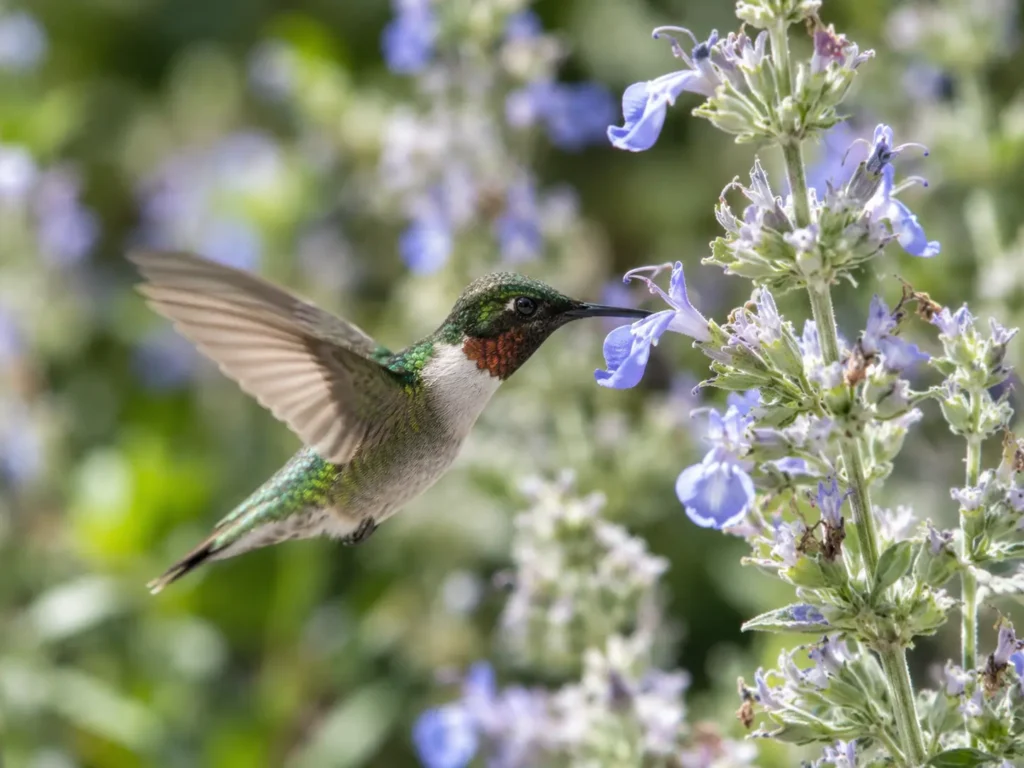
- Pollinator and habitat gardens. Bees, hummingbirds, and hawk moths visit the flowers. Native plant sources also describe white sage as important browse for wildlife.
- Drought-tolerant landscaping. This plant does well on sunny slopes and gravelly beds. It’s a good choice for the Southwest and California, where water is scarce.
- Aromatic foliage. The silvery leaves have a smell when you touch them. That makes it perfect for planting near paths or patios where people walk by.
- Cut and dried stems. You can use the dried flower stalks and leaves in flower arrangements or wreaths. They hold their shape and color well.
- Erosion control. The USDA plant guide says this plant helps hold soil in place on slopes. It’s good for preventing erosion in areas.
How to grow white sage
Quick answer: Plant white sage in full sun, in fast-draining soil, and water it sparingly once it’s established. It’s generally recommended for USDA zones 8 to 10 (some sources say 8 to 11), and wet winters, humid summers, and overwatering are what usually kill it.
Climate and hardiness
Sources give different hardiness ranges. The Arizona-Sonora Desert Museum says it’s hardy to at least 16°F, and some nurseries list it down to zone 7 where winters are dry. Most mainstream sources say zones 8 to 10. If you’re on the cold edge, plant it against a south-facing wall or in a container you can move.
Light
Full sun is essential. The Desert Museum notes that sun keeps the plant compact, while shade produces a lankier shrub.
Soil and drainage
Drainage matters more than anything else. Plant it in sandy, gravelly, or rocky soil, or in a raised bed or slope if your soil holds water. USDA’s plant guide stresses well-drained, fairly dry soils and cautions against excess watering. Skip rich compost and heavy fertilizer, which push soft growth. Light feeding once or twice a year is plenty.
Watering
Water regularly for the first season so roots can establish, then cut back sharply. The Desert Museum recommends watering about every two weeks in the winter growing season and no more than once a month in summer, because overwatering during summer dormancy can be fatal.
White sage is drought-deciduous, which means it may drop many leaves in summer heat and recover in fall. That isn’t a sign of death. Extra summer water can keep the leaves on, but it tends to shorten the plant’s life.
Planting
Fall is a good time to plant in mild-winter climates, giving roots a head start before the next summer. Give it room to spread, since a mature plant fills a 3-to-5-foot circle. Good air circulation helps in more humid areas.
Growing it in containers
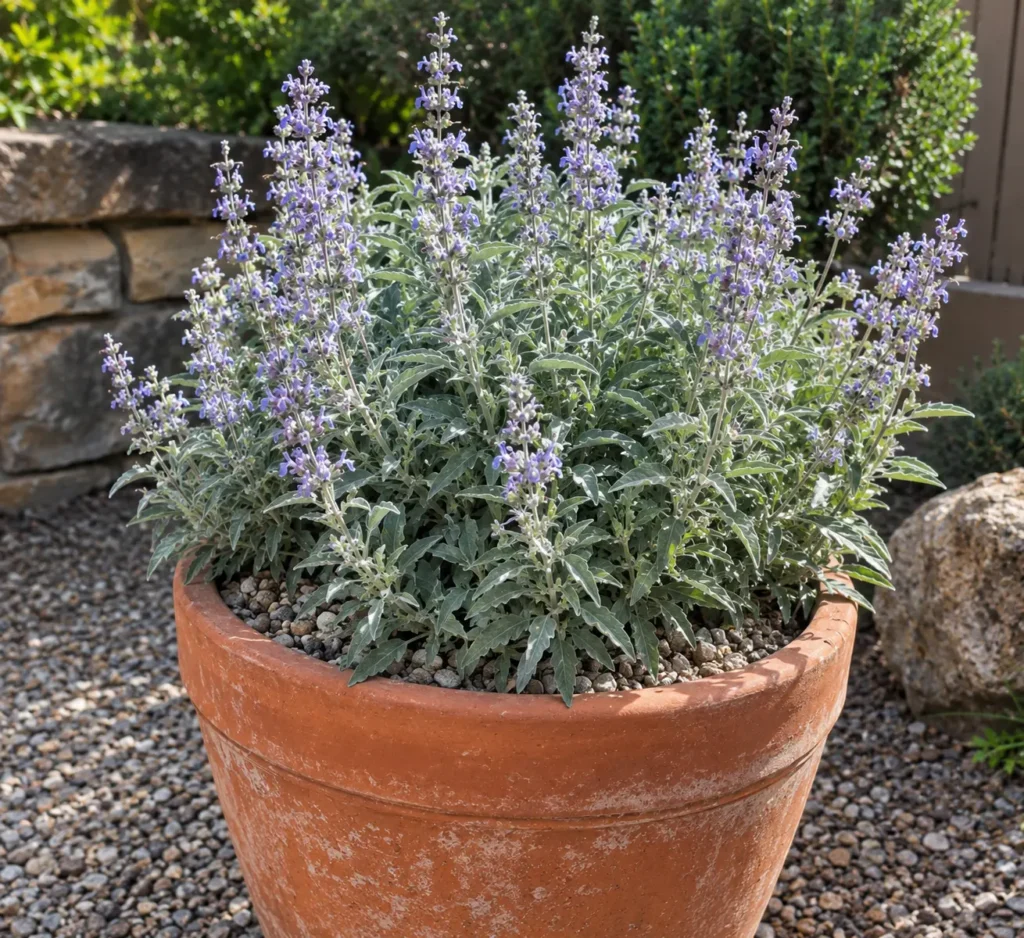
Containers work well if you live where winter cold or wet soil would kill it. Use a large pot with drainage holes and a gritty cactus or succulent mix. Move it to a bright, dry spot before hard freezes, and cut back on watering over winter.
Regional notes
- Southern California, Arizona, and the desert Southwest: White sage’s best conditions. Keep irrigation minimal.
- Pacific Northwest: Cool, wet winters are the challenge. Use a raised bed, slope, or container under an eave.
- Southeast and Gulf Coast: High humidity is difficult, and the Foraged nursery listing notes that it can struggle in humid areas. Containers and gravelly raised beds improve the odds.
- Colder zones: Treat it as a container plant that overwinters indoors, or accept that it may not survive.
Pruning, propagation, and lifespan
Prune lightly. The Desert Museum suggests cutting back leggy or overgrown plants in late fall to reduce size and increase density. Avoid cutting into bare, woody stems, since many sages don’t resprout well from old wood.
You can grow white sage from seed or stem cuttings. Seed is cheaper but slower, and cuttings give you a plant that matches the parent. Expect a lifespan of roughly 5 to 10 years, according to the Desert Museum, so plan to replace it eventually.
Harvesting from your own plant
Take only a small amount of leaves and stems at a time and leave the plant healthy. Dry stems in a bundle in a shaded, ventilated spot until crisp. Drying time depends on your humidity, but one to two weeks is common.
Quick-start checklist: planting white sage
- Confirm your USDA zone is 8 to 10, or plan to grow it in a container.
- Check the botanical name on the plant tag: Salvia apiana.
- Buy a nursery-grown plant from a seller who names where it was grown.
- Pick a full-sun spot with sandy or gravelly soil, or build a raised bed or slope.
- Plant in fall in mild-winter climates, leaving a 3-to-5-foot circle of space.
- Water regularly for the first season, then cut back sharply.
- Skip rich compost and heavy fertilizer, and stop watering heavily in summer.
- Prune lightly in late fall, and avoid cutting into bare woody stems.
Common mistakes
Overwatering. More plants die from kindness than from neglect. If the soil stays damp, the roots rot.
Planting in heavy clay. Without drainage improvements, clay soil holds water around the roots.
Buying unidentified bundles. If the label doesn’t say where the sage grew, assume it may be wild-harvested.
Confusing sages. White sage, white prairie sage, and culinary sage differ. Check the botanical name (Salvia apiana) before you buy.
Treating leaf drop as failure. Summer leaf loss is normal for this plant.
Expecting smoke to disinfect. The evidence doesn’t support it.
Which option fits you?
| Your goal | Best approach |
|---|---|
| Pollinator or native garden | Plant white sage in a sunny, dry spot |
| Scented herb for home use | Choose a cultivated herb from an identifiable grower |
| Smudging as a cultural practice | Learn from the Native community whose tradition you follow, and use sparingly |
| Humid or cold climate | Grow in a container with gritty soil |
| Supporting conservation | Buy from native plant nurseries and avoid wildcrafted bundles |
Looking for more sun-loving, low-water plants? See our guides to lavender plant care, hens and chicks (sempervivum) and Mexican heather.
Frequently asked questions
Is white sage the same as regular sage?
No. White sage is Salvia apiana, native to Southern California and Baja California. The sage you cook with is Salvia officinalis.
Is white sage endangered?
It isn’t formally listed as endangered. Conservation groups warn that poaching and habitat loss are putting wild populations under pressure.
Is it legal to harvest white sage in the wild?
Collecting plants on public wildlands is generally prohibited, and you need landowner permission on private property. Check with the managing agency before collecting anything.
Does burning white sage clean the air?
Not that anyone has shown. Fact-checkers found the commonly cited bacteria study didn’t test sage, and burning plants adds smoke particles to indoor air.
What zone does white sage grow in?
Generally USDA zones 8 to 10, with some sources extending to 11 and others reporting tolerance in colder, dry-winter areas.
Why are the leaves falling off my white sage?
Summer leaf drop is normal, since the plant is drought-deciduous. Check that you aren’t overwatering and that the soil drains quickly.
Can I grow white sage indoors?
It’s difficult. It needs intense sun and dry conditions, so a very bright south-facing window or a grow light helps. Containers outdoors in mild weather usually do better.
Where should I buy white sage plants?
Try a native plant nursery, a CNPS chapter plant sale, or a nursery that identifies the plant by its botanical name and its growing source.
Sources & References
- California Native Plant Society, White Sage conservation page and “Saging the World” campaign materials
- USDA NRCS Plant Guide, White Sage (Salvia apiana)
- Arizona-Sonora Desert Museum, White Sage plant care sheet
- Science Feedback, “Claim that burning sage purifies the air based on study that burned entirely different plants”
- National Center for Complementary and Integrative Health (NIH), information on sage taken by mouth
- UC Master Gardeners of Riverside County, native plant fact sheet on white sage