

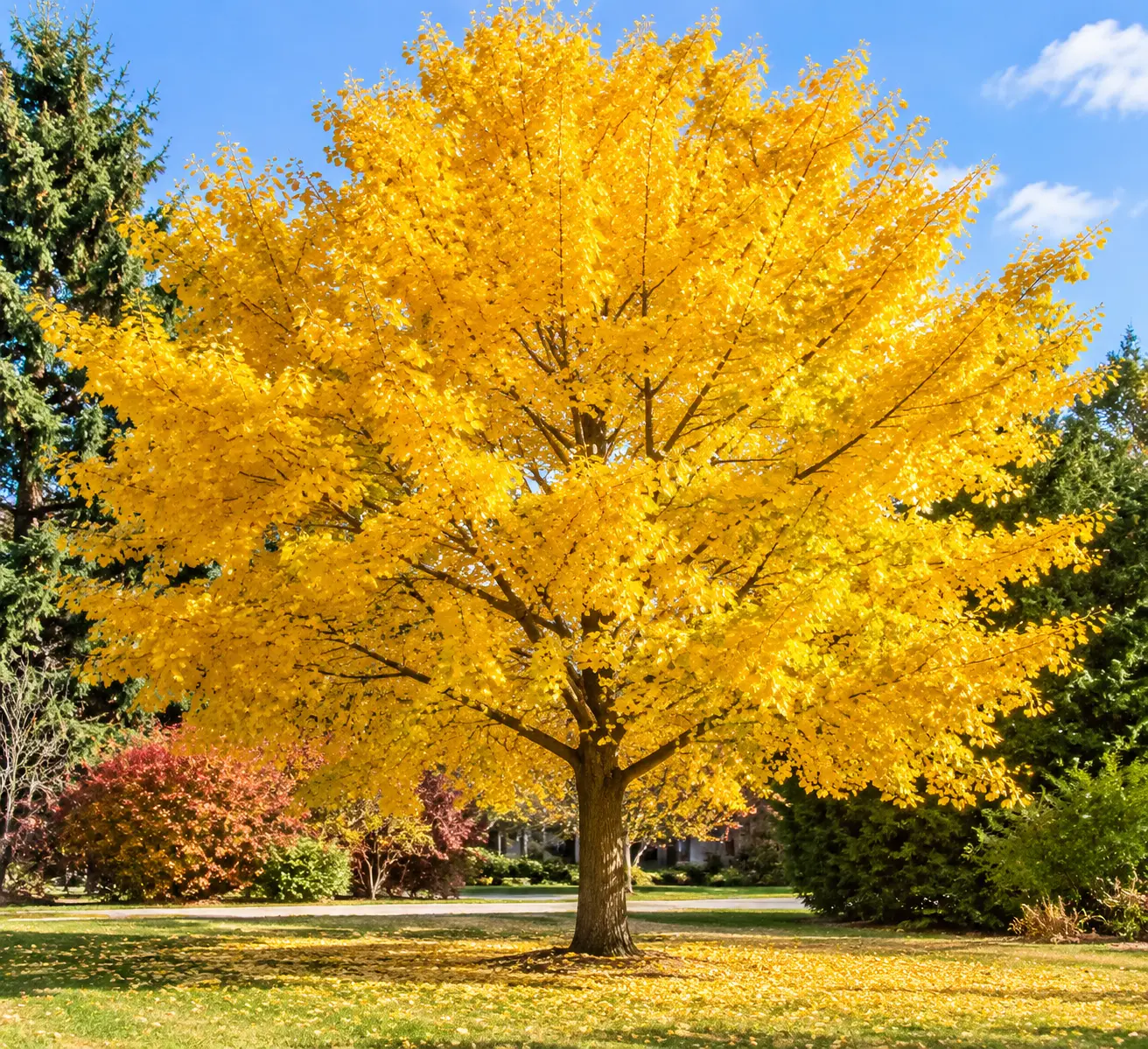
‘Autumn Gold’ is a male ginkgo chosen for its dependable golden-yellow fall color. It grows into a shade tree, usually 40 to 50 feet tall and 25 to 30 feet wide, according to Missouri Botanical Garden. It loves sun and well-drained soil and grows well in USDA zones 3 to 8. The best part comes in October or November, when the fan-shaped leaves turn bright yellow and then drop, often all at once. It’s a low-maintenance tree once established, but it is also large.
Before you buy ‘Autumn Gold,’ make sure you have the space. That single decision matters more than any care tip.
‘Autumn Gold’ at a glance
| Feature | Details |
|---|---|
| Botanical name | Ginkgo biloba ‘Autumn Gold’ |
| Common names | Autumn Gold ginkgo, maidenhair tree |
| Mature size | About 40 to 50 ft tall, 25 to 30 ft wide (Missouri Botanical Garden); Clemson Extension lists 50 ft by 30 ft |
| Shape | Broadly conical when young, spreading with age |
| Growth rate | Slow to moderate; one nursery lists about 20 ft or more in 15 years |
| Fall color | Brilliant golden yellow |
| Hardiness | Zones 3 to 8 (Missouri Botanical Garden); some nurseries list zones 4 to 9 |
| Light | Full sun (partial shade tolerated) |
| Soil | Adaptable, but well-drained is essential |
| Fruit | None. It’s a male clone |
What makes ‘Autumn Gold’ different from a regular ginkgo
Ginkgos are dioecious, which means individual trees are male or female. Female trees produce plum-sized seeds whose fleshy outer layer smells foul as it decays, and the pulp can irritate skin, according to Clemson Extension. That’s the reason most people avoid female ginkgos.
‘Autumn Gold’ is a named male clone, so it won’t produce those seeds. According to the Missouri Botanical Garden listing, the selection came from the Saratoga Horticultural Foundation in California in 1955. It’s popular because it combines the male form with a symmetrical shape and dependable gold color.
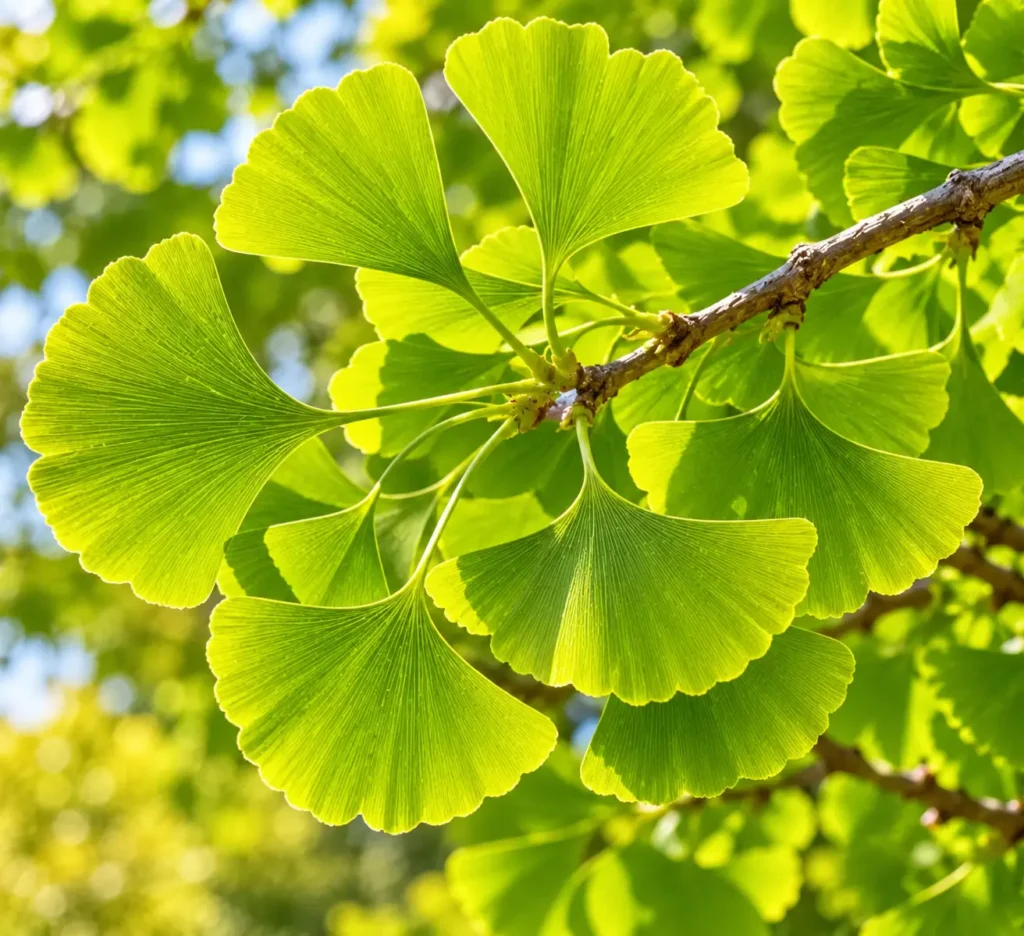
Here’s what to remember when you buy a ginkgo. According to Clemson, a ginkgo grown from seed can take twenty to thirty years to show whether it is male or female, so buying an unlabeled ginkgo is a gamble. Buy a named male cultivar like ‘Autumn Gold’ from a reputable nursery, and make sure the label says it’s male.
One caveat: ‘Autumn Gold’ itself will never drop fruit, but it can’t stop a female ginkgo elsewhere from doing so. If a neighbor has a female ginkgo, its fruit may still land on your property, and that isn’t something your tree causes or can prevent.
How big does ‘Autumn Gold’ get?
Expect a tree. Different sources have different numbers, which is normal for a tree that grows slowly and is measured at different ages and in different places:
- Missouri Botanical Garden: 40 to 50 feet tall and 25 to 30 feet wide
- Clemson Extension: about 50 feet tall and 30 feet wide
- Some wholesale growers: up to 45 feet tall and 30 to 40 feet wide
Young ginkgos often look lanky, with branches that don’t grow evenly, and they fill out as they age. Growth is slow to moderate. One nursery lists 20 feet or more in 15 years, but take that as a guide, since soil, water and climate all change the speed of growth.
What that means for your yard:
- Plan on roughly 30 feet of canopy width, which means keeping the trunk well away from your house, driveway, patio, and property line. An arborist or local extension office can suggest setback distances for your situation.
- Look up. Overhead power lines are a poor match for a tree that reaches 40 to 50 feet.
- Call 811 before digging to have underground utilities marked. It’s free, and it’s the standard step in the U.S. before any planting hole.
- If you have a small yard, consider a smaller cultivar (see the comparison table below) or a compact tree such as a Snow Fountain weeping cherry.
Fall color: what to expect
According to Clemson Extension, ginkgo is one of the trees that changes color early in autumn, with its leaves turning a bright yellow. ‘Autumn Gold’ is valued for the clean, pure yellow it shows. That color lasts only a few weeks, and then the leaves drop quickly, often almost all at once, leaving a golden carpet beneath the tree. If you want more fall color on a smaller scale, see our Bloodgood Japanese maple care guide.
Practical points about the display:
- Timing varies by region and year. In many parts of the Northeast and Midwest, color arrives in October into early November. Further south, it comes later. Weather matters, and a sudden hard freeze often triggers the drop.
- Leaf cleanup is short. Because the leaves fall within a short window, many people find one or two raking sessions enough, instead of weeks of ongoing leaf drop. That’s an advantage over trees that shed slowly.
- Stress dulls the show. Drought, root damage, and scorched leaves can reduce color, so a stressed tree may look less spectacular.
- Plant it where you’ll see it. A spot visible from a window, patio, or street gives the best return.
Where it grows best: zones and climate
Missouri Botanical Garden lists zones 3 to 8 for the species, and several nurseries list zones 4 to 9 for this cultivar, so check the tag. Clemson Extension’s quick guide gives 4 to 8b.
Cold climates (Upper Midwest, Northern Plains, Northeast): ‘Autumn Gold’ is a good choice and tolerates cold winters, though a young tree may benefit from a protected spot.
Mid-Atlantic and Midwest: Often an ideal match, with warm summers and cool fall nights that support good color.
Southeast: Works well in many places, but Clemson notes that leaf scorch from heat and drought can occur, especially in street trees. Water young trees during dry spells.
Hot deserts and the Southwest: Be cautious. Extreme summer heat and alkaline soils can stress the tree, and the species isn’t listed as reliable in the hottest zones. Check with your local extension office before buying. If heat is your main challenge, our list of best plants for full sun and heat has tougher options.
Pacific Northwest and California: Plantlust notes the ‘Autumn Gold’ cultivar was a Miller Botanical Garden “Great Plant Pick,” which shows it performs in the maritime Northwest. In California, summer irrigation matters.
How to plant ‘Autumn Gold’
When to plant. Fall or early spring are generally good times in most of the U.S., since cooler weather lets roots establish before extreme heat or deep cold. Container trees can go in over a longer window than balled-and-burlapped trees, as long as you water consistently.
Where to plant.
- Full sun, at least six hours a day, is ideal
- Well-drained soil. Ginkgo tolerates a range of soils but not standing water
- Enough space for a 25 to 30 foot canopy
- Away from overhead lines, building foundations, septic systems, and underground utilities
Step by step:
- Call 811 and have utilities marked.
- Dig a hole two to three times as wide as the root ball but no deeper than it is tall. The trunk flare, where the trunk widens at the base, should sit at or slightly above ground level.
- Remove containers, wire, and any twine. Cut away circling roots on container-grown trees.
- Set the tree straight, backfill with the native soil, and water thoroughly to settle it.
- Mulch two to three inches deep in a wide ring, keeping mulch off the trunk.
- Skip staking unless the tree can’t stand on its own or you’re in a windy site. If you stake, remove it after a year.
Clemson’s “Planting Trees Correctly” factsheet is a good step-by-step reference. Our pear tree care guide also covers planting and pruning young trees.
Care: what the tree actually needs
Watering. Water deeply and regularly through the first one to two growing seasons. Once established, ginkgo is moderately heat and drought tolerant, according to Clemson, but it will do best with occasional deep watering during extended dry spells.
Fertilizer. Usually unnecessary. Get a soil test before adding anything. Over-fertilizing can encourage weak growth.
Pruning. Young trees benefit from structural pruning to keep one dominant central leader, because a single straight trunk makes a better shape than competing vertical branches. After the early years, mature trees need little more than removal of dead, broken, or weak limbs. If your cultivar is grafted, watch for suckers from the rootstock and remove them. Prune in the dormant season or follow your local arborist’s advice.
Pests and diseases. Ginkgo is generally trouble-free, but Clemson lists two problems to watch for: leaf scorch caused by heat and drought, and bacterial leaf scorch, a disease spread by leafhoppers and treehoppers that can cause decline. Because the two look similar, send samples to a plant diagnostic lab for a diagnosis rather than guessing. If your tree’s leaves brown at the edges year after year, ask your county extension service for help.
Is ‘Autumn Gold’ the right ginkgo for you?
| Space and goal | Better pick |
|---|---|
| Large lot, classic shade tree, gold color | ‘Autumn Gold’ |
| Narrower yard | Princeton Sentry (about 60 ft tall by 25 ft wide) or Golden Colonnade (about 45 ft by 25 ft), per Clemson and University of Minnesota |
| Very tight spaces | ‘Sky Tower’ (15 to 20 ft tall, 6 to 10 ft wide), per University of Minnesota |
| Small garden or container | Dwarf cultivars like ‘Jade Butterflies’ or ‘Gnome’ |
| Wide canopy, big shade | ‘Emperor’ or ‘Presidential Gold’ (about 50 ft by 40 ft) |
Check each cultivar’s size and hardiness with the nursery, since published figures vary.
Common mistakes
Underestimating the size. A three-foot sapling becomes a 40-foot tree. Measure your site and plan for the full width.
Buying an unlabeled ginkgo. Without a named male cultivar, you risk a female tree and years of messy, foul-smelling fruit.
Planting too deep or in poorly drained soil. Ginkgo doesn’t tolerate waterlogged roots. Plant the trunk flare at ground level and avoid low spots.
Skipping watering in the first two years. Drought tolerance comes after establishment, not before.
Over-mulching. A mulch volcano piled against the trunk holds moisture and invites problems.
Expecting instant color. Young trees can look sparse, and the best displays come with age.
Frequently asked questions
Is ‘Autumn Gold’ ginkgo male or female?
Male. It’s a male clone selected to avoid fruit.
How fast does ‘Autumn Gold’ ginkgo grow?
Slowly to moderately. One nursery lists about 20 feet or more in 15 years, though conditions vary.
When does ‘Autumn Gold’ turn yellow?
Usually in October into November, depending on region and weather. Ginkgo is one of the earlier trees to color.
Does ‘Autumn Gold’ make a mess?
It drops leaves in a short window, which makes cleanup quick. It doesn’t produce the smelly fruit that female ginkgos do.
What zones is ‘Autumn Gold’ hardy in?
Generally zones 3 to 8, though some sellers list 4 to 9. Check the tag from your nursery.
Can I plant it near my house?
Give it room, since the canopy can reach 25 to 30 feet wide and the tree gets tall. Ask an arborist about distances for your site and soil.
Does ginkgo need full sun?
Full sun gives the best form and color. Clemson says full sun to partial shade works.
Why are my ginkgo’s leaves turning brown in summer?
Heat and drought stress are common causes. Bacterial leaf scorch is another possibility, so get a lab diagnosis if browning returns each year.
Sources & References
- Missouri Botanical Garden, Ginkgo biloba ‘Autumn Gold’ plant profile (size, zones, origin)
- Clemson Cooperative Extension, Ginkgo (Maidenhair Tree) Care & Growing Guide, HGIC 1032 (hardiness, care, cultivars, problems)
- University of Minnesota Extension, Ginkgo cultivars and zones
- Plantlust and nursery listings (growth rate, fall color notes, Great Plant Pick)