

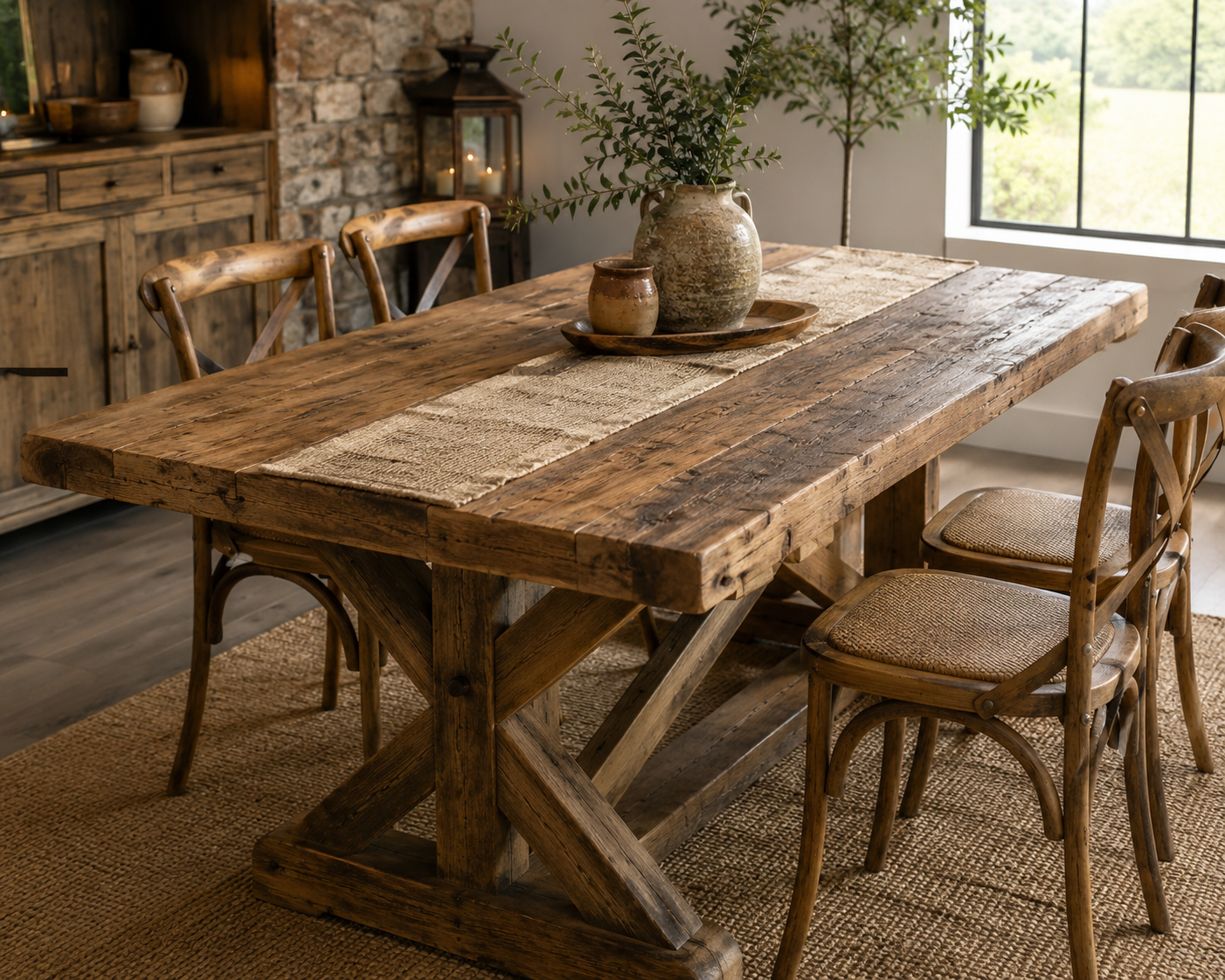
Walk into any home renovation show or scroll through any home decor feed in 2026, and you’ll notice something. Rustic tables keep showing up everywhere. I’ve helped friends pick out dining tables for their own farmhouse-style kitchens over the past few years, and one thing stays true every time. A well-chosen rustic table anchors an entire room. It doesn’t matter if that room sits in a Texas hill country ranch house or a small apartment in Brooklyn.
This guide walks through what actually makes a table “rustic,” why the style keeps growing across the US, and fifteen specific farmhouse table designs worth considering for your own space. We’ll also cover materials, care tips, and how to choose the right size and finish for your home. By the end, you’ll know exactly what to look for before you buy.
What Makes a Table “Rustic”?
Rustic furniture celebrates imperfection. Think visible wood grain, natural knots, and edges that haven’t been sanded into perfect uniformity. A rustic table often uses reclaimed or solid wood. It also tends to feature simple, sturdy joinery instead of ornate carving.
The style traces back to early American farmhouses. Builders back then worked with whatever timber they had on hand. They didn’t chase polish or perfection. That practical, no-frills approach still defines rustic design today, even though modern rustic tables often mix in more refined details like turned legs or metal hardware.
Farmhouse style, meanwhile, overlaps heavily with rustic design but adds a few extra touches. Think white or cream tones, shiplap-inspired bases, and a general cottage-core feel. Many of the designs below blend both styles, since most homeowners want warmth and durability without sacrificing polish entirely.
Why Rustic Tables Are Still Trending Across the US in 2026
Rustic and farmhouse furniture sales have stayed strong across the country this year, and a few clear reasons explain why. First, sustainability matters more to buyers than ever. Reclaimed wood tables reuse timber from old barns, factories, and warehouses. That appeals to homeowners who want character without adding to landfill waste.
Second, remote work changed how Americans use their dining rooms. Many households now treat the kitchen table as a workspace, a homework station, and a dinner spot all in one. A sturdy rustic table handles that kind of daily wear far better than a delicate glass or veneer piece.
Third, regional trends play a role too. Farmhouse style remains especially popular across the Midwest and South, where open-concept kitchens and large dining spaces suit big wooden tables well. Meanwhile, smaller rustic tables and benches have grown popular in urban apartments in cities like Portland, Austin, and Nashville. Homeowners there want the warmth of the style without the bulk.
Materials Worth Considering
Reclaimed wood remains the most popular choice for rustic tables in 2026. Barnwood, in particular, offers deep character thanks to decades of weathering. Pine and oak also show up frequently, since both woods take stain well and hold up under daily use.
Live edge slabs have grown in popularity too. These tables keep the natural, uneven edge of the tree trunk intact. That creates a dramatic, one-of-a-kind centerpiece. Walnut and acacia wood work especially well for this style, since their grain patterns look striking even with minimal finishing.
Metal accents also show up often in newer rustic designs. Hairpin legs, iron trestle bases, and blackened steel frames pair beautifully with rough wood tops. This combination, sometimes called industrial-farmhouse, has become one of the most requested looks among younger homebuyers furnishing their first house.
15 Farmhouse Table Designs & Ideas for Every Home
1. Classic Trestle Table A trestle base uses two solid end supports connected by a horizontal beam instead of four individual legs. This design offers excellent stability and extra legroom, making it ideal for large family gatherings.
2. Reclaimed Barnwood Dining Table Built from salvaged barn planks, this table carries visible nail holes, weathering, and color variation. Every table looks completely unique, which appeals to buyers who want a true statement piece.
3. Live Edge Walnut Table This design keeps the tree’s natural, uneven edge intact along one or both sides. It works beautifully as a centerpiece in open-concept homes with modern-meets-rustic decor.
4. Farmhouse Extension Table Extension tables include a leaf that slides out to add extra seating for holidays and large get-togethers. Many farmhouse versions use a simple turned-leg base with a distressed white or natural wood finish.
5. Whitewashed Pine Table Whitewashing lightens the wood while still letting the grain show through. This design works especially well in coastal or cottage-style homes across states like Maine, the Carolinas, and Florida.
6. Industrial-Farmhouse Table with Iron Legs Pairing a rough wood top with a black iron or steel base creates striking contrast. This design suits lofts, converted warehouses, and modern farmhouse kitchens alike.
7. Round Pedestal Farmhouse Table A round tabletop sits on a single, sturdy pedestal base instead of four legs. This shape works especially well in smaller dining rooms, since it eliminates awkward corner seating.
8. Distressed Oak Harvest Table Harvest tables traditionally seated large groups of farmworkers at mealtime. Today’s versions keep that long, narrow shape while adding a distressed finish for extra character.
9. Farmhouse Table with Bench Seating Swapping chairs for a built-in bench on one or both sides saves space and adds a casual, communal feel. Benches also work well for households with young kids who need extra room to wiggle.
10. Two-Tone Farmhouse Table This design pairs a stained wood top with a painted white or black base. The contrast highlights the wood grain while still fitting neatly into a farmhouse color palette.
11. Reclaimed Wood Console-Style Dining Table Narrow and elongated, this style works well for apartments or narrow dining nooks. It still seats four to six people comfortably despite its slimmer profile.
12. Chunky Farmhouse Table with Turned Legs Thick, hand-turned legs give this design a heftier, more traditional farmhouse look. It pairs especially well with wraparound porches and larger country kitchens.
13. Outdoor Rustic Patio Table Built from weather-resistant woods like teak or cedar, this design brings farmhouse style to decks and patios. It has become especially popular in warmer states like Arizona, California, and Texas, where outdoor dining happens most of the year.
14. Small-Space Rustic Bistro Table Compact and often round or square, this design suits studio apartments and small kitchen nooks. Many versions fold or extend when extra guests show up.
15. Custom Epoxy River Table This modern take on rustic design fills a live-edge wood slab’s natural gap with colored epoxy resin. The result looks part farmhouse, part art piece, and it has exploded in popularity among younger homeowners over the last few years.
How to Choose the Right Rustic Table for Your Home
Start with your space, not the table itself. Measure your dining area first, and leave at least 36 inches of clearance around the table for chairs to pull out comfortably. A table that looks perfect in a showroom can easily overwhelm a smaller room.
Next, think about how your household actually uses the space. Do you host large family dinners a few times a year? An extension table might serve you better than a fixed one. Do you mostly eat quick weekday meals? A smaller bistro or console-style table might fit your daily routine much better.
Finally, consider maintenance realistically. Reclaimed and live edge woods carry beautiful character, but they also require a bit more upkeep than mass-produced veneer furniture. If you have young kids or pets, ask about the finish before you buy, since a well-sealed top resists spills far better than an unfinished one.
Caring for Your Rustic Table
Rustic tables look effortless, but they still need routine care to stay in good shape for years. Dust the surface regularly with a soft, dry cloth, and wipe up spills right away to prevent staining. Avoid placing hot dishes directly on the wood, since heat can cause cracking or discoloration over time.
According to This Old House, wood furniture benefits from a regular inspection routine. Checking for loose joints or worn finishes helps you catch small issues before they turn into bigger repairs. This advice applies just as well indoors as it does outdoors, especially for rustic tables that see daily use.
Reapply wax or oil finishes every six to twelve months, depending on how often you use the table. This keeps the wood protected and helps maintain that rich, weathered look rustic furniture is known for. If you’re building out a full farmhouse look in your home, our guide on farmhouse decor ideas for every room covers additional tips for pairing your table with the right lighting, rugs, and accent pieces.
The Benefits of Choosing a Rustic Table
Rustic tables offer more than good looks. Solid wood construction tends to outlast cheaper, mass-produced furniture by decades. Many families pass these tables down as heirlooms, since the material only grows more characterful with age.
Sustainability plays a role too. Choosing reclaimed wood reduces demand for newly harvested timber, and it gives old materials a meaningful second life instead of ending up in a landfill. For buyers who care about eco-conscious choices, this matters just as much as style.
Finally, rustic tables offer flexibility that trendier furniture often lacks. Because the style draws from timeless, simple design principles, a good rustic table rarely looks dated. It can move with you from a first apartment to a forever home without ever feeling out of place.
Final Thoughts
Choosing a rustic table comes down to balancing style, space, and how your household actually lives day to day. Measure your room, decide how much seating flexibility you need, and pick a wood and finish that matches your maintenance comfort level. Do that, and your table will likely serve as the heart of your home for many years to come, whether that home sits on a ranch in Texas or in a walk-up apartment in Chicago.
Frequently Asked Questions
What wood is best for a rustic farmhouse table? Oak, pine, and reclaimed barnwood remain the most popular choices for rustic farmhouse tables. Oak offers exceptional durability, pine takes stain beautifully, and reclaimed wood adds natural character that new lumber simply can’t replicate.
How do I know what size rustic table fits my dining room? Measure your dining area and leave at least 36 inches of clearance on all sides for chairs to move freely. As a general rule, allow 24 to 28 inches of table length per seated guest.
Is reclaimed wood more expensive than new wood? Reclaimed wood often costs more than standard new lumber because of the labor involved in sourcing, cleaning, and preparing it. However, many buyers consider the unique character and sustainability benefits worth the extra cost.
Can a rustic table work in a modern home? Yes, rustic tables pair well with modern interiors when you balance the rough wood texture with cleaner lines elsewhere in the room. Pairing a rustic table with sleek metal chairs or minimalist lighting creates an appealing modern-farmhouse blend.
How often should I reseal or wax my rustic table? Most rustic tables benefit from a fresh coat of wax or oil every six to twelve months, depending on daily use. Households with children or frequent entertaining may need to reseal more often to protect against spills and scratches.
What’s the difference between rustic and farmhouse table styles? Rustic style focuses on natural imperfections, visible grain, and simple construction. Farmhouse style shares that foundation but often adds lighter paint finishes, turned legs, and a cottage-inspired color palette.
Do rustic tables work well outdoors? Yes, as long as you choose weather-resistant woods like teak, cedar, or acacia. These woods naturally resist rot and moisture damage, making them a solid choice for patios and covered outdoor dining spaces.
Are live edge tables considered rustic? Live edge tables fall firmly within the rustic design category, since they highlight the tree’s natural, unaltered edge instead of hiding it. Many homeowners pair live edge tops with rustic or industrial bases for a cohesive look.