

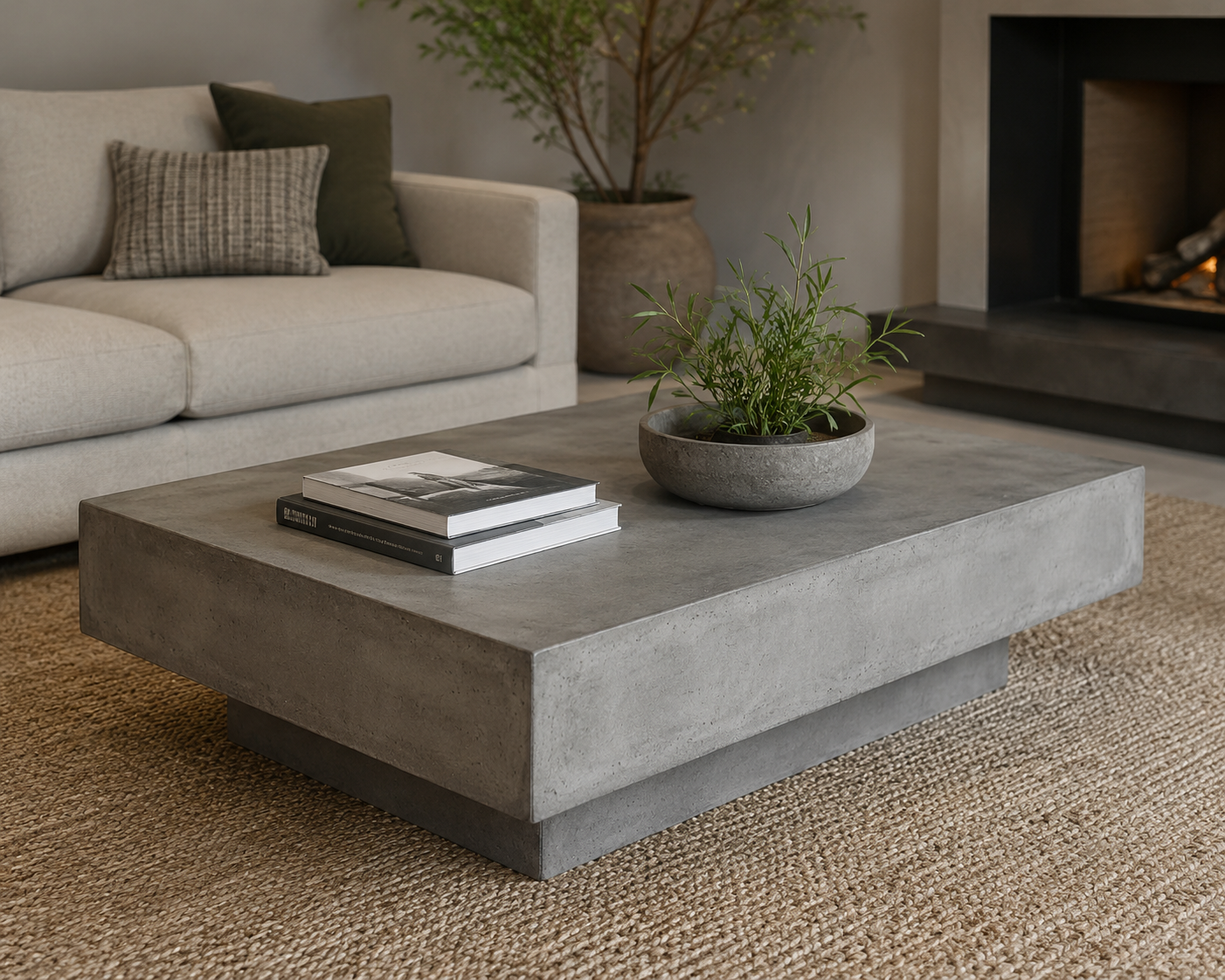
Walk into almost any modern living room today, and you will likely spot one. The concrete coffee table has moved far beyond its warehouse-loft origins. Now, it anchors everything from minimalist apartments to sprawling farmhouse-style living rooms across the country.
However, not all concrete coffee tables are created equal. Some are solid poured slabs. Others use lightweight reinforced concrete over a hollow core. So before you buy one, it helps to understand what you are actually getting. This guide covers design styles, materials, pricing, and the maintenance habits that keep a concrete table looking great for decades.
Why Concrete Coffee Tables Have Taken Over Modern Interiors
Concrete has a strange kind of appeal. It feels heavy, cold, and industrial. Yet somehow, it also looks warm and sculptural in the right setting. That contrast is exactly why designers love it.
A concrete coffee table brings texture into a room without adding visual clutter. Its surface often shows subtle variations, like small air pockets or faint veining. These imperfections give it a handmade, artisanal quality that mass-produced furniture simply cannot match. As a result, no two tables ever look completely identical, even from the same mold.
Beyond aesthetics, durability plays a huge role in the trend. Concrete resists scratches, heat, and daily wear far better than most wood or laminate options. Because of that, it works well in busy households with kids, pets, or frequent entertaining. It also holds up beautifully alongside other trending materials, including reclaimed wood, blackened steel, and natural stone.
Popular Modern Industrial Design Styles
Minimalist Slab Tables
The simplest style is also one of the most popular. A single rectangular or square concrete slab sits on a slim steel base. There is no ornamentation and no unnecessary detail. Instead, the focus stays entirely on the material itself.
This style pairs especially well with mid-century modern furniture. It also works in Scandinavian-inspired spaces that favor clean lines and neutral palettes. Because the design is so simple, it rarely goes out of style, which makes it a safe long-term investment.
Sculptural and Organic Shapes
Not every concrete table sticks to sharp corners. Many designers now favor curved, organic silhouettes instead. Think kidney shapes, rounded ovals, or asymmetrical forms that mimic natural stone.
These tables work particularly well as a statement piece in an otherwise neutral room. Because the shape draws the eye immediately, you can keep everything else in the space fairly simple. This approach has become especially popular in boho-industrial and Japandi-style interiors.
Pedestal and Floating Bases
Some concrete tables use a single central pedestal rather than four legs. This creates a floating, sculptural look that feels lighter than a traditional slab table. It also frees up floor space underneath, which helps in smaller living rooms or apartments.
Pedestal bases often pair concrete with steel or wood, blending the industrial edge of concrete with a warmer, more approachable material. This combination has become a favorite among interior designers working on transitional spaces that mix styles.
Mixed-Material Designs
Full concrete tables are striking, but mixed-material designs offer more versatility. A concrete top paired with a wood base softens the overall look. Meanwhile, a concrete base topped with tempered glass creates a more delicate, contemporary feel.
This approach lets you enjoy the texture and durability of concrete without committing to an all-concrete piece. It also tends to work better in smaller spaces, since the visual weight feels lighter overall.
Understanding Different Concrete Table Materials
Before buying, it helps to know that not all “concrete” tables use the same material. Traditional poured concrete offers the heaviest, most substantial feel. It is also the most likely to develop small hairline cracks over time, though these are typically cosmetic rather than structural.
Glass fiber reinforced concrete, often shortened to GFRC, has become increasingly popular for furniture. This material mixes cement, aggregate, and high-strength glass fibers, which results in a much lighter final product. GFRC pieces are also far less prone to cracking, which makes them a smart choice if you plan to move the table occasionally or place it outdoors.
Knowing which material you are buying matters for both weight and long-term durability. Always ask the retailer or manufacturer directly which type of concrete they use before making a purchase.
Choosing the Right Size and Shape for Your Space
Sizing a coffee table correctly makes a bigger difference than most people expect. As a general guideline, leave at least 18 inches of clearance between the table and surrounding seating. This allows comfortable movement without anyone bumping into sharp concrete edges.
Height matters just as much as footprint. Most coffee tables, including concrete versions, sit between 16 and 18 inches tall. That range typically aligns well with standard sofa height, keeping proportions balanced in the room.
If your space is small, consider a round or oval shape instead of a large rectangular slab. Curved edges reduce the visual bulk of the table and also lower the risk of bumped shins in tight walkways. For larger living rooms, a substantial rectangular or square slab can anchor the space and balance out oversized sofas or sectionals.
Indoor vs. Outdoor Concrete Coffee Tables
Concrete works beautifully both indoors and outdoors, but the two applications require different considerations. Indoor tables generally use lighter sealants and finishes, since they do not face direct rain, sun, or freezing temperatures.
Outdoor concrete coffee tables need a more robust build. Plan on reapplying a penetrating sealer every two to three years, depending on your local climate, to keep the surface protected from sun, rain, and temperature swings. If you live somewhere with harsh winters, look for GFRC construction specifically, since it holds up better against freeze-thaw cycles than traditional poured concrete.
Demand for outdoor concrete furniture has grown substantially across the country. This growth ties directly into the broader boom in patio and backyard living spaces. Urban gardens and compact patios have especially embraced concrete, since it delivers long-lasting style without much upkeep. If you live in an apartment with a balcony, this trend applies just as much to you as it does to homeowners with larger yards.
How Much Should You Expect to Pay
Pricing varies quite a bit depending on size, material, and craftsmanship. Smaller mixed-material tables, such as a concrete base paired with glass or wood, often start around $300 to $600. Mid-range GFRC tables from established furniture brands typically run between $600 and $1,200.
Custom or artisan-made poured concrete tables sit at the higher end, frequently ranging from $1,200 to $3,000 or more, depending on size and detail. Weight also factors into shipping costs, since a solid concrete slab can weigh well over 200 pounds. Always confirm delivery and assembly options before purchasing, especially for larger pieces.
Caring for Your Concrete Coffee Table
Concrete has a reputation for being indestructible, but it still needs a little care. Fortunately, that care is fairly simple. Regular cleaning only requires mild soap and a soft cloth, so there is no need for harsh chemicals or abrasive scrubbers.
According to the Concrete Network, a leading industry resource on concrete design and fabrication, a properly sealed concrete coffee table becomes practically waterproof and stays easy to wipe clean with mild soap and water, much like sealed concrete countertops. That said, acidic substances like wine or citrus can still cause staining if left sitting for extended periods. Wiping up spills promptly goes a long way toward preventing this.
Sealant maintenance matters just as much as daily cleaning. Most manufacturers recommend resealing every one to three years, depending on how often the table gets used. A fresh seal restores stain resistance and keeps the surface looking polished. Using coasters for drinks and trivets for hot items also extends the life of the sealant significantly.
Hairline cracks sometimes appear as concrete ages, particularly in solid poured pieces. In most cases, these cracks are purely cosmetic and do not affect the table’s structural integrity. Some homeowners even feel that these small imperfections add character, since they reflect the handmade nature of the piece.
Styling Tips to Complete the Look
A concrete coffee table works as either a quiet neutral piece or a bold focal point, depending on how you style the room around it. For a softer, more balanced look, pair it with warm textiles like a chunky knit throw or a natural fiber rug. This keeps the industrial edge from feeling too cold or sterile.
If you want the concrete to stand out as a statement piece, surround it with simpler furniture in neutral tones. Let the texture and shape of the table do the visual work. Adding a stack of books, a ceramic vase, or a small tray on top also softens the hard edges and makes the space feel lived in rather than staged.
For homeowners working on a full room refresh, our guide to industrial living room design covers additional furniture pairings that complement concrete pieces particularly well.
Common Buying Mistakes to Avoid
Many first-time buyers underestimate weight and delivery logistics. A solid concrete slab table can weigh several hundred pounds, so confirm delivery details, including whether the company offers white-glove or curbside service, before finalizing your purchase.
Another common mistake involves skipping questions about sealant type. Since sealants directly affect stain resistance and maintenance frequency, always ask the manufacturer which sealant they use and how often it needs reapplication. Finally, avoid choosing a table size based on looks alone. Measure your space first, then shop, rather than falling in love with a floor sample that turns out to be the wrong scale for your room.
Final Thoughts on Choosing the Right Table
A concrete coffee table offers a rare combination of durability, texture, and design flexibility. Whether you lean toward a minimalist slab, a sculptural organic shape, or a mixed-material piece, concrete adapts to nearly any interior style. With the right sealant care and a bit of planning around size and placement, this kind of table can genuinely last for decades.
Before you buy, take the time to measure your space, understand the material you are getting, and ask directly about sealing and maintenance requirements. That small bit of homework pays off in a piece of furniture that looks better with age rather than worse.
Frequently Asked Questions
Do concrete coffee tables crack easily? Not typically. Hairline cracks can appear over time, especially in solid poured concrete, but these are usually cosmetic rather than structural. If cracking is a major concern, GFRC construction offers significantly better crack resistance.
Are concrete coffee tables heavy? Yes, most weigh considerably more than wood or glass alternatives. Solid poured slabs can weigh well over 200 pounds, while GFRC versions tend to be noticeably lighter due to their reinforced, hollow-core construction.
Can a concrete coffee table be used outdoors? Yes, concrete works well outdoors, though it benefits from a more durable sealant and periodic resealing. In colder climates, GFRC construction holds up better against freeze-thaw cycles than traditional poured concrete.
How often should I reseal a concrete coffee table? Most manufacturers recommend resealing every one to three years, depending on usage and climate. Outdoor tables generally need more frequent resealing than indoor pieces.
What is the difference between GFRC and traditional concrete tables? GFRC, or glass fiber reinforced concrete, is lighter and more crack-resistant than traditional poured concrete. Traditional concrete offers a heavier, more substantial feel but carries a slightly higher risk of hairline cracking over time.
Will a concrete coffee table stain easily? Not if properly sealed. Acidic substances like wine or citrus can cause staining if left sitting for a long time, so wiping up spills quickly helps preserve the surface and sealant.
What size coffee table works best for a small living room? Round or oval concrete tables generally work better in smaller spaces, since curved edges reduce visual bulk. Leave at least 18 inches of clearance between the table and surrounding seating for comfortable movement.
How much does a concrete coffee table typically cost? Prices generally range from around $300 for smaller mixed-material designs to $3,000 or more for large, custom, artisan-made pieces. Mid-range GFRC tables from established brands usually fall between $600 and $1,200.