

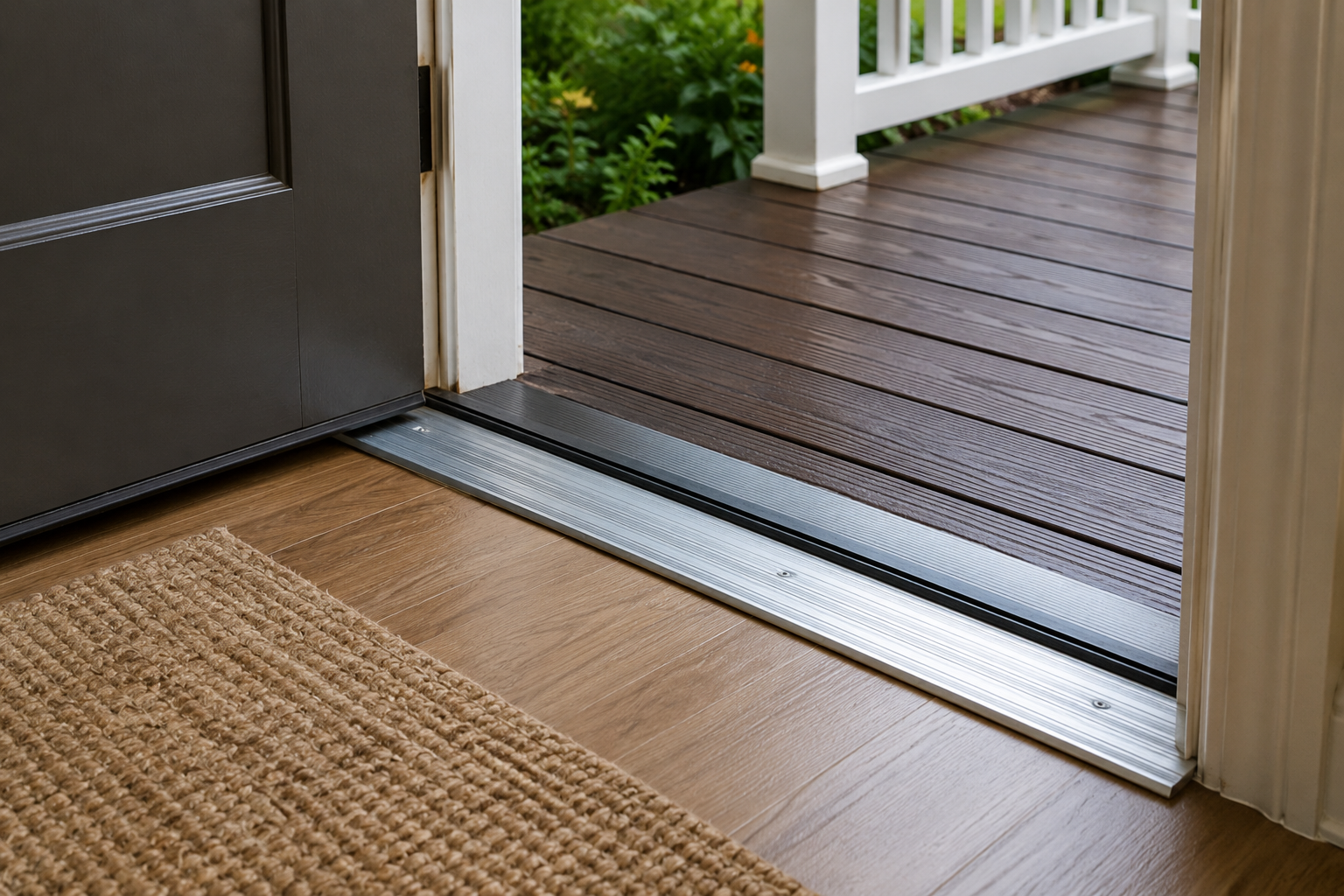
Most homeowners never think about their door threshold until it starts leaking cold air or catching on the carpet. Then suddenly it becomes the most annoying part of the house. The good news is that thresholds are one of the simplest and most affordable upgrades you can make in 2026, whether you are replacing a drafty exterior door or finishing a new build.
This guide breaks down every threshold type on the market, how to measure for a proper fit, and what current codes require. You will also get practical installation tips and answers to the questions homeowners ask most often. By the end, you will know exactly which threshold fits your door and your climate.
What Is a Door Threshold and Why It Matters
A door threshold is the strip that sits at the bottom of a door frame, right where the door meets the floor. It bridges the gap between your flooring and the door slab. Beyond looks, it does three important jobs.
First, it seals out drafts, rain, and dust. Second, it protects your subfloor and flooring edge from moisture and wear. Third, it creates a smooth, safe transition for foot traffic, strollers, and mobility devices. A worn or poorly fitted threshold can undo the energy efficiency of an otherwise well-sealed door, so it deserves more attention than most people give it.
Types of Door Thresholds
Not every threshold works for every door. Here are the main types you will run into while shopping in 2026.
Saddle thresholds. These sit flush or slightly raised and typically run under interior doors or lower-traffic exterior doors. They are simple, inexpensive, and easy to install.
Bumper thresholds. Exterior doors use these most often. A bumper threshold includes a raised vinyl or rubber seal that the door sweep presses against when closed, which blocks wind and water far better than a flat saddle.
Adjustable thresholds. These let you raise or lower the seal height with a screwdriver. They work well when a door has settled over time or when the gap under the door has grown uneven.
ADA-compliant thresholds. Public buildings and many residential remodels now require these low-profile, beveled thresholds to accommodate wheelchairs and walkers. We cover the exact height limits in the code section below.
Thermal-break thresholds. Cold-climate homes benefit from these two-part designs, which separate the interior and exterior metal with an insulating strip. That barrier stops heat from transferring straight through the metal and cutting your energy savings.
Panic and fire-rated thresholds. Commercial and multifamily buildings often need these at exit doors. They meet specific fire codes and usually pair with panic hardware.
Interior vs. exterior thresholds. Interior thresholds mainly manage small height differences between rooms, like tile transitioning into hardwood. Exterior thresholds carry a heavier workload, since they need to block weather, support door sweeps, and hold up to constant foot traffic. Keep this distinction in mind while shopping, since a threshold rated for interior use will not perform well at a front or back entry.
Threshold Materials Compared
Material choice affects durability, price, and how well the threshold holds up in your local climate.
Aluminum. This is the most common choice for exterior doors. It resists rot, handles moisture well, and costs less than most alternatives. However, plain aluminum can feel cold underfoot and may corrode near salt air.
Wood. Interior doors pair naturally with wood thresholds because they match trim and flooring. Wood does not hold up well against constant moisture, though, so it works best away from exterior entries.
Vinyl and composite. These resist moisture and temperature swings better than wood, and they typically cost less than solid brass or bronze. Many builders now default to composite for both interior and exterior use.
Bronze and brass. These premium metals last for decades and develop an attractive patina over time. The tradeoff is cost, since they run considerably higher than aluminum or vinyl.
Marble and stone. High-end builds often use marble thresholds for a polished look between tile floors. They need careful, precise installation, since even a slight height mismatch can create a trip hazard.
When you compare materials, think beyond the sticker price. Aluminum and composite thresholds usually offer the lowest long-term cost, since they resist warping and rarely need replacement within a decade. Wood and marble look better in certain design schemes, but they demand more maintenance and, in wood’s case, occasional resealing to prevent water damage. If your entry door sits under a covered porch, you have more flexibility to choose based on looks rather than pure weather resistance.
How to Measure and Size a Door Threshold Correctly
Getting the measurements right prevents drafts, gaps, and returns trips to the hardware store. Follow these steps before you buy.
- Measure the width of your door opening, not the door slab itself, from jamb to jamb.
- Measure the depth, meaning the distance from the interior face of the frame to the exterior face.
- Check the height of the existing threshold, or measure the gap under the door if you are installing one for the first time.
- Note whether your door swings in or out, since this affects which threshold profile will clear the door sweep properly.
- If you are unsure about code minimums, check your local building department before finalizing a size, especially for exterior doors and accessible routes.
Standard exterior door openings usually run 36 inches wide, but older homes and custom doors can vary. Always measure your specific opening rather than assuming a standard size will fit.
It also helps to measure twice, on different days if possible, especially in older homes. Wood floors and door frames shift slightly with humidity and temperature, so a measurement taken in a dry summer week can differ from one taken during a humid spring. Building in a small margin for trimming gives you room to adjust on installation day without an extra trip to the store.
ADA and Building Code Requirements for Thresholds in 2026
Threshold height rules exist to prevent tripping hazards and to keep entries accessible. These standards matter most for commercial buildings, but many residential remodels now follow them too, especially for aging-in-place projects.
Under current ADA standards, thresholds at accessible doorways cannot exceed one-half inch in height for new construction. Existing buildings get a bit more flexibility, allowing up to three-quarters of an inch, but only with a beveled edge on each side. Any threshold taller than one-quarter inch needs that bevel, sloped no steeper than 1:2, so wheels and feet can transition smoothly instead of catching an edge.
These figures come from the U.S. Access Board’s ADA standards, and you can find the full technical breakdown through the ADA National Network’s accessibility fact sheet. If your project includes any public-facing entrance, confirm these numbers with your local building department, since some jurisdictions layer additional requirements on top of the federal baseline.
Residential exterior doors are not legally bound by ADA rules in most cases, but builders increasingly install low-profile or beveled thresholds anyway. They cost little extra, and they make homes safer for aging family members and guests using mobility aids.
What Door Thresholds Cost in 2026
Threshold prices vary quite a bit depending on material, width, and finish. Basic aluminum saddle thresholds typically run between 15 and 40 dollars for a standard 36-inch door. Bumper-style thresholds with a vinyl seal cost a bit more, usually landing between 30 and 70 dollars.
Adjustable aluminum thresholds with a thermal break sit higher, often between 50 and 120 dollars, depending on brand and width. Composite and vinyl options tend to fall in a similar range, while solid bronze or brass thresholds can climb past 150 dollars for a quality piece.
Installation costs add to the total if you hire a professional instead of doing it yourself. Many contractors charge between 75 and 200 dollars for labor on a straightforward swap, though pricing climbs if they need to repair subfloor damage or reframe the opening. Given how affordable materials are, this remains one of the best return-on-investment upgrades available for entry doors.
Step-by-Step: Installing a New Door Threshold
Replacing a threshold is a manageable weekend project for most homeowners. Here is the general process.
First, remove the old threshold. Most are held in place with screws hidden under the weatherstripping or bumper seal. Pry gently to avoid damaging the surrounding flooring or door jamb.
Next, clean the subfloor area and check for water damage or rot. If you find soft or discolored wood, replace it before installing the new threshold, since sealing over damage only hides the problem.
Then, dry-fit the new threshold before applying any sealant. Trim it to length if needed, using a hacksaw for metal or a standard saw for wood and composite pieces.
After that, apply a bead of exterior-grade sealant along the underside and edges to block moisture. Set the threshold in place and secure it with the provided screws, checking that it sits level across the full width.
Finally, test the door. Close it fully and check for gaps, binding, or excessive resistance against the bumper seal. Adjust screw-in threshold sections as needed until the door swings smoothly and seals tightly.
Common Threshold Problems and How to Fix Them
Even a well-installed threshold wears down eventually. Here are the issues homeowners run into most.
Drafts and air leaks. Worn weatherstripping is usually the culprit, not the threshold itself. Replace the door sweep or bumper seal first, since this fix costs far less than a full threshold replacement.
Water pooling or leaking indoors. This often points to a threshold pitched the wrong direction, or a missing drip cap above the door. Check the exterior slope and confirm water drains away from the house rather than toward it.
Squeaking or shifting underfoot. Loose screws or a settling subfloor typically cause this. Tightening the mounting screws solves it in most cases, though a rotted subfloor will need repair first.
Door dragging on the threshold. This usually means the threshold sits too high, the door has dropped on its hinges, or humidity has swollen the door slab. Adjustable thresholds make this an easy fix, since you can lower the seal height without removing anything.
Local Climate Considerations Across the US
Where you live changes which threshold makes the most sense. In cold-weather regions like the Midwest and Northeast, thermal-break thresholds help prevent the frozen, drafty feeling that plain aluminum can create in January and in coastal areas along the Gulf Coast and Atlantic seaboard, corrosion-resistant materials matter more, since salt air degrades untreated metal quickly.
In hot, humid climates across the Southeast, moisture resistance takes priority, and composite or vinyl thresholds tend to outlast wood by years. Meanwhile, in the arid Southwest, UV resistance becomes more important, since intense sun exposure can fade or crack lower-quality vinyl over time.
If your home sits in a wildfire-prone region, ask your supplier about fire-rated threshold options as well, particularly for exterior doors facing prevailing wind directions. For a deeper look at sealing your entryway against the elements, check out our guide to exterior door weatherstripping, which pairs naturally with any threshold upgrade.
Final Thoughts on Choosing the Right Threshold
A door threshold looks small, but it plays a big role in comfort, safety, and energy efficiency. Match the material to your climate, size it carefully, and follow current code requirements if your project involves an accessible or public-facing entrance. With the right threshold in place, you will notice fewer drafts, less water damage, and a smoother transition every time the door opens.
Frequently Asked Questions
What is the standard height for a door threshold? Most residential thresholds run between one-half inch and one inch tall. Accessible routes under current ADA standards cap new construction at one-half inch, with a maximum of three-quarters of an inch allowed in existing buildings when a beveled edge is present.
What is the difference between a saddle threshold and a bumper threshold? A saddle threshold sits flush with a simple, low profile and works well for interior doors. A bumper threshold includes a raised seal that the door presses against when closed, which gives exterior doors much better protection against wind and water.
Can I install a door threshold myself? Yes, most homeowners can replace a threshold in an afternoon with basic tools. The project gets more involved if you find subfloor damage underneath, since that repair should happen before the new threshold goes in.
How do I stop drafts under my exterior door? Check the weatherstripping and door sweep first, since these wear out faster than the threshold itself. If the threshold has an adjustable seal, raise it slightly until the door seals tightly without dragging.
What material lasts the longest for an exterior door threshold? Bronze and aluminum both hold up well over decades, though bronze costs significantly more. For most budgets, a quality aluminum threshold with a thermal break offers the best balance of durability and energy performance.
Do I need an ADA-compliant threshold in my home? Standard residential doors are not legally required to meet ADA specifications. However, many homeowners choose low-profile, beveled thresholds anyway, especially for aging-in-place remodels or homes with wheelchair or walker access.
Why is my door dragging on the threshold? This usually happens when the threshold sits too high, the door has sagged on its hinges, or humidity has caused the door slab to swell. An adjustable threshold lets you lower the seal height without a full replacement.
How often should a door threshold be replaced? A quality threshold can last fifteen to twenty-five years depending on material and exposure. Replace it sooner if you notice persistent leaks, visible rot, or a seal that no longer adjusts to close the gap.
Do door thresholds help with energy efficiency? Yes, a well-sealed threshold can meaningfully cut drafts and lower heating and cooling costs. Thermal-break aluminum thresholds perform best in this regard, since they stop cold or hot air from transferring directly through the metal into your home.
[…] away from vulnerable areas. If you’re replacing exterior doors as part of the project, our door threshold guide covers matching sizing and weatherproofing at those […]
[…] into the gap over time. If you’re tackling other transition trim in the same project, our door threshold guide covers a similar type of edge transition at […]