

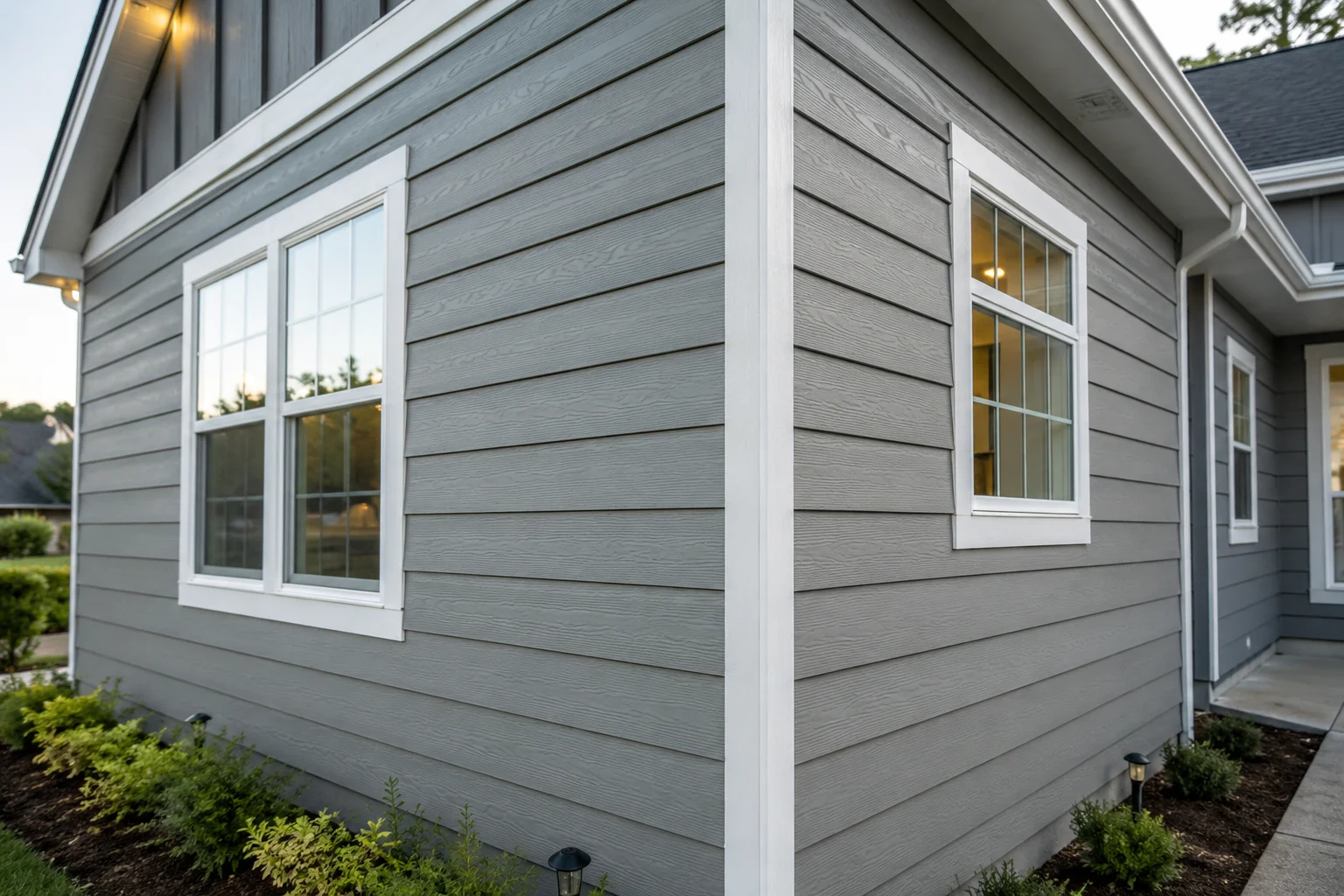
Are you weighing your options for a siding replacement this year? If so, you’ve probably come across Hardie Plank siding more than once. It’s one of the most requested exterior upgrades among U.S. homeowners right now, and for good reason. It combines the classic look of wood clapboard with the durability of fiber cement.
I’ve spent time researching current pricing, talking through specs with siding contractors, and comparing real project quotes from across the country. In this guide, I’ll walk you through what Hardie Plank actually costs in 2026, what benefits it offers over other siding materials, and what the installation process really involves. By the end, you’ll know whether it’s the right investment for your home.
What Is Hardie Plank Siding?
James Hardie manufactures Hardie Plank siding, and it’s the most popular fiber cement siding brand in North America. Essentially, it’s made from a blend of cement, sand, and cellulose fibers, which are pressed into long, wood-look planks and cured. As a result, it mimics the appearance of traditional wood clapboard, but it resists the problems that make wood siding difficult to maintain.
Unlike vinyl, Hardie Plank doesn’t warp, melt, or fade quickly in direct sun. Unlike wood, it doesn’t rot, attract termites, or need repainting every few years. That combination is exactly why it’s become the go-to siding choice for homeowners who want long-term durability without constant upkeep.
How Much Does Hardie Plank Siding Cost in 2026?
Cost is usually the first question homeowners ask, so let’s start there. Nationally, James Hardie fiber cement siding costs $6.50 to $14.00 per square foot installed in 2026. For context, that means a typical 2,000-square-foot home falls somewhere between $13,000 and $28,000 total, though the exact number depends heavily on your location, home design, and the siding profile you choose.
Several other cost surveys back up similar figures. According to Angi, homeowners pay between $7 and $18 per square foot for Hardie board siding, with an average price of $12.50 per square foot. Meanwhile, Hardie board siding costs an average of $21,300 nationally. And homeowners typically pay closer to $15,000 to install lap siding on a 1,000-square-foot home.
Your specific price also depends heavily on where you live. For instance, Hardie board siding tends to cost more in states with a higher cost of living, such as California, where average projects run around $30,900, and New York, at roughly $26,300. On the other hand, it’s more affordable in lower-cost states like Georgia, around $19,500, and Texas, around $19,800.
Cost by Siding Style
Not all Hardie Plank profiles cost the same. Generally speaking, shingle-style and clapboard-style Hardie board siding costs between $5 and $14 per square foot to install, while board and batten siding runs between $6 and $18 per square foot. So, if you’re working with a tight budget, classic lap siding usually offers the most value per square foot.
Hardie Plank vs. Vinyl Siding Cost
Naturally, homeowners often compare Hardie Plank against vinyl, since vinyl remains the cheaper upfront option. Specifically, Hardie costs 2-3 times more than vinyl, running $7 to $12 per square foot installed compared to vinyl’s $4 to $7. However, that gap tends to shrink over time. That’s because Hardie offers superior durability of 50-plus years compared to vinyl’s 20-30 years, along with better fire resistance, higher resale value, and a more authentic wood appearance. In coastal regions especially, Hardie also resists salt air damage better than vinyl does.
Key Benefits of Hardie Plank Siding
So, why do so many homeowners choose Hardie Plank over other materials? Here’s what stands out:
- Exceptional durability. Properly installed Hardie board siding lasts 50 years or more, which means most homeowners only need to side their home once during their time of ownership.
- Strong manufacturer warranty. James Hardie backs its product with a 30-year limited transferable warranty, plus 15 years of coverage on the ColorPlus finish.
- Fire resistance. Fiber cement doesn’t burn like wood or melt like vinyl, which matters increasingly for homeowners in wildfire-prone regions of the western U.S.
- Pest and moisture resistance. Because it contains no organic wood fiber for pests to feed on, it holds up against termites and rot far better than traditional wood siding.
- Low maintenance. Beyond occasional cleaning, Hardie Plank doesn’t require the frequent repainting or resealing that wood siding demands.
- Strong resale value. Real estate data consistently shows fiber cement siding recoups a large share of its cost at resale, often more than vinyl alternatives.
- Authentic wood-look aesthetic. Unlike vinyl, which can look plasticky up close, Hardie Plank’s textured finish closely resembles real cedar clapboard.
Hardie Plank Siding Styles and Finishes
James Hardie offers several profiles, and choosing the right one affects both cost and curb appeal:
- HardiePlank Lap Siding — the classic horizontal clapboard look, and the most popular and budget-friendly option
- HardiePlank Beaded Cedarmill — features a beaded edge with wood-grain texture for a more traditional appearance
- HardieShingle — mimics cedar shake shingles, available in staggered or straight-edge patterns
- HardiePanel — large vertical panels for a modern farmhouse or contemporary look
You’ll also choose between primed and ColorPlus finishes. Primed boards cost less upfront but require on-site painting, adding roughly $1 to $3 per square foot. ColorPlus, on the other hand, comes factory-finished with baked-on paint that resists fading for around 15 years. It costs more per plank, but it eliminates painting labor entirely, which many homeowners find worth the premium.
What Affects the Total Installation Cost?
Several factors move your final price up or down. Understanding them ahead of time helps you budget realistically and compare contractor quotes accurately.
- Home size and design. Larger homes obviously require more material and labor, but complex rooflines, multiple stories, and architectural details also add cost.
- Removal of old siding. If your home already has siding, tearing it off typically adds $1 to $4 or more per square foot before installation even begins.
- Siding profile and thickness. Wider boards or textured cedar-style profiles generally add 8 to 12 percent over standard smooth lap boards.
- Finish type. ColorPlus factory finishes cost more upfront but save on future repainting.
- Regional labor rates and material availability. Material pricing can shift month to month due to transportation costs and regional supply, particularly in coastal states.
- House wrap and moisture barriers. Proper installation always includes a weather-resistant barrier, which adds to material costs but protects your investment long term.
The Installation Process, Step by Step
Curious what to actually expect once you hire a contractor? Here’s how a typical Hardie Plank installation unfolds.
Step 1: Inspection and removal of old siding. The crew removes your existing siding and inspects the sheathing underneath for rot or damage that needs repair first.
Step 2: House wrap installation. A weather-resistant barrier goes up next, which protects your home from moisture infiltration behind the new siding.
Step 3: Trim and flashing installation. Contractors install trim boards and flashing around windows, doors, and corners to direct water away from vulnerable areas.
Step 4: Plank installation. Crews install the Hardie Plank boards horizontally (or vertically, for panel styles), working from the bottom of the wall upward with proper overlap and fastening.
Step 5: Caulking and sealing. All seams, joints, and trim edges get sealed to prevent water intrusion.
Step 6: Painting, if needed. Primed boards require a final paint job at this stage; ColorPlus boards skip this step entirely.
Timeline-wise, a typical 2,000-square-foot home takes 7 to 14 days for a professional crew to complete, though complex designs and weather delays can extend that window. Quality installers won’t rush this process, since proper moisture control and precise fitting matter far more than speed.
Maintenance and Repair Costs
One of Hardie Plank’s biggest selling points is how little maintenance it demands compared to wood. Still, a few things are worth budgeting for over the life of your siding:
- Repainting (for primed boards): Expect to repaint every 10 to 15 years, which typically costs $3,000 to $10,000 for an average home.
- Individual plank repairs: If a board gets damaged, replacing individual sections averages $150 to $300 per section.
- Routine cleaning: A simple annual rinse with a garden hose or gentle pressure wash keeps the surface looking fresh and prevents dirt buildup.
- Caulk inspection: Check seams and joints every couple of years, since caulking naturally degrades over time and needs occasional touch-ups.
Regional Considerations for U.S. Homeowners
Climate plays a real role in how well different siding materials perform, and it’s worth factoring into your decision. In hot, humid regions like the Southeast, Hardie Plank’s moisture and pest resistance offers a real advantage over wood siding, which struggles with rot in that climate. In coastal areas along the Gulf Coast and Atlantic seaboard, its resistance to salt air damage makes it a popular choice for homes exposed to ocean spray.
Meanwhile, in wildfire-prone areas of California and the broader West Coast, Hardie Plank’s Class A fire rating has become an increasingly important selling point. And some insurance providers even offer reduced premiums for homes with fire-resistant siding. In colder northern states, its resistance to cracking and warping under freeze-thaw cycles also outperforms vinyl, which can become brittle in extreme cold.
Is Hardie Plank Siding Worth the Investment?
So, does the higher upfront cost actually pay off? For most homeowners planning to stay in their home long term, the answer is generally yes. Because Hardie Plank lasts significantly longer than vinyl and requires far less maintenance than wood, the total cost of ownership often evens out or even comes out ahead over a 20 to 30 year window.
That said, if you’re planning to sell within the next few years and need the absolute lowest upfront cost, vinyl might make more financial sense for your specific timeline. It really comes down to how long you plan to own the home. And how much you value long-term durability over initial savings.
If you’re also considering other exterior upgrades alongside your siding project, check out our complete guide to choosing the right roofing material for your climate for tips on pairing your siding choice with a roof that performs well in your region.
For official product specifications, warranty details, and to find a certified installer near you, the James Hardie manufacturer website offers a helpful directory and up-to-date product documentation.
Frequently Asked Questions
How much does Hardie Plank siding cost per square foot? Generally, Hardie Plank siding costs between $6.50 and $18 per square foot installed, depending on your location, the siding profile you choose, and local labor rates. Most homeowners land somewhere around $12.50 per square foot on average.
How long does Hardie Plank siding last? When installed properly and maintained over time, Hardie Plank siding typically lasts 50 years or more. James Hardie also backs its products with a 30-year limited transferable warranty, plus 15 years of coverage on factory-applied ColorPlus finishes.
Is Hardie Plank siding better than vinyl siding? It depends on your priorities. Hardie Plank costs more upfront, roughly 2-3 times the price of vinyl, but it lasts significantly longer, resists fire and pests better, and typically offers stronger resale value. Vinyl remains the more budget-friendly option if minimizing upfront cost matters most.
Does Hardie Plank siding need to be painted? It depends on the finish you choose. Primed boards require on-site painting after installation and repainting every 10 to 15 years after that. ColorPlus boards, on the other hand, come factory-finished with baked-on paint that resists fading for around 15 years, which eliminates the need for immediate painting.
How long does Hardie Plank installation take? For a typical 2,000-square-foot home, professional installation usually takes 7 to 14 days. Complex home designs, multiple stories, or weather delays can extend that timeline, so it’s worth building some flexibility into your project schedule.
Is Hardie Plank siding fire resistant? Yes. Because it’s made primarily from cement, sand, and cellulose fibers rather than combustible wood, Hardie Plank carries a Class A fire rating. This makes it a popular choice in wildfire-prone regions, and some insurers even offer discounted premiums for homes with fire-resistant siding.
How much does it cost to repair Hardie Plank siding? Individual plank replacement typically costs between $150 and $300 per section, which makes minor repairs relatively affordable compared to full siding replacement. Larger repairs or storm damage repairs will naturally cost more depending on the extent of the work needed.
Does Hardie Plank siding increase home value? Generally, yes. Fiber cement siding consistently ranks among the exterior upgrades that recoup a strong percentage of their cost at resale, often outperforming vinyl siding in buyer perception and appraised value, particularly in markets where buyers prioritize low-maintenance, durable exteriors.