

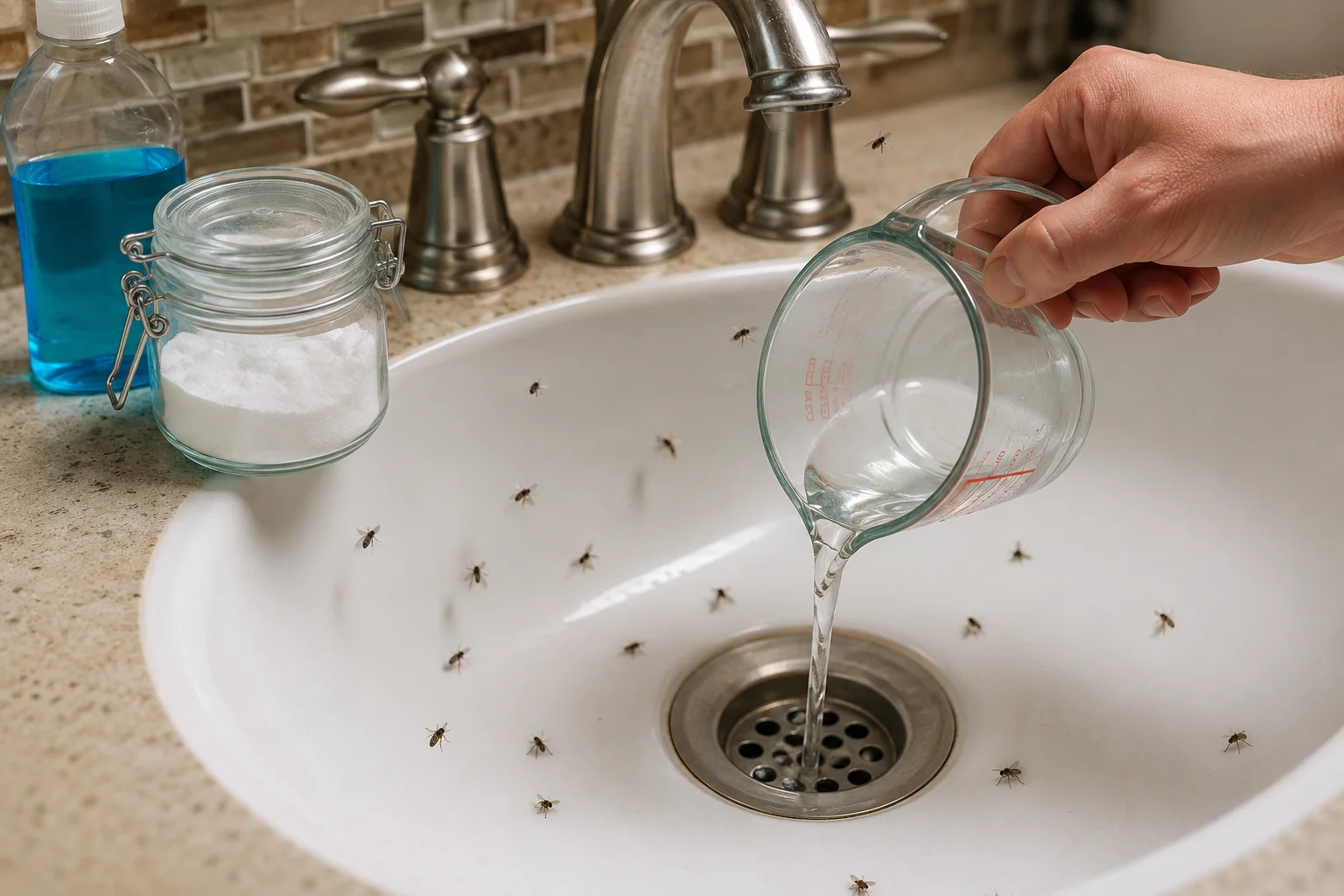
If you’ve noticed small, fuzzy, moth-like insects hovering around your bathroom or kitchen sink, you’re likely dealing with drain flies. They’re one of the most common household pests in the United States. However, they’re also one of the most misunderstood.
Many homeowners assume drain flies come from outside. In reality, they almost always breed right inside your plumbing. Because of this, most store-bought sprays only offer temporary relief. To actually get rid of them, you need to target the source, not just the adult flies buzzing around your sink.
In this guide, we’ll walk through seven proven methods for eliminating drain flies. We’ll also cover why they show up in the first place, and how to keep them from coming back.
What Are Drain Flies, Exactly?
Drain flies, also called moth flies or filter flies, are small dark insects with fuzzy, moth-like wings. They’re typically about an eighth of an inch long. Because of their hairy wings, people often mistake them for tiny moths at first glance.
Unlike fruit flies, drain flies don’t feed on fruit. Instead, they breed in the gelatinous slime that builds up inside drain pipes. This slime, sometimes called biofilm, forms from soap scum, hair, grease, and other organic debris. As a result, even a clean-looking home can still have a serious drain fly problem hiding beneath the surface.
Female drain flies lay their eggs directly on this slime layer. In fact, an entire life cycle, from egg to adult, can take as little as one to two weeks. That’s part of why infestations seem to appear so suddenly. One day you see nothing, and within a week, you’re swatting flies off your bathroom mirror.
Why Drain Flies Show Up in Your Home
Before jumping into solutions, it helps to understand what draws these pests in the first place. Drain flies typically show up because of:
- Slow-moving or rarely used drains
- Buildup of soap scum, hair, and grease in pipes
- Leaky pipes creating constant moisture
- Clogged or damaged sewer lines
- Standing water near air conditioning units or condensate lines
- Cracked or aging plumbing in older homes
Because these flies are weak fliers, an infestation almost always points to a breeding site somewhere close by. That said, pinpointing the exact drain can take a little detective work, which we’ll cover in the next section.
How to Find the Source Before You Treat It
Here’s something most people get wrong: they treat every drain in the house without confirming where the flies are actually breeding. This wastes time and product. Instead, try this simple test.
Place a strip of clear tape, sticky side down, over a suspected drain. Leave a small gap for airflow. Check it after 24 hours. If drain flies are breeding there, you’ll typically find several stuck to the tape by the next day. Repeat this across your bathroom, kitchen, and basement drains until you identify the active source.
This step matters because treating the wrong drain won’t solve anything. Once you’ve confirmed the breeding site, you can move on to actual treatment.
7 Proven Methods to Get Rid of Drain Flies
1. Scrub the Drain With a Stiff Brush
This is, by far, the most effective method available. Pouring chemicals down a drain rarely reaches the slime coating the pipe walls. A stiff bottle brush, however, physically removes it.
Start by removing the drain cover. Then scrub the inside walls of the pipe as far down as you can reach. Afterward, rinse thoroughly with hot water. This single step eliminates the food source drain fly larvae depend on, which makes it far more effective than surface-level treatments.
2. Flush With Boiling Water
Boiling water helps loosen grease and organic buildup that a brush can’t fully reach. Pour it slowly and directly down the drain, giving it time to work through the pipe.
That said, this method works best as a follow-up to brushing, not a replacement for it. On its own, boiling water often just knocks back the adult population temporarily. Combined with mechanical scrubbing, though, it becomes significantly more effective. Avoid this method on older plastic piping, since extreme heat can occasionally cause warping.
3. Use a Baking Soda and Vinegar Treatment
This natural combination helps break down residue while also deodorizing the pipe. Pour about half a cup of baking soda down the drain, followed by a cup of white vinegar. Let it fizz and sit for 15 to 20 minutes before rinsing with hot water.
Although this method won’t fully replace physical scrubbing, it works well as a weekly maintenance step once the initial infestation is under control.
4. Try an Enzyme-Based Drain Cleaner
Enzyme cleaners use biological agents to digest organic buildup inside pipes. Unlike bleach or harsh chemicals, they specifically target the type of slime drain flies feed on. Most versions need to be applied consistently over several nights to fully break down the biofilm layer.
Because enzyme treatments work gradually, they’re best used alongside brushing rather than as a single fix. Many pest professionals recommend nightly applications for two to three weeks for persistent infestations.
5. Set Apple Cider Vinegar Traps
While this method won’t eliminate breeding sites, it’s excellent for reducing the adult population quickly. Fill a small bowl with apple cider vinegar and add a drop of dish soap. The soap breaks the surface tension, causing flies to sink once they land.
Place these traps near affected drains overnight. Many homeowners notice a significant drop in visible flies within just a day or two, though this only addresses adults, not the larvae still developing in the pipe.
6. Check for Hidden Moisture Sources
Sometimes the real issue isn’t inside the drain at all. Leaky pipes under sinks, clogged air conditioning condensate lines, or damp crawl spaces can all become secondary breeding sites. Because of this, it’s worth inspecting these areas if drain treatments alone don’t solve the problem.
Fixing the underlying moisture issue is often the difference between a temporary fix and a permanent one.
7. Call a Professional for Persistent Infestations
If flies keep returning despite thorough cleaning, the breeding site may be somewhere harder to reach, such as a cracked pipe beneath a slab or a compromised sewer line. In these cases, a licensed plumber or pest control professional can inspect the plumbing system more thoroughly.
This step isn’t always necessary, but it’s worth considering if you’ve tried multiple methods over several weeks without lasting results.
How Long Does It Take to Get Rid of Drain Flies?
Most homeowners start seeing fewer adult flies within a few days of thorough cleaning. However, since the full life cycle can take one to two weeks, it’s smart to continue treatment for at least that long. Otherwise, new adults may continue to emerge from eggs that were already laid before you started treating the drain.
Consistency matters more than intensity here. A few dedicated cleaning sessions over two weeks will typically outperform one aggressive treatment followed by nothing.
Preventing Drain Flies From Coming Back
Once you’ve cleared an infestation, a little routine maintenance goes a long way. Consider these habits going forward:
- Run water through rarely used drains at least once a week
- Clean drain covers and stoppers regularly to prevent debris buildup
- Flush drains with hot water and baking soda monthly
- Fix leaky pipes as soon as they’re noticed
- Keep basement floor drains clear of dust and debris
If you’re also dealing with other seasonal pests, our guide on natural ways to prevent fruit flies in your kitchen covers several overlapping prevention habits that work well alongside drain fly maintenance.
Local Considerations Across the USA
Drain fly activity can vary depending on where you live. In warmer, humid regions like the Gulf Coast and parts of the Southeast, infestations tend to appear more frequently and year-round. Meanwhile, in colder Northern states, drain flies are more commonly reported during late summer and early fall, when indoor humidity rises.
Older homes with aging plumbing, common throughout parts of the Midwest and Northeast, may also see more frequent recurrences simply due to pipe condition. Because of this, homeowners in older housing stock may need to repeat treatment more often, even with consistent maintenance.
Frequently Asked Questions
What attracts drain flies in the first place? Drain flies are drawn to slow-moving drains with buildup of soap scum, grease, and organic debris. This buildup creates the exact breeding environment their larvae need to develop.
Are drain flies harmful to humans? Drain flies don’t bite and aren’t considered a major health threat. That said, since they breed in unsanitary conditions, they can potentially carry bacteria, so it’s still worth addressing an infestation promptly.
Will bleach get rid of drain flies? Bleach is far less effective than most people assume. It doesn’t fully penetrate the slime layer where larvae live, which means many infestations return shortly after treatment. Mechanical scrubbing works significantly better.
How do I know which drain the flies are coming from? The tape test is the most reliable method. Cover a suspected drain with clear tape overnight, and check for trapped flies the next day.
Can drain flies come from outside instead of inside pipes? Yes, in some cases. Damaged septic lines, clogged gutters, or standing water near your foundation can all serve as outdoor breeding grounds, especially during warmer months.
How long does a drain fly infestation typically last? With consistent treatment, most infestations clear up within one to two weeks. Without addressing the breeding source directly, however, they can persist for months.
Do drain fly traps actually work? Vinegar traps effectively reduce the visible adult population. However, they don’t eliminate the source, so they work best when combined with drain cleaning rather than used alone.
Final Thoughts
Getting rid of drain flies comes down to one key principle: eliminate the breeding site, not just the adult flies you see flying around. Scrubbing the drain, following up with boiling water or enzyme treatments, and staying consistent for a couple of weeks will resolve most infestations for good.
For homeowners dealing with a persistent problem despite regular cleaning, it may be worth consulting your local extension entomology office, which offers research-based guidance on identifying and controlling drain flies specific to residential plumbing systems.