

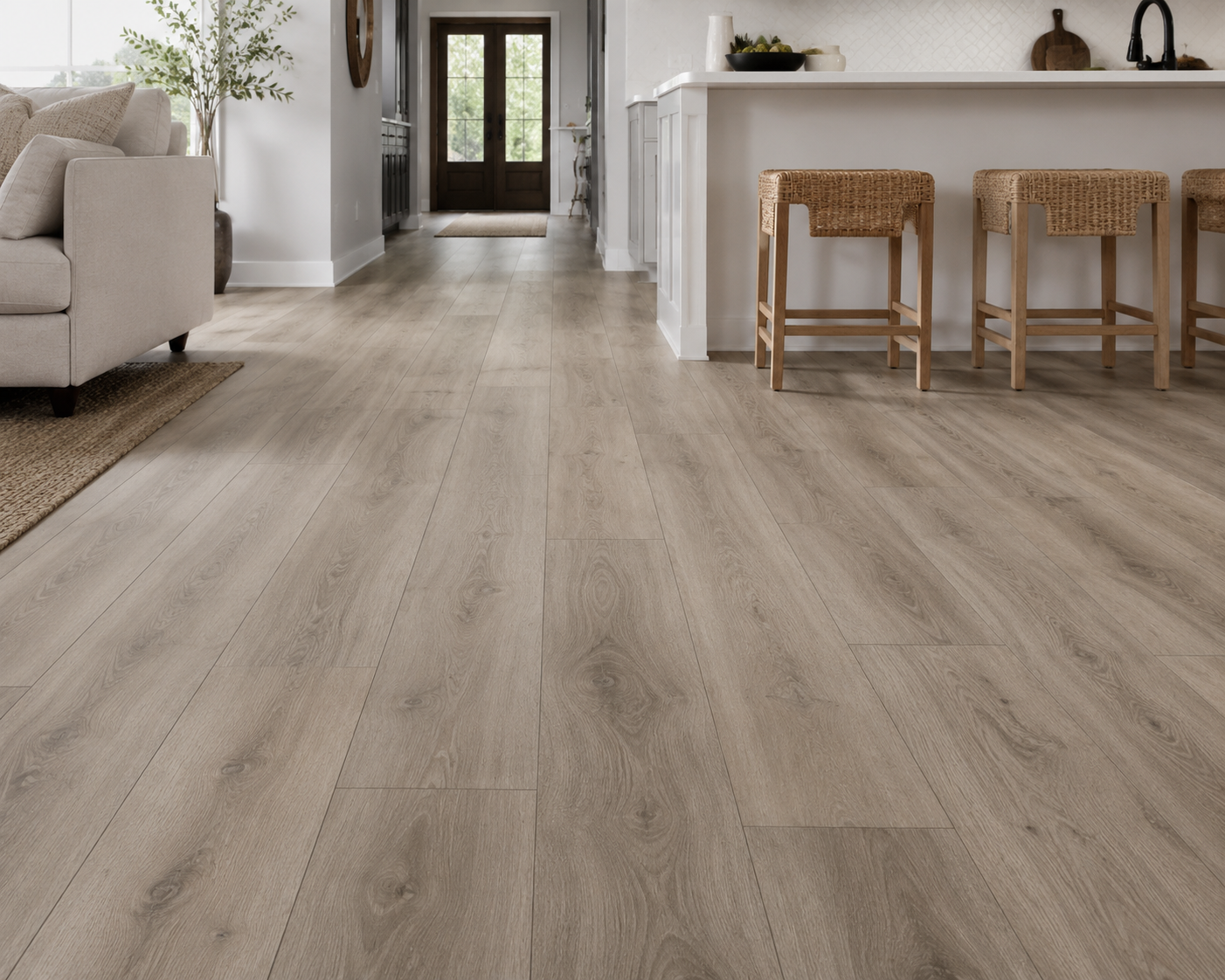
Walk into almost any renovated home right now, and there’s a good chance you’re standing on LVP flooring. It’s become the default choice for kitchens, bathrooms, and entire main floors across the country. It’s easy to see why. It looks like real wood, resists water, and costs a fraction of what hardwood does. But like any flooring material, it comes with real trade-offs worth understanding before you commit.
This guide breaks down exactly what LVP flooring is, how it compares to other flooring types, and what it actually costs in 2026. You’ll also get an honest look at the pros and cons. That way, you can decide with real confidence whether it belongs in your next renovation.
What Is LVP Flooring?
LVP stands for luxury vinyl plank. It’s a multi-layered synthetic flooring product engineered to mimic the look and texture of real hardwood. It offers far better resistance to water, stains, and everyday wear, too. Unlike traditional sheet vinyl, LVP comes in individual planks that click together or glue down. That closely mimics the installed look of hardwood strips rather than one continuous sheet.
Most LVP products share a similar layered construction. A rigid or flexible core sits at the base, topped by a printed design layer that creates the wood-look pattern. A clear wear layer protects the surface from scratches and daily traffic on top of that. That wear layer thickness, measured in mils, plays a huge role in both durability and price, which we’ll break down further below.
LVP vs. Other Flooring Types
Understanding how LVP compares to alternatives helps clarify whether it’s actually the right choice for your specific room and budget.
LVP vs. laminate: Laminate flooring uses a similar plank format, but its core is typically wood-fiber based rather than vinyl. That makes it far more vulnerable to water damage. LVP wins clearly in any wet-prone area like a bathroom, laundry room, or kitchen.
LVP vs. hardwood: Real hardwood offers a natural material and can be sanded and refinished multiple times over its lifespan. But it costs significantly more, and it can’t handle standing water or high humidity nearly as well. LVP delivers a similar visual look at a fraction of the cost, though it can’t be refinished once it wears out.
LVP vs. tile: Tile matches or exceeds LVP’s water resistance and can last even longer. But it costs more to install, feels harder and colder underfoot, and cracks under impact in a way vinyl simply doesn’t. LVP offers a warmer, softer feel that many homeowners prefer for everyday living spaces.
LVP vs. sheet vinyl: Sheet vinyl comes in large rolls rather than individual planks, and it generally costs less. But it lacks the realistic wood-look texture and dimensional detail that individual LVP planks provide. Repairing damage to one section of sheet vinyl is also far more disruptive than swapping out a single damaged plank.
LVP Flooring Cost in 2026
Pricing for LVP flooring varies quite a bit based on wear layer thickness, core construction, and installation method. National data from 2026 gives a reliable range to budget around.
Fully installed LVP flooring typically costs between $4.50 and $12 per square foot, combining both materials and labor. Most homeowners spend somewhere in the $1,350 to $4,200 range for a standard 300 to 600 square foot space. Material costs alone generally run $1.50 to $7 per square foot, depending on quality tier. Labor adds another $1.50 to $4 per square foot in most regions.
Here’s a rough breakdown by quality tier:
- Budget LVP (6-mil wear layer): $2 to $3 per square foot for materials. Suited to light-traffic areas or short-term use.
- Mid-range LVP (12-mil wear layer): $3 to $5 per square foot for materials. This tier covers most standard residential installations.
- Premium LVP (20-mil wear layer or higher): $5 to $8 per square foot for materials. Built for heavy foot traffic and long-term durability.
A few specific factors push the price higher across any tier. Rigid core, or SPC, construction typically adds $0.75 to $1.25 per square foot compared to standard flexible-core LVP. Pre-attached underlayment adds another $0.30 to $0.80 per square foot, but it can simplify installation. Glue-down installation costs more in labor than click-lock floating floors, since the adhesive application takes considerably more time and skill.
Pros of LVP Flooring
LVP earns its popularity through a genuinely strong combination of practical benefits.
Water resistance stands out as the biggest advantage over comparable wood-look flooring options. Most LVP products handle spills, splashes, and even standing water far better than hardwood or laminate. That makes it a smart choice for kitchens, bathrooms, mudrooms, and basements.
Durability ranks close behind. The wear layer protects against scratches, dents, and everyday foot traffic. Higher-mil products hold up well even in busy households with kids and pets.
Comfort underfoot matters more than people expect until they’ve lived with it. LVP feels warmer and softer than tile or stone, without sacrificing much in water resistance. That makes it a comfortable everyday flooring choice throughout an entire home.
DIY-friendly installation makes LVP one of the more approachable flooring projects for a confident homeowner. Click-lock rigid planks cut easily with a utility knife using a simple score-and-snap method. Installation generally requires no special tools beyond a tapping block and spacers.
Realistic appearance rounds out the list. Modern LVP products use high-resolution printing and embossed texture to closely mimic real wood grain. At a glance, quality LVP can be difficult to distinguish from hardwood.
Cons of LVP Flooring
LVP isn’t without real drawbacks, and understanding them helps set accurate expectations before you install it throughout your home.
It can’t be refinished. Unlike hardwood, which can be sanded and refinished multiple times over decades, LVP’s wear layer eventually wears through. At that point, the only fix is replacement rather than restoration.
Lower-end products can look artificial. Budget LVP, particularly products with thin wear layers and lower-resolution printing, can look noticeably less convincing than premium options. It’s worth seeing samples in person rather than judging quality from online photos alone.
Environmental concerns exist for some buyers. LVP is a synthetic, petroleum-based product, which matters to homeowners specifically prioritizing natural or sustainable materials. If that’s a priority for you, research a specific manufacturer’s environmental certifications before purchasing.
Resale value considerations vary by market. Real hardwood generally holds stronger resale appeal in higher-end markets. If you’re renovating specifically to maximize resale value in a luxury market, weigh that against LVP’s practical advantages.
Subfloor imperfections can telegraph through thinner products. Lower-mil, more flexible LVP can show subfloor irregularities more than a rigid core product would. Proper subfloor prep matters more with budget-tier LVP specifically because of this.
Click-Lock vs. Glue-Down Installation
LVP generally installs using one of two primary methods, and the choice affects both cost and long-term performance.
Click-lock, or floating, installation involves planks that interlock along their edges. They rest on top of the subfloor with an underlayment layer beneath, without any adhesive or nails securing them directly. This method installs faster, costs less in labor, and works well for most residential rooms.
Glue-down installation adheres planks directly to the subfloor, which requires more time and skill. It provides greater stability, though, particularly under heavy furniture or in commercial settings with constant foot traffic. If you’re installing LVP in a space that will see unusually heavy use, or where planks might shift under very heavy fixed furniture, glue-down is generally the more durable choice.
If you’re planning a broader flooring project across multiple rooms, check out our complete guide to comparing flooring options by room type. It breaks down which material makes sense for kitchens, bathrooms, bedrooms, and high-traffic hallways specifically.
Where LVP Works Best in a Home
LVP performs particularly well in a handful of specific room types, given its water resistance and durability profile.
Kitchens and bathrooms benefit the most from LVP’s water resistance, making it a smart alternative to tile in spaces prone to spills and splashes. Basements and mudrooms also suit LVP well, since these areas face higher moisture exposure and heavier foot traffic than typical living spaces. Rental properties frequently use LVP for its durability and relatively easy spot-repair, since a single damaged plank can be replaced without redoing an entire floor.
Living rooms and bedrooms work well with LVP too. Homeowners specifically chasing a premium, high-end resale look sometimes still prefer hardwood in these more visible, formal spaces, though.
How to Choose the Right LVP for Your Project
A few practical factors help narrow down the right product once you’ve decided LVP fits your renovation.
Match wear layer thickness to the room’s expected traffic level. A 6 to 8-mil product suits a low-traffic guest bedroom. High-traffic hallways, kitchens, or homes with large dogs warrant at least a 12-mil, and ideally a 20-mil or higher, wear layer.
Consider rigid core, or SPC, construction if you’re installing over an imperfect subfloor, since rigid cores resist telegraphing minor subfloor irregularities better than flexible-core products. According to Consumer Reports, thicker wear layers generally correlate with better long-term durability and scratch resistance. That’s worth prioritizing even if it means a higher upfront cost per square foot.
Always order roughly 10 percent extra material beyond your exact square footage to account for cutting waste and future repairs. Get written quotes from at least three installers if you’re hiring out the work, too, since labor pricing varies significantly even within the same region.
Final Thoughts
LVP flooring earns its popularity through a genuinely useful combination: real water resistance, strong durability, and a realistic wood-look appearance, all at a price point well below hardwood. It’s not a perfect material for every situation, particularly for buyers prioritizing natural materials or maximum resale value in a luxury market. But for most homeowners renovating a kitchen, bathroom, or busy living space, it delivers real practical value. Match your wear layer and core construction to your room’s specific traffic and moisture levels, and LVP should perform reliably for many years.
Frequently Asked Questions
What does LVP stand for in flooring? LVP stands for luxury vinyl plank, a synthetic flooring product designed to mimic the look of hardwood while offering significantly better water resistance and durability.
How much does LVP flooring cost installed? Fully installed LVP flooring typically costs between $4.50 and $12 per square foot, combining materials and labor. Most homeowners spend $1,350 to $4,200 for a standard 300 to 600 square foot room.
Is LVP flooring waterproof? Most LVP products are highly water-resistant, and many are marketed as fully waterproof, making them suitable for kitchens, bathrooms, and basements. Always confirm the specific product’s water resistance rating before installing it in a consistently wet area.
Can LVP flooring be installed over existing flooring? In many cases, yes, particularly with click-lock floating installations, as long as the existing floor is flat, stable, and clean. Always check the manufacturer’s specific subfloor requirements before installing over existing material.
How long does LVP flooring last? Quality LVP flooring typically lasts 10 to 20 years, depending on wear layer thickness and foot traffic. Higher-mil, premium products generally last longer than budget options with thinner wear layers.
Is LVP flooring good for pets? Yes, LVP’s scratch resistance and water resistance make it a popular choice for pet owners. A thicker wear layer, generally 12 mil or higher, holds up better against pet claws than thinner, budget-tier products.
What’s the difference between LVP and LVT flooring? LVP refers to luxury vinyl plank, designed to mimic wood in long, narrow plank shapes. LVT refers to luxury vinyl tile, designed to mimic stone or ceramic tile in square or rectangular formats. Both share similar core and wear layer construction.
Can I install LVP flooring myself? Yes, click-lock LVP is one of the more DIY-friendly flooring options available. It requires no special tools beyond a tapping block, spacers, and a utility knife for cutting planks. Glue-down installation generally requires more skill and is often better left to a professional.