

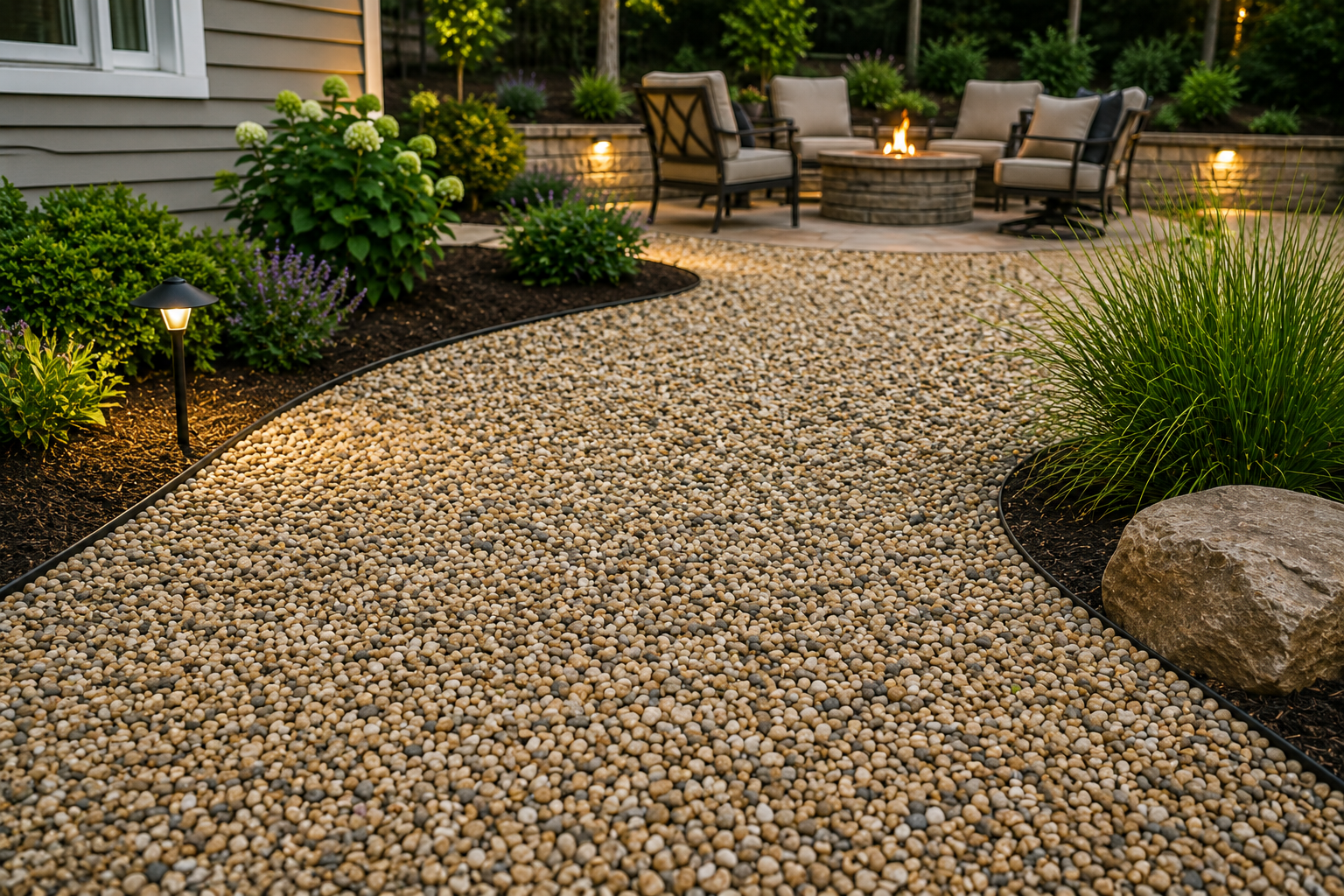
Are you searching for a budget-friendly way to upgrade a walkway, patio, or garden bed? Pea gravel keeps showing up as one of the most popular answers. It’s affordable. It’s easy to install yourself. It also works in nearly every climate across the United States.
This guide covers everything you need to know about pea gravel in 2026. You’ll get real pricing and common landscaping uses. We’ll walk through a step-by-step installation process, plus maintenance tips and common mistakes that trip up first-time DIYers.
Quick Answer
Pea gravel typically costs $30 to $55 per ton, or $45 to $80 per cubic yard, as of 2026. Small bags from home improvement stores run about $4 to $7 each. Fully installed, expect to pay $1.50 to $4.50 per square foot. The exact price depends on depth and project complexity. A basic pathway needs 2 to 4 inches of gravel. Driveways and patios need 6 inches or more. Most homeowners can install pea gravel themselves over a weekend. Hiring a professional adds $14 to $100 per hour, depending on your region.
What Is Pea Gravel?
Pea gravel gets its name from its size and shape. The stones typically measure about 3/8 of an inch across, roughly the size of a pea. Natural weathering, usually from rivers or streams, rounds the edges smooth over time. That smooth, rounded texture sets pea gravel apart from crushed stone. Crushed stone has sharp, angular edges instead.
This rounded shape makes pea gravel comfortable to walk on barefoot. It also drains well, since water passes easily between the loose stones. Pea gravel comes in a range of natural colors, including tan, gray, white, and reddish-brown blends. You can usually find a shade that matches your home’s exterior or existing landscaping.
Unlike crushed stone, pea gravel doesn’t compact as tightly. That’s a tradeoff worth understanding upfront. The loose, rolling texture makes it comfortable underfoot. That same texture also means it shifts more easily under heavy weight or foot traffic. This affects where it works best in your yard.
How Much Does Pea Gravel Cost in 2026?
Bulk pea gravel runs $30 to $55 per ton in most parts of the country. By the cubic yard, expect to pay $45 to $80. Are you working on a small project? Bagged pea gravel from stores like Home Depot or Lowe’s costs about $4 to $7 per half-cubic-foot bag. That per-unit price runs higher than buying in bulk, though.
For a typical 200-square-foot residential project, most homeowners spend around $310 on materials alone if they install it themselves. Professional installation adds labor costs on top of that. Labor typically runs $14 to $100 per hour, depending on your region and the contractor’s rates.
Fully installed pricing includes both materials and labor. That generally falls between $1.50 and $4.50 per square foot. A pea gravel patio installed by a professional typically costs $500 to $2,500. A pea gravel driveway runs higher, often landing between $700 and $2,700. Driveways need a deeper base to handle vehicle weight, which adds to the cost.
Location plays a bigger role in pricing than most homeowners expect. Quarry proximity drives much of the cost variation between suppliers. Do you live within 20 miles of a quarry? You’ll often save $10 to $20 per ton compared to areas that require longer hauls. Get quotes from at least three local suppliers before committing. Prices can vary significantly even between nearby companies sourcing from different quarries.
Timing your purchase also affects the price. According to HomeGuide’s pea gravel cost breakdown, pricing shifts based on project type, depth, and regional factors. Buying during late fall or winter can save you 15 to 25 percent. Construction demand drops during those months, compared to peak spring and summer pricing.
Common Uses for Pea Gravel
Pea gravel shows up in a wide range of residential landscaping projects. Its versatility explains much of its popularity. Walkways and garden paths rank among the most common uses. The material drains well, and it looks natural winding through a yard. Its soft, rounded texture also makes it comfortable for bare feet. That matters if the path leads to a pool or garden seating area.
Patios represent another popular application. This works especially well for homeowners who want an affordable alternative to poured concrete or pavers. A pea gravel patio costs significantly less than most hardscaping alternatives. It installs faster, too. Driveways work as well, though they need a deeper gravel bed. Solid edging also matters here, since it handles the weight and turning motion of vehicles.
Garden beds and plant borders benefit from pea gravel’s drainage properties. Spreading a layer around trees, shrubs, or flower beds helps suppress weeds. It still allows water to reach plant roots. Many homeowners also use pea gravel around mailbox posts, fire pits, and dog runs. It handles moisture and heavy foot traffic reasonably well in those smaller, defined spaces. If you’re improving drainage in garden beds specifically, our loam topsoil guide covers the soil side of that equation.
Playground surfaces occasionally use pea gravel too. Its rounded edges reduce injury risk compared to sharper landscaping materials. That said, always check current playground safety guidelines before choosing gravel for a play area. Fall-height requirements vary by installation type.
How to Install Pea Gravel: Step-by-Step
Getting the installation right matters more than many homeowners expect. Skipping steps often leads to gravel that sinks into soil or spreads into your lawn within a year. Follow these steps for a durable result that holds up over time.
- Mark out and excavate. Remove existing grass, weeds, or old landscaping material. For pathways, remove 4-6 inches of soil; for driveways or high-traffic patios, dig 8-10 inches to accommodate a proper base layer.
- Install landscape fabric. Lay fabric across the entire excavated area to prevent weeds from pushing through. Overlap seams by several inches and secure the edges with landscape staples.
- Add edging. Metal, plastic, or stone edging keeps pea gravel contained within your intended space and prevents it from migrating into your lawn or garden beds.
- Add a compacted base (driveways and high-traffic areas only). Add a layer of crushed stone before the pea gravel for structural support, and compact it thoroughly with a plate compactor.
- Spread the pea gravel. Rake it evenly to 2-4 inches for pathways or 6+ inches for patios and driveways, then use a lawn roller to help settle the stones.
Maintenance and Long-Term Care
Pea gravel requires relatively little maintenance once properly installed. That’s part of its appeal. That said, a few simple habits keep it looking good and performing well for years.
Rake your gravel periodically to redistribute stones that shift from foot traffic or weather. This matters especially in high-traffic areas like walkways and driveways, where gravel naturally migrates over time. Top off thin spots with fresh gravel every year or two. Some material loss is normal even with proper edging and fabric installed correctly.
Even with landscape fabric, occasional weeds may work their way through gaps or blown-in soil that accumulates over time. Spot treat these early, before they establish a strong root system. Letting weeds spread makes removal significantly harder and more expensive. Professional weed treatment typically costs $50 to $125 per visit if the problem gets out of hand. Early intervention saves money in the long run.
In regions that see heavy snowfall, avoid using metal shovels directly on pea gravel surfaces. This can scatter stones along with the snow. A plastic shovel or a snow blower set to a slightly elevated height helps protect your gravel investment through winter months. This matters especially for homeowners in the Midwest, Northeast, and mountain regions, where snow removal happens regularly.
Pea Gravel vs. Other Landscaping Materials
Understanding how pea gravel compares to alternatives helps you decide if it’s the right choice for your specific project.
| Material | Cost per Ton | Best For |
|---|---|---|
| Pea Gravel | $30–$55 | Walkways, patios, garden beds — comfortable underfoot |
| Crushed Stone | Slightly higher than pea gravel | Driveways and heavy vehicle traffic — compacts tighter |
| River Rock | $40–$75 | Water features and decorative accents, not walkways |
| Mulch | Varies | Garden beds where improving soil health matters |
Crushed stone, with its angular edges, compacts more tightly and holds up better under vehicle weight, but feels rougher underfoot. River rock is more decorative and less practical for walkways. Mulch breaks down over time and improves soil health, while pea gravel doesn’t decompose and needs replacing far less often.
Are you still deciding between hardscaping materials for your specific project? For most residential uses, pea gravel’s lower cost and comfortable footing outweigh its looser compaction — pairing it with proper edging solves most of the downsides mentioned here.
Regional Considerations Across the U.S.
Climate and regional soil conditions affect how well pea gravel performs in different parts of the country. In the Southwest, including areas around Phoenix and Las Vegas, pea gravel works especially well as a xeriscaping material. It pairs naturally with drought-tolerant landscaping, and it handles intense summer heat without the maintenance demands of grass.
In the Southeast, heavy rainfall means drainage matters even more than usual. Proper base preparation prevents pooling water from washing gravel out of place during intense storms, which are common throughout states like Florida, Georgia, and the Carolinas during hurricane season.
Northern states dealing with freeze-thaw cycles should pay extra attention to base preparation as well. Water that seeps beneath poorly prepared gravel can freeze and expand, shifting the stones above and creating an uneven surface by spring. A properly compacted base layer helps minimize this seasonal disruption significantly. If you’re doing other fall prep at the same time, our garden winterizing guide covers the rest of the yard.
Frequently Asked Questions
How much does pea gravel cost per ton?
Pea gravel typically costs $30 to $55 per ton in 2026, though prices vary based on your location and proximity to a quarry. Buying within 20 miles of a supplier generally saves $10 to $20 per ton compared to areas requiring longer delivery distances.
How deep should pea gravel be for a walkway?
Most walkways need 2 to 4 inches of pea gravel for adequate coverage and stability. High-traffic areas like driveways and patios need a deeper layer, generally 6 inches or more, along with a compacted base underneath for proper support.
Does pea gravel need landscape fabric underneath?
Yes, landscape fabric is strongly recommended for nearly every pea gravel project. Skipping this step almost guarantees weeds will grow through the gravel within a season or two, and treating an established weed problem later costs significantly more than installing fabric correctly from the start.
Can I install pea gravel myself, or do I need a professional?
Most homeowners can install pea gravel themselves over a weekend, especially for smaller projects like pathways or garden borders. Larger projects like driveways, or areas requiring significant excavation and base preparation, may benefit from professional installation, which typically costs $14 to $100 per hour depending on your region.
How long does pea gravel last?
Pea gravel itself doesn’t break down or decompose, so the stones can last indefinitely with basic maintenance. However, some material naturally migrates or gets lost over time, so most installations need periodic topping off, generally every one to two years, to maintain full coverage.
What’s the difference between pea gravel and crushed stone?
Pea gravel features smooth, rounded edges from natural weathering, while crushed stone has sharp, angular edges from mechanical crushing. Crushed stone compacts more tightly and holds up better under vehicle weight, while pea gravel offers a more comfortable, natural-looking surface for walkways and patios.
Is pea gravel good for a dog run or pet area?
Yes, pea gravel works well for dog runs since it drains well and doesn’t hold odor the way grass or mulch can. Choose a lighter-colored gravel if possible, since it stays cooler underfoot during hot summer months compared to darker stone.
Will pea gravel work in areas with heavy snow?
Yes, pea gravel handles snow reasonably well, though you should avoid metal shovels directly on the surface, since they can scatter stones along with the snow. A plastic shovel or an elevated snow blower setting helps protect the gravel layer through winter months.
Final Thoughts
Pea gravel remains one of the most budget-friendly, versatile landscaping materials available to American homeowners in 2026. It works across walkways, patios, garden beds, and even driveways. The material itself holds up for years with minimal upkeep. The real key to success lies in proper installation. Solid edging, quality landscape fabric, and adequate depth make the difference between a pea gravel project that lasts and one that spreads into your lawn within a season.
Are you tackling a small garden border, or a full driveway overhaul? Taking the time to prepare your site correctly pays off in the long run. It saves you both money and frustration down the road.