

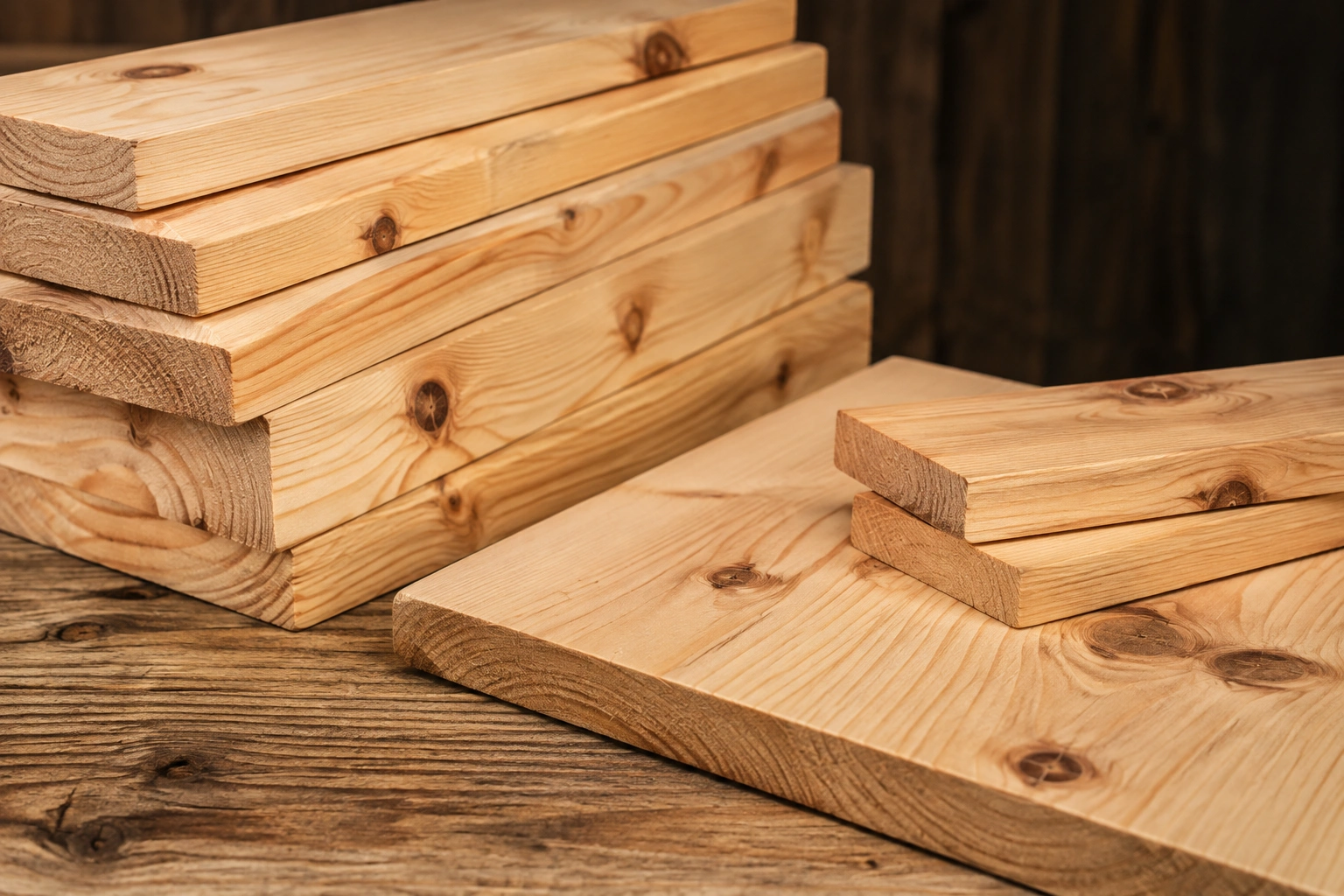
Walk into any rustic cabin or farmhouse kitchen in the United States, and you’ll almost certainly spot knotty pine wood. It might be on the walls, the ceiling, the floors, or the cabinetry. There’s a good reason this material has stayed popular for well over a century. It’s warm, characterful, widely available, and — perhaps most importantly — it won’t break your budget the way premium hardwoods will.
That said, knotty pine has its quirks. I’ve worked with it on several home renovation projects over the years. While I’d recommend it enthusiastically for the right application, there are specific situations where it’s the wrong choice entirely. In this guide, I’ll walk you through everything you need to know: the main types, the best uses, the honest pros and cons, and the practical finishing tips that separate a professional result from an amateur one.
What Is Knotty Pine Wood?
Knotty pine is a grade of pine lumber selected — or simply left unselected — for its visible knots. These knots form where branches once grew from the tree’s trunk. As the tree grows taller and lower branches die off, the surrounding wood grows over the branch stump. Eventually, it encases that stump within the trunk as a knot.
In lumber grading, knotty pine falls under the “Common” grade. This contrasts with “Select” or “Clear” grade pine, which mill workers sort specifically to eliminate visible knots. The knots aren’t a structural defect. Instead, they’re a natural characteristic that many homeowners, designers, and craftspeople actively seek out for the rustic texture they provide.
Knotty pine has a creamy white to pale yellow sapwood and a warm honey-yellow to reddish-tan heartwood. Over time, the wood deepens into a rich amber color — a patina that many people find even more attractive than the original finish.
Key Wood Properties at a Glance
Before diving into types and uses, it helps to understand the core characteristics of knotty pine as a material.
| Property | Detail |
|---|---|
| Wood type | Softwood (conifer) |
| Janka hardness | ~380–420 lbf |
| Color (fresh) | Pale yellow to creamy white |
| Color (aged) | Warm amber to golden brown |
| Grain | Straight, medium to fine texture |
| Weight | Lightweight (specific gravity 0.35–0.59) |
| Workability | Excellent — cuts, nails, glues, and sands easily |
| Sustainability | High — plantation-grown and widely renewable |
| Typical cost | Lower than most hardwoods; budget-friendly |
Knotty pine wood has a Janka hardness rating of 420 lbf, categorizing it as a softwood. It may not be the densest or most durable wood on the market. However, its ease of molding and staining — combined with solid day-to-day durability — makes it a go-to choice for woodworkers and interior designers alike.
Types of Knotty Pine Wood
Not all knotty pine is the same. In fact, the term covers several distinct species. Each one has slightly different properties, appearances, and ideal applications. Understanding these differences will help you choose the right material for your project.
1. Eastern White Pine (Pinus strobus)
Eastern White Pine is the most common species for interior knotty pine work in the northeastern and upper Midwestern US and Eastern white pine wood has one of the lowest Janka hardness values of any commonly used wood, rated at approximately 380 lbf. This makes it exceptionally easy to work with. It suits tongue-and-groove paneling, trim work, and furniture projects where hand tools or basic power tools get the job done.
Its knots tend to be tight and well-distributed. As a result, it delivers a clean, classic rustic appearance. Furthermore, it takes stain and natural oil finishes beautifully — particularly when you prep the surface with a wood conditioner beforehand.
Best for: Wall paneling, ceiling planks, interior trim, light furniture, and cabinetry in rustic or farmhouse-style homes.
2. Southern Yellow Pine (Pinus taeda and related species)
Southern Yellow Pine (SYP) is a collective term for several closely related species. These include Loblolly, Shortleaf, Longleaf, and Slash Pine. Southern Yellow Pine is the primary structural softwood in the American South and grows on plantations across millions of acres from Texas to Virginia.
Compared to Eastern White Pine, SYP is noticeably denser and harder. It has a more pronounced grain and a deeper amber-yellow color. Its knots also tend to be darker and more resinous. As a result, SYP suits flooring and structural work where extra durability matters. However, that resin content makes finishing trickier — you must seal knots carefully to prevent bleed-through.
Best for: Flooring, structural framing, pressure-treated outdoor applications, and heavy-duty furniture.
3. Ponderosa Pine (Pinus ponderosa)
Ponderosa Pine dominates the western United States. You’ll find it across the Rocky Mountain region, the Pacific Northwest, and the Southwest. Common uses for Ponderosa pine include cabinetmaking, carvings, interior trim, millwork, paneling, furniture, and rustic cabin construction.
Its knots are often larger and more dramatic than those of Eastern White Pine. This gives Ponderosa a bolder, more rugged visual character. In addition, its grain pattern is slightly more uniform. That consistency makes it easier to achieve even stain results across large surface areas.
Best for: Cabin construction, rustic furniture, wall paneling in Western or lodge-style interiors, and decorative millwork.
4. Western White Pine (Pinus monticola)
Western White Pine grows mainly in the Pacific Northwest. It’s somewhat less common commercially than its eastern counterpart. In terms of color and workability, it closely resembles Eastern White Pine — fine-grained, light-colored, and easy to shape. However, it tends to have fewer and smaller knots. This makes it a middle-ground option between full knotty and clear-grade pine.
Best for: Interior paneling with a refined rustic look, cabinetry, and detailed millwork.
5. Reclaimed Knotty Pine
Reclaimed pine deserves its own category and reclaimed pine — especially reclaimed heart pine — comes from old barns, warehouses, factories, and river-salvaged logs. This wood stands out for its old-growth density and hardness, its unique patina and nail holes, and the environmental benefit of reusing existing material rather than harvesting new trees.
Reclaimed knotty pine is denser, harder, and more stable than new-growth pine. Old-growth trees grew more slowly, producing tighter growth rings — and that slow growth translates directly into a stronger, more stable board. Furthermore, decades of natural aging give reclaimed pine a depth of color and character that new wood simply cannot replicate. The trade-off, however, is cost and availability. Reclaimed pine typically costs significantly more, and sourcing consistent quantities for large projects can prove challenging.
Best for: Premium flooring, statement accent walls, bespoke furniture, and projects where historical character is a priority.
Understanding Knotty Pine Grades
Within the broad category of knotty pine, mills sort lumber into grades. These grades reflect the size, frequency, and tightness of the knots. In the US, softwood pine grading typically follows the Southern Pine Inspection Bureau (SPIB) or the Western Wood Products Association (WWPA) standards.
For practical purposes, here’s what the most common designations mean:
- #1 Common (C Select / D Select): Tight knots, minimal defects, clean appearance. This grade sits closest to clear pine. It works best for painted or stained cabinetry and furniture where a relatively clean surface matters.
- #2 Common: More frequent knots, occasional loose knots, some mineral streaking. This is the most widely used grade for rustic paneling, ceiling planks, and decorative applications.
- #3 Common and below: Larger, more frequent knots, possible loose knots, and other character marks. Builders use this grade for utility applications, barn wood aesthetics, and heavily rustic designs.
One important distinction to understand is tight knots versus loose knots. Tight knots are part of the wood and stay put. Loose knots sit surrounded by a thin ring of bark and can eventually fall out, leaving a hole. For walls and ceilings, loose knots aren’t necessarily a problem. For furniture or flooring, however, stick with tighter knots.
Best Uses for Knotty Pine Wood
Wall Paneling and Wainscoting
Wall paneling is perhaps the single most popular application for knotty pine in American homes. <cite index=”16-1″>The most common use of knotty pine boards is tongue-and-groove paneling. This style uses end-matching techniques to create even, continuous-feeling panels that lock cleanly together.</cite>
In 2026, the design trend has shifted away from covering every wall in knotty pine — that approach can feel dated. Instead, the modern approach favors selectivity. Panel one accent wall in knotty pine and paint the other three white, light gray, or soft sage. This creates warmth and texture without overwhelming the room.
Ceiling Planks
A wood ceiling pulls the eye up and warms the entire room. Paired with white walls, knotty pine ceiling planks fit beautifully in cabins and farmhouse-style homes alike. Tongue-and-groove knotty pine works particularly well on ceilings. The locking profile eliminates visible fasteners and creates a clean, continuous surface that looks intentional and polished.
Flooring
Knotty pine flooring delivers enormous visual impact at a price well below oak, maple, or walnut. Pine is soft — it will dent and scratch over time. Some people love that worn-in, lived-in look. Others find it frustrating. It’s worth knowing your household before you commit to pine floors.
In high-traffic areas like hallways and kitchens, pine flooring will show wear faster than hardwood alternatives. On the other hand, in bedrooms, low-traffic living rooms, or vacation homes — where the patina of age is a feature, not a flaw — knotty pine flooring is an excellent choice.
Furniture
Knotty pine works well for beds, tables, wardrobes, and cabinets. Pine’s softness allows for intricate designs while still holding up for most furniture applications.It’s also a favorite among DIY woodworkers because it’s forgiving. It cuts cleanly, holds screws and nails well, and doesn’t demand expensive specialized tooling.
Cabinetry
Knotty pine works beautifully in rustic or farmhouse kitchens. The knots add character to even the simplest cabinet designs. That said, knotty pine cabinetry almost always looks better stained than painted — for reasons covered in detail below.
Structural and Construction Use
Southern Yellow Pine is a workhorse in structural applications. Builders use it widely for framing, floor joists, and pressure-treated decking. Its higher density gives it better structural performance than Eastern White Pine. Furthermore, pressure-treating dramatically extends its lifespan in outdoor or ground-contact conditions.
Pros of Knotty Pine Wood
1. Affordability
Knotty pine is one of the most cost-effective wood options in the US market. Pine trees grow quickly and thrive on sustainable tree farms across the country. As a result, supply stays consistent and prices remain accessible — especially compared to slow-growing hardwoods like walnut or cherry.
2. Excellent Workability
Pine is easy to cut, nail, glue, sand, and stain — even for beginners. This makes it a favorite for carpenters, woodworkers, and DIYers alike.</cite> Unlike dense hardwoods that demand carbide-tipped blades and powerful equipment, pine works smoothly with basic tools. That ease of workability matters — especially on longer projects.
3. Distinctive Visual Character
The knots, mineral streaks, and grain variations in knotty pine give every board a unique personality. No two pieces look identical. That’s precisely the appeal for homeowners who want a space that feels handcrafted rather than factory-produced.
4. Sustainability
White Pine and Northern Pine grow continuously on tree farms, making them sustainable wood choices. Pine trees also grow significantly faster than hardwoods like oak or walnut. In addition, many US suppliers now offer FSC-certified knotty pine — giving eco-conscious buyers a verified, independently confirmed sustainable option.
5. Lightweight
Pine’s low density makes it easier to handle, transport, and install. This matters especially on large paneling or ceiling plank projects where material weight affects both installation time and structural load.
6. Natural Warmth and Aging
Unlike synthetic materials, knotty pine improves visually with age. The natural resins in the wood deepen its color over time. It shifts from pale yellow toward a rich honey-amber — a look that many homeowners find even more attractive than the fresh-cut original.
Cons of Knotty Pine Wood
1. Softness and Dent Susceptibility
Knotty pine scores around 380–420 lbf on the Janka hardness scale. That’s well below hardwoods like oak (1,290 lbf) or maple (1,450 lbf). You may need to take extra care when finishing knotty pine to prevent scuffing, scratching, or denting over time. In high-traffic or high-impact applications, this softness is a genuine limitation. It’s worth considering a harder species for those specific situations.
2. Knot Bleed-Through When Painted
This is one of the most frustrating surprises for first-time knotty pine users. Stain brings out the natural charm of knotty pine, but painting — particularly with lighter colors — can cause knots to bleed through. The oils in the knots react differently to paint, making them visible over time.
The solution is straightforward: seal every knot with a shellac-based primer before painting. Pine resin bleeds through paint if you skip this step and can ruin your finish within months. One extra step upfront saves a lot of frustration later.
3. Uneven Stain Absorption
The natural variations in knot and grain patterns can make it difficult to achieve an even finish on knotty pine wood. Areas around knots absorb stain differently than the surrounding clear wood. The result can be blotchy, uneven coloration. To minimize this effect, always apply a wood conditioner before staining.
4. Moisture and Insect Vulnerability
Pine lacks the natural resistance to moisture, decay, and insects that cedar or redwood offer. For interior use, proper sealing and finishing provide adequate protection. However, for outdoor applications without pressure treatment, pine deteriorates relatively quickly. Always specify pressure-treated pine for any outdoor or ground-contact project.
5. Loose Knots in Lower Grades
In #2 Common and below grades, loose knots can eventually fall out of paneling or flooring. They leave behind holes that need repair. For wall and ceiling applications, this isn’t necessarily a structural concern. For furniture or flooring, however, it’s worth factoring into your grade selection before you buy.
6. Requires Regular Maintenance
Knotty pine wood needs regular refinishing and maintenance to keep looking its best — especially after years of heavy use. This is particularly true for pine flooring and countertops. Harder wood species extend the time between refinishing sessions significantly. So if low maintenance is a priority, pine may not be the best fit for high-wear surfaces.
How to Finish Knotty Pine: Practical Tips
Getting the finish right is where most DIYers either succeed or struggle with knotty pine. Here are the most important steps, drawn from personal experience and current best practices from woodworking professionals.
Step 1 — Acclimate the wood. Before installing or finishing, let knotty pine boards sit in the room for at least one to two weeks. This allows the wood to adjust to local humidity and temperature. It also reduces the risk of warping or gapping after installation.
Step 2 — Sand progressively. Work through grits in sequence — 80, 120, 150, then 180–220 — for a smooth, burnished surface. Skipping grits leaves scratch patterns that show through even a dark stain.
Step 3 — Apply wood conditioner. This step is non-negotiable for stained finishes. Wood conditioner penetrates the grain and creates a more uniform surface. It dramatically reduces blotchiness around knots and in softer grain areas.
Step 4 — Seal knots before painting. Apply a shellac-based primer — Zinsser BIN is a widely trusted option across the US — to every knot before priming and painting. Oil-based primer is the next-best option. Standard latex primer alone will not reliably block resin bleed-through.
Step 5 — Choose the right topcoat. Polyurethane is the most practical topcoat for knotty pine. Oil-based adds warmth over time, while water-based stays clearer. For a matte look, tung or linseed oil delivers a beautiful finish — though you’ll need to reapply it every few years.
For in-depth finishing guidance and product comparisons, the Wood Magazine finishing guide from Better Homes & Gardens is an expert-reviewed resource worth bookmarking.
You might also find our companion guide on choosing the right wood for home renovation projects useful for a broader comparison of knotty pine against other popular species.
Knotty Pine vs. Clear Pine: Which Should You Choose?
This is one of the most common questions buyers ask. The answer depends almost entirely on the look you want and the application you have in mind.
Clear pine — also called select or premium grade — has few or no visible knots. Its clean, uniform appearance suits contemporary, Scandinavian, and minimalist interiors. Clear pine costs 20% to 40% more than knotty grades because mill workers select the defect-free boards from the best portions of each log.
In short: choose knotty pine if you want warmth, character, and rustic texture at a lower cost. Choose clear pine if you need a smooth, uniform surface for painted cabinetry or a modern interior. Both have their place — the key is matching the grade to the goal.
Is Knotty Pine Right for Your Project? A Quick Decision Guide
Choose knotty pine if:
- You want a rustic, farmhouse, cabin, or lodge aesthetic
- Your project involves interior paneling, ceiling planks, or trim work
- Budget is a meaningful constraint
- You’re comfortable with the finishing steps (conditioning, knot sealing)
- You value sustainability and domestic sourcing
Consider an alternative if:
- You plan to paint with a light color and want a perfectly smooth result
- The application involves heavy daily traffic (hallways, kitchen countertops)
- You need long-term outdoor durability without pressure treatment
- A sleek, contemporary, or minimalist design is the goal
Frequently Asked Questions
What is the difference between knotty pine and clear pine? Knotty pine is a lower lumber grade that includes visible knots — the natural remnants of old branch growth. Clear pine (also called select pine) excludes knots entirely, giving a smooth, uniform surface. Knotty pine costs significantly less and suits rustic aesthetics. Clear pine works better for contemporary or painted applications where a uniform finish matters most.
Is knotty pine wood strong enough for furniture? Yes — knotty pine handles most furniture applications well. These include beds, tables, chairs, shelving, and cabinetry. Its Janka hardness of 380–420 lbf means it’s softer than oak or maple. So it can dent and scratch more easily. However, with proper finishing and normal use, knotty pine furniture holds up well for everyday household life. Generations of American families have relied on it for home furnishings.
Why do knots bleed through paint on knotty pine? Pine knots contain concentrated resin — the tree’s natural sap. When paint goes over an unsealed knot, the resin migrates through the paint layer over time. It creates yellowish or brownish stains on the surface. The fix is simple: seal every knot with a shellac-based primer before applying any paint. This creates a barrier that blocks the resin and prevents bleed-through.
How do I prevent blotchy staining on knotty pine? The key is applying a pre-stain wood conditioner before any stain. Pine absorbs stain unevenly — soft grain areas soak up much more than the dense areas around knots. This results in a patchy, blotchy appearance. Wood conditioner penetrates the grain and equalizes absorption across the surface. Apply it per the manufacturer’s directions, let it soak in, then apply stain while the conditioner is still slightly tacky.
Can knotty pine be used outdoors? Untreated knotty pine is not a good choice for outdoor use. It has limited natural resistance to moisture, decay, and insects. However, pressure-treated Southern Yellow Pine is a proven option for outdoor decking, fencing, pergolas, and garden structures across the US. For any outdoor project, always specify pressure-treated pine and follow the manufacturer’s guidelines for compatible finishes and fasteners.
How does knotty pine hold up as flooring? Knotty pine flooring looks beautiful and costs far less than most hardwood alternatives. However, its softness means it will show dents, scratches, and wear more quickly. Many homeowners actually embrace this as a living patina that adds character over time. That said, for high-traffic areas in busy family homes, a harder species will require less maintenance and stay looking better longer. Knotty pine flooring performs best in bedrooms, home offices, or vacation properties.
What is the best finish for knotty pine paneling? For a natural look that showcases the grain and knots, a clear satin or semi-gloss polyurethane over a light oil-based stain — or no stain at all — is the most popular and durable option. Water-based polyurethane stays cleaner and clearer over time. Oil-based adds warmth and amber tones. For a matte, natural feel, tung oil or linseed oil are beautiful alternatives — though both need reapplication every few years to maintain protection.
Is knotty pine a sustainable wood choice? Yes — pine is among the most sustainable commercial wood species in the US. Pine trees grow significantly faster than hardwoods. Moreover, the vast majority of commercially available pine lumber comes from sustainably managed tree farms rather than old-growth forests. For buyers who want additional assurance, FSC-certified knotty pine is available from many US lumber suppliers. It provides independent confirmation of responsible forest management.
Final Thoughts
Knotty pine wood has earned its enduring place in American homes and workshops. It’s affordable, easy to work, sustainable, and genuinely beautiful in the right setting. Furthermore, once you understand its limitations — and take the right finishing steps — the results can be impressive.
Whether you’re paneling a basement, installing ceiling planks in a vacation cabin, building a farmhouse dining table, or adding a single accent wall to a living room, knotty pine delivers warmth and character that few materials can match at its price point.
As with any building material, the key is matching the wood to the application. Use knotty pine where its rustic personality is an asset, take the finishing process seriously, and it will reward you with a result that looks — and feels — like quality craftsmanship.