

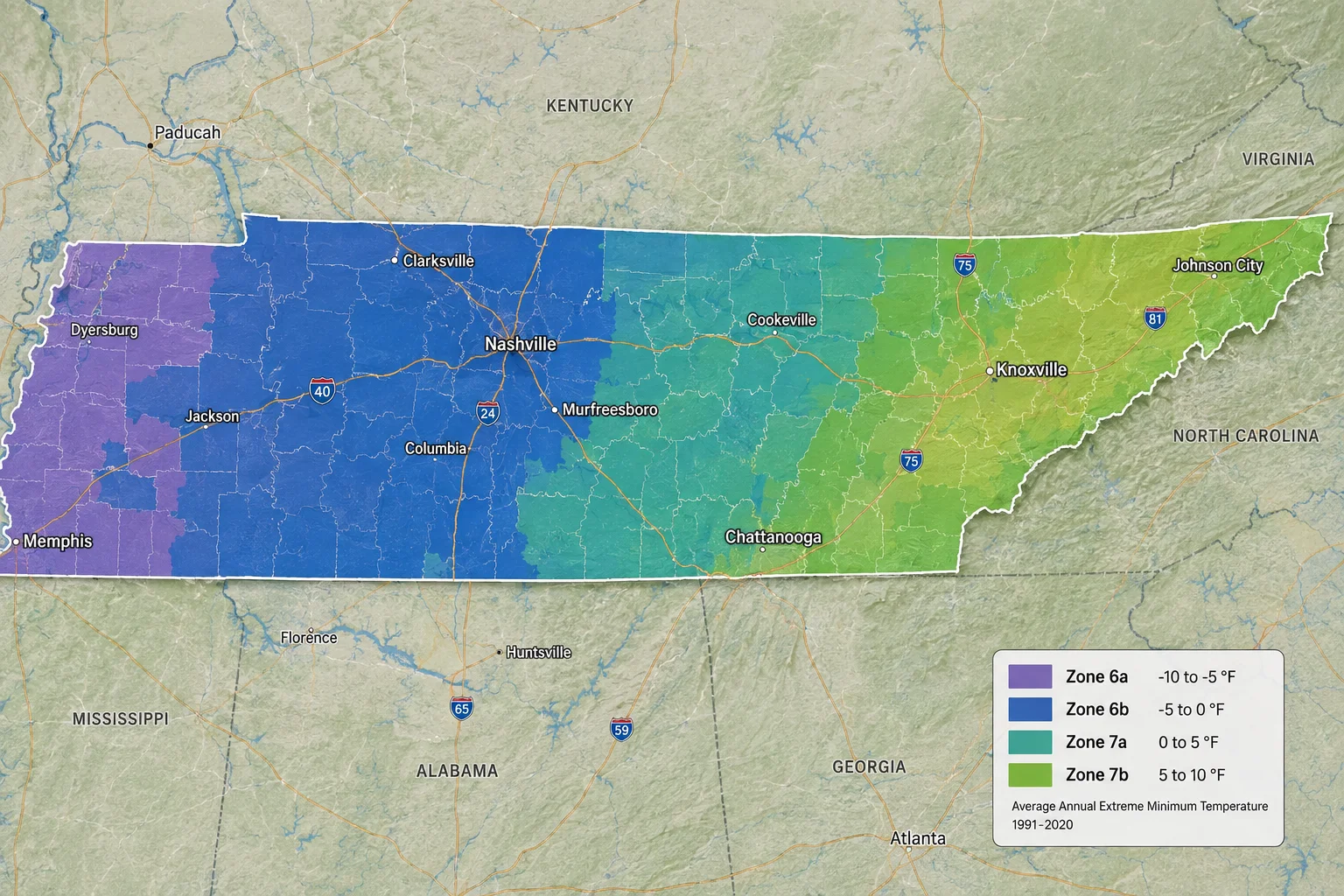
Have you ever bought a plant, only to watch it die over winter? If so, there’s a good chance it wasn’t rated for your growing zone. Knowing your Tennessee planting zone takes the guesswork out of gardening. It tells you which trees, shrubs, and perennials can actually survive your area’s coldest nights.
I’ve dug through the current USDA data, cross-referenced it with regional frost dates, and pulled together what Tennessee gardeners actually need to know in 2026. Below, you’ll find your zone, what changed in the most recent map update, and practical planting guidance based on where you live in the state.
What Is a USDA Plant Hardiness Zone?
A plant hardiness zone measures your area’s average annual extreme minimum temperature. In simpler terms, it estimates the coldest night your garden typically experiences each winter. The USDA divides the country into 13 main zones, and each zone splits further into “a” and “b” half-zones based on 5-degree Fahrenheit increments.
This matters because plant tags reference these zones directly. When a shrub says “hardy in zones 6-9,” that means it can survive winter lows within that range. Plant something outside your zone’s cold tolerance, and it likely won’t make it through winter without extra protection.
Tennessee’s Current USDA Zones (2023 Map Update)
In November 2023, the USDA released an updated Plant Hardiness Zone Map, replacing the previous version from 2012. This update matters more than you might think. The new map pulls data from over 13,000 weather stations, compared to fewer than 8,000 used in the 2012 version. As a result, it offers a far more precise picture of local climate patterns.
So, what changed for Tennessee? Overall, the state spans zones 6a through 8a. Because winters have trended slightly warmer over the past few decades, roughly 40 percent of Tennessee locations shifted up by half a zone. For example, much of the state moved from zone 7a to 7b. Memphis saw an even bigger jump, shifting from 7b to 8a.
That said, this shift doesn’t mean sweeping changes for most home gardeners. According to UT Extension agents, the plants that already perform well in a given area will largely continue to thrive. Still, it does open the door to experimenting with slightly less cold-hardy varieties, particularly in West Tennessee.
Tennessee Growing Zones by Region
Because Tennessee stretches nearly 500 miles from the Mississippi River to the Appalachian Mountains, its climate varies significantly from west to east. Understanding your specific region helps you plant with more confidence.
West Tennessee (Zones 7b–8a)
Memphis, Jackson, Dyersburg, and the surrounding Mississippi River counties sit in the state’s warmest zones. Winters here stay relatively mild, and the frost-free growing season runs longer than anywhere else in Tennessee. Gardeners in this region can push the boundaries with warmer-climate plants, including some citrus varieties grown in containers.
Middle Tennessee (Zones 7a–7b)
Nashville, Murfreesboro, Franklin, and the broader Davidson, Williamson, Rutherford, and Maury county area fall into this middle range. Most of this region shifted from 7a to 7b in the 2023 update, meaning winter lows now typically bottom out around 5 to 10 degrees Fahrenheit, rather than 0 to 5 degrees. For most gardeners, this doesn’t change much day-to-day, but it does offer slightly more flexibility with borderline-hardy plants.
East Tennessee (Zones 6a–8a)
This region covers the widest range of any part of the state, thanks to dramatic elevation changes. Knoxville and Chattanooga sit in warmer valley zones, while high-elevation areas around the Great Smoky Mountains and Cumberland Plateau drop as low as zone 6a, or even colder in isolated mountain pockets. If you garden in this region, elevation matters just as much as latitude when estimating your actual zone.
How to Find Your Exact Zone
Regional averages give you a starting point, but your exact zone depends on your specific ZIP code. To find it, visit the official USDA Plant Hardiness Zone Map, click the interactive map tool, and enter your ZIP code directly. This gives you the most precise reading available, since even neighboring towns can fall into different half-zones depending on elevation and local microclimates.
Keep in mind that hardiness zones only tell part of the story. Local microclimates, like a south-facing wall that traps heat or a low-lying area that collects cold air, can shift the effective growing conditions in your own yard. Because of that, it’s worth observing your specific property over a season or two, rather than relying on zone data alone.
Average Frost Dates Across Tennessee
Your hardiness zone tells you about winter survival, but frost dates matter just as much for timing your planting. These dates mark when it’s generally safe to plant tender annuals and vegetables without risking frost damage.
- Memphis: Last spring frost around March 28
- Nashville: Last spring frost typically mid-to-late April
- Knoxville: Last spring frost around April 12
- Mountain City area: Last spring frost around April 25, reflecting its cooler zone 6b classification
Because these dates shift slightly year to year, it’s smart to cross-reference them with current data from NOAA’s Climate Data Online or the Old Farmer’s Almanac frost date calculator before finalizing your planting schedule.
What to Plant Based on Your Zone
Once you know your zone, you can plant with real confidence. Here’s a general breakdown by region:
West Tennessee (7b-8a): Take advantage of the long growing season with heat-loving vegetables like okra, sweet potatoes, and southern peas. Fig trees and certain camellia varieties also perform especially well here.
Middle Tennessee (7a-7b): This zone supports a wide range of classic Southern garden staples, including tomatoes, peppers, blueberries, and hydrangeas. Most nursery stock sold in the Nashville and Murfreesboro area gets selected specifically for this range.
East Tennessee valleys (6b-7a): Apples, pumpkins, and cool-season crops like kale and broccoli thrive here, particularly at higher elevations where summer heat stays more moderate.
High-elevation East Tennessee (6a and colder): Stick to genuinely cold-hardy perennials and shrubs, since winter lows here can dip significantly colder than surrounding valley areas. Native mountain species tend to perform best in these pockets.
Tips for Gardening Successfully in Your Zone
Knowing your zone number is just the starting point. Here’s how to actually put that information to work in your yard:
- Check plant tags before you buy. Nursery tags list a hardy zone range. If your zone falls outside that range, the plant likely won’t survive winter without extra protection.
- Account for your specific microclimate. A sheltered courtyard or a south-facing bed often runs slightly warmer than your official zone suggests.
- Use season-extension tools strategically. Floating row covers add roughly 2 to 4 degrees of frost protection, while cold frames can add 6 to 8 degrees, letting you push your planting window earlier or later.
- Watch for pest pressure shifts. Warmer winters mean more overwintering pests, like spider mites, survive into spring. Keep an eye out for early-season pest activity, especially if your area recently shifted zones.
- Log your own frost observations. Over a season or two, track when your first and last frosts actually occur in your yard. This local data often proves more useful than regional averages alone.
- Don’t assume older plant tags are current. Some nursery stock and gardening books still reference the 2012 zone map. Since many Tennessee areas shifted a half-zone warmer, double-check plant hardiness ratings against the current 2023 map when in doubt.
Best Trees and Shrubs for Tennessee’s Climate
Beyond seasonal vegetables, choosing the right trees and shrubs matters even more, since these plants need to survive many winters, not just one. Here’s what tends to perform reliably across the state’s zones.
For Middle and West Tennessee (7a-8a): Crape myrtle, southern magnolia, and dogwood all thrive in these warmer zones and show up constantly in local landscaping for good reason. They tolerate the region’s hot, humid summers just as well as they handle mild winters.
For East Tennessee valleys (6b-7a): Red maple, eastern redbud, and serviceberry offer strong cold tolerance while still handling the region’s summer heat. These natives also tend to need less fuss once established, which matters if you want a low-maintenance landscape.
For high-elevation areas (6a and colder): Stick with true cold-hardy natives like white pine, American beech, and mountain laurel. These species evolved specifically for the temperature swings common at higher elevations, so they hold up far better than warmer-zone ornamentals transplanted into cooler pockets.
Regardless of your zone, buying from local nurseries offers a real advantage. Most Tennessee nurseries only stock plants suited to the surrounding region’s climate, which takes some of the guesswork out of your selection process.
Soil and Climate Factors Beyond Hardiness Zones
Your hardiness zone tells you about winter cold, but Tennessee’s growing conditions involve more than temperature alone. Statewide, most of Tennessee falls into a humid subtropical climate, while higher elevations in the east shift toward a cooler oceanic or highland climate. That distinction affects more than winter lows. It also shapes summer heat, humidity levels, and rainfall patterns throughout the growing season.
Soil composition varies significantly by region too. West Tennessee’s Mississippi River bottomlands tend toward rich, silty soil that drains well and supports heavy vegetable production. Middle Tennessee’s rolling hills often sit over limestone bedrock, which creates naturally alkaline soil that favors certain plants over others. Meanwhile, East Tennessee’s mountainous terrain produces more variable soil conditions, ranging from rocky, well-drained slopes to nutrient-rich valley bottoms.
Because of these differences, a simple soil test through your local UT Extension office can tell you far more about your garden’s actual potential than hardiness zone data alone. Many county extension offices offer these tests for a small fee, and the results often reveal pH imbalances or nutrient deficiencies worth correcting before you plant.
Why the 2023 Zone Update Matters for Tennessee Gardeners
It’s worth understanding why this shift happened in the first place. Since 1970, Tennessee’s average annual temperature has risen by roughly 1.8 degrees Fahrenheit, with winter warming outpacing other seasons. The 2023 USDA map reflects that trend directly, since it’s built on 30-year averages running through 2020.
Practically speaking, this means a few marginally hardy plants that once struggled in Tennessee winters now have a better shot at survival. At the same time, it also means gardeners should stay alert to new pest and disease pressures that come with warmer winters, since fewer hard freezes allow more pests to overwinter successfully.
If you’re planning a full growing season around your zone, pairing this information with a complete Tennessee vegetable planting calendar can help you time your seed starting and transplanting more precisely throughout the year.
Frequently Asked Questions
What USDA planting zone is Tennessee in? Tennessee spans USDA hardiness zones 6a through 8a, according to the 2023 Plant Hardiness Zone Map. West Tennessee, including Memphis, sits in the warmest zones (7b-8a), while high-elevation areas of East Tennessee near the Great Smoky Mountains fall into the coolest zones (6a and below).
Did Tennessee’s planting zones change in 2023? Yes. The 2023 USDA map update shifted roughly 40 percent of Tennessee locations up by half a zone due to warming winter trends. Much of Middle Tennessee moved from zone 7a to 7b, and Memphis shifted from 7b to 8a.
What planting zone is Nashville, Tennessee in? Nashville generally falls in zone 7a to 7b, depending on the specific ZIP code. Downtown and central Davidson County areas typically register around zone 7a, based on the current USDA map.
What planting zone is Memphis, Tennessee in? Memphis sits in zone 8a as of the 2023 USDA update, making it the warmest major growing zone in the state. This shift from its previous 7b classification reflects a roughly 3-degree warming trend in average annual extreme minimum temperatures.
How do I find my exact planting zone in Tennessee? The most accurate way to check is by entering your ZIP code directly into the USDA’s official interactive Plant Hardiness Zone Map. Regional estimates give you a general idea, but your specific zone can vary based on elevation and local microclimate factors.
When is the last frost date in Tennessee? Frost dates vary by region. Memphis typically sees its last spring frost around March 28, Knoxville around April 12, and higher-elevation areas like Mountain City closer to April 25. Always cross-reference these estimates with current-year forecasts before planting tender vegetables.
Can I grow citrus trees in Tennessee? Standard citrus trees like oranges and grapefruit can’t survive Tennessee winters outdoors. However, gardeners in the warmest zones (7b-8a) sometimes successfully grow cold-hardy dwarf varieties, like kumquats or calamondins, in containers that get moved indoors before the first frost.
Does my planting zone tell me everything I need to know about my garden? Not entirely. Your hardiness zone only measures winter cold tolerance. Factors like soil type, summer heat, humidity, and rainfall also affect what grows well in your specific yard, so it’s worth using your zone as one piece of a broader planting strategy rather than the only consideration.
This guide reflects the 2023 USDA Plant Hardiness Zone Map and current regional climate data as of August 2026. Always verify your exact zone using the official USDA map tool, since local microclimates and elevation can shift actual growing conditions within any listed zone.