

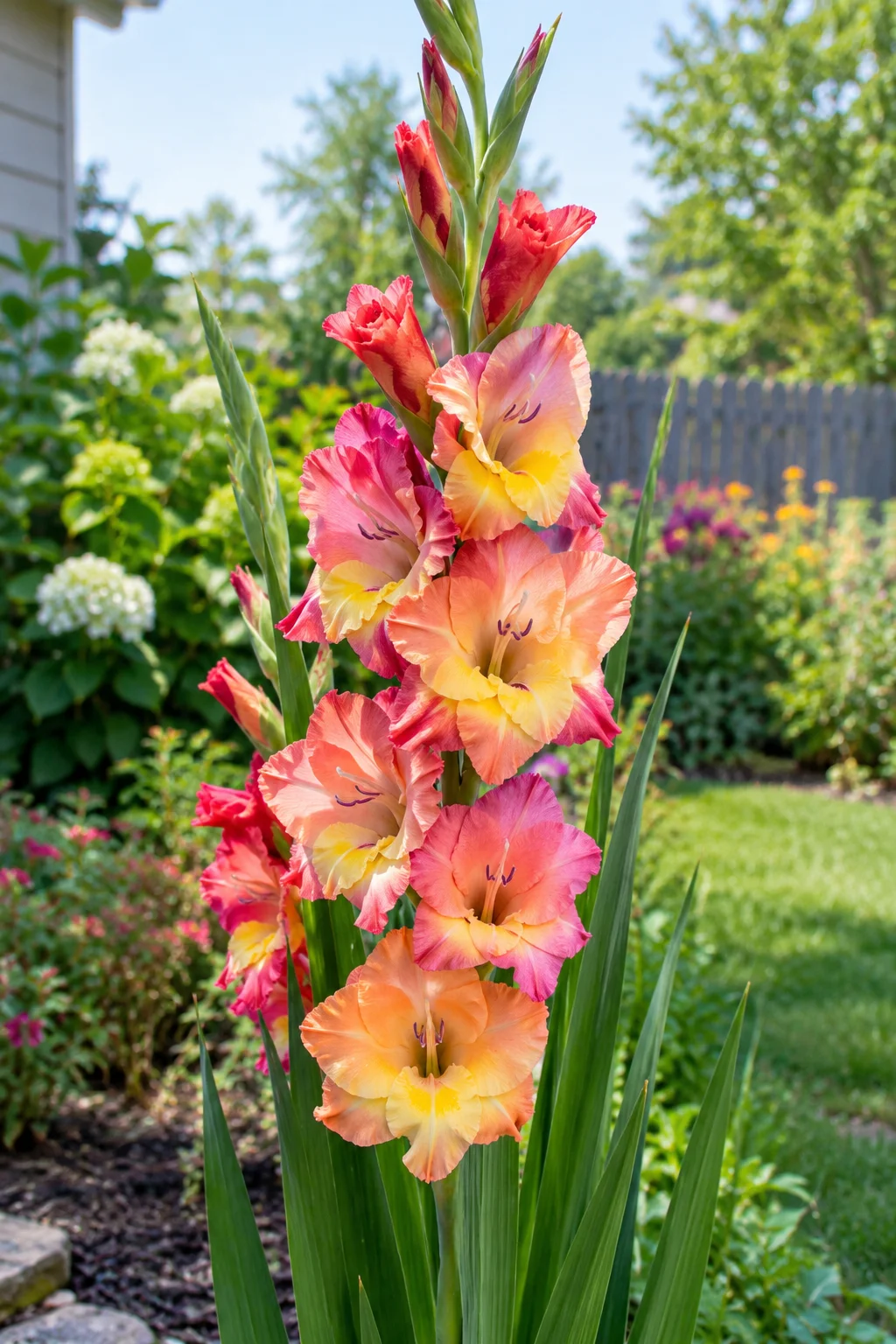
If you’re wondering what the August birth flower actually is, here’s the quick answer. August has two: the gladiolus, its primary flower, and the poppy, its secondary flower. The gladiolus gets its name from the Latin word for sword, because of its tall, blade-like leaves. It symbolizes strength of character, integrity, and sincere admiration. The poppy, with its delicate, papery petals, represents remembrance, imagination, and peaceful rest. Together, they capture something true about late summer itself: bold, confident growth paired with a quieter, more reflective undertone as the season starts to turn. Below is what each flower actually means, where that symbolism comes from. For anyone who wants to grow either one, practical guidance most articles on this topic skip entirely.
Quick Answer: What Is the Birth Flower for August?
August is one of several months assigned two birth flowers rather than one. This tradition gives more range for the meanings you might want to send or receive. The gladiolus is listed first and carries the stronger, more assertive symbolism: honor, integrity, and admiration. The poppy follows as the secondary flower, contributing themes of memory, dreams, and quiet reflection. Neither flower cancels the other out. Instead, they work as a pair, giving August birthdays a broader emotional range than a single-flower month typically carries.
The Gladiolus: Meaning and Symbolism
The gladiolus takes its name from the Latin word gladius, meaning sword. That’s a direct reference to its tall, blade-shaped leaves, not any violent association. The connection to swords runs deeper than etymology, though. In ancient Rome, gladiators reportedly wore gladiolus corms as protective amulets before entering the arena, believing the flower offered protection and a better chance of victory. Roman crowds are also said to have thrown gladiolus blooms to fighters who won, as a mark of respect. That history is where the flower’s enduring association with courage, strength, and honor originates.
By the Victorian era, when flower symbolism became a genuinely codified system of communication, the gladiolus took on a softer, more personal meaning. Victorians used it to express deep admiration and, notably, infatuation, tied to the idea that the recipient had figuratively been “pierced” by the sender’s feelings. Today, the gladiolus remains the traditional flower associated with 40th wedding anniversaries, a nod to the strength and integrity needed to sustain a long marriage.
Color shifts the emphasis somewhat. Red gladiolus lean toward passion and deep love. Pink communicates gentleness and compassion. White speaks to remembrance and purity, and purple is often tied to themes of fortune and distinction.
The Poppy: Meaning and Symbolism
Where the gladiolus is bold and structural, the poppy is delicate and reflective, and its symbolism follows that contrast. Poppies are most widely known today as a symbol of remembrance for fallen soldiers. This association is rooted in the flower’s tendency to grow across disturbed battlefield soil, most famously commemorated in the World War I poem “In Flanders Fields.”
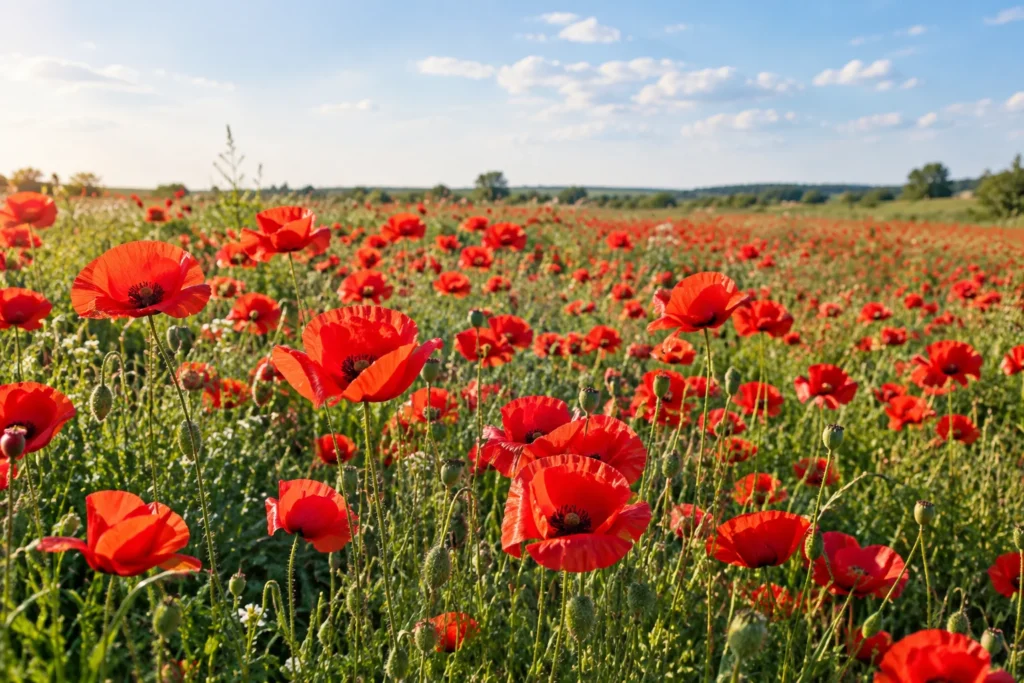
That’s not the flower’s only layer of meaning, though. In ancient Greek mythology, the poppy was sacred to Hypnos, the god of sleep. And his son Morpheus, the god of dreams. This is where the flower’s long-standing association with rest, sleep, and imagination comes from. The poppy also connects to Demeter, the Greek goddess of the harvest, tying it to themes of abundance and the natural cycle of the season.
Poppies bloom in a wide range of colors beyond the iconic red, including orange, yellow, pink, purple, and white. The specific meaning can shift somewhat with color, though remembrance and imagination remain the dominant themes across most varieties.
Why August Has Two Birth Flowers
Both flowers reach their seasonal peak during the height of summer, which is part of why they were paired with this particular month. The pairing also works on a symbolic level, though. The gladiolus represents August’s outward energy: confidence, achievement, and the sense of a growing season at its most productive. The poppy reflects the month’s quieter undercurrent, the awareness that summer, however abundant, is beginning its slow shift toward autumn. Together, they suggest someone capable of both strength and depth. It Is an appealing combination for anyone choosing a flower to represent an August birthday.
Growing Gladiolus: What to Know
This is where most birth flower articles stop short, but if you’re actually interested in growing either plant rather than just buying cut stems, the practical details matter.
Gladiolus grows from a corm, a solid underground storage structure similar to a bulb. Whether it behaves as a true perennial in your garden depends heavily on your USDA hardiness zone. In zones 8 through 11, gladiolus corms can typically stay in the ground year-round, going dormant in winter. And resprouting as the soil warms in spring, often naturalizing and multiplying over the years. Zone 7 is considered a borderline or transition zone: corms often survive mild winters with a thick layer of mulch for insulation, but a harder freeze can still damage them. Some gardeners in this zone choose to dig up corms as a precaution.
In zones 2 through 6, covering most of the northern United States, gladiolus corms won’t reliably survive winter in the ground. Gardeners in these regions either treat gladiolus as an annual, planting fresh corms each spring, or dig up the corms in fall before the first frost. After digging, cure them for one to two weeks in a warm, airy spot, then store them over winter in mesh bags at 35 to 50 degrees Fahrenheit before replanting the following spring.
Growing Poppies: What to Know
Poppies vary more by species than gladiolus does in terms of hardiness and growing habit. Oriental poppies, one of the most common garden varieties, are herbaceous perennials in many temperate U.S. zones. They go dormant in mid-summer after their spring bloom, a normal part of their growth cycle rather than a sign of a problem. Annual poppy varieties, including the classic red field poppy associated with remembrance symbolism, are typically direct-sown in early spring or even in fall in milder climates, since their seeds often need a cold period to germinate well.
Both types generally prefer full sun and well-drained soil. As a group, poppies also tend to resent transplanting once established, given their long taproots. So direct sowing rather than starting seedlings indoors is usually the better approach if you’re growing them from seed.
Choosing Between Gladiolus and Poppy for an August Birthday
If you’re picking a flower to represent someone’s August birthday specifically, think about which symbolism fits the message you want to send. Gladiolus works well for congratulating an achievement, expressing admiration, or marking a milestone, thanks to its associations with strength, honor, and sincere respect. Poppy fits better for something more reflective: a message of remembrance, comfort, or quiet appreciation.
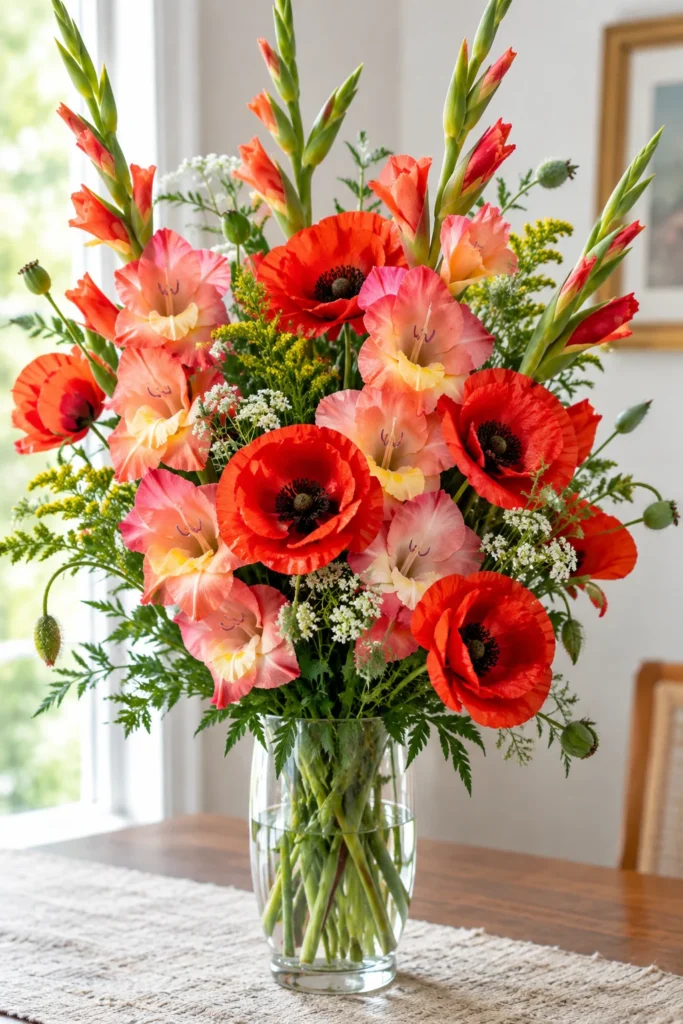
Many florists also combine both flowers in a single arrangement specifically to capture August’s dual character, pairing the gladiolus’s height and structure with the poppy’s softer, more delicate presence for a bouquet that reflects both sides of the month’s symbolism.
If you’re planning a cutting garden or flower bed featuring seasonal blooms like these, PlazmaHomes’ decomposed granite guide covers a practical hardscaping option worth considering for garden pathways and bed borders.
For checking your specific growing zone before planting gladiolus corms or poppy seeds, the USDA Plant Hardiness Zone Map is the authoritative source for determining what will reliably survive winter in your area.
Frequently Asked Questions
What is the primary birth flower for August?
The gladiolus is August’s primary birth flower, with the poppy recognized as the secondary birth flower.
What does the gladiolus symbolize?
Strength of character, integrity, honor, and sincere admiration. Its name comes from the Latin word for sword, referencing its tall, blade-shaped leaves and its historical association with Roman gladiators.
What does the poppy symbolize?
Remembrance, imagination, and peaceful rest. It’s most widely known as a symbol honoring fallen soldiers. But it also connects to ancient Greek mythology through its association with sleep and dreams.
Why does August have two birth flowers instead of one?
Several months in the birth flower calendar have two flowers to reflect different historical floral traditions. And to allow a broader range of symbolic meaning. The gladiolus and poppy both peak seasonally in late summer, reinforcing their pairing with August.
Can gladiolus survive winter outdoors?
It depends on your USDA hardiness zone. In zones 8 through 11, gladiolus corms typically survive winter in the ground and in zone 7, they’re borderline and often need mulch protection. In zones 2 through 6, most gardeners dig up corms in fall or treat the plant as an annual.
What color gladiolus should I choose for a birthday gift?
Color shifts the emphasis of the symbolism. Red suggests passion and deep love, pink suggests gentleness, white suggests remembrance and purity, and purple is often tied to fortune. Choose based on the specific message you want to convey.
Are poppies easy to grow from seed?
Reasonably, yes, though they generally don’t transplant well due to their taproots, so direct sowing in the garden is usually more successful than starting seeds indoors and transplanting seedlings later.
Is the gladiolus associated with any specific wedding anniversary?
Yes, the gladiolus is the traditional flower for 40th wedding anniversaries, symbolizing the strength and integrity that sustain a long marriage.