

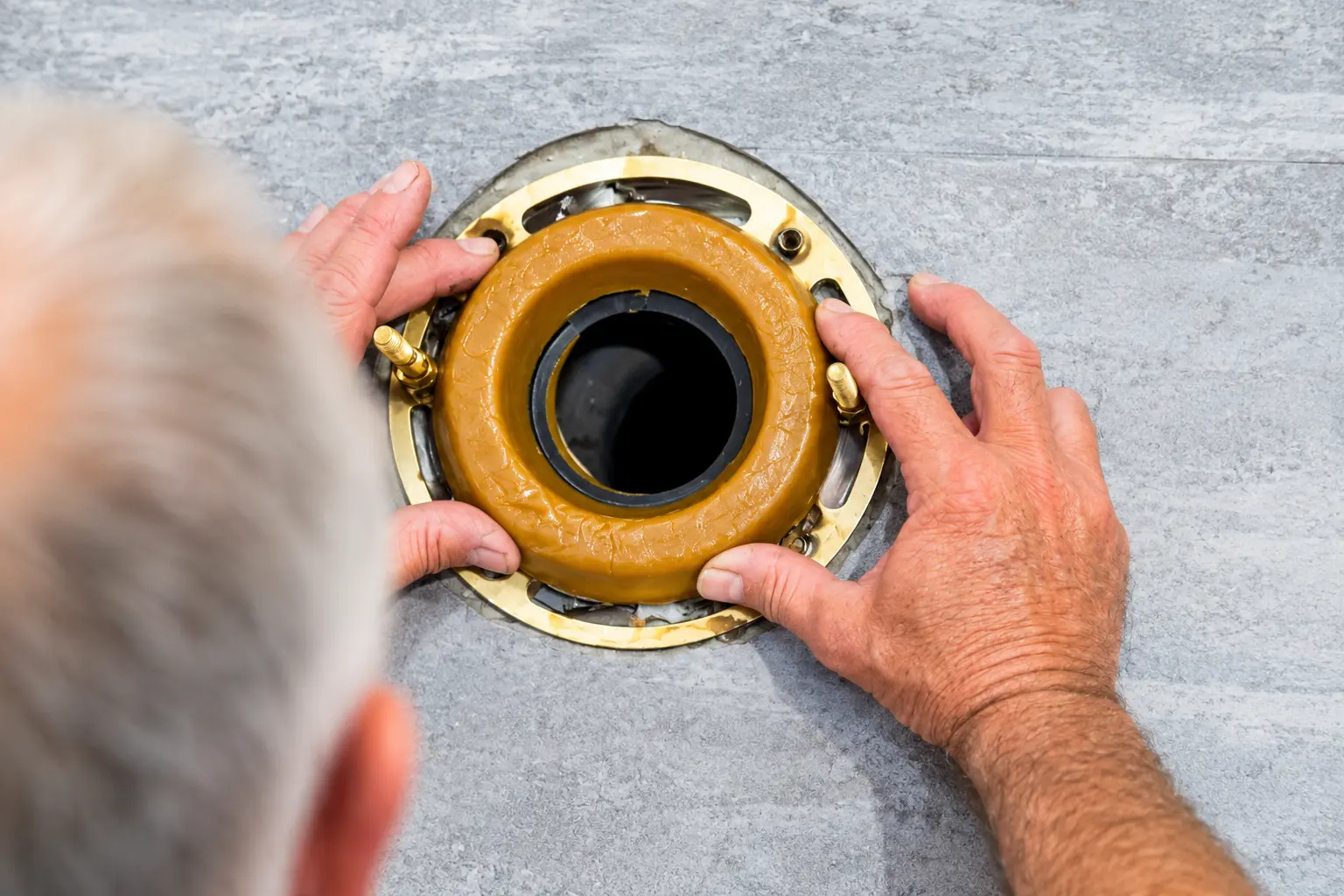
A wax ring is a donut-shaped seal that fits between the bottom of the toilet and the drain flange in the floor. It stops water from leaking out and keeps sewer gas from coming up through the bathroom. Most toilets in the United States use either a 3-inch or 4-inch drain so you’ll need a ring that fits one of those sizes. The thickness of the ring depends on how the flange sits compared to your finished floor. If you have taken the toilet off for any reason you must use a wax ring. Wax rings are meant to be used once.
This guide focuses on helping you get that choice right. That’s because most problems with toilet installation come down to a wax ring that doesn’t match the height of the flange.
What a wax ring actually does
When you place the toilet back onto the flange the wax compresses and fills spaces between the toilet outlet (called the “horn”) and the flange. This creates a watertight and airtight seal. Oatey, a manufacturer of plumbing parts, says their wax rings are made of petroleum wax. This kind of wax is soft and moldable enough to fit surfaces.
Because the seal works by compression a wax ring can’t be reused. Once it has been squashed and pulled away it won’t form a seal again. An installed wax ring can last many years—sometimes as long as the toilet itself. If the toilet moves or the flange is damaged the seal can fail.
Signs your wax ring needs replacing
- Water pools or seeps around the base of the toilet
- The toilet wobbles or shifts when you sit on it
- There’s a smell of sewer gas near the toilet that doesn’t go away after cleaning
- Stains appear on the ceiling below a second-floor bathroom
- The floor around the toilet feels soft or spongy
Even if no water is leaking, a rocking toilet should be checked. Movement breaks the seal. A slow leak might cause serious damage to the subfloor before you notice anything.
Types of toilet wax rings
| Type | What it is | Best for |
|---|---|---|
| Standard | Basic wax ring | Flange sitting on top of the finished floor |
| Extra thick | Thicker wax body for a deeper seal | Flange level with or slightly below the floor |
| Jumbo / double-thick | Even more wax than extra thick | Flange noticeably recessed |
| Reinforced | Wax with a stronger core; Oatey advertises a core five times stronger | High-use toilets and any floor type |
| Wax with plastic sleeve (horn) | Adds a sleeve that extends the toilet outlet | Helps guide waste and alignment |
| Wax-free (rubber or foam) | Reusable flexible seal | Cleaner installs and toilets you may remove again |
| Wax ring with flange kit | Ring bundled with a replacement flange | Broken or damaged flanges |
Wax versus wax-free. Wax is the traditional choice because it molds well to imperfect surfaces. Wax-free seals are easier to handle. Some models even adjust to flange heights. According to Oatey, they may not seal properly on uneven or damaged flanges. They also tend to wear out over time. If your flange is in good shape and you want less mess, a wax-free seal is a reasonable pick. But if the flange is chipped or the floor is not flat a wax ring is safer.
Wax ring sizes and thickness
Diameter: Most homes use either a 3-inch or 4-inch drain. Many wax rings are sold as fitting both. You can check the size by looking at the pipe opening after removing the toilet.
Thickness: Different brands describe thickness in different ways. Standard rings are usually three-quarters of an inch to one inch thick. Extra-thick rings are often around one and a half inches. Go by the labels and the position of the flange instead of relying on exact measurements.
The rule of thumb that most manufacturers agree on is:
- Flange sits on top of the finished floor: standard thickness.
- Flange is level with the floor or slightly below it: extra thick.
- Flange is well below the floor: fix the height with a flange spacer or extender, then use an extra-thick ring if needed.
One retail guide suggests that if the flange is half an inch or more below the floor an extra-thick ring that’s 1.5 inches or thicker is best. Take that as a guide, not a strict rule.
Why flange height matters most
Oatey says toilet flanges must sit flush with or slightly above the floor. Problems often happen after someone installs a flooring layer like tile on top of vinyl. The floor gets higher. The flange ends up lower than it should be. A standard wax ring can’t fill that gap.
You have three options:
- Use an extra-thick ring if the flange is only slightly low.
- Add a flange extender or spacer to raise the flange to the correct height. Oatey recommends this fix for a flange that’s below the floor.
- Use an adjustable wax-free seal designed for varying flange heights.
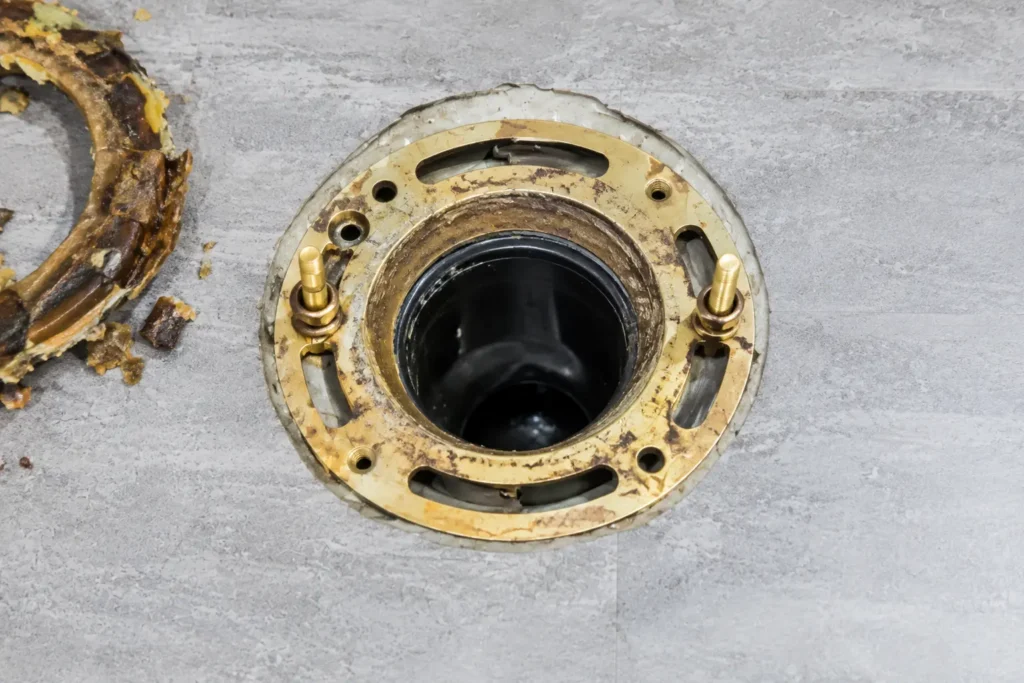
Don’t stack two wax rings. It seems like a fix, but Oatey warns against it. Instead, use an extra-thick ring or a spacer.
The opposite problem can happen too. If the ring is too thick for a flange that’s already high the toilet can sit too high and rock. Using an extra-thick ring on a flange that’s flush or above the floor can squeeze out the wax and make the seal worse. Match the thickness to the flange height.
How to replace a toilet wax ring
Oatey rates this an intermediate project that takes under two hours. Here’s the process with the details that matter most.
Before you start: Check the flange. If the toilet rocked or one side lifted the flange might be broken. Buy a repair kit before you begin. Also replace the closet (T) bolts whenever you replace the wax ring. Many kits include them.
Tools and supplies: wrenches, bucket and sponge, a mini hacksaw for cutting bolts, plastic putty knife, disposable gloves, a new wax ring, new closet bolts and a new water supply line if the old one is worn.
- Shut off and drain. Turn the shutoff valve clockwise, flush, and sponge out the remaining water in the tank and bowl.
- Disconnect and lift. Loosen the supply line, remove the bolt caps and nuts, rock the toilet gently to break the seal, and lift it straight up. Toilets are heavy, so get help if you need it.
- Scrape and inspect. Remove all old wax from the flange and the toilet outlet with a putty knife. Look for cracks, rust, or a flange that sits below the floor. Also look at the subfloor. If it’s soft or stained, repair it before you continue.
- Set the new ring. Center the ring on the flange. Don’t stack rings.
- Lower the toilet. Guide the toilet straight down onto the bolts, and press evenly to compress the wax. Don’t twist or slide it after it touches the wax, because that can distort the seal.
- Tighten gradually. Alternate between the two nuts a little at a time. Over-tightening one side can crack the porcelain. Reconnect the supply line hand-tight plus about a quarter turn with a wrench.
- Test. Open the valve, let the tank fill, and flush several times while checking the base for leaks. If it’s dry, caulk around the base if you like.
Temperature tip: Wax gets stiff when it’s cold. Many installers let the ring warm to room temperature before use so it molds better. It’s a common practice, but I didn’t find a manufacturer rule for it, so follow the instructions on your product’s packaging.
Toilet still rocks? Check the flange level and the bolts. If the flange is fine, plastic toilet shims can stabilize a slightly uneven floor.
Common mistakes
- Reusing the old ring. It won’t reseal once it’s been compressed.
- Stacking two rings instead of using an extra-thick ring or spacer.
- Ignoring a low flange after a tile or flooring upgrade.
- Skipping new bolts. Old bolts can be corroded or bent.
- Tightening one nut all the way before the other, which can crack the toilet.
- Repeatedly rocking the toilet after setting it, which can break the seal.
- Not checking the subfloor when the original problem was a leak.
- Blaming the ring when the real problem is a cracked flange.
When to call a plumber
A DIY replacement is realistic for most homeowners. But call a professional if:
- The flange is cracked, corroded, or set into damaged flooring
- The subfloor is soft, stained, or rotted
- The toilet leaks again shortly after you replace the ring
- You see water damage on the ceiling below
- The toilet sits on an offset flange or unusual drain layout
If you’re thinking about replacing the whole toilet instead of just the ring, our tankless toilets guide explains how newer designs work and what they cost. You can also compare our picks for the best wall hung toilets. If you enjoy DIY plumbing repairs, our shower cartridge guide and water heater thermostat guide walk through similar jobs.
Cost
I didn’t find a single authoritative price source, and prices change. At one large retailer, individual wax-free seals and extra-thick rings were listed at roughly $10 to $17, with multi-packs and kits with flanges costing more. Compare current prices and check that the kit includes bolts.
Frequently asked questions
How do I know what size wax ring I need?
Most toilets use a ring for a 3-inch or 4-inch drain. Measure the drain opening and check the flange height relative to your floor. Standard thickness fits a flange on top of the floor, and extra thick fits a flange level with or slightly below it.
Can I reuse a wax ring?
No. Wax rings seal by compression and are single-use. If you lift the toilet for any reason, install a new one.
How long does a wax ring last?
A properly installed ring often lasts many years, sometimes the life of the toilet, but it can fail sooner if the toilet moves or the flange is damaged.
Can I use two wax rings stacked together?
It’s common, but Oatey advises against it. Use an extra-thick ring or a flange spacer instead.
Is a wax-free toilet seal better than wax?
Not universally. Wax-free seals are cleaner and reusable, but Oatey notes they may not seal well on uneven or damaged flanges and can lose durability over time.
Why is my toilet leaking after I installed a new wax ring?
Common causes are a cracked or low flange, a ring that’s the wrong thickness, loose or uneven bolts, or a damaged supply line. Check the flange and bolts first.
Do I need new bolts every time?
It’s recommended. Oatey advises replacing the closet bolts whenever you replace the wax ring.
Why does my toilet still rock after a new wax ring?
The flange may be broken or uneven, or the ring may be too thick for the flange height. Check the flange, and use shims if the floor is slightly uneven.
Sources & references
- Oatey: What Is a Toilet Wax Ring and When Should You Replace It?
- Oatey: How to Replace a Toilet Wax Ring
- Danco: How to Choose the Right Toilet Wax Ring Size
Product details and prices vary by brand and change over time. Follow the instructions on your specific product, and follow local plumbing codes. This is general home-repair information, not professional plumbing advice.