

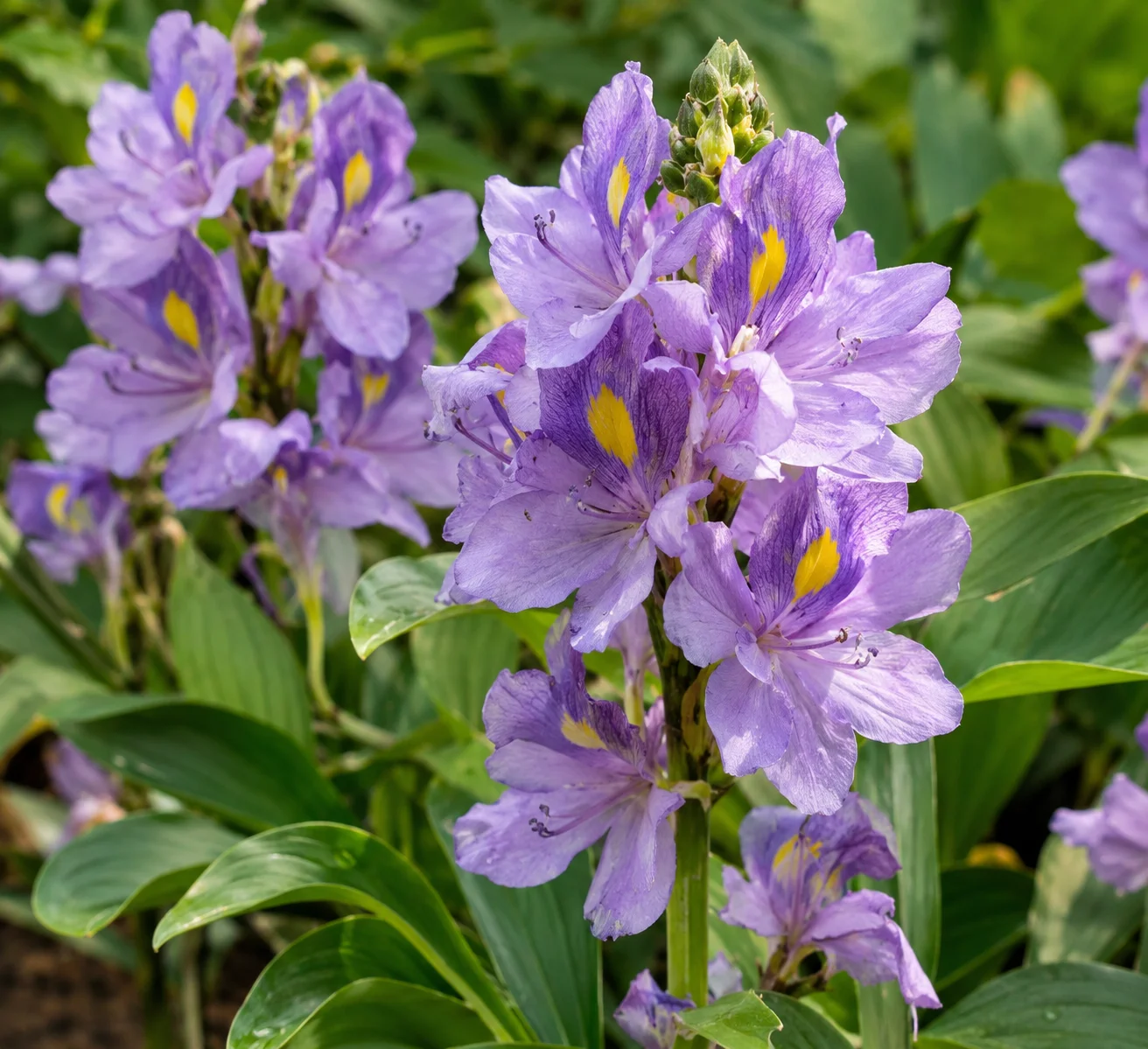
If you’ve ever stood under a mature wisteria in bloom, you know why people lose their minds over it. You also know the other side of the story: the Asian types can swallow a porch, crack a pergola, and take a decade to flower. Amethyst Falls is the friendlier cousin.
It’s a native American wisteria with cascading lavender flowers, hardy in USDA zones 5 to 9, and it blooms on new growth. That last bit is the real selling point. A late frost or a hard prune won’t wipe out your flowers the way it can with Chinese or Japanese wisteria.
One honest warning before we start: “well-behaved” doesn’t mean “small.” This is still a woody, twining vine that wants strong support, a trim once a year, and a little patience. Here’s how to set it up so it actually performs.
Amethyst Falls wisteria at a glance
- Botanical name: Wisteria frutescens ‘Amethyst Falls’
- Hardiness zones: 5 to 9
- Sun: Full sun (6+ hours) for the best bloom
- Mature size: Roughly 15 to 25 ft of vine, 4 to 10 ft wide, depending on how you train it
- Flowers: Fragrant, lilac-purple clusters about 4 to 6 inches long
- Bloom time: Late spring, with a lighter rebloom in summer
- Pruning: Blooms on new wood, so it forgives a hard cut in winter or early spring
- Watch out for: Seeds and pods are toxic if eaten
Why gardeners pick Amethyst Falls over other wisterias
Most of us picture Chinese or Japanese wisteria when we hear the word. Those two grow fast, spread hard, and are considered invasive across much of the eastern United States. Delaware has banned them outright. American wisteria plays by different rules. Duke Gardens describes ‘Amethyst Falls’ as a popular, widely available, slower-growing choice that suits patios, trellises, and other small spaces.
| Feature | Amethyst Falls (American) | Chinese / Japanese wisteria |
|---|---|---|
| Invasive? | No, native to the eastern US | Yes, in many states |
| Flower clusters | About 6 in. long | Up to a foot or more |
| Blooms on | New growth | Last year’s wood |
| Bloom timing | 1 to 2 weeks later | Earlier, so frost can hit the buds |
| Seed pods | Smooth and hairless | Velvety and fuzzy |
| First flowers | Often in the first season | Can take many years |
A few of those differences matter more in real life than they look on paper:
- The flowers are shorter and daintier. Think six-inch, grape-bunch chains instead of the foot-long curtains you see on Asian wisteria. It’s subtler, but still lovely.
- It blooms later, which protects it. Flowers open a week or two after the Asian types, so late-winter frosts rarely catch the buds.
- It flowers on new wood. Young plants can bloom early, and many rebloom lightly through summer.
- Pollinators like it. It’s reported to host several skipper butterflies, and bumblebees visit the flowers.
Keep your expectations realistic, though. A University of California Davis trial called it “pretty but a little too timid” next to showier plants. If you want the jaw-dropping show of a mature Asian wisteria, this isn’t it. If you want a vine that won’t try to eat your gutters, it’s a great pick.
How big does Amethyst Falls wisteria get?
Ask five sources and you’ll get five answers. Here’s what the main ones say:
| Source | Height | Spread |
|---|---|---|
| NC State Extension Plant Toolbox | 18–20 ft | 10–15 ft |
| Native Plant Trust | 15–25 ft | 4–8 ft |
| Purdue Arboretum | up to 30 ft | 15 ft |
| One online nursery | 8–20 ft | 6–10 ft |
The numbers don’t agree because this is a twining vine. “Height” really means stem length, and that depends on how you train and prune it. Plan on about 15 to 25 feet of reach, then prune to keep it where you want it. One grower reports 10 feet or more of growth in a single year, so don’t be surprised when a pergola post fills in faster than you expected.
Where to plant it
Sun. Full sun is the biggest factor for flowers. Aim for at least six hours of direct light. Some regional guides say part sun is fine, and the vine will grow there, but you’ll see fewer blooms.
Soil. It likes moist, well-drained, slightly acidic soil (one extension-style guide gives a pH of 5.8 to 6.5). It grows wild in riverside woodland, so it handles more moisture than many climbers, and it’s happy in ordinary garden soil. Once established, it copes with moderate drought. What it really hates is sitting in waterlogged clay. If your yard holds standing water after rain, plant it on a low mound.
Zone and region. Most sources say zones 5 to 9, though a few list 3 to 9 or 7 to 9. If you’re near the edge of that range, ask a local nursery or your county extension office. A few regional notes:
- Northeast and Midwest: In colder zone 5 spots, pick a place sheltered from harsh winter wind.
- Southeast: This is the species’ home turf, so it should be at its easiest here.
- Pacific Northwest and California: Results can be uneven. The UC Davis trial found it less vigorous than hoped, so don’t assume it will behave the way it does back East.
- Hot, dry Southwest: Plan on regular irrigation and some afternoon relief.
Distance from your house. Give it some breathing room from siding, wood shingles, and gutters. Even this well-mannered wisteria turns into a heavy, woody vine over time.
Build the support first
This is where most people go wrong. Wisteria stems get thick and strong with age, and a flimsy big-box trellis that looks fine in year one can bend or collapse a few years later. Go for a sturdy pergola, an arbor, or a post-and-wire system. The Native Plant Trust is blunt about it: wisteria needs a structure that can carry its weight.
Two small details make a real difference.
Mind the direction of the twist. According to Duke Gardens, American wisteria twines counterclockwise. When you tie in stems, wrap them the same way. They’ll grip on their own and need far less hand-holding.
Leave a gap behind the wires. If you’re training it on a wall or fence, run horizontal wires with a little space between the wire and the surface. The stems need room to wrap around the wire, not press flat against the wall.
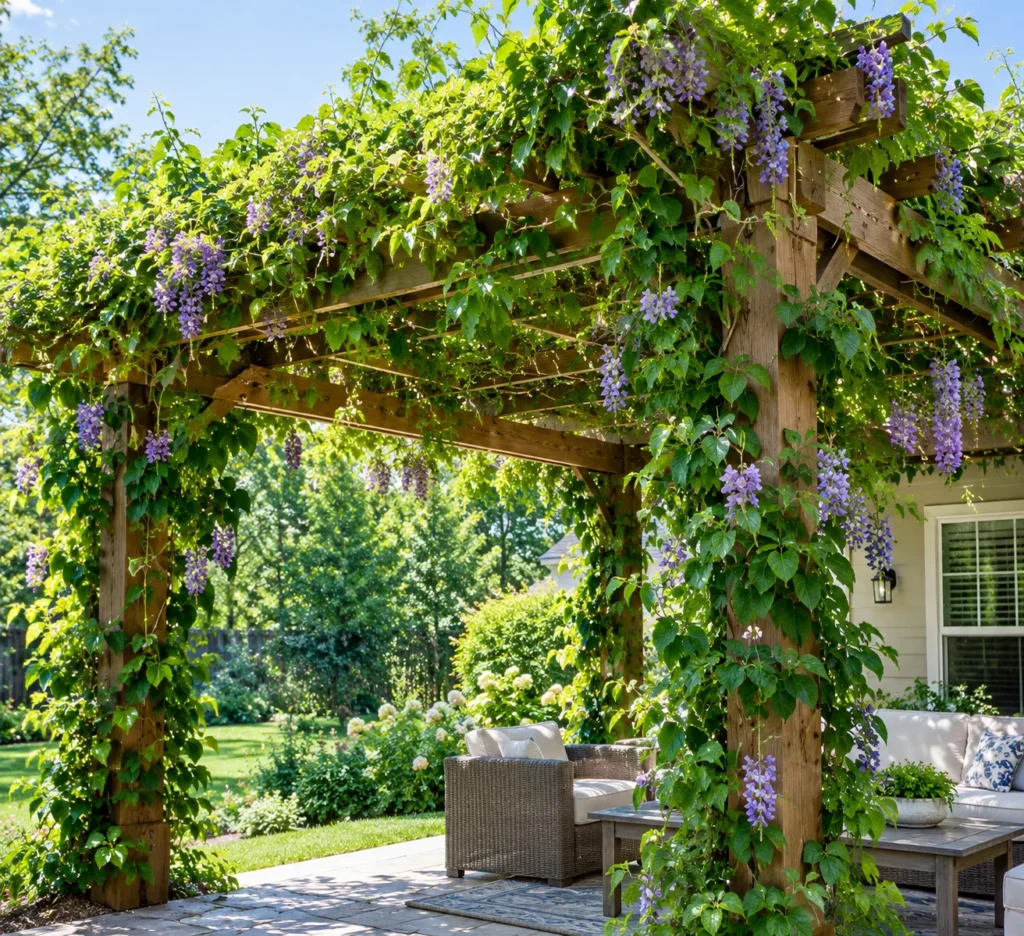
You can also grow it as a small tree: stake a young plant to a post, keep one central stem, and trim off the lower side shoots. The Bartlett Arboretum notes the cultivar looks good both on a trellis and staked as a standard.
Buying tips: what to look for at the nursery
Not every plant labeled “wisteria” is the same, and this is an easy place to save yourself years of waiting.
- Buy a named plant, not a seedling. Purdue’s extension advice is to avoid seed-grown vines, because their bloom habits are unpredictable. A tagged ‘Amethyst Falls’ is the safe bet.
- Check the label for Wisteria frutescens. That’s the American species. If the tag says sinensis or floribunda, you’re holding an Asian wisteria.
- Don’t pay extra for a big vine. A healthy one-quart or one-gallon plant usually catches up quickly, and it’s easier to settle in.
How to plant Amethyst Falls wisteria, step by step
- Pick your timing. Spring or fall is best, so the roots can settle in before extreme heat or hard freezes.
- Dig a wide hole. About twice the width of the container, and no deeper than the root ball.
- Plant at the same depth it grew in the pot. Backfill with your own soil, lightly amended if it’s very poor.
- Water deeply and mulch 2 to 3 inches, keeping the mulch off the stems.
- Tie the main stem to the support and keep watering regularly through the first full season.
If you’re covering a long fence, one retailer suggests about eight feet between plants. That’s one retailer’s number, not a rule, so adjust for how fast you want coverage.
Watering and feeding
In the first year, water young plants once or twice a week when it’s dry. Established vines cope with dry spells, but they bloom better when moisture stays steady during spring growth.
Go easy on fertilizer. Wisteria is a legume, which means it makes some of its own nitrogen, and extra nitrogen gives you leaves instead of flowers. One nursery suggests a fertilizer with some phosphorus to support blooming. If you suspect a nutrient problem, a soil test through your state extension service costs far less than guessing.
How to prune Amethyst Falls wisteria
Because Amethyst Falls blooms on new wood, pruning is much more forgiving than with Asian wisteria. NC State’s Plant Toolbox says the vines can be pruned moderately each winter, and other growers say it can take a harder cut in winter since flower buds form on spring growth. Here’s a simple routine:
- Winter or early spring: Before leaves appear, cut last year’s side shoots back to a few buds from the main framework. Remove anything dead, crossing, or tangled. This is when you set the size of the vine.
- Midsummer (optional): Trim long, floppy shoots so the vine doesn’t sprawl. Some gardeners do this to tidy the shape and encourage flowering wood.
- Any time: Snip stems drifting toward gutters or neighboring plants before they start to cling.
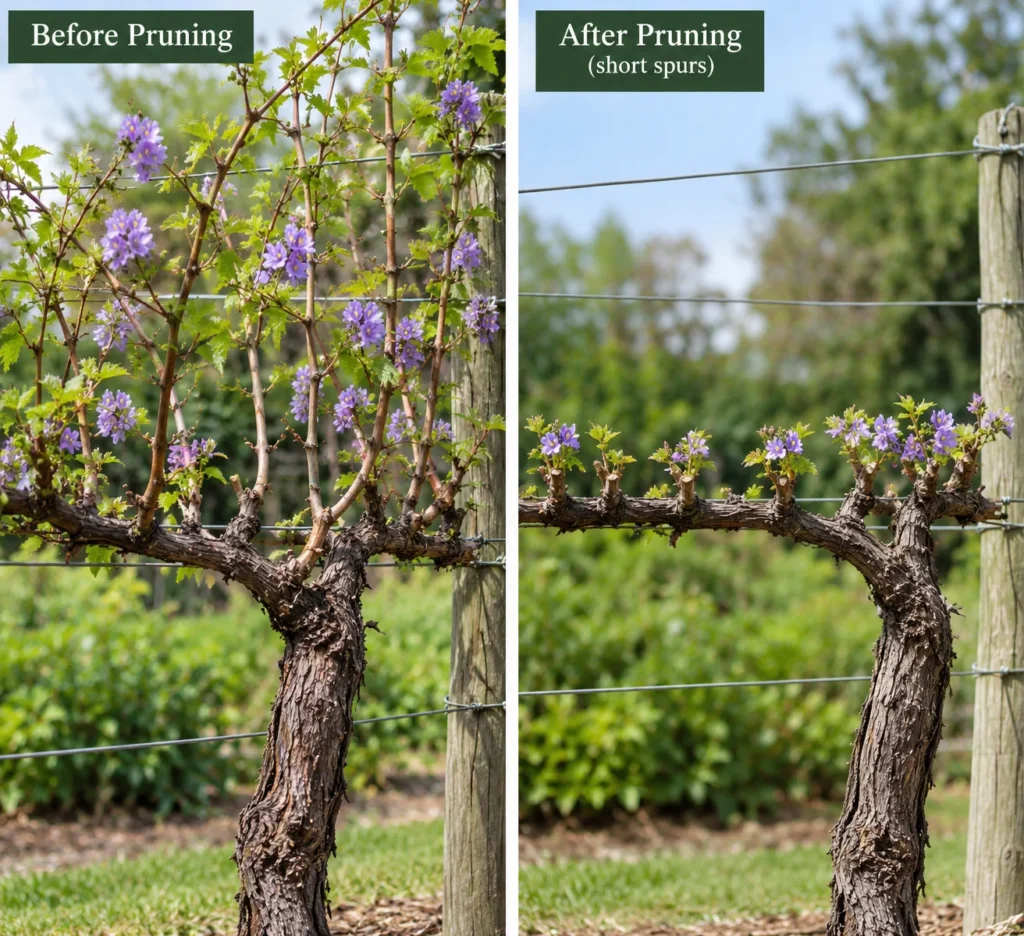
One caution: just because it can handle a severe cut doesn’t mean you should do it every year. You still need a solid framework of main stems to carry the new flowering branches. Let a young vine cover its support first, then start the regular trimming.
Growing Amethyst Falls in a container
Yes, you can do it, and it’s one of the better wisterias for the job. Duke Gardens says it suits small, contained spaces, and the Royal Horticultural Society recommends it for a large pot. A few ground rules:
- Go big on the pot. The RHS suggests at least 18 inches across for wisteria, with a loam-based potting mix.
- Drainage is non-negotiable. Make sure the pot has holes, and don’t let the roots sit in a saucer of water.
- Give it a real support. An obelisk, a sturdy trellis, or a stake for a tree form. Tiny wire cages won’t hold up.
- Water more often than you would in the ground, and protect the pot over winter in colder zones.
Why isn’t my Amethyst Falls wisteria blooming?
Wisteria has a reputation for being stubborn, and Amethyst Falls is easier than most. When it does hold out on you, it’s usually one of these:
- Not enough sun. The most common culprit. A shaded vine puts its energy into leaves.
- Too much nitrogen. Lush foliage, hardly any flowers. Keep lawn fertilizer away from the vine.
- It’s still young. Sources disagree. Some say it can bloom in its first season, others say it may take a few years. A small nursery plant may just need time to settle in.
- Badly timed pruning. Amethyst Falls is less touchy than Asian wisteria, but stripping off all the new growth in early summer removes the stems that carry the flowers.
- Stress. Drought while buds are forming, or disturbed roots, can cut the bloom.
Pests and problems to watch for
Wisteria is tougher than it looks, and serious problems are uncommon. Still, keep an eye out for a few things.
- Aphids and scale insects. The RHS lists both as possible visitors to wisteria. Look for sticky leaves or small bumps on the stems, and treat early.
- Sudden wilting or dieback. This usually points to a problem with water uptake at the roots, such as waterlogged soil, drought, or damage. Check drainage first.
- Weak growth in the wrong spot. If a vine sulks in deep shade or soggy clay, moving the planting site will do more than any treatment.
Safety, wildlife, and other things people overlook
Toxicity. The seeds, pods, and other parts of wisteria can make you sick if eaten. NC State’s Plant Toolbox gives ‘Amethyst Falls’ a low-severity poison rating. If you have kids or pets who chew on plants, snip the pods before they mature or keep the vine out of reach.
It’s hard to get rid of. The Native Plant Trust points out that established wisteria is very hard to remove because of its deep roots. Choose the spot carefully.
Deer. Some sources list it as deer resistant. But where deer are plentiful, no plant is truly safe, especially young ones.
Telling it apart from Asian wisteria. If you’ve inherited a vine and aren’t sure what it is, check three things: flower length (short for American), bloom time (later), and the seed pods (smooth for American, fuzzy for Asian). The direction it twines helps too.
Is Amethyst Falls the right wisteria for you?
Choose it if you want a more restrained wisteria with fragrant flowers, you have full sun, and you can give it a sturdy structure to climb.
Think twice if you’re after dramatic, foot-long flower chains, you only have deep shade, or you want a plant you can ignore. It needs support and a yearly trim to stay healthy and bloom well. For shady walls, you may be happier with one of these clematis varieties that thrive in shade.
Look at alternatives if you want a different color. ‘Nivea’ is a white-flowering American wisteria, and ‘Longwood Purple’ has deeper purple blooms, according to one grower guide.
Frequently asked questions
Is Amethyst Falls wisteria invasive?
No. It’s a cultivar of a native species, and sources consistently describe it as far less aggressive than Chinese or Japanese wisteria. It’s still vigorous, though, and can overwhelm weaker plants nearby, so it needs pruning.
How fast does Amethyst Falls wisteria grow?
Sources split on this. Some call it fast, others say it’s slower than Asian wisteria. Once it’s settled in, expect several feet of new growth each good summer, and some growers report 10 feet or more in a year. It’s steady and strong rather than wild.
When does Amethyst Falls wisteria bloom?
Late spring, generally April to June depending on your climate, and about one to two weeks after Asian wisterias in the same area.
Does it bloom more than once a year?
It blooms mainly in late spring and may rebloom lightly in summer. Don’t count on the second round being as showy as the first.
Can I grow it in a container?
Yes. Use a large pot with good drainage, give it a sturdy support, and water more often than you would an in-ground plant. In cold zones, container plants may need winter protection.
Does it need pruning every year?
In practice, yes. It’ll survive without it, but an unpruned vine gets tangled, heavy, and messy.
Is it toxic to dogs and cats?
The seeds and pods can be harmful if eaten, and NC State gives them a low-severity poison rating. Keep pets from chewing on the pods. If you think your pet has eaten some, call your vet or a pet poison hotline right away.
Sources & references
- NC State Extension Gardener Plant Toolbox: Wisteria frutescens ‘Amethyst Falls’ (plants.ces.ncsu.edu/plants/wisteria-frutescens-amethyst-falls/)
- Duke Gardens, “American Wisteria” (gardens.duke.edu/garden-talk/american-wisteria/)
- Native Plant Trust, Go Botany/Plant Finder: Wisteria frutescens ‘Amethyst Falls’
- Royal Horticultural Society, “How to grow wisteria” and “Wisteria problems: frequently asked questions” (rhs.org.uk)
- Purdue University Yard and Garden, wisteria guidance (purdue.edu/hla/sites/yardandgarden)
[…] build the arbor (design #9) with posts of at least 4×4 lumber, or rethink the plant. See our Amethyst Falls wisteria guide for how much support it […]