

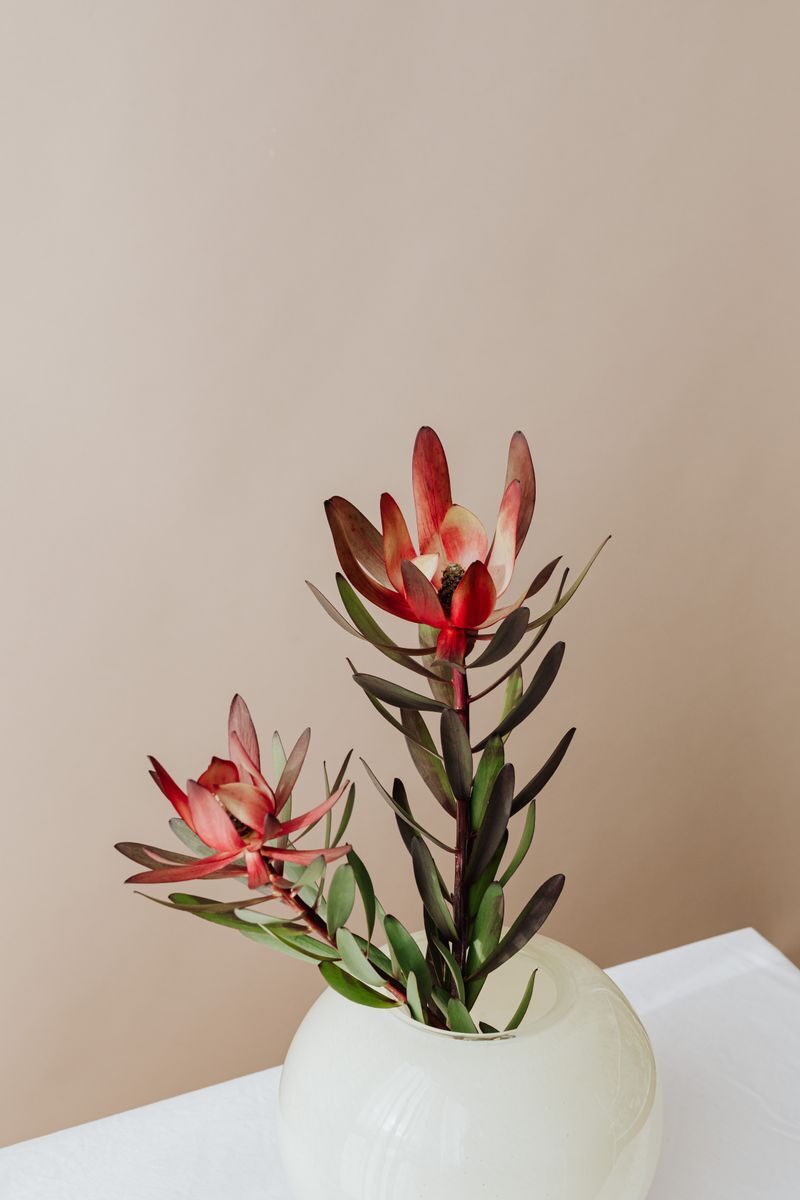
If you’ve ever walked through a California nursery in spring and spotted a shrub covered in fiery red, yellow, or pink star-shaped bracts, chances are you were looking at a Leucadendron. Commonly called conebush, this South African native has become a favorite among American gardeners who want color without constant fuss. It’s drought-tolerant, low-maintenance, and honestly, a little forgiving even when you forget to water it for a week.
I’ve grown a few varieties myself in a hot, dry backyard, and what surprised me most is how little these plants ask for once established. That said, they do have specific needs, and ignoring them can quickly turn a thriving shrub into a sad, yellowing mess. So, this guide walks through everything you need to know, from soil and sunlight to pruning, propagation, and the best varieties for US gardens.
What Is a Leucadendron, Exactly?
Leucadendron belongs to the Proteaceae family, which makes it a close cousin of the Protea plant. There are roughly 80 species in the genus, and most are evergreen shrubs or small trees ranging from 3 feet to over 9 feet tall, depending on the variety. What people usually think of as the “flower” is actually a cluster of colorful bracts, or modified leaves, surrounding a much smaller true flower at the center.
Because of this structure, the color display can last for months rather than weeks, which is exactly why florists love these plants for arrangements. In the garden, though, they’re just as valuable for the texture and structure they add year-round, since the foliage stays visually interesting even when nothing is actively blooming.
Where Leucadendrons Thrive in the US
This is the part American gardeners need to consider first, since climate matters more than almost anything else in this guide. Leucadendrons are only reliably hardy outdoors in USDA zones 9b through 11, so it’s worth checking your zone before committing to an in-ground planting. If you’re in Southern California, coastal areas of the Central Coast, parts of Arizona, or South Florida, you’re likely in solid shape.
Regions with Mediterranean-style weather, meaning mild wet winters and warm dry summers, tend to mimic the conditions these plants evolved with in South Africa. Meanwhile, gardeners in the Pacific Northwest, the Northeast, or the Midwest can still grow Leucadendron, but only as a container plant that gets moved indoors before frost, or treated as a seasonal annual. Since they tolerate temperatures down to about 25°F for short periods but are genuinely frost-sensitive, a hard freeze will damage or kill an unprotected plant fairly quickly.
Light, Soil, and Water Requirements
Leucadendrons want full sun, and that means at least six to eight hours a day. Partial shade, on the other hand, will stunt growth and produce dull, washed-out bract colors, so don’t tuck these under a tree canopy hoping they’ll adapt. Soil is where most beginners go wrong, though, since these plants need sharp drainage above almost everything else, and they actually prefer soil that’s a bit low in fertility rather than rich garden loam.
A sandy or loamy mix works best, and if your yard has heavy clay, amend it generously with sand or fine gravel before planting. Additionally, aim for a slightly acidic pH, somewhere around 5.5 to 6.5, since alkaline soil can lock out nutrients and lead to yellowing leaves over time. As for watering, once established, Leucadendron is genuinely drought tolerant. Therefore, water deeply about once a week rather than giving it frequent shallow sips, and try to keep water off the foliage itself, since damp leaves invite fungal problems.
Planting Guide for Beginners
Spring or early autumn is the best time to plant, since this gives roots a chance to settle in before extreme heat or cold arrives. First, dig a hole roughly twice the width of the root ball, and resist the urge to add compost or fertilizer to the planting hole, because rich soil actually works against this plant’s natural preferences.
Next, space plants generously so air can circulate freely between them, since Leucadendrons are notably susceptible to fungal disease when crowded or when leaves stay wet. If you’re planting several as a hedge or border, leave at least 3 to 4 feet between shrubs depending on the mature size of the variety you’ve chosen. Once planted, water deeply to settle the soil around the roots, then hold off on fertilizing for at least the first few months.
Feeding and Pruning
One reason Leucadendron has become so popular in low-water landscaping is that it barely needs feeding at all. A light application of low-phosphorus, slow-release fertilizer once a year is plenty, since these plants are naturally adapted to nutrient-poor soils, and too much phosphorus can actually harm them.
Pruning, however, is where you’ll get the most return on your effort. After flowering finishes, cut stems back to just above a healthy node, since this encourages bushier, denser new growth for the following season. Neglected plants that have grown leggy can be cut back by up to half their height, but avoid going further than that in a single season, because it can shock the plant. Removing spent blooms regularly also keeps the shrub looking tidy and directs energy toward fresh growth instead.
Propagating Leucadendron at Home
If you’d like to expand your collection without buying new nursery stock every time, propagation is fairly straightforward, though it does require patience. Semi-ripe cuttings taken in spring or autumn tend to root best, especially when dipped in rooting hormone and placed in a free-draining mix of sand and perlite.
Seeds are another option, particularly if you’re starting several plants at once. Sow seeds in autumn if your summers run hot and dry, or in spring if you’re in a cooler climate with milder late summers. Either way, keep the growing medium moist but never soggy, since overly wet conditions will rot the seeds before they germinate.
Popular Leucadendron Varieties for US Gardens
There’s a surprising range of size, color, and form within this genus, so picking the right one really depends on your space and climate.
- ‘Safari Sunset’ – Probably the most widely sold variety in the US, known for deep burgundy-red bracts and a mature height up to 8 feet. It’s a strong pick for a focal point shrub.
- ‘Jester’ – A compact, dwarf variety with pink and cream variegated foliage, ideal for smaller yards or container growing.
- ‘Silvan Red’ – Performs particularly well in coastal climates and tolerates salt air better than many other varieties.
- ‘Inca Gold’ – Thrives in hot, arid conditions, making it a solid choice for inland Southern California or Arizona gardens.
- Leucadendron salignum – A parent species behind many hybrids, valued for its resilience and seasonal color shifts from yellow to red.
If you’re building out a broader drought-tolerant landscape, Leucadendron pairs beautifully alongside other low-water plants. Our guide to drought-tolerant perennials for hot climates goes into more detail on companion choices that share the same watering schedule and sun requirements.
Regional Spotlight: Growing Leucadendron Across the US
Because so much of Leucadendron’s success depends on regional climate, it helps to break things down by area.
In Southern California, particularly along the coast from Santa Barbara down to San Diego, Leucadendron thrives with almost no intervention beyond occasional watering. Inland valleys can grow it too, but afternoon shade during the hottest summer stretches helps prevent scorch. In South Florida, humidity is the bigger concern rather than cold, so spacing plants well and avoiding overhead irrigation matters even more than usual. Meanwhile, in Arizona, varieties like ‘Inca Gold’ handle the intense, dry heat well, though supplemental water during the driest months keeps plants from looking stressed. Gardeners in Texas, particularly along the Gulf Coast, can experiment with container growing if in-ground winters run too unpredictable.
Growing Leucadendron in Containers
Gardeners outside the ideal hardiness zones don’t have to give up on this plant entirely. Container growing works well, as long as the pot has solid drainage and you’re using a loose, well-draining potting mix without added fertilizer. Elevating the pot slightly on feet or a stand can help excess water escape faster, since these roots genuinely hate sitting in soggy soil.
Repot annually into a container just one size larger, and bring the plant indoors to a bright spot before the first frost if you’re in a colder region. Container plants generally need more frequent watering than those in the ground, especially during hot summer stretches, so check the soil moisture every few days rather than sticking to a rigid schedule.
Common Problems and How to Fix Them
Most Leucadendron issues trace back to one root cause: too much water or poor drainage. Yellowing leaves often signal either overwatering or alkaline soil, so check your drainage first before reaching for fertilizer. Root rot is the most serious risk, and unfortunately, it’s often fatal by the time symptoms show above ground, which is exactly why prevention through proper soil prep matters so much upfront.
Fungal leaf spots can also appear if plants are crowded or watered overhead, so switching to drip irrigation and spacing plants further apart usually solves it. According to the University of California Master Gardener Program, Leucadendrons are generally low-maintenance once their soil and sun needs are met, and most home garden problems stem from cultural conditions rather than pests or disease.
Are Leucadendrons Toxic to Pets?
Leucadendron isn’t listed among the common plants known to be toxic to cats or dogs, which makes it a reasonably safe choice for pet-friendly yards. Still, it’s wise to discourage pets from chewing on any ornamental, since individual sensitivities can vary and woody stems can pose a choking hazard regardless of toxicity.
Using Leucadendron as a Cut Flower
Beyond the garden, Leucadendron is prized in the floral industry for its long vase life, sometimes lasting several weeks with minimal care. If you’d like to bring some indoors, cut stems in the morning when they’re most hydrated, strip any leaves that would sit below the waterline, and change the water every few days. The bracts often deepen in color as they age, which is part of why they’re such a popular choice for dried arrangements too.
Frequently Asked Questions
1. Can Leucadendron survive winter outdoors in the US? Only in USDA zones 9b through 11, where winter temperatures stay above roughly 25°F. Outside those zones, plan on container growing with indoor overwintering, or treat the plant as a seasonal annual.
2. How often should I water an established Leucadendron? Once a week with a deep soak is typically enough for established plants. Overwatering is a far more common problem than underwatering with this species.
3. Why are my Leucadendron leaves turning yellow? This usually points to either overwatering, poor drainage, or alkaline soil. Test your soil pH and drainage before assuming a nutrient deficiency.
4. Do Leucadendrons need fertilizer? Not much. A single light application of low-phosphorus, slow-release fertilizer once a year is generally sufficient, since these plants prefer nutrient-poor soil.
5. What’s the best variety for a small yard or patio container? ‘Jester’ is a popular dwarf option thanks to its compact size and striking pink and cream foliage, making it well suited to pots.
6. When is the right time to prune Leucadendron? Prune after flowering finishes, cutting stems back to just above a node to encourage bushier regrowth. Avoid heavy pruning during active bloom periods.
7. Can I grow Leucadendron from cuttings? Yes, semi-ripe cuttings taken in spring or autumn root reasonably well, though patience is required since Proteaceae family plants can be slower to establish than many common shrubs.
8. Is Leucadendron toxic to pets? Leucadendron isn’t listed among common toxic plants for cats and dogs, but as with most ornamentals, it’s still wise to discourage pets from chewing on any garden plant.
Final Thoughts
Leucadendron rewards gardeners who get the basics right from the start: full sun, sharp drainage, and a hands-off approach to fertilizer. Once those conditions are in place, this plant will largely take care of itself, delivering months of vivid color with surprisingly little effort. Whether you’re planting a single ‘Safari Sunset’ as a focal point or building an entire drought-tolerant border, conebush earns its reputation as one of the more forgiving and rewarding shrubs you can add to a warm-climate garden.