

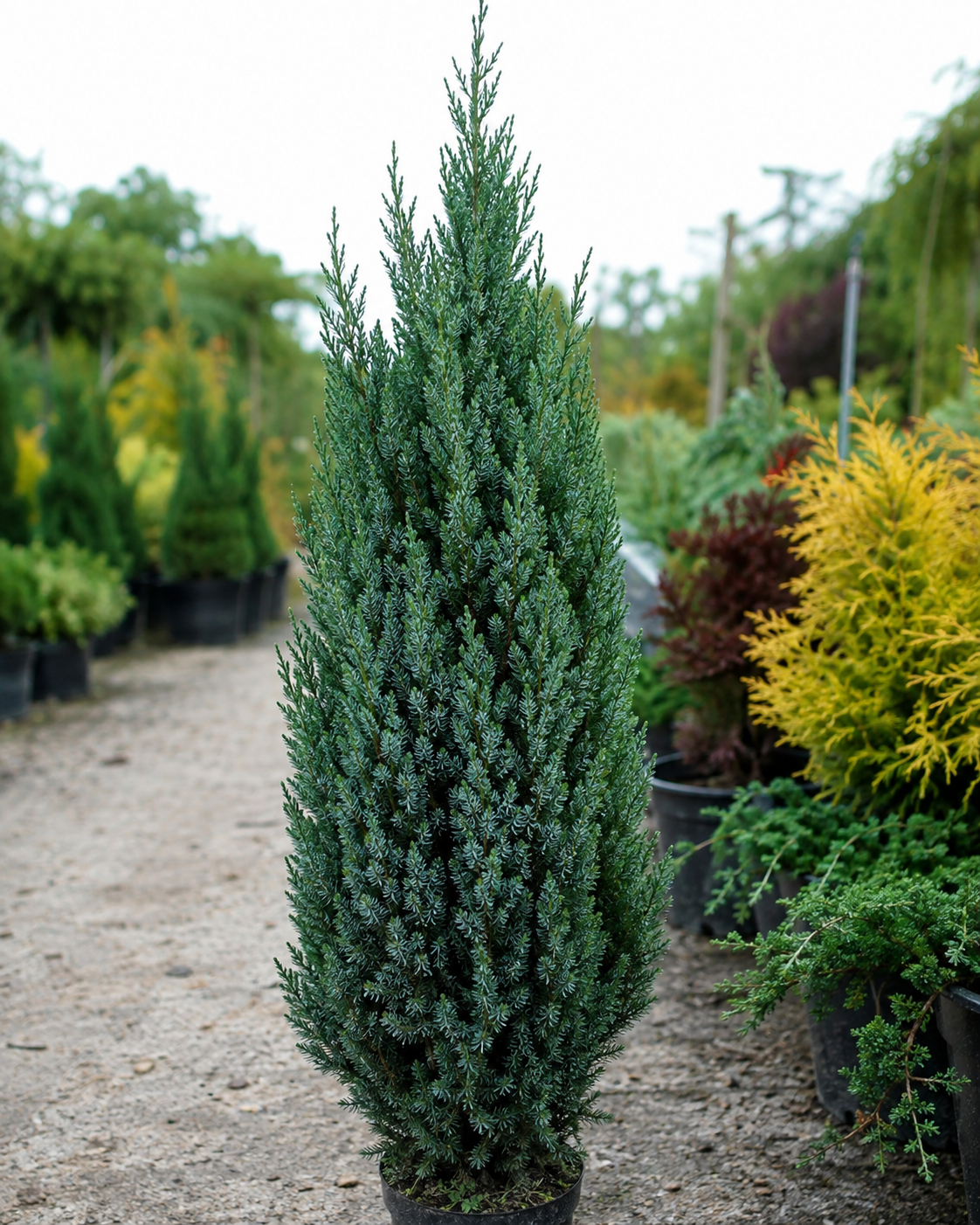
Want a narrow evergreen that shoots straight up without eating into your yard? Skyrocket Juniper has earned its name honestly. Few landscape trees pack this much vertical height into such a slim footprint. But growth speed and fullness are not automatic. Get a few key details wrong, and you end up with a thin, leggy tree. That kind of tree can take decades to look like the photos on the nursery tag.
This guide focuses on exactly that. We will show you how to get your Skyrocket Juniper growing faster and fuller, not just alive. We will cover sun, soil, water, fertilizing, and spacing. We will also cover the problems that slow growth down, so you can avoid them from day one.
What Is Skyrocket Juniper?
Skyrocket Juniper, botanically Juniperus scopulorum ‘Skyrocket’, is a narrow, columnar cultivar of the Rocky Mountain Juniper. It was discovered growing wild and later introduced to the nursery trade in the mid-20th century. Its silvery blue-green foliage and pencil-thin form make it one of the narrowest columnar evergreens available today.
Most residential landscapes see mature heights in the 15 to 20 foot range. Older specimens in ideal conditions can reach 25 to 30 feet over many decades. Width typically stays remarkably narrow, generally 2 to 3 feet. Stressed or poorly maintained trees can splay wider, though, under snow load or wind damage. That narrow profile is exactly why homeowners choose it. It fits tight side yards, formal entries, and privacy screens where space is limited.
How Fast Does Skyrocket Juniper Grow?
Under good conditions, Skyrocket Juniper typically adds 12 to 24 inches of height per year. In poor soil or heavy shade, that rate can slow to just a few inches annually. What separates a fast-growing, full specimen from a slow, thin one? Almost always, it comes down to a handful of controllable factors. We will walk through each one below.
It helps to set realistic expectations early. The first year after planting is mostly about root establishment, not visible height gain. Do not panic if your new tree barely grows in year one. Strong root development now sets up faster, more consistent growth in the years that follow.
Sun Exposure: The Number One Factor for Growth Speed
Nothing affects Skyrocket Juniper’s growth rate more than sunlight. This tree needs full sun to grow at its fastest. Aim for 6 to 8 hours of direct light daily. Partial shade slows growth noticeably. It can also cause thin, sparse foliage on the shaded side of the tree.
If you are choosing a planting location, prioritize southern or western exposure whenever possible. Trees planted in the shadow of a building, fence, or larger tree almost always grow slower. They also tend to look thinner than trees in open, sunny spots. Shade is sometimes unavoidable in part of a yard. If that is your situation, expect somewhat slower growth, and plan your spacing and expectations accordingly.
Soil and Drainage Requirements
Skyrocket Juniper tolerates a wide range of soil types, including sandy, rocky, and clay soils. That flexibility is part of its appeal. Drainage, however, is non-negotiable. Standing water at the roots leads quickly to root rot. That rot stunts growth and can kill the tree outright in severe cases.
Does your yard have heavy clay that holds water after rain? Amend the planting area with coarse sand or grit. Alternatively, consider a slightly raised planting bed. This single adjustment often makes the difference between a thriving, fast-growing tree and one that struggles for years. Soil pH matters less here than with many other landscape plants. Skyrocket Juniper tolerates acidic, neutral, and alkaline soils reasonably well.
Watering for Faster Establishment
New plantings need consistent, deep watering during their first one to two growing seasons. Water deeply once or twice weekly. Let the top few inches of soil dry slightly between waterings. This encourages roots to grow deep and wide, rather than staying shallow and dependent on frequent surface moisture.
Once established, Skyrocket Juniper becomes genuinely drought-tolerant. That said, occasional deep watering during extended dry spells keeps growth steady rather than stalled. Trees under chronic drought stress slow their growth rate considerably. They can also develop thin, sparse foliage as a defensive response.
Avoid frequent shallow watering at any life stage. Light, frequent sprinkling encourages shallow roots. It can also increase the risk of fungal issues at the base of the tree, particularly in humid climates.
Fertilizing to Boost Growth
Fertilizing plays a real role in growth speed, though less than sun and water. Apply a balanced, slow-release fertilizer in early spring, just as new growth begins for the season. This gives the tree the nutrients it needs to support a strong flush of new growth through the following months.
Avoid over-fertilizing, especially with high-nitrogen products. Excess nitrogen can push weak, leggy growth. That growth looks lush initially but lacks the density most homeowners actually want. Once established, most Skyrocket Junipers need fertilizing only every year or two. This holds especially true if the tree is planted in reasonably fertile soil to begin with.
Spacing for Fuller, Denser Trees
Spacing affects fullness more than most homeowners expect. Plant Skyrocket Junipers too close together, and they compete for light along their inner-facing sides. The result is thin, sparse growth where branches touch or overlap. For a privacy screen or hedge, space trees 3 to 4 feet apart. This spacing allows enough light penetration for full, even growth on all sides. It still creates a solid visual barrier once mature.
For single specimen plantings, keep the tree at least 3 feet from walls, fences, or other structures. Buildings block afternoon sun on one side. They can also restrict root spread. Both factors slow growth and reduce fullness over time.
Pruning: Do You Need It?
Skyrocket Juniper rarely needs pruning to maintain its natural columnar shape. In most cases, the only pruning necessary involves removing dead, damaged, or diseased branches as they appear. Early spring is generally the best time for this kind of maintenance pruning.
That said, light shaping can help. It corrects minor asymmetry or encourages denser growth in a specific area. Avoid heavy pruning into old wood. Junipers generally do not regenerate new growth from bare, leafless branches, unlike some deciduous shrubs. Has a section of the tree already gone bare? Pruning will not bring it back. Prevention matters more than correction here.
Common Problems That Slow Growth
Cedar-Apple Rust
This fungal disease affects junipers growing near apple or crabapple trees. Those trees serve as an alternate host in the disease’s life cycle. Infected branches develop orange, gelatinous growths in spring. It is rarely fatal, but repeated infections can stress the tree and slow overall growth. Removing nearby infected apple trees, when practical, reduces reinfection risk considerably.
Juniper Blight
Warm, humid conditions favor this fungal disease. It causes browning and dieback, particularly on the interior and lower portions of the tree. Good air circulation, achieved through proper spacing, is the best preventive measure. Avoid overhead watering. It keeps foliage wet longer than necessary and creates favorable conditions for infection.
Spider Mites
These tiny pests thrive in hot, dry conditions. They can cause stippled, discolored foliage when populations build up. A strong blast of water from a hose dislodges many mites. That makes it a simple, low-intervention first response. Severe infestations may require a targeted miticide application.
Root Rot
Almost always tied to poor drainage, root rot shows up as yellowing foliage, stunted growth, and eventually branch dieback. Prevention through proper soil drainage remains far more effective than treatment once symptoms appear. Do you suspect root rot? Improve drainage immediately, and avoid additional watering until the soil dries out.
Growing Zone Considerations Across the US
Skyrocket Juniper performs reliably across USDA hardiness zones 4 through 8. Some sources extend its range slightly further in both directions, depending on local microclimates. Regional conditions still affect how well it thrives, though. It helps to plan around your specific climate.
In hot, humid regions like the Southeast and Gulf Coast, this tree can struggle more than in its native dry mountain climate. High humidity increases the risk of fungal issues like juniper blight. So prioritize spacing and airflow if you are planting here. In arid Western states, from Colorado through the Southwest, Skyrocket Juniper often performs at its absolute best. These conditions closely mirror its native habitat.
In colder Northern states, from the Upper Midwest through New England, snow load can cause branches to splay outward. That splaying temporarily widens the tree’s normally narrow profile. Light snow removal after heavy storms helps preserve the columnar shape. It also prevents permanent branch damage.
How Skyrocket Juniper Compares to Other Narrow Evergreens
Homeowners often compare Skyrocket Juniper to Italian cypress, especially in regions too cold for that Mediterranean species to survive. The visual effect is remarkably similar. Both offer a tall, narrow, formal silhouette. Skyrocket Juniper wins on cold hardiness, though, thriving well into zone 4, while Italian cypress struggles below zone 7 or 8.
Compared to other columnar junipers like Blue Arrow or Spartan, Skyrocket tends to grow faster and stay narrower over time. Blue Arrow offers similarly tight form but often grows a bit slower. Spartan Juniper, meanwhile, tends to fill out wider at maturity, which makes it a better fit for hedges than for tight vertical accents.
Landscape Uses for Skyrocket Juniper
Its extremely narrow profile makes Skyrocket Juniper a favorite for tight side yards and formal entryways. It also works well as a vertical accent where a wider evergreen simply would not fit. Beyond that, it performs well as a living privacy screen or windbreak when planted in a row with proper spacing.
Many homeowners use it as a substitute for Italian cypress in regions too cold for that species. The visual effect is remarkably similar: tall, narrow, and formal. At the same time, it offers far better cold hardiness for Northern and Midwestern gardens.
What Does Skyrocket Juniper Cost in 2026?
Pricing depends heavily on size at purchase. Smaller plants in 1 to 3-gallon containers typically run $25 to $50. Larger, more established specimens cost more. Expect $100 to $250 or more for 10-gallon or larger sizes, often marketed as “jumbo” plants for faster instant impact.
Buying smaller and allowing the tree to grow into its mature size costs considerably less over time. It does require patience, though, given how many years full maturity takes. Are you planting a privacy screen where uniform size matters? Buy matched plants from the same nursery batch. This helps ensure even growth rates across the planting.
For more on comparing Skyrocket Juniper against other narrow columnar evergreens, see our full columnar evergreen comparison guide. It breaks down several popular options side by side.
According to UF/IFAS Extension at the University of Florida, Rocky Mountain Juniper species generally grow slowly to a mature height of 30 to 40 feet under ideal conditions. Cultivars like Skyrocket, though, were specifically selected for a faster, narrower growth pattern than the straight species.
Final Thoughts: Getting Faster, Fuller Growth
Skyrocket Juniper rewards attention to a few key details early on. Give it full sun, well-drained soil, and consistent watering during its first couple of growing seasons. Space it properly if planting a row or screen. Do that, and you will see the fast, dense growth this cultivar is known for. Skip any one of these steps, and you risk the thin, leggy result that comes from cutting corners.
Frequently Asked Questions
How fast does Skyrocket Juniper actually grow?
Under good conditions, expect 12 to 24 inches of growth per year. Poor soil, heavy shade, or drought stress can slow that rate to just a few inches annually.
How do I make my Skyrocket Juniper grow fuller instead of thin and sparse?
Full sun is the single biggest factor in fullness. Proper spacing also matters. Keep at least 3 to 4 feet between trees, which allows even light exposure on all sides and prevents the thin growth that happens when trees compete for light.
What is the mature size of a Skyrocket Juniper?
Most residential landscapes see mature heights of 15 to 20 feet, with a width of just 2 to 3 feet. Older specimens in ideal conditions can occasionally reach 25 to 30 feet over many decades.
Does Skyrocket Juniper need full sun?
Yes. It needs at least 6 to 8 hours of direct sunlight daily to grow at its fastest rate. Full sun also helps it maintain dense, healthy foliage throughout.
Why is my Skyrocket Juniper turning brown or thin on one side?
This often points to insufficient sun on that side. It can also signal poor air circulation leading to fungal disease, or root rot from standing water. Check drainage first, then evaluate whether nearby structures or trees are blocking light.
How close together should I plant Skyrocket Junipers for a privacy screen?
Space them 3 to 4 feet apart. This spacing allows enough light penetration for full, even growth. It still creates a solid visual barrier once the trees mature.
Does Skyrocket Juniper need regular pruning?
No. It rarely needs pruning beyond removing dead or damaged branches. Avoid cutting into old, bare wood, since junipers generally do not regrow from leafless branches.
How much does a Skyrocket Juniper cost?
Smaller plants in 1 to 3-gallon containers typically cost $25 to $50. Larger, more established specimens can run $100 to $250 or more, depending on size and root development at purchase.