

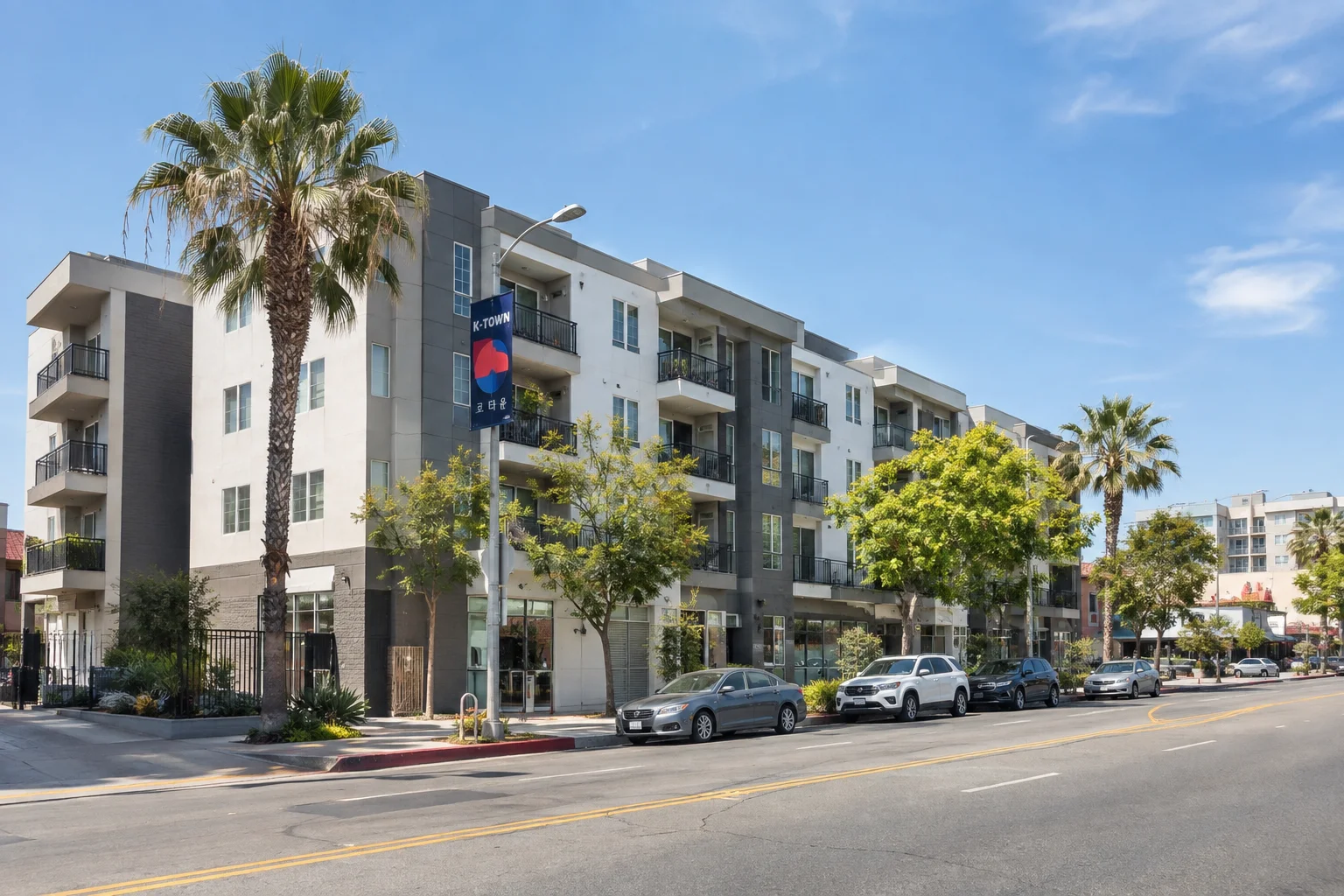
When apartment hunting in LA, there are three key points you need to remember. Get ready to battle other tenants for the best apartments. Spend more money on your rental than the “national average rental price.” Finally, act fast when you find the right apartment. The amount you will pay for renting a one-bedroom in Los Angeles depends entirely on where you want to live. In other words, a one-bedroom in Koreatown and in Santa Monica have nothing in common except the fact that they are located in Los Angeles.
In this guide, you can learn about the real factors affecting the apartment hunting process in LA.
The Quick Answer
Apartments’ rent prices can significantly differ based on Los Angeles neighborhoods. Studio and one-bed rooms usually cost between late $1,500 and $2,800 in most neighborhoods except luxury ones. The coastal areas as well as other high demand neighborhoods go much higher than that. In Santa Monica, Venice, West Hollywood and some parts of Downtown apartments can start at $3,000 or even more. Adding one more bedroom usually makes the price increase from $500 up to $1,000.
The above numbers can change depending on the season and what concessions will be offered by the building. Please consider the information presented in the table below as a general idea only, not the price quote.
Rent postings can get very fast in Los Angeles’ submarkets. It is reasonable to narrow your choice of the neighborhood and price range first. Later be prepared to apply for an apartment right after viewing it.
Why Location Changes Everything in LA
There is no such thing as a Los Angeles rental market; there are many small markets sewn together. This is the most important aspect of what general “rental apartments” recommendations do not take into account. Any website can tell you the overall average cost of a lease in Los Angeles, but the information is almost meaningless.
Here are some grouping options that make sense.
The Westside (Santa Monica, Venice, West LA, Mar Vista, Culver City)
The neighborhood charges the highest rental rates in the city. The closeness to the beach and companies like Google and Snap, as well as newer housing developments, is responsible for that. In addition, the cost of square footage will be higher there compared to other parts of the city.
Central LA (Koreatown, Mid-Wilshire, Silver Lake, Los Feliz, East Hollywood)
This area tends to provide the greatest ratio of value to location. This type of neighborhood is suitable for individuals seeking accessibility to public transportation and walkable streets without paying the Westside premium. Specifically, Koreatown has an ample supply of mid-rise apartments.
Downtown LA
There have been many constructions during the last ten years. There is indeed an inventory of high-rise apartments with pools and lounges for co-working that were built in them. The prices are moderate. However, there are many special offers for moving in for the residents, which may affect the price. If amenities like a gym matter to you, see how they show up in listings in our guide to Houston apartments with a gym or fitness center.
The Valley (Sherman Oaks, Studio City, North Hollywood, Van Nuys, Burbank)
The Valley usually costs less than either Westside or Hollywood. There are more apartment buildings constructed during the 1970s-90s years that means there is more room to live. The parking lot is usually free of charge, as an extra car space in Los Angeles will cost you $100-$200 per month.
South Bay, South LA and the San Gabriel Valley
The South Bay and South LA suburbs (Torrance, Inglewood, Hawthorne), along with the nearby San Gabriel Valley cities of Covina, Pasadena, and Glendale, are some of the less expensive areas available at a reasonable distance from Downtown LA. “Reasonable” very much depends on which freeways you would use and at what time of day.
If you’re weighing a specific suburb against a shorter commute, PlazmaHomes’ guide to apartments for rent in Covina, CA is a useful comparison point. It shows what pricing and inventory look like just outside the city’s core.
What Actually Drives the Price Difference
There are a number of reasons why even identical looking one bedroom units vary by $1,000 per month in cost based on their location.
Building Age Matters More in LA Than in Many Cities
Rent-control rules result in a large percentage of LA’s apartment units being quite old. You will find that many of these apartments were built between the ’60s and ’80s. Such apartments are generally more affordable and unique. Just keep in mind that there will not be many modern amenities, such as AC and garage space.
Parking Is Not Automatically Included
This will come as a shock to many who are relocating from cities where there is an assumption that parking will always be available. Be sure to read the tour information very thoroughly. “Parking Available” does not necessarily mean free.
Rent Control Status Affects Your Quote
Rent control status affects what you’re quoted versus what a similar unit down the street costs. Buildings included in the Los Angeles Rent Stabilization Ordinance are buildings constructed before October 1978. This will ensure that the landlord is not able to increase annual rental rates above a certain percentage. However, this does not protect the starting rent set by the landlord for a new tenant.
Common Mistakes Renters Make in the LA Market
Underestimating Application Competition
In attractive areas, affordable properties will get several applications in 24-48 hours after being listed for rent. Once you find a property suitable for you, it’s advisable to apply immediately you tour the place because you may lose the opportunity.
Not Budgeting for Move-In Costs
California’s regulations state that for an unfurnished apartment, the security deposit cannot exceed the sum of two months’ rent, while for a furnished apartment it should not be more than one month’s rent. In most cases, there is an application fee for each adult applying. There may even be a requirement for advance payment of the last month’s rent.
Ignoring Commute Time vs. Commute Distance
A ten-mile trip in Los Angeles may last anywhere from fifteen to ninety minutes, depending on which freeway you are taking and what time of day it is. If your landlord tells you that the rent is cheap because it is only x miles away, make sure you take into account the travel time.
Assuming All Listings Are Current
The LA rental scene is quick moving. Third-party listing sites often list units that have been let out days or weeks before. Confirm with the property management firm first before getting your hopes up and booking a viewing.
Skipping the Neighborhood Walk-Through
The unit may be picture-perfect, but even the block on which it stands may be vastly different at night than during the day. It is always a good idea to see the building and the block during multiple times of the day if possible.
What to Bring to a Rental Application
Generally speaking, CA landlords request a relatively similar set of documents. Preparing everything beforehand definitely helps since it greatly expedites the procedure.
- Valid government-issued photo identification
- Documentation proving income (recent pay stubs, a letter of offer, or 2-3 months of bank statements in case of freelancers/self-employed persons) – most of the landlords in LA expect you to have gross monthly income 2.5-3 times bigger than the monthly rental cost
- Credit check or authorization to obtain one
- Rental history and landlord’s references
- Application fee that is capped by CA state legislation and adjusted every year due to inflation
It’s important to note that even though your gross monthly income is not quite 2.5-3 times higher than monthly rental cost, it doesn’t necessarily mean that you won’t be able to move into the apartment. Usually, this issue concerns college students, freelancers or newcomers who still do not have California pay stubs.
Studio vs. One-Bedroom vs. Two-Bedroom: A Practical Comparison
| Unit Type | Typical LA Monthly Range* | Best For | Trade-off |
|---|---|---|---|
| Studio | $1,500–$2,400 | Single renters prioritizing location over space | Least living space; limited furniture layout options |
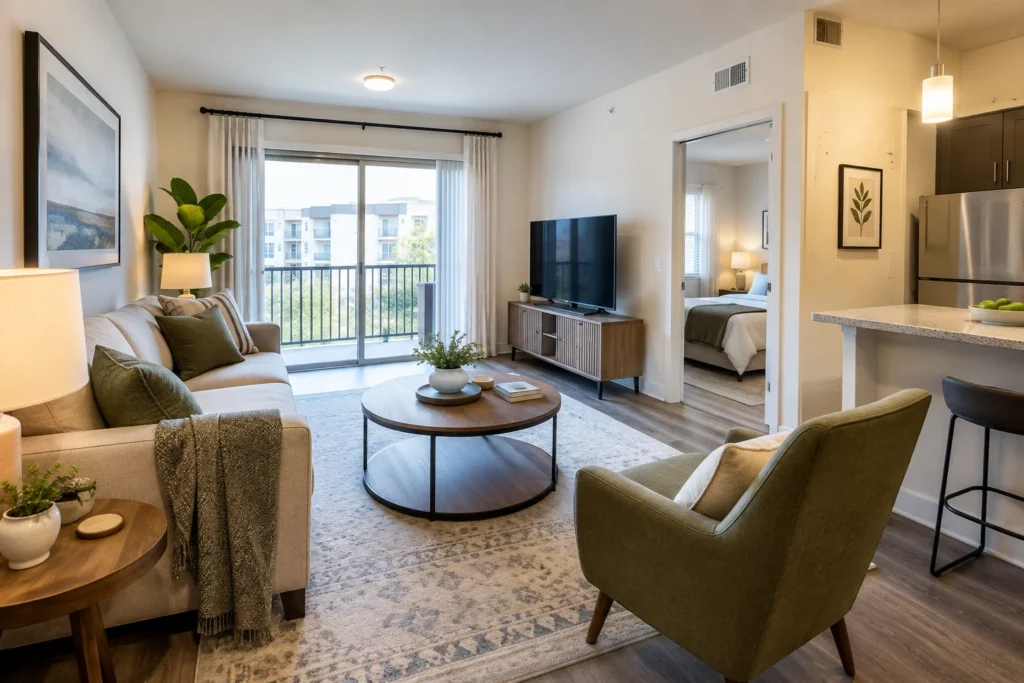
| One-bedroom | $1,900–$3,000+ | Individuals or couples wanting separation between sleeping and living areas | Meaningful step up in cost from studio |
| Two-bedroom | $2,500–$4,000+ | Roommates or small families | Splits well between two incomes but harder to find in older, smaller buildings |
Range is a reflection of variation seen in LA communities, not any specific building or listing agency. Ranges will change depending on the market situation. Be sure to check the actual price always. To see how LA compares with another major western market, read our guide to apartments for rent in Salt Lake City.
Renting Sight Unseen: When It Makes Sense and When It Doesn’t
If you are moving to LA from out of town, viewing the property personally is not always practical. Video tours have been adopted by most management firms. It’s a good alternative to an initial visit. However, view it as high risk. If you’re weighing other California cities before relocating, our look at The Elms Apartments in Sacramento shows how pricing and listings compare in the state capital.
Always inquire about noise levels. Units facing the streets along big boulevards such as Sunset, Wilshire, or Ventura may be noisy. Inquire about natural light. In addition, inquire about whether the video tour features the specific unit or a “similar” unit. This is a common occurrence.
Los Angeles-Specific Renter Protections Worth Knowing
AB 1482 is California state legislation that caps the annual increase in rents for many properties that do not fall under local rent control. Rent increases are capped at 5% plus local inflation, with a ceiling of 10%. Many exceptions exist for AB 1482; for example, it does not cover buildings that were constructed within the past 15 years and not owned by any corporate entity.
Los Angeles has its own Rent Stabilization Ordinance that generally imposes stricter rules. This applies to older buildings within Los Angeles city limits. Both regulations apply partially to each other and are not quite identical. In which case a particular property may be covered by one of the regulations, the other, both, or neither depends on the construction period and ownership of the property. You should check your individual landlord or Los Angeles Housing Department.
Frequently Asked Questions
What’s a realistic budget for a one-bedroom apartment in Los Angeles?
Typically, in the year 2026, most mid-range one-bedroom apartments in downtown and valley locations around LA would range from $1,900 to $2,800 monthly. Westside and beachside prices are more expensive, while suburbia is cheaper. These figures vary depending on the building in question and its state.
Is it cheaper to rent in the San Fernando Valley than in central LA?
Yes, especially where more spacious living is desired. The difference has diminished in some hip Valley neighborhoods such as Studio City and Sherman Oaks. Places such as Van Nuys and North Hollywood usually provide the best bargains.
Do I need a car to live in Los Angeles?
For most neighborhoods, yes. LA has expanded its Metro rail and bus system. Areas like Downtown, Koreatown, and parts of Hollywood are genuinely walkable and transit-connected. But the city as a whole is still built around car ownership. Factor parking availability and cost into your apartment search if you’ll have a vehicle.
How much notice do LA landlords typically require before move-out?
Standard month-to-month leases in California generally require 30 days’ written notice. Longer notice periods can apply for tenants who’ve lived in a unit over a year. Lease-specific terms can vary, so always check your signed lease rather than assuming a default.
Are utilities usually included in LA apartment rent?
It varies by building. Older, smaller buildings sometimes include water and trash in the rent. Newer buildings and larger complexes more often bill electricity, gas, water, and sometimes even trash and internet separately. Always ask for a full utility breakdown before comparing two listings on price alone.
What credit score do I need to rent an apartment in LA?
A specific threshold doesn’t exist, but generally, a number ranging between the mid-600s and above is desirable. Just because your score is below this number doesn’t necessarily mean that you’re not going to qualify for anything. You can always make up for a low score by paying a substantial deposit or having an income guarantor.
Is renting sight unseen a bad idea in Los Angeles?
It’s common for out-of-state relocations and not inherently a bad idea. But it does carry more risk. Video tours, direct questions about noise, and a flexible short-term lease as a first step can reduce that risk if an in-person visit isn’t possible.
Sources & References
- Los Angeles Housing Department — Rent Stabilization Ordinance
- California Department of Consumer Affairs — Tenant/Landlord guidance on security deposits and notice requirements
[…] One housing database says LIHTC properties must accept Section 8 Housing Choice Vouchers, so ask the office how vouchers work at Parkview. It’s also smart to apply to more than one affordable community, since Bay Area waitlists are often long. For more rental options, see our guides to The Elms Apartments in Sacramento, apartments for rent in Covina, CA and apartments for rent in Los Angeles. […]