

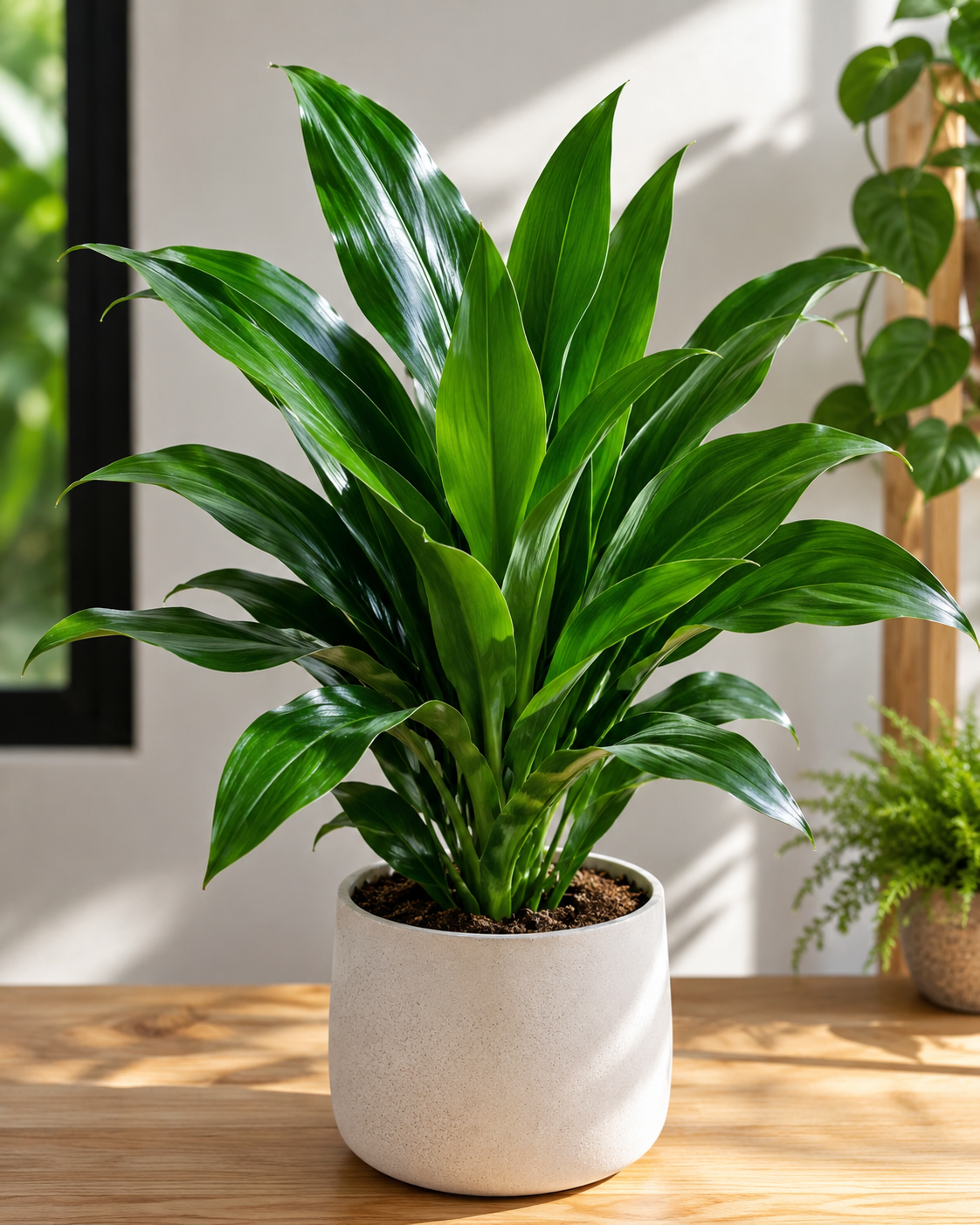
If you want a houseplant that looks expensive but barely asks for anything, Dracaena Janet Craig is hard to beat. Its glossy, dark green leaves bring a polished look to any room. Meanwhile, it tolerates the kind of neglect that would kill most other tropicals.
This guide covers everything you need to know in 2026, from watering schedules to light requirements to common problems. Whether you just brought one home or you’ve had yours for years, these tips will help it thrive.
What Is Dracaena Janet Craig?
Dracaena Janet Craig, botanically known as Dracaena deremensis ‘Janet Craig’ (sometimes labeled Dracaena fragrans ‘Janet Craig’), is a tropical evergreen native to West Africa. The cultivar dates back nearly a century. It’s named after the daughter of a Philadelphia nurseryman who first cultivated it.
This plant has become a staple in offices, lobbies, and homes across the United States. That’s largely thanks to its air-purifying reputation and its patience with inconsistent care. Left to grow, it can eventually reach 6 to 10 feet indoors, though most potted specimens stay more compact for years.
Light Requirements: Finding the Right Spot
Dracaena Janet Craig is remarkably flexible when it comes to light. It grows best in bright, indirect light, but it also tolerates medium and even low light without much complaint. That adaptability is exactly why it works so well in interior offices and rooms with north-facing windows.
However, direct sunlight is one thing to avoid. It can scorch the leaves and leave permanent brown patches. If your home doesn’t get much natural light, don’t worry. This plant handles artificial light well, so a grow light can fill the gap nicely, especially in darker U.S. climates like the Pacific Northwest during winter months.
One quick way to check if your plant is happy: watch the leaf color. Pale or washed-out leaves usually mean too much light. Slow growth and small new leaves usually mean not enough.
How Often Should You Water Dracaena Janet Craig?
Watering is where most beginners go wrong, so pay close attention here. This plant strongly prefers to dry out between waterings. It does not tolerate soggy soil well.
As a general rule, water when the top third to half of the soil feels dry, which usually works out to every 10 to 14 days. That said, your exact schedule will depend on your home’s humidity, temperature, and the season. Homes in drier regions, such as Arizona, Nevada, or Colorado, may need slightly more frequent watering than homes in the humid Southeast.
When you do water, soak the soil thoroughly until water drains from the bottom of the pot. Then let any excess drain away completely. Never let the pot sit in standing water, since that’s one of the fastest ways to cause root rot.
It’s also worth mentioning tap water quality. Dracaena Janet Craig is sensitive to the fluoride, chlorine, and salts found in many municipal water supplies. If you notice browning leaf tips, switching to distilled water, rainwater, or water left out overnight can make a noticeable difference.
Soil and Potting Essentials
Good drainage matters more than almost anything else with this plant. A well-draining potting mix, ideally a blend of regular potting soil, perlite, and a bit of peat moss, gives roots the airflow they need. Always choose a pot with drainage holes, since trapped water is the quickest path to root problems.
Repotting isn’t something you’ll need to do often. Every two to three years is usually enough, and only once roots have filled the current pot. When you do repot, move up just one size rather than jumping to a much larger container, since oversized pots tend to hold excess moisture longer than the roots can use.
Temperature and Humidity: What Works Best
Dracaena Janet Craig prefers consistent indoor temperatures between 65°F and 80°F. It doesn’t handle cold well, so keep it away from drafty windows, exterior doors, and air conditioning vents. Anything below 55°F can cause leaf damage fairly quickly.
Humidity is a bit more forgiving. This plant adapts to average household humidity levels without much fuss. Still, if you live somewhere especially dry, like much of the American Southwest, occasional misting or a small humidifier nearby can help keep the foliage looking its best.
Feeding Your Dracaena Janet Craig
This plant doesn’t need much fertilizer to stay healthy. Feed it once or twice during the spring and summer growing season using a balanced houseplant fertilizer diluted to half strength. That’s usually plenty.
Overfeeding is actually more common than underfeeding, and it causes real problems. Too much fertilizer leads to salt buildup in the soil, which often shows up as burnt, crispy leaf tips. If you notice that happening, flushing the soil with a thorough water-through once a year can help reset things.
Pruning and Propagation
Pruning keeps your Dracaena Janet Craig looking full and well-shaped. Simply trim back leggy stems or cut the central cane to your preferred height using clean, sharp shears. New growth will typically emerge just below the cut within a few weeks.
Propagation is refreshingly simple, too. Take a stem cutting in spring or early summer, ideally about five inches long. Let the cut end sit out for a day to callous over, then place it in water or moist soil. Roots usually develop within a few weeks, giving you a brand-new plant to keep or share.
Common Problems and How to Fix Them
Most Dracaena Janet Craig issues trace back to just a few root causes, so troubleshooting isn’t too complicated.
Brown, crispy leaf tips are usually caused by tap water salts, dry air, or too much fertilizer. Yellowing leaves often point to overwatering, though occasional lower-leaf yellowing is just a normal part of the plant’s growth cycle. If you notice fine webbing between leaves, check closely for spider mites, which tend to show up during dry winter months. Treating them early with insecticidal soap usually solves the problem before it spreads.
It’s also completely normal for a newly purchased plant to drop a few leaves in its first week or two at home. That’s simply an adjustment period, not a sign something is wrong.
Is Dracaena Janet Craig Toxic to Pets?
Yes, and this is important if you share your home with cats or dogs. Dracaena species contain saponins, compounds known to cause vomiting, drooling, and appetite loss if pets chew on the leaves. According to the ASPCA’s list of toxic plants, Dracaena is considered toxic to both cats and dogs, so it’s worth keeping your plant somewhere curious pets can’t easily reach.
If you’re building a pet-friendly indoor jungle, it also helps to check our guide to pet-safe houseplants before adding new greenery to a home with animals.
Actionable Care Tips for 2026
A few quick habits will keep your Dracaena Janet Craig thriving for years. First, check soil moisture with your finger rather than watering on a fixed schedule, since conditions shift with the seasons. Second, dust the leaves regularly with a damp cloth, since built-up dust blocks light absorption and invites pests. Third, rotate the pot a quarter turn every month or so to encourage even, balanced growth on all sides.
Finally, resist the urge to fuss over it too much. This plant genuinely does better with a bit of benign neglect than with constant attention.
Frequently Asked Questions
How often should I water my Dracaena Janet Craig? Water when the top third to half of the soil is dry, which usually works out to every 10 to 14 days. Always adjust based on your home’s humidity, light levels, and the season.
Can Dracaena Janet Craig survive in low light? Yes, it tolerates low to medium light quite well, though growth will slow down considerably. For the healthiest, fullest plant, bright indirect light is still the ideal target.
Why are the leaf tips on my plant turning brown? Brown tips usually come from tap water salts, low humidity, or too much fertilizer. Switching to distilled or filtered water often clears this up within a few weeks.
Is Dracaena Janet Craig safe for homes with cats or dogs? No, it’s considered toxic to pets due to saponin compounds in the leaves. Keep it out of reach of curious cats and dogs, and contact a vet promptly if ingestion occurs.
How big does Dracaena Janet Craig get indoors? Indoors, it typically grows to 6 to 10 feet over many years, though growth is slow and steady. You can prune it anytime to control height and shape.
Does Dracaena Janet Craig need fertilizer? It needs very little. Feeding once or twice during spring and summer with a diluted balanced fertilizer is usually enough to support healthy growth.
Can I propagate Dracaena Janet Craig at home? Yes, stem cuttings root fairly easily in water or moist soil. Spring and early summer are the best times to try, since the plant is actively growing.
What’s the ideal temperature range for this plant? Aim for consistent temperatures between 65°F and 80°F. Avoid placing it near drafts, exterior doors, or heating and cooling vents, since sudden temperature swings can damage the leaves.